Sunday, June 13, 2010

POPnews - June 13th

Photobucket
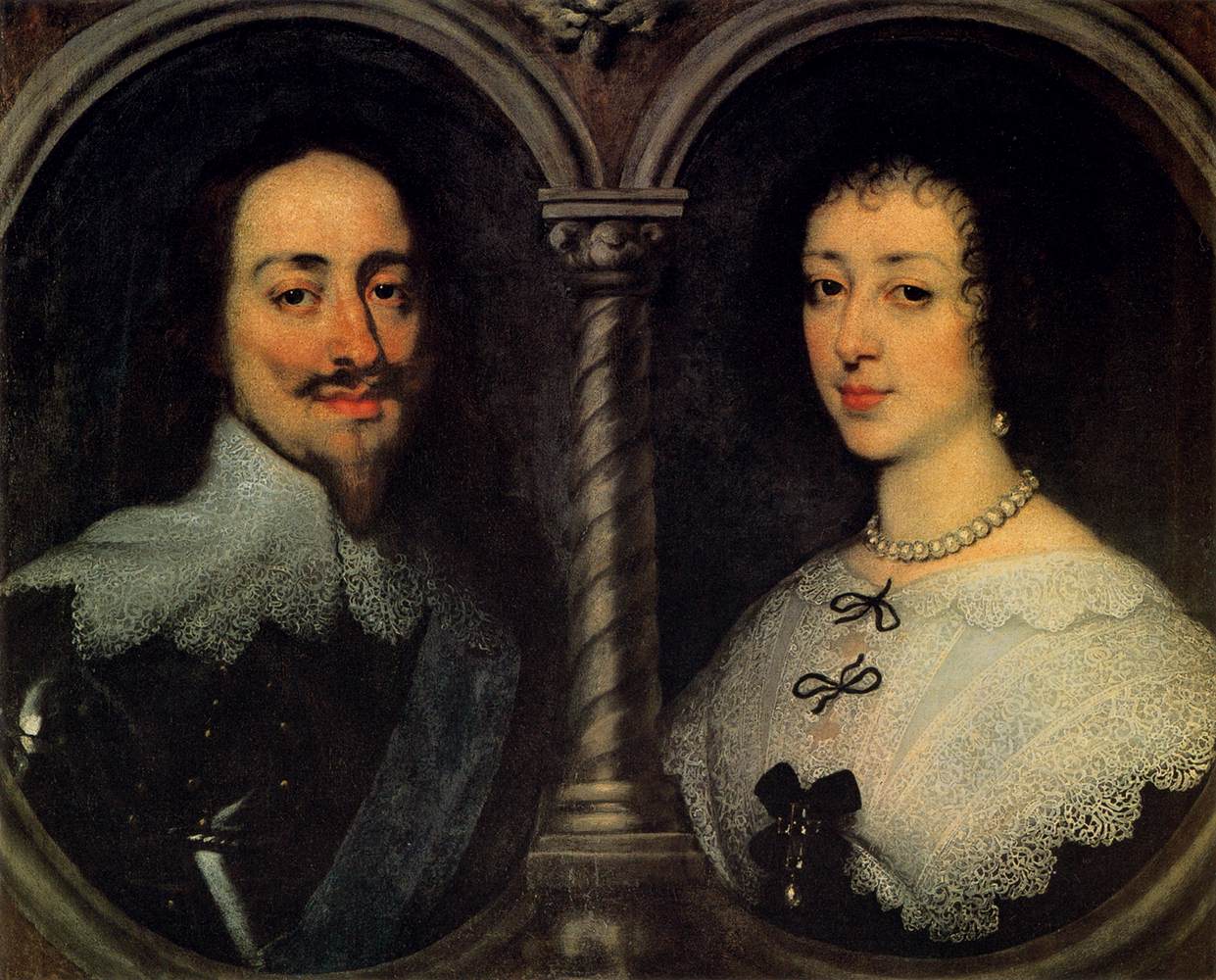
[The daughter of France's King Henri IV and his second wife Marie de Medici, through her daughter Henrietta, Duchess of Orléans Charles I's queen is related to French monarchs Louis XV, Louis XVI, Louis XVII, Louis XVIII & Charles X plus such modern-day luminaries as Diana, Princess of Wales , Prince William, Prince Harry, and Camilla, Duchess of Cornwall as well through the illegitimate children of her son, Charles II. Despite being such a pivotal figure in history - every bit as much as Queen Victoria if not more - Henrietta Maria has been written about very little, and understood even less...]

1525 - Martin Luther married Katharina von Bora, openly defying the celibacy doctrine decreed by the Roman Catholic Church on priests and nuns in the most boring way imaginable.

1625 - England's King Charles I married French princess Henrietta Maria; not only would she become the mother of two kings (Charles II and James II) she would also be the grandmother of two queens (Mary II and Queen Anne) as well as William III - who, according to rumour was both a king and a queen - besides.

Photobucket1777 - At the outset of the American Revolution the Marquis de Lafayette (who during the subsequent French Revolution renounced his title in a fit of Republicanism and became plain-old Gilbert de Motier) landed near Charleston in order to help the Continental Congress to train its army, which he did as an unpaid volunteer. Some idea of the closeness between the has-been Marquis and the would-be President George Washington can be gleaned from David A. Barry's book Adopted Son: Washington, Lafayette, and the Friendship That Saved the Revolution, which will have to do until I decide* to take up writing slash fiction.

*Or am driven, out of sheer desperation, more like...

1798 - The Mission San Luis Rey de Francia was founded in what is now Oceanside, California.

1881 - The USS Jeannette was crushed in an Arctic Ocean ice pack and sunk under the command of George W. DeLong; owned by James Gordon Bennett, Jr., owner of the New York Herald, the Jeannette had been sent North to look for an overdue expedition aboard the Vega.

1886 - A fire devastated much of Vancouver; on the same day Bavaria's King Ludwig II was found dead in Lake Starnberg, south of Munich. Most historians feel the two events aren't related - and even a paranoid bastard such as myself can't force any connection, but I'll probably keep trying anyway...

1898 - Yukon Territory was formed, with Dawson chosen as its capital; the capital was moved to Whitehorse following World War II, to little effect.

1927 - A ticker-tape parade was held for aviator Charles Lindbergh down Manhattan's Fifth Avenue upon his return to New York City from Paris following his historic transatlantic flight on May 20th.

Photobucket1935 - In one of the biggest upsets in championship boxing, the 10 to 1 underdog James J. Braddock (shown, at right) defeated Max Baer at the Madison Square Garden Bowl in Long Island City, New York, making him the heavyweight champion of the world. Braddock's life was reverently inhabited by Russell Crowe in Ron Howard's 2005 biopic Cinderella Man; he was joined by Paul Giamatti as Braddock's manager Joe Gould and for once Squinty McCokeface doesn't ruin the film by playing Braddock's long-suffering wife Mae, although the unflattering - and inaccurate - portrayal of Max Baer (otherwise well-played by Craig Bierko) nearly does. 

1942 - The US government opened its Office of War Information.

1955 - Mir Mine - the Soviet Union's first diamond mine - was discovered.

1966 - The US Supreme Court ruled, in Miranda v. Arizona, that the police must inform suspects of their rights before questioning them; Justice John Marshall Harlan II didn't agree, nor did Justice Tom C. Clark, or Justices Potter Stewart and Byron White for that matter. Oh that wacky Warren Court!

1967 - U.S. President Lyndon B. Johnson nominated Solicitor-General Thurgood Marshall to become the first black justice on the US Supreme Court following the retirement of Justice Tom C. Clark.

1977 - Convicted Martin Luther King Jr. assassin James Earl Ray was recaptured after escaping from Brushy Mountain State Penitentiary three days earlier. 

1982 - Fahd became King of Saudi Arabia upon the death of his brother, Khalid. 

1983 - Pioneer 10 became the first man-made object to leave the solar system when it left the orbit of Neptune. 

1991 - Boris Yeltsin became Russia's first popularly elected President.

1996 - The Montana Freemen surrendered after an 81-day standoff with FBI agents.

1997 - A jury sentenced Timothy McVeigh to the death penalty for his part in the 1995 Oklahoma City bombing.
*
share on: facebook

Saturday, June 12, 2010

"Born With a Broken Heart" by Kenny Wayne Shepherd


This song is a favourite of mine, which explains so much; shown here recorded before a live audience in 1996, Born With a Broken Heart is the first song on Kenny Wayne Shepherd's first album Ledbetter Heights, and showed that straight out of the gate the boy was a man.

The actual Ledbetter Heights - also known as 'St. Paul's Bottoms' - is a traditionally black neighbourhood and former red-light district in Shreveport*, an area which spawned blues god Huddie 'Leadbelly' Ledbetter and was later named after him in an effort to rehabilitate the district's image...
All of which begs the question: what kind of a sorry state would a neighbourhood have to be in that naming it after a blues musician would improve it?

*Kenny Wayne Shepherd's hometown, yo.
*
share on: facebook

Happy Birthday Kenny Wayne Shepherd

Photo Sharing and Video Hosting at PhotobucketA blues prodigy, self-taught by age 7, Kenny Wayne Shepherd recorded his first album Ledbetter Heights at age 17. In it, not only is his playing as sharp as a seasoned veteran's, his vocals growl and yelp and ache more like a man of 71 than 17. His second album, Trouble Is..., holds the record for the longest duration on the American Blues chart.

Today at 33 he is the author of five albums and tours extensively, often playing with the likes of B. B. King and Clarence 'Gatemouth' Brown. In 2006 he married Hannah, the eldest daughter of Mel Gibson and together they have two children.
*
share on: facebook

In Memoriam: Anne Frank

Both a remarkable young woman and her remarkable book were born on this day: the girl in 1929, and the book 13 years later, in 1942; that such a simple birthday present as a diary could one day become the single most damning piece of evidence against the atrocities of the Holocaust not only staggers the mind but also makes the heart soar...

Photo Sharing and Video Hosting at PhotobucketBorn in Frankfurt, Anne Frank and her family fled to Aachen in 1933 after Hitler's election, finally settling in Amsterdam the following year. For awhile it seemed their flight had been successful, but they were soon trapped in Holland following the Nazi Occupation in November 1940.

Anne Frank's diary was begun less than a month before her family went into hiding, in July 1942; its earliest entries, while detailing the minutiae of her life, also offer glimpses of a growing awareness that her life was in danger. For two long years her family and four of their friends hid in a room in the back of the Opekta Works factory on the Prinsengracht (now a museum) which her father owned, until being arrested by the Gestapo in August 1944 - on a tip from a person whose identity remains unknown to history even if the sting of their betrayal survives.

Alas, the third act of Anne's life was not to be; seven months after her arrest she died of typhus in the concentration camp at Bergen-Belsen, a few days after her older sister Margot. The exact date of their deaths remain unknown, but it was likely some time in March 1945, when an epidemic of the disease swept the camp. Since it was her dream to be a journalist one wonders how Anne, already a gifted and sensitive writer, would have described those last months of her young life, the liberation of the camps just six weeks after she died, or the ensuing Nuremberg trials when those responsible would be held accountable, having already written history's most damning account of Nazism by the age of 15.

Anne's father Otto Frank was the only survivor of the achterhuis, and upon his return to Amsterdam he was given Anne's diary, which was found and saved by Miep Gies, who'd aided the inmates during their hiding at great personal risk to herself. Today it is one of the world's most read books, and Gies is a national (indeed an international) heroine for having rescued it.

Anne's story was quickly adapted for the stage, and that play duly became a movie; the most chilling work on the life and death of Anne Frank, though, is Jon Blair's 1995 documentary Anne Frank Remembered; narrated by Kenneth Branagh and featuring excerpts of the diary read by Glenn Close, among the many treasures it contains* is the only known film footage of Anne Frank.

*Anne Frank Remembered also contains the longest interview Miep Gies ever gave about her involvement with the Franks, as well as their fellow captors, the Van Pels family - Hermann, Auguste, and 16-year-old Peter - and Fritz Pfeffer. It comes with the highest possible recommendation of the Pop Culture Institute.
*
share on: facebook

"Brass in Pocket" by The Pretenders


Birthday wishes would go out today to Pete Farndon - bass player and founding member of The Pretenders - if only he'd survived that ole devil called the rock and roll lifestyle, that is. Instead of a 57th birthday, though, he gets a brief mention on an obscure blog in the boondocks of the Internet. Oh joy...

Few bands have survived the number of lineup changes The Pretenders have over the years, mainly because despite her refusal to perform as Chrissie Hynde and The Pretenders that is essentially what the band should be called; I highly doubt the band could survive the loss of her the way it did poor old Pete Farndon. His departure was doubly painful; not only was he fired by his fellow band mates (in June 1982) he'd once been Hynde's lover as well.

His dismissal came just two days after his 30th birthday; just two days later his fellow founding Pretender James Honeyman-Scott died of a heart attack caused by cocaine use. Farndon himself died in April 1983 - in the midst of forming a new band with Topper Headon, formerly of The Clash - having made an indelible mark on the world of rock thanks to songs like this one.

Brass in Pocket, the band's third single, was released in November 1979 and appears on the band's 1980 debut album Pretenders. The video, interestingly enough, was the seventh ever video shown on MTV following that channel's August 1981 launch; I've always liked its wistful whimsy, and I'm a sucker for a story video every time.
*
share on: facebook

Pop History Moment: Nicole Brown Simpson and Ron Goldman Were Murdered

Photo Sharing and Video Hosting at Photobucket

On this day in 1994 Nicole Brown Simpson and Ronald Goldman were brutally murdered at her home on Bundy Drive in LA's tony Brentwood neighbourhood by person or persons unknown* wearing ugly shoes and gloves that didn't fit; alas, the crime took place in California, so it wouldn't have been possible to get a conviction even if the killer had been caught literally red-handed. Which, in a way, he was. As it is, O. J. Simpson had more of Nicole Brown's blood on him than she had left in her by the time he was done; so much, in fact, that not even the stunningly inept crime scene investigation unit of the LAPD could manage to taint, compromise, or obliterate all of it.

Still, the case riveted the world, as who doesn't love to see a famously arrogant celebrity fall from grace: from the sluggish high speed chase of the white Ford Bronco belonging to Al Cowlings on Interstate 405 through the various hairstyles of Marcia Clark and the wacky white supremacy of LAPD officer Mark Fuhrman to the verdict offered by Judge Lance Ito in October 1995...

Bad times...


*And by 'person or persons unknown' I'm being sarcastic; we all damn well know who did it.
*

share on: facebook

POPnews - June 12th

Photobucket
[Under the motto Preserving History, Honoring Excellence, Connecting Generations the Baseball Hall of Fame in Cooperstown, New York, is charged with both preserving the relics and honouring the legacies of those men who have most excelled at playing the American pastime. But have they been too over-zealous in this latter pursuit? Author Zev Chafets thinks so; his book, Cooperstown Confidential: Heroes, Rogues, and the Inside Story of the Baseball Hall of Fame seeks to blow the white-wash off of some of the worst d-bags, bastards, and blackguards ever to shag a fly, swing the ash, or hurl the pearl.]

1381 - During England's so-called Peasants' Revolt rebels from Essex - led by John Ball, Wat Tyler and Jack Straw - arrived at Blackheath, which was then on the outskirts of London.

1429 - Joan of Arc led the French army in their capture of the city and the English commander, William de la Pole, 1st Duke of Suffolk, in the second day of the Battle of Jargeau.

1653 - During the First Anglo-Dutch War the Battle of the Gabbard began; it would last into the next day.

1776 - The Virginia Declaration of Rights was adopted.

1860 - The State Bank of the Russian Empire was established.

1864 - During the Overland Campaign portion of the US Civil War, at the Battle of Cold Harbor, General Ulysses S. Grant gave Confederate forces under Robert E. Lee a victory when he pulled his Union troops from their positions at Cold Harbor, Virginia, and moved south.

1889 - 78 people were killed and 260 injured in the Armagh rail disaster - a crash involving a Sunday School excursion train near Armagh in what is now Northern Ireland.

1898 - General Emilio Aguinaldo declared the Philippines' independence from Spain, appropriately enough with the Philippine Declaration of Independence.

1899 - The New Richmond Tornado - the eighth deadliest tornado in US history - killed 117 people and injured around 200 in that Wisconsin town.

1939 - The Baseball Hall of Fame was dedicated in Cooperstown, New York.

1940 - 13,000 British and French troops surrendered to Nazi Germany's Major General Erwin Rommel at Saint-Valery-en-Caux.

Photobucket1963 - Civil rights leader Medgar Evers (shown, at left) was murdered in front of his Jackson, Mississippi, home by Ku Klux Klan member Byron De La Beckwith - a story told cinematically* by Rob Reiner in the 1996 film Ghosts of Mississippi, which contains a chilling Oscar-nominated performance by James Woods as de la Beckwith...  In the film Whoopi Goldberg as Evers' widow Myrlie and Alec Baldwin as her lawyer Bobby DeLaughter fight for justice at de la Beckwith's third trial - the first two (in 1964) having ended in mistrials resulting in acquittal. As per usual, any attempt to stop or even slow down the Civil Rights Movement with the murder of Medgar Evers was met with a redoubled effort by those more determined than ever to continue his work by preserving his legacy. In 1970 Medgar Evers College opened in Brooklyn, a fitting tribute to the man who once helped the first black student, James Meredith, attend the University of Mississippi, which had a strict whites-only policy.

*An earlier film - For Us the Living: The Medgar Evers Story starring Howard Rollins Jr. and Irene Cara - was made for American television and aired in 1983; Phil Ochs also tells Evers' story in the song Too Many Martyrs.

1964 - Anti-apartheid activist and African National Congress leader Nelson Mandela was sentenced to life in prison by a court in South Africa for engaging in acts of sabotage.

1967 - The US Supreme Court unanimously decided in the case of Loving v. Virginia, declaring all state laws which prohibited inter-ethnic marriage to be unconstitutional, making today a big one for all fans of miscegenation.

1975 - India's Prime Minister Indira Gandhi was found guilty of corruption by the High Court of Allahabad based largely on complaints made by Raj Narain. Her punishment was being barred from holding elective office for six years; her response was to compel Indian President Fakhruddin Ali Ahmed to declare a state of emergency which held for 21 months, during which time she rounded up and jailed her critics and clamped down on press freedoms - events most chillingly described in Salman Rushdie's Booker Prize-winning 1981 novel Midnight's Children.

1978 - David Berkowitz - New York City's notorious 'Son of Sam' killer - was sentenced to 365 years in prison for committing six killings - those of Donna Lauria, Christine Freund, Virginia Voskerichian, Alexander Esau, Valentina Suriani, and Stacy Moskowitz; his other victims - Jody Valenti, Carl Denaro, Rosemary Keenan, Donna DeMasi, Joanne Lomino, John Diel, Sal Lupo, Judy Placido, and Robert Violente - survived his attacks, although in many cases were left severely injured. Berkowitz's bloody rampage is chronicled in Spike Lee's 1999 film Summer of Sam, in which the murderer was portrayed by Michael Badalucco.

1979 - Bryan Allen won the second Kremer prize - a none-too-shabby £100,000 - for a man-powered flight across the English Channel in the Gossamer Albatross; he'd also won the first Kremer prize as well - only £50,000, but still nice - in August 1977, also piloting a plane owned by Dr. Paul MacCready.

1987 - The Central African Republic's former self-proclaimed Emperor Jean-Bédel Bokassa was sentenced to death for crimes he had committed during his 13-year rule.

1990 - On a day now celebrated as Russia Day, the parliament of the Russian Federation formally declared its sovereignty.
*
share on: facebook

Friday, June 11, 2010

"Viva Las Vegas" by ZZ Top


Birthday wishes go out today to Frank Beard, founding member of Southern rock stalwarts ZZ Top; the group was formed in 1969, and amazingly is still comprised not only of its original lineup but employs its original manager as well. It's always easy to spot Frank Beard onstage, as (despite his name) he's the one without the beard, preferring the subtler charms of a mustache instead.

Viva Las Vegas was a single included to help move the group's 1992 Greatest Hits album, which it certainly did - triple platinum, in fact; originally written by Doc Pomus and Mort Shuman for Elvis Presley as the title track to his 1964 film Viva Las Vegas, ZZ Top's video naturally features an Elvis impersonator as the ghost of Elvis, albeit circa 1959.
*

share on: facebook

Pop History Moment: Escape From Alcatraz

Photo Sharing and Video Hosting at Photobucket

On this day in 1962 Frank Morris, John Anglin and Clarence 'Larry' Anglin became the only prisoners to successfully escape from the maximum security prison on Alcatraz Island, in San Francisco Bay. As none of them were ever seen again or indeed recaptured, they are officially presumed dead. Of course, their bodies have never turned up either...

Later the Anglin family insisted that all three found their way to South America, without offering much in the way of evidence to support their claim.

Their feat was described in J. Campbell Bruce's 1963 book Escape From Alcatraz, which was later made into a Clint Eastwood movie with the same incredibly creative title - Escape From Alcatraz (1979).
*
share on: facebook

POPnews - June 11th

Photobucket
[On the reverse of the little-seen US $2 bill is a representation of the Committee of Five presenting John Hancock and the Continental Congress with their work in June 1776; an engraved modified reproduction of the painting The Declaration of Independence by John Trumbull, it is a picture steeped in American history and lore, and makes the $2 bill the only one to feature the images of two Presidents - namely Adams and Jefferson. Trumbull's original hangs in the Rotunda of the Capitol Building in Washington, DC.]

1429 - Not only did the start of the Battle of Jargeau mark the resumption of hostilities after a generation of relative peace between the French and the English during the Hundred Years' War, it also marked the first offensive battle in the military career of Joan of Arc.

1509 - England's King Henry VIII married Catherine of Aragon following the publication of a papal bull by Pope Julius II which allowed it; previously the bride had been married to the groom's brother Arthur, and following his untimely death she insisted that their marriage had never been consummated so that she could legally marry Henry.

1770 - Captain James Cook's vessel Endeavour ran aground on the Great Barrier Reef, causing severe damage to both the ship and the reef.

1776 - The Second Continental Congress appointed Thomas Jefferson of Virginia, John Adams of Massachusetts, Benjamin Franklin of Pennsylvania, Roger Sherman of Connecticut, and Robert R. Livingston of New York to the Committee of Five to draft a declaration of independence - although the majority of the work was done by Jefferson. It was just 17 days later when they presented their draft to Congress, as shown above.

1825 - The cornerstone was laid for Brooklyn's Fort Hamilton, whose purpose was to guard the Narrows and thus New York Harbour from an invasion by sea.

1837 - The Broad Street Riot occurred in Boston, fueled by ethnic tensions between English-Americans and Irish-Americans.

1892 - The Limelight Department, one of the world's first film studios, was officially established in Melbourne.

1898 - The Hundred Days' Reform was begun by China's Guangxu Emperor with the hope of changing social, political and educational institutions in that country; it was, however, suspended by Empress Dowager Cixi after 104 days. Despite its failure, the reform did later lead to the abolition of Imperial Examination in 1905.

1917 - King Alexander I assumed the throne of Greece after his father Constantine I abdicated under pressure by allied armies occupying Athens; the ex-King and his eldest son Crown Prince George were then sent into exile. The so-called National Schism over whether Greece should enter World War I had been a major source of conflict between Constantine and his Prime Minister Eleftherios Venizelos.

1936 - The International Surrealist Exhibition opened in London.

1955 - 77 people were killed when a car driven by Pierre Levegh crashed into the crowd during the 24 Hours of Le Mans motor race in France.

1956 - The Gal Oya riots - the first reported ethnic riots that targeted minority Tamils in the Eastern Province of Sri Lanka - reportedly killed 150 people before they were finally brought under control five days later.

1963 - Buddhist monk Thich Quang Duc burnt himself to death at a busy intersection in Saigon to protest the lack of religious freedom in South Vietnam.

1964 - World War II veteran Walter Seifert ran amok in an elementary school in Köln on his 42nd birthday, killing at least eight children and two teachers and seriously injuring several more with a home-made flamethrower and a lance; following the attack, he took poison, was apprehended by the police, and died in custody the next day.

1970 - Anna Mae Hays and Elizabeth P. Hoisington officially received their ranks as US Army Generals from Commander-in-Chief Richard Nixon, becoming the first females to do so.

1972 - The Eltham Well Hall rail crash, caused by an intoxicated train driver, killed six people and injured 126.

1987 - Margaret Thatcher was elected Prime Minister of Great Britain for a third consecutive term.

2001 - Timothy McVeigh was executed for his role in the Oklahoma City bombing.

2004 - Ronald Reagan's funeral was held at Washington National Cathedral.
*
share on: facebook

Thursday, June 10, 2010

Bonus Video: Jim Bailey Channels Judy Garland


If imitation is the sincerest form of flattery, then Jim Bailey could easily qualify as Judy Garland's publicist!

It always shocks me - if I haven't seen this clip for awhile - how utterly perfect Bailey's impersonation is; more than just a parodic pastiche of mannerisms and catch phrases, Bailey seems to become inhabited by the lady herself.
*

share on: facebook

Judy Garland on "What's My Line?"


One of the greatest revelations for the Pop Culture Institute during 2009 was the vast number of What's My Line? clips available on YouTube - including this one, starring the inimitable Judy Garland as the Mystery Guest for the week of March 5th, 1967. During its record-setting run (eighteen seasons from 1950 to 1967!) the Mark Goodson and Bill Todman produced effort attracted some of the biggest names in entertainment to the small screen.

As hosted by John Charles Daly, What's My Line? featured regular panelists - in this case Arlene Francis, Tony Randall, Susan Oakland, and Bennett Cerf - trying to either guess the unusual profession of a guest or (the special treat of the show) donning blind-folds and trying to guess the identity of the famous person doing their best not to be recognized. In Judy's case this meant no speaking at all - since her voice could never have possibly been concealed, so popular was it.

For entertainment historians as well these miniature kinescope time capsules often yield a couple of gems in and of themselves; in this case, Judy talks about having just come from her daughter's wedding... That the daughter in question was Liza Minnelli and the new son-in-law Peter Allen and the marriage in question a famously well-documented train-wreck adds more than a soupçon of amusement! Another throwaway quip has the obviously intoxicated Garland discussing her upcoming appearance as Helen Lawson in the film version of Jacqueline Susann's once-racy 1966 novel Valley of the Dolls*; in discussing her role, Garland claims her unsuitability for it, saying 'She's the only one in the book who doesn't take pills'.

*Alas, it wasn't to be; Garland proved uninsurable, and the role went to Susan Hayward. Susann was said to have based the novel's ingenue - Neely O'Hara, played in the film by Patty Duke - on the young Judy herself.
*
share on: facebook

"Let Me Entertain You/Two Lost Souls" by Judy Garland and Liza Minnelli


The Judy Garland Show is one of the great what-if's in the history of television... Yet for every what if it had been allowed to run longer than 26 episodes there is a somewhat comforting what if it had never been made in the first place as a consolation. The lesson we can derive from this is one which is apt in other spheres of life as well; we can choose to dwell on what might have been but never was, or we can simply celebrate what was, even if it seems like what little bit we got was fleeting, illusory, or just plain not enough to satisfy whatever need we needed it to fulfil.

In the case of The Judy Garland Show, what we also have is a bridge between the vaudeville of the 1920s in which Judy Garland had been raised - both her parents had been vaudevillians, and little Judy herself had trod the boards with her two siblings as the Gumm Sisters - and the Vegas era of the 1960s with its gaudy showmanship and appalling glibness. It was the same format applied to The Ed Sullivan Show, only sincere, and without Sullivan's seeming contempt for his guests. Debuting on the CBS network in September 1963, the show became a showcase for Judy's own idiosyncratic musical taste, which ran every gamut of popular music in the American idiom but never strayed from being entirely focused on providing entertainment.

Case in point: in the above clip we see the lady herself and her 17-year-old daughter Liza Minnelli in only the show's third episode (filmed July 7th and aired November 10th) working their best Emmett Kelly shtick together. The songs they assay - Let Me Entertain You and Two Lost Souls, the former from Gypsy and the latter from Damn Yankees - were undeniably popular, but hardly spoke of vaudeville* in and of themselves - that is, until Garland got a hold of them.

Unfortunately for Judy CBS had put her and her show up against ratings powerhouse Bonanza; while it garnered respectable enough ratings, it brought in just half the viewers its competition did. CBS chief William S. Paley, in his zeal to unseat the Cartwright clan, did not have the patience to let Garland's showcase of sentimental obscurities find its audience; then again, once reports of backstage difficulties** began getting back to him, the man known for valuing acquiescence over talent pulled the plug. The final episode aired in March 1964, and featured none of the gimmicks that had been tried yet failed to bring in viewers, but merely an hour with the lady herself doing what she did best - singing her heart out...

*Although Let Me Entertain You was, of course, intended to be evocative of burlesque - notably the lowest form of show business.
**As chronicled in the 1970 book The Other Side of the Rainbow, written by the show's musical arranger Mel Tormé.
*
share on: facebook

"Get Happy" by Judy Garland


Judy Garland's last musical for MGM was 1950's Summer Stock, in which Garland plays a fresh-faced farm girl who rents her barn out to a troupe of actors, so they can 'put on a show'. While plot-wise the film is a hoary cliche, in its execution it's a giddy comedy and something of a minor classic as well. Co-starring Gene Kelly (at the absolute peak of freshness), the leading couple are back up by a crew of seasoned veterans, including Eddie Bracken, Gloria DeHaven, Marjorie Main, and Phil Silvers; the film is also notable for Kelly's Newspaper Dance.

The scene in which Garland sings Get Happy was shot four months after the rest of the production had wrapped, and in the meantime she'd been in hospital and lost over twenty pounds, most of it as a result of a recurring liver ailment*. Nevertheless, it remains one of the most indelible moments of Garland's movie career.

*In addition to alcohol, Garland had long abused prescription medication, both of which cause bloating due to the inadequate drainage of bile over the long term.
*
share on: facebook

"Over The Rainbow" by Judy Garland


When the villainous Recording Industry Association of America and equivalently virtuous National Endowment for the Arts teamed up to select their Songs of the Century in 2001, Over the Rainbow topped the list; the ballad also made the top spot in the AFI's 100 Years...100 Songs in 2004.

Not bad for a song that has long been embraced as probably the first gay anthem... Yet clearly part of the song's enduring appeal is that it speaks to a wide variety of people in a wide variety of situations; it gives hope to the downtrodden, expresses thanks for those who've been uplifted, and its relatively simple lyrics express entirely complex emotions.

With music by Harold Arlen and lyrics by E.Y. Harburg, the song was (of course) made famous by Judy Garland in the 1939 film The Wizard of Oz - from whence this clip is derived - yet it almost didn't make the cut. MGM studio head Louis B. Mayer thought the song slowed the picture down*. Fortunately, cooler (and more astute) heads prevailed; composer Arlen and producer Arthur Freed were able to convince him to leave the song in the picture.

The rest, as they say, is pop culture...

*Which just goes to show you what studio executives know...
*
share on: facebook

"Dear Mr. Gable/You Made Me Love You" by Judy Garland


Nearly seventy-five years separate us in the oh-so-cool present from the quaint, sentimental past represented by this clip; nowadays, of course, Judy Garland wouldn't so much be singing to a scrapbook full of Clark Gable's pictures as blogging about him with all the OMGs and WTFs and like, y'know's her little thumbs could muster. How better to bridge these two seemingly dissimilar eras, then, than to blog about this today, on what would have been her birthday?

Taken from Broadway Melody of 1938 - in which her mother is portrayed by none other than Sophie Tucker* - the touching number Dear Mr Gable/You Made Me Love You (I Didn't Want To Do It) was a key early element in Judy's rise to stardom. Originally arranged (by longtime Garland collaborator Roger Edens) for her to sing to Gable at a birthday party thrown for him by Metro-Goldwyn-Mayer brass, so charmed were those present by her performance that the song was included in the movie. Later still it became the b-side of Garland's famous 1939 recording of Over the Rainbow, which she'd sung so famously in The Wizard of Oz.

*Very apt casting in this blogger's opinion, given the similarity in their singing voices.
*
share on: facebook

In Memoriam: Judy Garland

Before she was America's Addict and America's Falling-Down Drunk, Judy Garland was America's Sweetheart; despite all her subsequent travails, it was the beauty and innocence of her very public childhood that seems to have preserved her at her best in the public's mind despite a tragic and very public self-destruction later in life...

Photo Sharing and Video Hosting at PhotobucketA child star (along with her sisters, 'Suzy' and 'Ginnie', as the Gumm Sisters) in a string of minor, mostly singing, roles throughout the mid-Thirties - mainly in one- and two-reelers, where she was considered 'the poor man's Deanna Durbin' - led to her being cast as Dorothy Gale in MGM's all-star adaptation of L. Frank Baum's classic children's novel The Wonderful Wizard of Oz; the film was a flop upon its initial release, which should give you some idea how ahead of its time it was. Nevertheless, it made her a star.

She met the Forties with verve, belting her way through a string of highly successful musicals such as Meet Me in St. Louis and The Harvey Girls, as well as tirelessly entertaining US and Allied troops over Armed Forces Radio; although no one knew it at the time, the heavy doses of amphetamines it took to keep her tirelessly entertaining (especially when countered with the barbiturates it took to bring her down again) sent Garland into the deadly spiral that would one day claim her life...

When her movie career got shaky after A Star is Born (1954) so great was her need to entertain that she took to the stage despite crippling stage fright, wowing audiences with a voice no auditorium in the world could contain. She made a few movies in the Sixties, but they were merely minor successes*, and eventually she became uninsurable, due to her failing health and increasing unreliability.

Yet through it all she kept her sense of humour about herself, and with a self-effacing wit - of the kind her daughter Liza Minnelli (by Garland's first husband, famed film and stage director Vincente Minnelli) has been turning into a grotesque parody of itself for years - Garland not only kept but grew her fan base through the lean years. It just goes to show how forgiving the public is; addiction, failed relationships, hospitalizations, rumours of being trouble to work with all mean nothing provided you don't start to take yourself too seriously, or start to believe the hype your own fans feed you. In Garland's case, her various comeuppances were very humbling indeed...

In the end it wasn't movies, records, or concerts but television which came to the rescue of her career, in September 1963; despite its troubled production**, The Judy Garland Show is today treasured by Garland's fans and scholars alike for its sheer entertainment value. Alas, television isn't about entertainment but pleasing sponsors, and the sponsors weren't pleased with the rumours of backstage chaos being circulated in the press and along the Hollywood grapevine. The show was cancelled in March 1964, after just 26 episodes.

There are those (myself included) who contend that her death, in June 1969, contributed substantially to the Stonewall Riots which began five days later, on the evening of her funeral. Whether or not that's true, I like contributing to the myth that the gay icon to end all gay icons played some, even indirect, role in helping us attain our current level of liberation. If only we'd been able to repay her by helping to liberate her from her considerable demons while keeping her alive.

Born on this day in 1922, Judy Garland died twelve days after her 47th birthday...

*And, in at least one instance - 1963's A Child Is Waiting - cult classics.
**At least according to Mel Tormé, whose 1970 book The Other Side of the Rainbow chronicled (some said unfairly) life backstage at the show.
*

share on: facebook

Happy Birthday Your Royal Highness

Photo Sharing and Video Hosting at Photobucket

Prince Philip, Duke of Edinburgh, turns 89 today; His Royal Highness had a health scare in April 2008 (and ongoing health problems both before and since, it turns out, which have only recently come to light) but has since been occasionally seen in public looking his usual vigourous self following a recuperation at Windsor Castle. He still, for instance, carries out more than 300 official engagements a year, and as anyone connected with the many and varied charities, organizations, and appeals to which he lends his name will tell you, he is very hands-on indeed.

In addition to being the subject of numerous biographies - and being considered a living deity by certain villagers in Vanuatu - His Royal Highness has been portrayed on film by James Cromwell in the Academy Award-winning film The Queen, by David Threlfall in the 2005 TV-movie The Queen's Sister (first aired in the UK on Channel 4), and even as a fictional character in Nevil Shute's 1952 novel, In the Wet!
*
share on: facebook

"Hit The Road, Jack" by Ray Charles


When legendary performer Ray Charles hit the road on this day in 2004 Ray - the biopic of his life which would later earn Jamie Foxx an Academy Award - was about to be released; according to Foxx, Charles had 'seen' the film, and approved of the job its director Taylor Hackford had done, balancing the light of his talent with the darkness of his demons.

Here then, is one of Ray Charles' biggest early hits, Hit the Road Jack; written by Percy Mayfield, the song was first recorded by Charles in 1961, and is here performed by him and his trademark Raelettes.
*
share on: facebook

POPnews - June 10th

Photobucket
[If you're like me - and let's face it, would you be if you didn't have to be? - you like gawking at super fit college aged men clad only in revealing sporting costumes, all the while enjoying yourself a pleasant afternoon in an idyllic riverside setting... Which makes the annual Oxford and Cambridge Boat Race the ideal way to combine my hobbies (and/or pervs). The image above shows a practice run by the Cambridge team in 1866 along the River Cam, near the Plough Inn at Fen Ditton. You know the place I mean. Anyway, that year Cambridge lost to Oxford - a race which included a dramatic near-collision with a barge!]

1190 - Holy Roman Emperor Frederick I Barbarossa drowned in Turkey's Saleph river while leading an army to Jerusalem on his way to fight the Third Crusade.

1619 - The Battle of Záblatí proved a turning point in the Bohemian Revolt during the Thirty Years' War when Karel Bonaventura Buquoy won the day for the Holy Roman Empire, while Ernst von Mansfeld suffered heavily losses in personnel and a baggage train as well, following which he was forced to lift the siege of Budějovice.

1692 - During the Salem Witch Trials, Bridget Bishop was hanged at Gallows Hill for 'certaine Detestable Arts called Witchcraft & Sorceries'. Which, I'm sure, is what Jesus would have done...

1719 - The Battle of Glen Shiel proved a decisive victory for its commander Joseph Wightman and put an end to the Jacobite Rising, whose commander Lord George Murray (among others) had hoped to put the Catholic Bonnie Prince Charlie on the throne of England as Charles III in place of the Protestant George I.

1786 - A landslide dam on the Dadu River created by the Kangding Louding earthquake ten days earlier collapsed, killing 100,000 in the Chinese province Sichuan province as far as 1400 km upriver, making it the second deadliest landslide on record.

1805 - Yussif Karamanli signed a treaty ending hostilities with the United States following the First Barbary War; try and guess whether or not that lasted...

1829 - The first Boat Race between the University of Oxford and the University of Cambridge took place; annually pitting eights against each other on the River Thames since 1856 (and four times unofficially elsewhere during the Second World War) the brain-child of Charles Merivale, a student at St John's College, Cambridge, and his chum Charles Wordsworth, who was at Christ Church, Oxford, today the 6.8 km- (4 mile, 374 yard-) long race is attended by a quarter million spectators bankside along the course from Putney to Mortlake, while 7-9 million watch on telly in the UK, and more than 20 million people tune in worldwide.

1838 - At Australia's Myall Creek Massacre 28 Aboriginals were murdered near Inverell, a sheep station in New South Wales; seven of the 11 whites responsible were later found guilty, a first for Australian jurisprudence.

1886 - Following the eruption of New Zealand's Mount Tarawera, 153 people were killed and the country's famous Pink and White Terraces were destroyed.

1924 - Fascists kidnapped and killed Italian socialist leader Giacomo Matteotti in Rome, a crime which historians now believe was ordered by Il Duce himself, Benito Mussolini.

1925 - The inaugural service for the United Church of Canada - a union of Presbyterian, Methodist, and Congregationalist churches - was held in Toronto Arena.

1935 - With the assistance of Bill Wilson, Dr. Robert Smith took his last drink, thereby helping to found Alcoholics Anonymous.

1942 - The Nazi occupiers of Czechoslovakia burned the village of Lidice in reprisal for the earlier killing of Reinhard Heydrich as part of Operation Anthropoid.

1944 - 15-year old Joe Nuxhall of the Cincinnati Reds became the youngest player ever in a Major League game.

1967 - The Six-Day War 'ended' when Israel and Syria agreed to a cease-fire... There are those, however, who feel a war cannot truly be over as long as one side continues to call for the death of all of those on the other side, in addition to all of their co-religionists throughout the world, and the total destruction of their country besides. I'm just saying, is all.

1977 - James Earl Ray escaped from Brushy Mountain State Prison in Petros, Tennessee; he was recaptured three days later.

1986 - Patrick Magee was found guilty of planting the bomb that damaged Brighton's Grand Hotel during a Conservative Party conference in October 1984, killing five.

2001 - Pope John Paul II canonized Lebanon's first female saint, Rafqa.

2003 - The Spirit Rover was launched, beginning NASA's Mars Exploration Rover mission; it landed successfully the following January 4th, three weeks before its twin Opportunity landed on the other side of the planet.
*
share on: facebook