Monday, September 06, 2010

POPnews: September 6th

Photobucket
[The Pan-American Exposition in Buffalo had many memorable sights - including its vast array of electric lighting - but is best remembered today for the shooting of US President William McKinley by Leon Czolgosz, which occurred there on this day in 1901.]


394 CE - The Christian Roman Emperor Theodosius I defeated and killed the pagan usurper Eugenius and his Frankish magister militum Arbogast at the Battle of the Frigidus.

1628 - Puritans settled Salem, which would later become part of Massachusetts Bay Colony and acquire something of an enduring reputation for its treatment of supposed witches during the Salem Witch Trials.

1781 - The Battle of Groton Heights took place near New London and Groton, Connecticut, resulting a British victory for the famed turncoat Benedict Arnold and Lieutenant-Colonel Edmund Eyre, who nevertheless died in battle; also dead as a result of these particular hostilities was the American William Ledyard, whom history records was killed by his own sword at the hands of the commanding officer of the battalion which had stormed and taken command of Fort Griswold from him.

1847 - Henry David Thoreau left Walden Pond and moved in with Ralph Waldo Emerson and his family in Concord, Massachusetts.

1870 - Louisa Ann Swain of Laramie, Wyoming, became the first woman in the United States to cast a vote legally after 1807.

1885 - Eastern Rumelia declared its union with Bulgaria, thus accomplishing the Unification of Bulgaria.

1901 - Anarchist Leon Czolgosz shot and fatally wounded US President William McKinley outside the Temple of Music at the Pan-American Exposition in Buffalo, New York. McKinley's death, a week later, has since been attributed to blood poisoning from a bullet lodged in his abdomen which doctors were unable to locate.

1930 - The democratically elected President of Argentina, Hipólito Yrigoyen, was deposed in a military coup by José Félix Uriburu - an act which instigated a period in that country's history known as the Infamous Decade.

1937 - The Battle of El Mazuco - itself a part of the War in the North campaign of the Spanish Civil War - commenced; lasting until September 22nd, it would give the Nationalist forces of José Solchaga Zala a victory, although it would allow the Republican resistance an opportunity to regroup. The battle became notorious for witnessing the first use of carpet bombing (courtesy of Nazi Germany's Condor Legion) against a military target.

1939 - The Battle of Barking Creek - one of the earliest World War II battles in Britain - also resulted in the first pilot fatality of the war when the Hurricane flown by Montague Hulton-Harrop of 56 Squadron was shot down by a Spitfire piloted by John Freeborn of 74 Squadron in a friendly fire incident. It turns out the air raid siren that had scrambled the Hurricanes out of Essex's North Weald Airfield was a false alarm and preparedness, just three days into the war, had been lax.

1940 - Romania's King Carol II abdicated, and was succeeded by his son Michael.

1944 - The Belgian city of Ypres was liberated by Allied forces.

1948 - Juliana became Queen of the Netherlands following the abdication of her mother Wilhelmina.

1949 - Howard Unruh, a former World War II sharpshooter from Camden, New Jersey, killed 13 of his neighbors with a souvenir Luger, making him the first single-episode mass murderer in US history.

1952 - Canada's first television station, CBFT-TV, opened in Montreal.

1966 - The architect of apartheid, South African Prime Minister Hendrik Verwoerd, was stabbed to death by Dimitri Tsafendas during a parliamentary meeting in Cape Town. Good times...

1968 - Swaziland gained its independence from the United Kingdom.

1991 - The name Saint Petersburg was restored to Russia's second largest city - which had been renamed Petrograd in 1914 and then Leningrad in January 1924, three days after the death of Vladimir Lenin.

1997 - Diana, Princess of Wales, was laid to rest in front of a television audience of more than 2.5 billion - including nearly 33 million in the UK alone, a record viewing audience for that country - while as many as a million people lined the 6.4 km (4 mile) processional route from her former home at Kensington Palace to her funeral at Westminster Abbey.
*
share on: facebook

Sunday, September 05, 2010

"Un giorno di regno" by Giuseppe Verdi


In conducting my research into Un giorno di regno - Giuseppe Verdi's second opera, which debuted at Milano's Teatro alla Scala on this day in 1840 - I came across this helpful video, posted by YouTube user coloraturafan, which attempts to give not only a condensed rendering of the opera itself but some insight into this production of it as well. Since I find many opera mavens less than helpful when it comes to letting others in on just what's so great about the medium, I applaud coloraturafan for his efforts...

Un giorno di regno (aka The One-Day Reign, or King For a Day) was Verdi's first attempt at a comic opera, and concerned itself with the War of the Polish Succession embroiling its central figure, the historical King Stanisław Leszczyński. With a libretto by Felice Romani, it was met with a poor reception, which the composer witnessed from his seat in the orchestra pit. After the curtain rang down on that first performance the remainder of the run was cancelled. Soor poorly was it received that it would not be revived in the theatre where it premiered until 2001.

Verdi later blamed the opera's failure on his own personal turmoil; while in the process of writing it, his first wife Margherita Barezzi and their two infant children died - precisely the sort of events which would sap even the greatest comedic mind of its sense of humour.
*
share on: facebook

Now Showing: Bob Newhart (with Mo Collins) on "MADtv"


Seriously, I can't tell you the level of self-improvement I've obtained from using the Newhart Method and applying it to my everyday life... Here's hoping it works for you!*
share on: facebook

Happy Birthday Bob Newhart

Photo Sharing and Video Hosting at PhotobucketComedy comes from lots of places, most of them not funny - anger, grief, self-loathing...

Bob Newhart may be unique, in that his humour seems to come from geniality. True, there's a note of frustration in there sometimes, but often it stems from the other person's refusal to be as genial as him. Whether playing a befuddled psychologist in the Bob Newhart Show or a perennially put-upon inn-keeper in Newhart, the greatest pleasure in watching him comes from wondering when he'll reach the end of his fuse.

On night club stages, in recordings, on television or in the movies, Bob Newhart's geniality has been entertaining audiences for more than 40 years. Quoth David Hyde Pierce, 'The only difference between Bob Newhart onstage and Bob Newhart offstage – is that there is no stage.'
*
share on: facebook

"Two-Way Monologue" by Sondre Lerche


Norway's pop sensation Sondre Lerche illustrates the battle between style and substance in the video for Two-Way Monologue, the title track to his second album, which was released in 2004; I'm proud to say that substance appears to have won this one, even though that sense of pride leaves me feeling like a traitor to myself.

The fact that he was born on this day in 1982 doesn't help matters at all...
*
share on: facebook

In Memoriam: Freddie Mercury

About him, David Bowie said: 'He could always turn a cliché to his advantage.' Which is fortunate for Freddie Mercury, since the manner of his passing was indeed one of the greatest clichés of our times. Bowie, insightful as ever, was definitely on to something though, because Mercury's reputation has only grown since his death in November 1991.

Photo Sharing and Video Hosting at PhotobucketIn his life - which began on this day in 1946 - it was Mercury's art which met with much scorn from critics; in death, the critics have been won over, lauding his amazing voice and compositional eclecticism, and hailing Queen as one of Britain's greatest bands. In life his private life was private; in death his private life has its own critics, who are very public in their scorn for the way Mercury concealed not only his sexuality and his HIV status but also his ethnicity.

The good work Freddie Mercury could have done in life is being done now in his name (through various charities) in death, which could account for the popularity of a man whose memory, nevertheless, could still use some burnishing. A planned concert in Zanzibar to commemorate what would have been his 60th birthday was denied by the Islamic government there, citing Mercury's 'degenerate lifestyle'.
*
share on: facebook

POPnews: September 5th

Photobucket
[The church we now know as 'Old St. Paul's' was actually the fourth dedicated to St. Paul the Apostle on the same site; it was built after a fire burned the third one in 1087, which had been built after the Vikings sacked the second one in 961, which replaced the first one - burnt down in 675 - which had been the first Saxon church on the site when it was established by Mellitus in 604.]

1666 - The Great Fire of London was finally brought under control, but not before destroying 10,000 buildings, including Old St Paul's Cathedral.

1774 - The First Continental Congress assembled in Philadelphia.

1793 - Fifteen months into the French Revolution the French National Convention initiated the Reign of Terror, pitting the Girondins against the Jacobins and sending as many as 60,000 to their deaths beneath the blade of a guillotine.

1816 - France's King Louis XVIII had to dissolve the so-called Chambre introuvable in that country's Chamber of Deputies after the Second Bourbon Restoration due to an impasse caused by the country's Ultra-royalists, who were then briefly replaced by the Doctrinaires.

1836 - Sam Houston was elected President of Texas.

1840 - Giuseppe Verdi's opera Un giorno di regno received its debut at Teatro La Scala in Milan.

1877 - Oglala Sioux chief Crazy Horse was fatally bayoneted by an American soldier after resisting confinement in a guardhouse at Nebraska's Fort Robinson during the Indian Wars.

1905 - The Treaty of Portsmouth - mediated by US President Theodore Roosevelt and signed at New Hampshire's Portsmouth Naval Shipyard - ended the Russo-Japanese War.

1938 - A group of youths affiliated with the fascist National Socialist Movement of Chile were assassinated in the Seguro Obrero massacre; it's now more than seventy years on, and I have yet to work up the ability to feel bad about it.

1944 - Belgium, The Netherlands and Luxembourg formed Benelux.

1945 - Iva Toguri D'Aquino - a Japanese-American suspected of being wartime radio propagandist Tokyo Rose - was arrested in Yokohama.

1957 - Jack Kerouac's novel On the Road was published by Viking Press.

1960 - The poet Léopold Sédar Senghor was elected the first President of Senegal.

1972 - Black September - a group with ties to Fatah who had previously tried to kill King Hussein of Jordan - kidnapped and murdered 11 Israeli athletes at the Summer Olympics in Munchen, Germany. These events form the basis of Steven Spielberg's 2005 film Munich.

1975 - Lynette 'Squeaky' Fromme attempted to assassinate President Gerald Ford but was thwarted by Secret Service agent Larry Buendorf without firing a shot.

1977 - Hanns Martin Schleyer was kidnapped by the Red Army Faction in Cologne, West Germany, and was later murdered.

1979 - Earl Mountbatten of Burma was given a state funeral at Westminster Abbey.

1980 - The St. Gotthard Tunnel opened in Switzerland; the world's longest highway tunnel at 16.224 km (10.14 miles) in length, it connects Goschenen to Airolo.

1997 - Mother Teresa died; for a rebuttal to the popular notion that she was some kind of living saint, try this book by Christopher Hitchens.
*
share on: facebook

Saturday, September 04, 2010

"Everything Old Is New Again" by Mitzi Gaynor


Birthday wishes go out today to Mitzi Gaynor, the vivacious comedienne, singer, and dancer who graced many a film in the 1950s, and many a nightclub stage thereafter. In fact, many of the acts she wowed 'em with in Las Vegas were broken in at The Cave - that legendary Vancouver night spot - making her one of the first Hollywood types to develop an affinity for our little town. From the start the feeling was decidedly mutual, and remains so to this day...

Everything Old Is New Again was written by Peter Allen and Carole Bayer Sager; Miss Gaynor is seen here performing it on a 1976 television special, Mitzi...Roarin' in the 20's, which is technically an impossibility, since she was born in 1931. I figured that posting this would be slightly less obvious than I'm Gonna Wash That Man Right Outta My Hair, which of course she sang in the 1958 film South Pacific. It's a performance I've never understood, as I'd never wash Rossano Brazzi out of anything of mine, and that's a fact!

Then again, I always was more partial to her performance in the 1957 film Les Girls anyway, so what do I know?
*
share on: facebook

Pop History Moment: The Little Rock Crisis

Photo Sharing and Video Hosting at Photobucket

It was on this day in 1957 Arkansas governor Orval Faubus deployed the National Guard to protect the state from the severe threat of nine black teenagers (7 of them female) trying to get their education at Central High in Little Rock...

The stoic determination of the Little Rock Nine throughout the ensuing Little Rock Crisis would serve the cause of the Civil Rights Movement almost as well as the hatred on the white faces visible in this photograph.
*
share on: facebook

POPnews: September 4th

Photobucket
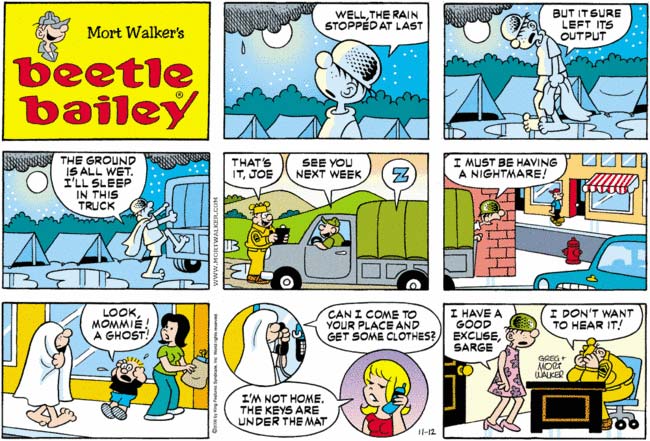
[Observe the hilarity ensuing all over the place in this episode of
Mort Walker's
Beetle Bailey, and try not to hurt yourself laughing.]

476 CE - Roman Emperor Romulus Augustulus was deposed and Odoacer was declared King of Italy; this event is generally regarded by historians as the fall of ancient Rome, the demise of the Western Roman Empire, and the beginning of the Middle Ages in Western Europe.

626 CE - Li Shimin, posthumously known as Emperor Taizong of Tang, assumed the throne of China's Tang Dynasty following the death of his father Li Yuan, who was himself posthumously known as Emperor Gaozu; together they are considered the co-founders of the dynasty.

1260 - The Sienese Ghibellines - supported by the forces of King Manfred of Sicily, his commander Farinata degli Uberti, and (nominally, at least) the Holy Roman Empire - defeated the Florentine Guelphs (supporting Pope Alexander IV) at the Battle of Montaperti, which was itself part of the larger ongoing conflict between the Guelphs and Ghibellines in Italy; the action gained a certain notoriety for an act of treachery that turned the tide of the battle, which was immortalized by Dante Alighieri in his poem Divine Comedy.

1725 - France's King Louis XV married Polish princess Maria Leszczyńska.

1781 - Los Angeles was founded by a group of forty-four settlers known as 'los Pobladores'; the city's original name was El Pueblo de Nuestra Señora la Reina de los Ángeles de Porciúncula.

1812 - The Battle of Fort Harrison began when the fort - near Terre Haute, Indiana - was set on fire by a combined force of Miami, Potawatomi, Kickapoo, and Winnebago raiders led by Joseph Lenar and Stone Eater; although the siege would last for nine days, it would also provide the US with its first victory on land in the War of 1812 and it's commander, Zachary Taylor, a lot of swell war stories to tell when he was later successfully campaigning to become the republic's 12th President.

1870 - France's Emperor Napoleon III was deposed and the Third Republic was declared, just two days after he'd been captured by German forces at the Battle of Sedan during the Franco-Prussian War. The last Emperor of France, Charles-Louis-Napoléon Bonaparte had also been that country's first president (between December 1848 and December 1852, at which time he was promoted to Emperor).

1886 - After almost 30 years of fighting in the Indian Wars, Apache leader Geronimo and his remaining warriors surrendered to General Nelson Miles at Arizona's Skeleton Canyon; today there is a monument at the site where the surrender took place.

1888 - George Eastman's Kodak camera was patented; Eastman's innovation would bring photography to the masses, and his other invention - roll film - would be the single greatest innovation in photography until the advent of digital technology rendered it obsolete more than a hundred years later.

1919 - Mustafa Kemal Atatürk, founder of the Republic of Turkey, gathered a congress in Sivas comprising members of the Turkish National Movement to make decisions as to the future of Anatolia and Thrace.

1923 - The first US airship, the USS Shenandoah - which famously crashed and burned one day shy of two years later - had its maiden flight.

1948 - Queen Wilhelmina of the Netherlands abdicated.

1949 - The so-called Peekskill Riots erupted in Van Cordtlandville, New York, following a concert by Paul Robeson. The only other thing that's ever ever happened in Peekskill was that one time on The Facts of Life when Tootie bought a bong. Remember, and Mrs. Garrett got so mad? Good times*...

*Not to be confused with Good Times, which was an entirely different sitcom.

1950 - Mort Walker's comic strip Beetle Bailey made its newspaper debut; Walker's other offering, Hi and Lois, appeared in 1954.

1957 - The Wolfenden Report was released, advocating the decriminalization of homosexual acts between consenting adults in the United Kingdom; the report had been prompted by several high-profile court cases involving gay men, such as that of Peter Wildeblood.

1964 - Scotland's Forth Road Bridge - near Edinburgh - officially opened.

1970 - Salvador Allende was elected President of Chile.

1984 - (Neo)Conservative Brian Mulroney was elected Prime Minister of Canada for the first time.

1998 - Google was founded by Larry Page and Sergey Brin, two students at Stanford University. All hail the Great Google!
*
share on: facebook

Friday, September 03, 2010

"Composed upon Westminster Bridge, September 3, 1802" by William Wordsworth

Photobucket

Earth has not anything to show more fair:
Dull would he be of soul who could pass by
A sight so touching in its majesty:
This City now doth, like a garment, wear
The beauty of the morning; silent, bare,
Ships, towers, domes, theatres, and temples lie
Open unto the fields, and to the sky;
All bright and glittering in the smokeless air.
Never did sun more beautifully steep
In his first splendour, valley, rock, or hill;
Ne'er saw I, never felt, a calm so deep!
The river glideth at his own sweet will:
Dear God! the very houses seem asleep;
And all that mighty heart is lying still!
*
share on: facebook

"Dum" by Vivek Oberoi


My ongoing fascination with Bollywood superstar Vivek Oberoi is now entering its fourth year; although his only previous appearance on the Pop Culture Institute came when he was awarded the distinctly dubious honour of the Gratuitous Brunette* - all the way back in April 2007, before I'd hit on the brilliant idea of posting such things on people's birthdays - I'm always looking for new and subtle ways to work this lovely man's face and work into the mix...

He appears here today on the occasion of his 34th birthday, performing the title track to a film he made in 2003. I gather from the reviews at Amazon that the movie is about a one-man crusade to rid the police force of corruption. While dancing.

Sounds good to me!

*He was, in fact, one of the first to receive this accolade (or should I call it an ecch-olade?).
*
share on: facebook

Pop History Moment: The Death of Oliver Cromwell

A poll conducted in the UK in 2002 named Oliver Cromwell among the Top Ten Greatest Britons of all time...

Photo Sharing and Video Hosting at PhotobucketReally? A crusader for liberty of conscience who viciously suppressed all religions but his own. A so-called Republican who killed a King only to have His Late Majesty's titles and privileges (and power and income, let's not forget) showered upon himself (and who later passed his rule on to his son, despite an earlier disavowal of the hereditary principle.) A devoted Parliamentarian who once in power acted towards that body as 'cavalierly' as had his predecessor. A man who talked a big game when it came to liberty but who nevertheless ruthlessly conquered Ireland. Besides which savagely suppressing the arts by closing London's theatres, single-handedly not just ending the English Renaissance but setting it back.

Really? This is a great man? This murdering thug and hypocrite, who cloaked his greed in religion, and couldn't even be bothered to obey the First Commandment?

His death - on this day in 1658 - could easily be considered his greatest act. The Irish may take some solace in knowing it was they who may have indirectly caused it; he died of malaria, which he likely contracted while campaigning in Ireland. He also received terrible medical attention, since during his Protectorate many of the better doctors fled London and indeed England for some reason.

It turns out the best thing that can be said about Oliver Cromwell was spoken by the Earl of Clarendon as long ago as 1667 - according to Clarendon, he was 'a brave bad man'. May we never see his like again.
*
share on: facebook

POPnews - September 3rd

Photobucket
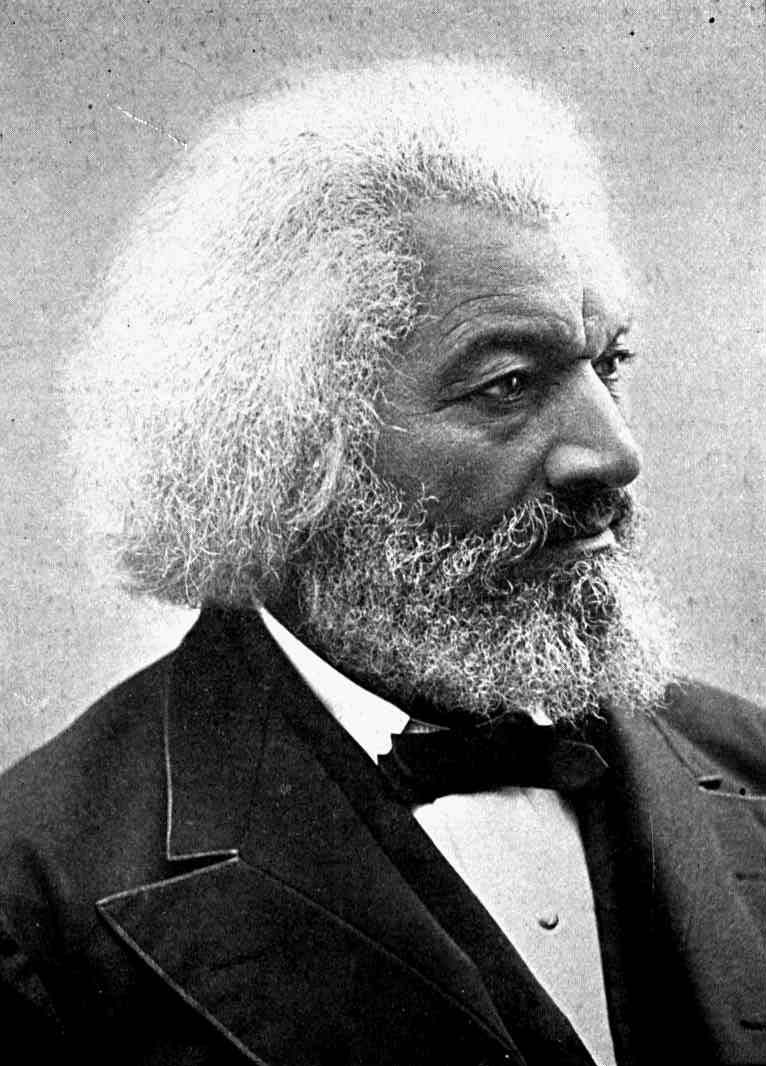
[Frederick Douglass escaped slavery via train and ferry, taking
24 hours to travel from Maryland to New York City dressed
as a sailor and using another man's identification papers.
]


36 BCE - At the sea-going Battle of Naulochus - fought off the coast of Sicily, oddly enough near Naulochus - Octavian's admiral Marcus Vipsanius Agrippa defeated Sextus Pompeius, son of Pompey, thus ending Pompeian resistance to the Second Triumvirate and (not inconsequentially) freeing up a vital portion of Rome's grain supply.

301 CE - The Republic of San Marino was founded by its namesake, St. Marinus.

590 CE - Gregory I was elected Pope to replace the recently deceased Pelagius II.

1189 -England's King Richard I (since better known as 'Richard the Lionhearted') was crowned at Westminster Abbey; not only was his coronation marred by anti-Semitic violence - notably killed in sectarian attacks that day was the scholar Jacob of Orléans - but owing to his involvement in the Crusades, the King would spend a scant ten months of his ten-year reign in his kingdom, allowing his brother John pretty much free reign to hone his already considerable skills as an absolute douchebag monarch.

1777 - During a skirmish between British/Hessian and American forces at Cooch's Bridge in New Castle County, Delaware - known as the Battle of Cooch's Bridge* - the Stars and Stripes was flown in battle for the first time; while technically an American loss, the battle was an unqualified victory for the nascent nation's propagandists, who've been waving the flag over battlegrounds ever since.

*Incidentally, the only battle of the American Revolution to be fought in Delaware.

1783 - The American Revolution was officially concluded with the signing of the Treaty of Paris by Americans John Adams, Benjamin Franklin, and John Jay and British emissary David Hartley at the Hotel d'York in Paris.

1812 - 24 settlers were killed by Shawnee raiders near Underwood, Indiana, in what came to be known as the Pigeon Roost Massacre; the location of the killings, which occurred shortly after the opening of the War of 1812, is now a State Historic Site.

1838 - Frederick Douglass stole his freedom.

1870 - Prussia's Second Army under Prince Friedrich Karl undertook the Siege of Metz, which would result in a decisive Prussian victory in the Franco-Prussian War against the defenses of Metz when France's Marshal François Bazaine finally surrendered on October 23rd.

1878 - Over 640 people died when the crowded pleasure boat Princess Alice collided with the coal ship Bywell Castle within sight of London's North Woolwich Pier; owing to severe pollution in the River Thames many of those who didn't die on that day perished in the subsequent months.

1914 - William, Prince of Albania left the country after just six months due to opposition to his rule.

1925 - The American zeppelin USS Shenandoah crashed near Caldwell, Ohio, killing 14 - including its commander, Zachary Lansdowne.

1935 - Sir Malcolm Campbell became the first person to ever drive a car faster than 300 mph.

1951 - Search for Tomorrow made its TV debut on CBS; it would be broadcast for 35 years, not going off the air until 1986.

1967 - On what came to be known as Dagen H in Sweden, traffic changed from driving on the left to driving on the right overnight; to be more precise, the change-over occurred at 4:50 AM.

1971 - Qatar gained its independence from the United Kingdom.

1976 - The Viking 2 spacecraft landed at Utopia Planitia on Mars.

1995 - eBay was founded.

2004 - Day 3 of the Beslan school hostage crisis ended with the deaths of more than 300 people, over half of whom were children.
*
share on: facebook

Thursday, September 02, 2010

Guy Laliberte: Visionary


Cirque du Soleil founder Guy Laliberte - born on this day in 1959 - had a dream, and he followed it; what makes him a visionary isn't that he had the dream in the first place, but that he followed it at all...

Given how zealously the powers-that-be in all the arts guard access to their respective establishments, accomplishments like Laliberte's are certain to become increasingly rare in the coming years. Likewise, to a generation raised on being told yes - namely my own - the amount of rejection heaped on artists early in their careers as a matter of course is certain to dissuade untold numbers of budding young geniuses to take up bookkeeping to feed their bellies, and so to let their souls wither from malnourishment.

It is the most fervent wish of the Pop Culture Institute that new media will not be similarly overtaken by degree snobs and cultural bureaucrats, so that dreamers like Guy Laliberte can continue to inspire us all based on merit, rather than connections.
*
share on: facebook

In Memoriam: Lili'uokalani

It hasn't been that long, as these things go, since Hawai'i was a sovereign nation - whether as a loose association of chiefdoms in the Polynesian manner, as a Kingdom (during Hawai'i's earlier 'British' period), or as a Republic immediately prior to its annexation by the US.

Photo Sharing and Video Hosting at PhotobucketThough Queen for less than two years before the monarchy was abolished by US President Grover Cleveland, Her Majesty is still fondly remembered today, most notably by a statue of her in the grounds of the state house in Honolulu; the nearby 'Iolani Palace owes much of its splendour to her efforts.

Nevertheless the reign of Lili'uokalani was marred by a certain inflexibility on her part, especially given that she spent most of it staring down the barrels of American cannons. Even though her overthrow was eventually determined illegal by the Blount Report issued by the US Congress, the Queen refused amnesty to those involved, and her ouster was maintained.

Lili'uokalani was probably a better writer and composer than Queen, given her disdain for diplomacy; one of the songs she wrote, Aloha 'Oe, is probably the most famous song in the Hawaiian language. Chances are, in a film or TV show depicting Hawaii, the lilting strains of the song (and thus a remnant of the soul of its last Queen) will accompany the establishing shot.

Born on this day in 1838 - the daughter of High Chieftess Analea Keohokalole and High Chief Caesar Kaluaiku Kapaʻakea but adopted at birth by Abner Pākī and his wife Laura Kōnia according to Hawai'an custom - Hawai'i's last sovereign Liliʻuokalani died in November 1917.
*
share on: facebook

Remembering... Russ Columbo

Although he was one of the biggest stars in the world on the day he died, Russ Columbo is barely remembered today, despite the truly bizarre circumstances surrounding his demise, which if nothing else ought to have assured his enduring fame; fortunately, recent scholarship is reviving interest in both the man and his legend...

Photo Sharing and Video Hosting at PhotobucketThe handsome singer and violinist - lover of Carole Lombard and like her a film star and object of much fervent adulation - was accidentally shot and killed on this day in 1934. He was 26.

While visiting his friend the photographer Lansing Brown at his studio, Columbo tried to light his cigarette by striking a match against the stock of an antique pistol. Heat from the match set off a long-forgotten charge inside the gun. The bullet ricocheted off a table and shot Columbo in the left eye, killing him instantly.

Brown was later cleared of any wrongdoing, but the death of his friend scarred him for life; Lombard, already a highly emotional sort, was said to be inconsolable for months.

Recordings of Russ Columbo's crooning are somewhat rare, and those held in the collection at the Pop Culture Institute are highly treasured for this very reason. His signature tune You Call It Madness, But I Call It Love especially shows off Columbo's smooth baritone, not to mention his gifts as a peerless interpreter of pop music.
*
share on: facebook

Gratuitous Brunette: Keanu Reeves

Photo Sharing and Video Hosting at Photobucket

Whether or not birthday boy Keanu Reeves is a good actor is beside the point. Since such an assessment is necessarily subjective, as long as you've been moved by one of his performances he's good; if, even after you've watched him acting up a storm, you remain unmoved, then you can choose to blame it on his lack of talent. Or...

There's another theory, which I alone may hold: it's entirely possible that he was simply born with a modern voice. Such an affliction might have never been noticed if only his ambition as an actor didn't drive him to play historical characters. It's an illness which afflicts many of Hollywood's brightest stars; if you don't believe me, watch Kate Hudson in Almost Famous and then in The Four Feathers.

Bill & Ted's Excellent Adventure, My Own Private Idaho, even The Matrix; I enjoyed all of them. Yet every time he opens his mouth in Dangerous Liaisons, Bram Stoker's Dracula, or Much Ado About Nothing I can barely suppress my gag reflex. I have yet to see Little Buddha all the way through for this very reason.

Until such time as a cure is discovered, it's the recommendation of the Pop Culture Institute that he stick to the contemporary and sci-fi movies; they serve him far better than any costume picture ever has, no matter how good he might look in a doublet and hose...
*
share on: facebook

Now Showing: "Yes, Prime Minister"


In reviewing all of the episodes of Yes, Prime Minister (strictly for research purposes, of course, in order to select a suitable one to post here) I came across this one; entitled The Key, it's actually the fourth of eight in that show's first series, and was originally aired on January 30th, 1986.

Yes, Prime Minister, of course, was the sequel to Yes, Minister - both of which programs were deftly written by Antony Jay and Jonathan Lynn - and all of which follow the career of Jim Hacker MP (brilliantly played by the equally brilliant Paul Eddington) over 38 episodes as he fails upward from the back bench to 10 Downing Street. In my heart of hearts, I always wanted to see a third series, Yes, M'Lord, that would have followed Hacker into the House of Lords, but it was not to be...

A n y w a y ... The reason I chose to post this episode is that it features a bit of role reversal; not only is Hacker more masterful than bumbling for once, Sir Humphrey Appleby (played by Nigel Hawthorne) loses his usual supercilious cool and Bernard Woolley (played by birthday boy Derek Fowlds) is forced to stand up to Sir Humphrey when normally he would never do such a thing. Hilarity generally ensues on this show, but on this episode it ensues even more!


It seems that the Prime Minister's political advisor Dorothy Wainwright (Deborah Norton) has lost her prime office space to the machinations of Sir Humphrey. By and by, as these things go in this elegantly constructed Whitehall farce, Sir Humphrey manages to find himself hoisted on his own petard.


For proof of the unifying power of quality art - even if it is 'only a sitcom' - consider that not only is this show one of my favourites of all time but it was also the favourite of Margaret Thatcher. As much as I am loath to admit to any common ground between us (the more I read about her the more I've begun to suspect that we're not even the same species) I am forced to accept that this is one of them*.

Both Yes, Minister and Yes, Prime Minister are available in their remastered, commercial-free, glory on DVD.

*In the interest of full disclosure, my support for the pound over the euro is almost the only other.
*
share on: facebook

Pop History Moment: The Great Fire of London

Photobucket

As long ago as 60 CE - when Boadicea, Queen of the Iceni, first burned what was then called Londinium to the ground - Londoners were well aware of the risk posed to their city by fire. That particular blaze of hers was so successful that modern-day archaeologists still use the layer of ash it produced to determine the age of any new findings beneath the ancient city. Again and again - in 675, 1087, 1133, and 1212 - the city's warren of narrow streets and wooden buildings have succumbed to ravaging flames...

What started at Thomas Farriner's bakery in Pudding Lane just after midnight on this day in 1666 would, within three days, leave 70,000 of the city's 80,000 inhabitants homeless; having destroyed more than 13,000 homes, 87 churches (including Old St. Paul's Cathedral), and all administrative and government buildings, the fire was kept from Westminster (and so spared both Whitehall and Parliament) only after stores of powder held in the Tower of London were used to create fire breaks. Despite the toll the fire took on the city's infrastructure, there were relatively few deaths directly related to the fire.

Although much has been written about the Great Fire which devastated most of London in 1666, the account of record is still that of Samuel Pepys. His gossipy, slightly bemused accounts of life in London before, during, and after the Great Fire are great fun to read; they are available online here (as well as permanently in the blogroll at right) but have yet to come to the descriptions of the fire that would establish his reputation posthumously.

From the ash and cinders of the medieval city consumed by the mighty conflagration arose the London we know today, including a new St. Paul's Cathedral whose dome refused to fall even under a much worse threat than fire, namely bombardment by the Luftwaffe nearly 400 years later*. Bubonic plague, which had, well, frankly plagued the city in 1665, never did return with the same ferocity again - providing the silver lining to the clouds of smoke and ash that hung over the smoking ruins of medieval London.

Much of the area known today as the City of London was rebuilt by Sir Christopher Wren over the next half century, supervised of course by Charles II, James II, William and Mary, and Queen Anne each in their turn. The fire is commemorated today by the Monument to the Great Fire of London, located near the site where the fire began.

*In fact, the events of December 1940 have been referred to as the Second Great Fire of London.
*

share on: facebook

POPnews - September 2nd

Photobucket
[A memorial to the victims of Swissair Flight 111 was placed on The
Whalesback, a promontory 1 km north of Peggys Cove, Nova Scotia.
]

44 BCE -Egyptian Pharaoh Cleopatra declared her three-year-old son Caesarion co-ruler of Egypt as Ptolemy XV.

31 BCE - The Battle of Actium, the decisive battle of the Roman civil war, saw the forces of Octavian defeat the combined fleets of Mark Antony and Cleopatra off the coast of Greece near modern-day Preveza. As a result of their loss the lovers would individually take their own lives; Octavian later killed Caesarion, Cleopatra's son by Julius Caesar, to ensure no challenges remained to his reign as Caesar Augustus.

1649 - The Pope Destroyed Castro! (Okay, okay... It was Pope Innocent X, and the Castro in question is a town in Italy, but I made you look.) Anyway, despite the fact that the siege ended the so-called Wars of Castro, the Vatican's very real war on a very different Castro persists to this day...

1752 - The United Kingdom adopted the Gregorian Calendar, nearly two centuries later than most of Western Europe; that year September 2nd was followed by September 14th.

1789 - The US Department of the Treasury was founded; the first Secretary of the Treasury was Alexander Hamilton, who'd been suggested for the position by Robert Morris, who himself declined it despite being President George Washington's first choice.

1792 - During what became known as the September Massacres of the French Revolution, rampaging mobs slaughtered three Catholic bishops, more than two hundred priests, and prisoners believed to be royalist sympathizers.

1807 - England's Royal Navy bombarded Copenhagen with fire bombs and phosphorus rockets to prevent Denmark from surrendering its fleet to Napoleon.

1833 - Ohio's Oberlin College was founded by John Shipherd and Philo P. Stewart.

1867 - Mutsuhito - the Meiji Emperor of Japan - married Masako Ichijō, following which the Empress consort was known as Lady Haruko; since her death in April 1914, she's been known by the posthumous name - as per the tradition of Japanese royalty - of Empress Shōken.

1898 - At the Battle of Omdurman British and Egyptian troops commanded by General Sir Horatio Kitchener defeated Sudanese tribesmen led by Abdullah al-Taashi and established British dominance in the Sudan.

1901 - US Vice President Theodore Roosevelt uttered his famous phrase, 'Speak softly and carry a big stick' at the Minnesota State Fair; henceforth Big Stick Ideology would provide a handy corollary to the Monroe Doctrine, allow for the establishment of an American Empire, and give rise to the impression that, diplomatically at least, the United States is something of a bully.

1935 - The worst hurricane in American history struck the Florida Keys, killing 423.

1945 - Envoys from the Empire of Japan and dignitaries from various Allied nations attended the signing of Japan's Instrument of Surrender aboard the battleship USS Missouri in Tokyo Bay; the first to sign was Japan's Foreign Minister Mamoru Shigemitsu.

1960 - The historic first election of the Parliament of the Central Tibetan Administration was conducted; the Tibetan community in exile still observes this date as Democracy Day.

1967 - A micronation called The Principality of Sealand, ruled by Prince Paddy Roy Bates, was established on a disused Maunsell Sea Fort located off of England's Suffolk coast.

1969 - America's first electronic ATM was installed at Rockville Center, New York.

1979 - The body of a young woman named Barbara Leach, thought to be the twelfth victim of the so-called Yorkshire Ripper, was discovered in an alley near the centre of Bradford.

1990 - Transnistria was unilaterally proclaimed as a Soviet republic, which decision Mikhail Gorbachev declared null and void by presidential decree the following December.

1998 - Swissair Flight 111 crashed near Peggys Cove, Nova Scotia, killing all 229 on board.
*
share on: facebook

Wednesday, September 01, 2010

Now Showing: Georges Méliès' "A Trip To The Moon"


Believe it or not, this is the very first science fiction movie; Le Voyage dans la lune by Georges Méliès made its debut on this day in 1902.

No doubt contemporary critics felt that the filmmaker relied a little too heavily on special effects, and that, since the film was silent, the dialogue also sucked. Damn critics...

Anyway, it's shown here with a simple narration, some sound effects, and music.
*
share on: facebook

Pop History Moment: Terry Fox Ended His Marathon of Hope

Photo Sharing and Video Hosting at Photobucket

Few people in history have been as universally loved and admired as Terry Fox; even now, more than a quarter century after his death, I defy you to find anyone who met him who has anything bad to say about him. A 1983 HBO movie about Fox, which depicted him as ill-tempered, was savaged by all those close to him, and even as unrepentant a cynic as yours truly still cannot help but be affected by his vigourous dignity.

Diagnosed with osteosarcoma in 1977 (which may have been triggered by an earlier car crash) Fox later had his right leg amputated above the knee. Rather than the end of his life, he seemed to treat it as just the beginning...

In April 1981 Terry Fox dipped his foot into the Atlantic Ocean near St. John's, Newfoundland. He then proceeded to run 42 km - or 26 miles, the length of a marathon - every day, to raise funds for cancer research. Over the next 143 days he ran 5,373 kilometres.

Even though it was his intention to run across the country, as he passed through northern Ontario his energy began to flag; x-rays revealed sizable tumours in each of his lungs, and on this day in 1980 he was forced to quit. He had just made it to Thunder Bay, about halfway home.

When he died the following June, just shy of his 23rd birthday, it was like everyone in Canada died a little too. For his sake, though, the country and the Marathon of Hope have persisted. To date more than $400 million has been raised in his name on the annual Terry Fox Run, and unlike with his initial effort, there's no end in sight to this one.
*
share on: facebook

In Memoriam: Ann Richards

While she was still governor of Texas, Ann Richards became one of the first people to warn the world about George W. Bush; unfortunately, nobody believed her, or anyway, too few.

Photo Sharing and Video Hosting at PhotobucketBush defeated Richards* in the 1994 Texas gubernatorial race, a victory which seemed to surprise even him; in the aftermath she praised his ability to stay on message, which was even then very much the trademark of Bush's favoured toady strategist, Karl Rove. Apparently she was too classy to comment on that other Rove standby, the smear campaign, which gave Bush the narrow margin he got.

Having lost a governor in Texas, the Democratic Party gained a charismatic and popular speaker. Throughout the mid- to late-90s Ann Richards could always be counted on to stump for progressive candidates. Her interest in and advocacy on behalf of education reform, substance abuse, and the arts earned her kudos across the board, as did her work on behalf of social issues like gay rights.

Born on this day in 1933 Ann Richards died in September 2006, following a brief battle with esophageal cancer; she was 73.

*Actually the second female governor in the history of Texas, after Miriam 'Ma' Ferguson.
*

share on: facebook

"Dis-moi, Dis-moi" par Mitsou


In 1991, during the year-and-a-bit between the release of Justify My Love and Erotica, Mitsou - the Madonna of Quebec, born on this day in 1970 - made this wholesome little video which positively scandalized executives at music channels around the globe. It was more heavily banned than played, Mitsou lost out on an American recording contract, and poof!... No more Mitsou.

The next time she tried her hand at scandal was in 1993, with a song written by RuPaul, but helas trying to force a scandal only works if you're the actual Madonna. Even though she's been acting more lately, Mitsou (currently the host of Au Courant on Quebec television) still releases albums. None of them, though, have succeeded in returning her to the pinnacle of stardom she attained in 1988-9.
*
share on: facebook

Pop History Moment: Robert Mitchum Arrested

Photo Sharing and Video Hosting at PhotobucketIt was in the wee hours of this day in 1948 that one of the original Hollywood tough guys, actor Robert Mitchum, and starlet Lila Leeds were arrested during a drug raid at a house party in Los Angeles' Laurel Canyon; they were each found to be in possession of a small amount of marijuana.

Both went on to serve time in jail: in Mitchum's case, 43 days (out of a possible 60) at a prison farm in Castaic, California (well-documented by a photographer from Life magazine); Mitchum's conviction would eventually be overturned by the District Attorney's office when, in 1951, it was revealed that the sting had been a set-up. Lila Leeds received the same jail time as Mitchum plus five years' probation; while in jail she became a heroin addict.

Mitchum's career flourished in the wake of the scandal - thanks to the intervention of RKO studio head Howard Hughes - as it seemed to reinforce the image he'd been cultivating. Leeds' career, on the other hand, foundered - although she did later star in the exploitation B-movie She Shoulda Said No! (1949). Mitchum's death in July 1997 was mourned by le tout Hollywood, while Leeds' died, forgotten, in September 1999.
*
share on: facebook

Happy Birthday Lily Tomlin

Photo Sharing and Video Hosting at Photobucket

Her television debut - in 1965 - was on The Merv Griffin Show; four years later, Lily Tomlin was one of the stars of Rowan & Martin's Laugh-In, a genuine pop culture phenomenon which made her a star overnight. She's never looked back.

Many of the characters Tomlin introduced on Laugh-In - most notably Edith Ann, Ernestine, and my personal favourite Judith Beasley - she has continued to use in her ongoing career. The comedy albums she recorded in the 70s are much loved, and likewise her movie roles have been both varied and highly regarded; so beloved is she that when clips of her on-set battles with director David O. Russell surfaced on YouTube, he took the brunt of the criticism. Still, she was classy enough to brush it off when later questioned.

Although breathtakingly coy about her personal life (which was the biggest open secret since... Well, since Rock Hudson) Tomlin finally came out in 2000, although her narration of the 1995 documentary The Celluloid Closet, an adaptation of the landmark book by Vito Russo, is considered by many to be her actual coming out - if, in fact, she was ever in.

If you haven't had the chance to see it yet, rent the 1992 film version of her master work The Search For Signs of Intelligent Life in the Universe - a show written by her partner Jane Wagner, which she performed extensively both on Broadway and in a lengthy national tour. Often referred to as a one-women show, to call it that is an affront to its author; it is in fact a two-woman show performed by one woman and features many memorable characters. One of the best lines in the show is: 'What is reality anyway? Nothing but a collective hunch.' That line seems to sum up Lily Tomlin's world view pretty neatly.
*
share on: facebook

"Rhythm Is Gonna Get You" by Miami Sound Machine


Birthday wishes go out today to Gloria Estefan who, as lead singer of Miami Sound Machine, burst out of the then-nascent Latin music industry into the mainstream in 1985 with a little ditty called Conga, from the band's second album, Primitive Love. Rhythm Is Gonna Get You was the band's fourth Top Ten, and first from their third album Let it Loose; it went all the way to #5 on the US pop chart in 1987.

While touring in support of her first solo album, Cuts Both Ways, in March 1990 Estefan and her band were involved in a collision when their tour bus was hit by a semi-truck on a highway outside of Scranton, Pennsylvania. Following surgery and physiotherapy to heal her fractured spine - including the implantation of two titanium rods - she made a triumphant appearance on the American Music Awards in January 1991, her first since the accident; entering the theatre to the lilting strains of her new single, Coming Out of the Dark, she received an ecstatic ovation.

Needless to say, if a collision with an eighteen-wheeler wasn't going to get her, rhythm didn't stand a chance...
*
share on: facebook

POPnews - September 1st

Photobucket
[It's too late to help Martha here, but as a helpful hint to any currently
endangered species - a) don't be tasty, and b) humans suck.
]

1715 - The death of France's King Louis XIV brought to a close one of the longest reigns of any sovereign in history - more than 72 years.

1752 - The Liberty Bell arrived in Philadelphia.

1763 - Russia's Catherine the Great endorsed Ivan Betskoy's plans for a Foundling Home in Moscow.

1772 - Mission San Luis Obispo de Tolosa was founded by Junípero Serra in San Luis Obispo, California.

1807 - Former US Vice President Aaron Burr was acquitted of treason for conspiring to establish his own nation.

1836 - Narcissa Whitman, one of the first white women to settle west of the Rocky Mountains, arrived at Walla Walla, Washington.

1894 - A forest fire in Hinckley, Minnesota, which came to be known as the Great Hinckley Fire killed more than 400 people.

1897 - The Green Line of Boston's subway opened, making it the first underground metro in the United States; today it remains one of the most heavily used subway lines in the country.

1905 - The provinces of Alberta and Saskatchewan joined the Canadian confederation.

1914 - Martha, the last passenger pigeon (and named after Martha Washington), died at the Cincinnati Zoo; although today her taxidermied remains reside in the archives of the Smithsonian Institution in Washington, DC, she is not currently on display.

1923 - What came to be known as the Great Kantō Earthquake, centred on Tokyo and Yokohama in Japan, killed between 100,000 and 142,000 people and left a further 1.9 million homeless.

1928 - Ahmet Zogu declared Albania a monarchy, and named himself King Zog.

1939 - Nazi Germany invaded Poland, precipitating the deadliest armed conflict of modern times and indeed of all time; more than 70 million people, most of them civilians, died as a result of the hostilities of World War II.

1969 - A revolution in Libya brought Moammar Khadaffy to power, deposing King Idris I in the process; although he holds no official title in Libya he remains, to this day, owner of the least spellable name in the world.

1970 - Several attempted assassinations of King Hussein by members of the Palestine Liberation Organization were thwarted, at the start of what became known in Jordan as Black September.

1982 - Canada adopted a Charter of Rights and Freedoms as part of its Constitution; the inspiration of Liberal Prime Minister Pierre Trudeau, the Tories have been trying to undermine it for years, to no avail.

1985 - A joint American-French team led by Jean-Louis Michel of IFREMER and Dr. Robert Ballard out of the Wood's Hole Oceanographic Institution in Massachusetts discovered the wreckage of the RMS Titanic.

1991 - Uzbekistan seceded from the Soviet Union.

2004 - Chechen separatists and Islamic fundamentalists took more than 1200 people - many of them schoolchildren - hostage in the town of Beslan, Russia; according to official counts, 344 civilians (including 186 children) were killed during two days of heavy fighting, and hundreds more were injured.
*

share on: facebook