Monday, January 10, 2011

The House of Grimaldi: The Death of Honoré II

It was under the rule of Honoré II that the Lords of Monaco became Princes, which titular distinction they still hold today; other than that, an eerie resemblance to Ron Jeremy and a brief biographical outline are about all that we know about the first royal Grimaldi. Yet within those few details of a life is enough excitement for several Hollywood films - or else one European one...

PhotobucketBorn on Christmas Eve 1597 to Hercule, Lord of Monaco, and Maria Landi, Honoré's father was murdered when the boy was just six, at which time he ascended to the throne of Monaco under the stewardship of his uncle Frederico Landi, prince of Val di Taro; his uncle's loyalty to the Spanish meant that Monaco would be occupied by Spanish troops, which occupation would endure until 1614.

Monaco's traditional allegiance with France was later upheld by Honoré II, who sought the support and protection of Louis XIII, resulting in the Treaty of Péronne in 1641; as a result of this, Honoré lost his Spanish titles, for which he was compensated with the title Duke of Valentinois, a title still borne by the Princes of Monaco today.

In February 1616 Honore married Ippolita Trivulzio, which marriage resulted in the births of at least four children: Louis, Maria Ippolita, Giovanna Maria, and Teresa Maria. Honoré II died on this day in 1662, at which time he was succeeded by his son, who became Louis I.
*
share on: facebook

"We Belong" by Pat Benatar


In the video for We Belong, from her 1984 album Tropico, Pat Benatar is great with child; a rare ballad for the leather-lunged Queen of Stadium Rock, the song was her last major hit. Still, it's a pretty good swan song for a career that entailed thousands of concert appearances and millions of records sold; which makes it the ideal song to finish out a hat trick of videos for her birthday.
*
share on: facebook

In Memoriam: Sal Mineo

His breakthrough role in the film Rebel Without A Cause (1955) is haunting still, likely because his own tragic end contributed in its way to the film's reputed 'curse'; like Mineo himself, his costars James Dean and Natalie Wood also met untimely deaths.

PhotobucketBorn in The Bronx on this day in 1939, Sal Mineo began attending acting and dancing schools at a young age with the support of his mother; he appeared on Broadway in Tennessee Williams' play The Rose Tattoo (1950) and opposite Yul Brynner and Gertrude Lawrence in The King and I (1951).

Following the success of Rebel it was easy for Hollywood to typecast him, and he subsequently played a string of juvenile delinquents, even though his character in that film was no delinquent himself. Late in his career he was still being typecast, more often than not as outright criminals.

Mineo recorded a string of songs in the mid-Fifties - two of which went as high as the Top 40 - and later he further demonstrated his musical abilities by playing the drummer Gene Krupa in the 1957 movie The Gene Krupa Story. As suddenly as his star had risen, though, so did it fall; his last film role came after a long respite from Hollywood (during which time he appeared in plays and on television) when he played Dr. Milo in Escape from the Planet of the Apes (1971).

Mineo was murdered in February 1976 during a botched mugging; his killer, Lionel Ray Williams, was sentenced to life in prison but was paroled in 1990.
*
share on: facebook

The Late, Great Paul Lynde

These twinks today have it so easy; they have so damn many role models it isn't even funny. When I was earning my fairy wings in the Seventies all we had were Charles Nelson Reilly and Paul Lynde; fortunately for all concerned, though, both of them were hilariously funny.

PhotobucketWhile I loved them both like the gay uncles I never had (and one day hope to become) Lynde was by far my favourite, probably because he was more overtly bitchy; it took me a long time to get over that predilection. There are those who might say I have a long time yet - these are the real bitches.

In addition to his portrayal of Uncle Arthur on Bewitched, Lynde became notorious for his appearances on Hollywood Squares, in which he was so camp they could have changed his name to KOA. His caustic one-liners are today the stuff of legend.

When he died, on this day in 1982, his body was discovered by Paul Barresi, a man who would later have as great an impact on my adult life as Paul Lynde had on my childhood. Lynde was only 55 at the time, but the coroner who examined him said his heart was that of a man in his 80s; a lifetime of drinking (and, it was rumoured, amyl nitrate) meant that one of the funniest men of the 20th Century likely self-medicated himself to death.
*
share on: facebook

"Shadows Of The Night" by Pat Benatar


From Pat Benatar's 1982 rock/New Wave hybrid album Get Nervous, it's Shadows of the Night, with its cool WWII-era inspired video, costarring the then-unknown actors Judge Reinhold and Bill Paxton; keeping in mind, this video was released two years before Jonathan Demme's film Swing Shift, starring Goldie Hawn and Kurt Russell, with which it shares an ethos.
*
share on: facebook

Remembering... Paul Henreid

In the 1942 film Now, Voyager - a perennial favourite of ours here at the Pop Culture Institute - suave European Paul Henreid romanced the plain Boston spinster right out of Bette Davis and left in her place a soigne Back Bay socialite; in the process he committed one of the greatest moments in the American cinema to celluloid. By lighting two cigarettes at the same time and handing one to her, he made a necessarily chaste scene - especially in light of that era's repressive on-screen censorship - undeniably erotic...

PhotobucketLater that year he played Victor Laszlo, the hero Ingrid Bergman would have forsaken for the cad played by Humphrey Bogart but - in the end, and due entirely to Bogie's sacrifice - didn't, in Casablanca. It was a role with which Henreid was already familiar, having escaped deportation from England to his homeland (and almost certain incarceration) thanks to the intercession of his colleague Conrad Veidt.

Few careers in Hollywood have opened with that kind of one-two punch; while none of his subsequent work would be as beloved as these two roles, his success in them afforded Henreid - born in Austria on this day in 1908 - that most priceless of assets: star quality.

Which is not to say that Henreid wasn't admired right up until his death in March 1992; he's one of the few people to have received two stars on the Hollywood Walk of Fame, one for film and another for television.
*
share on: facebook

Pop History Moment: The London Underground Opens

Photobucket

It was on this day in 1863 when, thanks to the efforts of Charles Pearson, Londoners first began minding the gap...

The original portion of the Underground (popularly known as the Tube), ran between Paddington and Farringdon; it's still in service today as part of the Hammersmith and City line, and is coloured salmon on current maps.

30-40,000 passengers were carried that first day, on steam-powered trains which ran every ten minutes; electric trains were first introduced in 1890. From those humble beginnings, the London Underground has grown into the longest in the world, with 400 km (250 miles) of track serving a similarly record-setting 270 stations, which between them see 1 billion passengers every year*. Understandably, with that many users, the tube map itself has become as iconic as the symbol you see above.

*Only the systems in Paris and Moscow see more.
*
share on: facebook

"Love Is A Battlefield" by Pat Benatar


It was one of the MTV era's first smash hits, a story video so perfectly melded with a solid pop-rock song that even today, if played at any venue where Gen-Xers are assembled, all will fall into its dance steps as if by habit.

Love is a Battlefield featured the first electronic elements of any Pat Benatar song, signalling the deep inroads European pop had made into the world of American rock; originally appearing on her 1983 album Live from Earth both the song and the video were so popular as to be ubiquitous.
*

share on: facebook

Happy Birthday Pat Benatar

Photobucket

Every so often there's an event here at the Pop Culture Institute that gets me as excited as Dick Cheney at a Halliburton shareholders' meeting; today it's the birthday of a woman whose incendiary voice and incandescent stage presence blazed a trail for women in music...

The 1970s was the era of cock rock: big hair, tight clothes, soaring falsettos... And those were the men! In the midst of it all - 1977 to be exact - came a diminutive Polish-Irish hybrid from Staten Island who showed everyone (regardless of chromosomes) how it was done.

In 1979 Pat Benatar's debut single Heartbreaker raced up the charts; that first album, In the Heat of the Night, also yielded the single We Live For Love. The hits continued: 1980's Crimes of Passion gave us Treat Me Right, You Better Run, Hell Is For Children, a cover of Kate Bush's Wuthering Heights, and a single so blazing it still has the power to wow: Hit Me with Your Best Shot.

Having not merely overcome her sophomore slump but kicked it to death, Benatar and her guitarist husband Neil Giraldo continued to churn out the hits; 1981's Precious Time featured Fire & Ice and Promises in the Dark, and 1982's Get Nervous Anxiety (Get Nervous), Looking For a Stranger, Little Too Late, as well as that year's ubiquitous Shadows of the Night.

In 1983 Benatar brought her live show to all those who couldn't get to it, with the album Live from Earth, which featured 2 studio tracks, including her masterwork Love is a Battlefield; that single also appeared in 1984's Tropico, along with We Belong.

By the time her seventh album in seven years - aptly entitled Seven the Hard Way - appeared it was time for Benatar to pull back. After promoting the singles Sex as A Weapon and Invincible (which was far more memorable than the movie it was written for, The Legend of Billie Jean) Benatar took three years off to rest and spend time with her young family.

Since then she's released five more albums, only one of which charted any singles - All Fired Up, from the 1989 compilation album Best Shots, was big in the UK - even as they charted new territory for her artistically. Currently she lives in a remote location on Maui, where she farms organically with her husband and two daughters, Haley and Hana.
*
share on: facebook

POPnews - January 10th

Photobucket
[Even though some of his adventures are unavailable due to the censorious nature of political correctness, those Tintin books still being reprinted continue to delight fans more than eighty years after they first began appearing.]

49 BCE - Julius Caesar crossed the Rubicon, sparking both a civil war and a cliché.

681 CE - Pope Agatho died; he was succeeded by Leo II who, although he'd been elected shortly after his predecessor's death, wouldn't be crowned until August of the following year.

1276 - Pope Gregory X died; he was succeeded by Innocent V eleven days later.

1475 - Moldavia's Prince Stephen III defeated the Ottoman Empire's Hadân Suleiman Pasha at the Battle of Vaslui, near the town of Vaslui in what is now eastern Romania.

1645 - Archbishop of Canterbury William Laud was beheaded at the Tower of London for opposing Puritanism and for his support of King Charles I.

1662 - Monaco's ruling Prince Honoré II died; he was succeeded by his son, Louis I.

1776 - Thomas Paine published his famous pamphlet Common Sense.

1810 - The marriage of Napoleon Bonaparte and Josephine de Beauharnais was annulled.

1842 - Sir Charles Bagot arrived in Kingston to become Governor-General of what was then the newly-created Province of Canada, succeeding Lord Sydenham; although ordered by the British government to resist the colonist's demand for responsible government, Bagot did allow Robert Baldwin and Sir Louis-Hippolyte Lafontaine to form a ministry on the basis of their parliamentary majority.

1863 - The London Underground, the world's oldest underground railway, opened between London Paddington station and Farringdon station.

1901 - The first great Texas oil gusher was discovered at Spindletop in Beaumont.

1922 - Arthur Griffith was elected President of the Irish Free State.

1927 - Fritz Lang's cinematic masterpiece, Metropolis, had its world premiere in Berlin.

1929 - The comic book character Tintin, by Hergé, made his debut in Tintin in the Land of the Soviets.

1942 - Elizabeth Monk and Suzanne Pilon became the first female lawyers in Quebec.

1957 - HM The Queen invited Chancellor of the Exchequer Harold Macmillan to become Prime Minister of Great Britain following the resignation of Sir Anthony Eden over his mishandling of the Suez Crisis.

1962 - As part of its Apollo Project, NASA announced plans to build the C-5 rocket booster, which later became better known as the Saturn V moon rocket, and which would be used to launch all 17 Apollo moon missions.

1971 - Masterpiece Theatre premiered on PBS.

1982 - The Freezer Bowl - the NFL's coldest game in terms of wind chill, at -37°F - was won by the Cincinnati Bengals who defeated the San Diego Chargers 27-7 and advanced to Super Bowl XVI.
*
share on: facebook

Sunday, January 09, 2011

"Don't It Make My Brown Eyes Blue" by Crystal Gayle


Birthday wishes go out today to Crystal Gayle, whose 1977 country hit Don't It Make My Brown Eyes Blue achieved considerable crossover success - owing in part to the lady herself, whose classiness in interviews, concerts, and public appearances endeared her to many...

The youngest of eight children and sister to fellow country music legend Loretta Lynn, Gayle's career has been more low-key* than that of her iconic sibling, but has still seen its great moments: We Must Believe in Magic - the album which spawned the monster hit shown above - was the first by a female country artist to be certified platinum**, Gayle herself became the first person in history to record a television concert on the Great Wall of China and, on a personal note, she teamed up with Pop Culture Institute favourite Tom Waits to record the soundtrack*** for Francis Ford Coppola's 1982 film, One from the Heart.

While it might not seem like much to the casual observer, it was during the period of Gayle's collaboration with Waits that he met his future wife, Kathleen Brennan - a relationship which would cause the paradigm shift in Waits' music that brought about the end of the so-called Asylum Years of his early career and inspired the more innovative work he's done since, a process of ongoing experimentation which has expanded the frontiers of American popular music in ways too numerous to mention.

Wait! What were we talking about? Oh yeah... Pretty song, pretty lady, happy birthday!

*And certainly far less controversial!

**No doubt helped as much by its #1 position on the country charts as its #2 position on the pop charts.
***For which Waits would earn an Academy Award nomination in the category of Best Musical Score.
*
share on: facebook

Happy Birthday Your Potential Highness

Photobucket

I had almost convinced myself that, after an eight-year on-again off-again engagement any announcement Our Wills was planning to marry birthday gal Kate Middleton was going to seem anti-climactic - until, that is, the news came in December 2010...  Even now that it's had time to sink in those of us who feel it's our business are still going ever so slightly ape-shit!

Prince William was on the record as saying that he'd like to marry at the age of 28, which age he turned in June 2010; official reports (meaning wags at the British tabloids) had long claimed that the marriage would take place in 2011 - in advance of the whole brouhaha in 2012 of the Olympics and the Queen's Diamond Jubilee.  We now know the date will be April 29th.

In the meantime all that remains for the rest of us is to watch and wait...
*
share on: facebook

"Diamonds and Rust" by Joan Baez


Birthday wishes go out today to Joan Baez whose greatest success was born of the folk revival of the 1960s, and whose stamina for performance and activism thankfully remains undimmed...

Diamonds & Rust was one of her biggest hits; written in 1975, it recalls an event from a decade earlier in which she meets her lover at a seedy motel in Greenwich Village. But who exactly is the lover? There are those - even Baez herself - who seem to think the song is about Bob Dylan, but then she's done what she can to muddy this by counter-claiming the song is about her ex-husband David Harris.

Personally, I don't think it matters, as the song itself is a poignant reminiscence about a lost time and an equally lost love into which the listener can easily project their own time, place, and lover...
*
share on: facebook

"Tableau" by Countee Cullen

Locked arm in arm they cross the way,
The black boy and the white,
The golden splendor of the day,
The sable pride of night.
From lowered blinds the dark folk stare
And here the fair folk talk,
Indignant that these two should dare
In unison to walk.
Oblivious to look and word
They pass, and see no wonder
That lightning brilliant as a sword
Should blaze the path of thunder.
*
share on: facebook

Remembering... Countee Cullen

When he died - on this day in 1946 at the age of only 43 - Countee Cullen was among the foremost black writers in the world; although he said he strove to be a poet first and a black poet second, his work is rife with black imagery (as it would be) and he can reasonably be thought of as a poet who happened to be black.

PhotobucketOne of the few writers acclaimed during the Harlem Renaissance to have outlived the hype, Cullen's childhood is shrouded in mystery. He is now thought to have been born in Louisville, but abandoned by his mother as an infant; he made his way to Harlem, where at the age of fifteen he was adopted by Frederick Ashbury Cullen, pastor of Harlem's Salem Methodist Episcopal Church and co-founder of the National Urban League.

Having shown promise as a poet from a young age, Cullen never contemplated any other career; following his graduation from the mostly white DeWitt Clinton High School, he attended New York University. As he had in high school, at university he worked for the school publication, joined Phi Beta Kappa, and was awarded the Witter Bynner Undergraduate Poetry Prize.

While still an undergraduate Cullen began working for The Crisis, under W. E. B. Du Bois, who would one day become his father-in-law; he later obtained his Master's degree from Harvard.

In 1928 Cullen married Nina Du Bois, but the marriage broke after just two months when he and the best man went to Europe on his honeymoon, leaving Nina behind. He would later marry Ida Mae Roberson and, despite his affairs with other men, seems to have been more considerate of her feelings. That same year Cullen was named a Guggenheim Fellow.

Though his life was short his career while alive was prodigious: he published 7 books of poetry, 3 novels (including 1931's One Way To Heaven), and in the last year of his life also wrote a play. His sudden death - of uremia and high blood pressure - was a shock to the literary community.
*
share on: facebook

"The Rain, The Park and Other Things" by The Cowsills


Today would have been the 63rd birthday of Bill Cowsill, lead singer, guitarist, and founding member of the 1960s group The Cowsills, whose sweet harmonies charted three hits during that decade's folk music revival, of which this was arguably the biggest; The Rain, The Park and Other Things reached #2 in the US in 1967. The other two were 1968's Indian Lake, and 1969's Hair, the title track from the musical. The band was the inspiration for TV's classic show The Partridge Family; their sound is generally described as bubblegum pop.

Later a fixture of the Vancouver and Calgary music scenes - and key in the development of the alt-country movement founded in those two cities - throughout the 1980s and 90s (where he would mentor singer-songwriter Jann Arden) Bill Cowsill died in Calgary in February 2006 of emphysema, following a long battle with drug addiction. He was also afflicted with Cushing's syndrome and osteoporosis.
*
share on: facebook

Saturday, January 08, 2011

"I'm Afraid Of Americans" by David Bowie


I figured since it's David Bowie's birthday, and since I'd already shown a 70s video and an 80s video, I'd better now show a 90s video of his - in this case I'm Afraid of Americans, from the 1997 album Earthling; lest those of you out there who are sensitive to such things become overwrought and insensible with worry that either Bowie or I are engaged in even more (or, indeed, any) America-bashing I should first let you know that the title is ironic. The clues are subtle, but they're there:
  • the song comes from an album called Earthling, which Bowie clearly is not, so how could a song he wrote with that title also be literal
  • it was written and recorded in 1997, when Americans were much less scary than they would become circa 2001-2006
  • in it, Bowie is in collaboration with industrial music pioneer and noted American Trent Reznor, of Nine Inch Nails fame
  • since Bowie doesn't appear to be afraid of Trent Reznor he's probably not afraid of anyone
  • Bowie lives at least part of the year in New York City, a well-known place in America
  • as the song's lyricist and co-composer (alongside Brian Eno) he says it's not - therefore he should know - and,
  • it just isn't, okay?!?
If anything, the song (and especially its video) satirizes the paranoia with which much of the rest of the world views America and its people, seemingly inured to the horribility of their own populations. After all, as the lyric says 'I'm afraid of Americans / I'm afraid of the world'; let's not forget kids, it's not Americans that are awful, it's humans in general...

I hope that helps put your collective minds at ease...
*

share on: facebook

Prince Albert Victor: The Lost King

The tradition of disappointed heirs to the throne is one of the British Crown's most durable ones. Edward VII was already an old man before he succeeded Queen Victoria; as great as he eventually became, at first George VI's appeal was a pale shadow of Edward VIII's popularity; Elizabeth II's youth was sacrificed to duty; and even the current Prince of Wales has waited and waited*...

PhotobucketIn his own generation, Prince Albert Victor - son of the future Edward VII and Queen Alexandra - was intended to be King, only to die young and thrust an unprepared George V onto the throne. Fortunately, the British Crown has another tradition, that of those who ascend it to not merely rise to the occasion but exceed all expectations...

Yet another of the Royal Family's redoubtable traditions is that each of its generations has a member whose memory is plagued by scandal, and in this case Prince Albert Victor more than fills the bill. Already considered a suspect in the Jack the Ripper murders when they began to occur in August 1888, from the moment the Cleveland Street Scandal broke in July 1889, his name was forever linked to the last royal taboo, namely that of homosexuality - the mere existence of which is seen as the principal threat to an organization founded on heredity.

Although widely travelled as a naval cadet at a time when most people lived and died within five miles of where they were born, the Prince known to his family as Eddy was far from worldly, with even his kindest biographers referring to him as 'thick'. Born on this day in 1864 at Frogmore House (located in the Home Park near Windsor Castle) early on the Prince's tutor John Neale Dalton referred to his pupil's brain as 'abnormally dormant', whereupon it was suggested that a military career was likely the best option. It wasn't. No matter what the field of study, Eddy was ill-suited to learning, and from a young age expressed grave misgivings about fulfilling the role he was expected to undertake.

By 1891 his grandmother the Queen had brokered a marriage between Eddy and an impoverished German Princess, Mary of Teck; before they could be wed, though, Eddy perished in an influenza pandemic in January 1892...

During the customary mourning period the ill-fated fiancee became friendly with her former paramour's brother, the Duke of York, and rather than letting an eminently suitable Protestant bride go to waste, the pair initially united in an official show of grief were soon also united in matrimony in the Chapel Royal at St. James's Palace**.

Eddy's legacy, then, wasn't a disappointing reign which may have ended in the abolition of the monarchy but the only honourable setting aside of an unsuitable heir in favour of one whose solid foundation has kept the House of Windsor in power even as their cousins across Europe have fallen from grace.

*And is bloody well gonna keep on waiting, if I have anything to say about it...
**So successful was their marriage that George V became one of the first English monarchs to never take a mistress.
*

share on: facebook

In Memoriam: Wilkie Collins

In many ways the popular Victorian novelists Wilkie Collins and Charles Dickens functioned as mirrors of each other; each wildly successful in their times, each responsible for overly-sentimental, verbose, and even maudlin yet hugely popular works, and each plagued by illness which fated them to premature deaths, today the latter and his works are studied with a fervour bordering on the obsessive while the former languishes in a semi-forgotten state that is in its way as tragic as the lives of any of the fictional heroines he created.

PhotobucketSo why the discrepancy? Possibly Collins' bohemianism didn't sit well with the generation that came after him - the one whose role it was to assess his legacy. While Dickens married young and had children as he frantically wrote himself to death, Collins never married, preferring instead to shack up with a widow named Caroline Graves; also, while Dickens suffered his deteriorating health with a stoicism the Victorians would have considered brave, Collins dealt with his by taking increasing doses of laudanum - so much, in fact, that he not only hallucinated but invented himself a subjective doppelgänger he called 'Ghost Wilkie'.

In fact, much of Collins' 1868 novel The Moonstone was written without his recollection of having written it; I had a similar reaction when I read his 1859 novel The Woman in White, only my memory lapse wasn't caused by laudanum, but rather by Byzantine Victorian verbiage and a heroic quantity of THC. But I digress...

Bornin London on this day in 1824, Collins' father was the landscape artist William Collins; when he was a teenager Collins' family lived in Italy, which left an indelible impression on him. Originally employed as a clerk, after the failure of his first novel Iolani Collins studied law at Lincoln's Inn. When his second novel Antonina was a greater success in 1850 Collins began taking his writing career more seriously. It was following his fateful meeting of Dickens in 1851 that Collins went to work on the more successful author's Household Words; by the time his next few novels had been serialized in All the Year Round Collins' fame was assured. By the time he died in September 1889 he'd published 27 novels, more than 50 short stories, at least 15 plays, and over 100 pieces of non-fiction work. All of which makes his subsequent obscurity all the more odd...

The resurrection of Wilkie Collins began when Sarah Jessica Parker and Matthew Broderick gave their son James the middle name of Wilkie; while it might not seem like much to most people with lives, it was a big deal to the blogocracy when it occurred in October 2002, and was much commented upon. In fact, it was in reaction to this event that I first read The Woman in White - which fact I'm only partially ashamed to admit.
*
share on: facebook

"Cracked Actor" by David Bowie


David Bowie's song Cracked Actor was originally released on his 1973 album Aladdin Sane; this footage of him performing it is derived from a 1974 documentary of the same name, made by Alan Yentob for the BBC series Omnibus.

The song's shocking story and frank lyrics are as redolent of the 1970s as Bowie's costumes and cocaine-addled demeanour, and point to the genius of the man which continues to grow, even as he passes his 64th birthday today.
*

share on: facebook

World City-Zen: Monaco

Photobucket

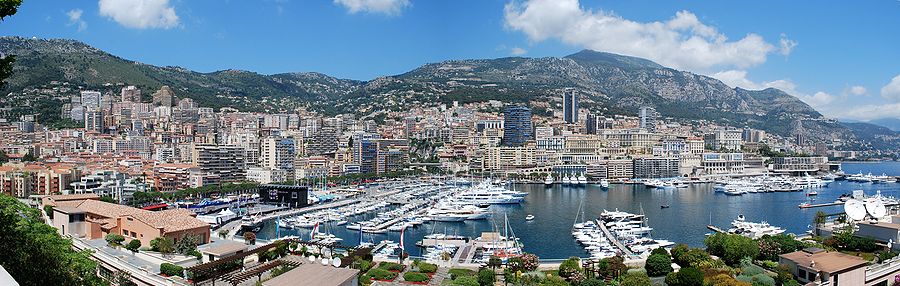
Monaco is a place which has long exerted a pull on my interest - and I'm not alone; first settled in the Paleolithic era as early as 300,000 years ago, by the sixth century BCE it was the site of a Phocaean Greek colony where a temple to Hercules was built, which temple gave the area the name Monoikos (or 'lone-dweller') from whence its current name is derived. This Mediterranean-adjacent jewel located in the south of France passed from empire to empire until 1191 when it was granted by Holy Roman Emperor Henry VI to Genoa; a fortress was begun atop the Rock of Monaco in June 1215, from which time the modern history of Monaco can be said to begin.

François Grimaldi captured Monaco on this day in 1297, since which time the city state has been continually in the possession of the House of Grimaldi; while Monaco itself has gradually evolved itself into a principality so has its ruling family evolved into a princely one. Nominally under the protection of France - without whom it and its tax-free status could not exist - Monaco has chiefly been ruled by absentee rulers, who preferred their decadent life at Versailles and Paris over a life of despotism in the sleepy, if lovely, village from which their power and station were derived.

The Franco-Monegasque Treaty of 1861 was the first to formalize this relationship, which has since been refined numerous times, especially whenever the succession has been in question - as it was in 1918. In fact, the parlous state of the Monegasque succession is still a worry, given the propensity of its rulers for philandering and their seeming unwillingness to produce heirs within wedlock.

It was Louis II who first took a hands-on interest in his most important holding, although the modern state is almost entirely the creation of his grandson and successor Rainier III; Prince Rainier did more than diversify Monaco's economy, he put the place front and centre in the world's imagination when, in April 1956, he married the glamourous actress and humanitarian Grace Kelly. Miss Kelly, in fact, did her part to put Monaco on the map even before she'd met the Prince, when she starred in Alfred Hitchcock's 1955 fim To Catch a Thief, opposite Cary Grant.
*

share on: facebook

In Memoriam: Soupy Sales

As pranks go, it will go down in the history books as one of the greatest; on New Year's Day 1965 Soupy Sales addressed the kids watching his TV show and asked them to get those 'funny green pieces of paper' from their parents' wallets and purses and send them to him at the station, in exchange for which he'd send them a postcard from Puerto Rico.

PhotobucketHistory doesn't record how much money arrived, but obviously some did, and Sales was suspended from work for two weeks for encouraging children to steal; now who ever said television executives had a sense of humour?

It's just one of the wild stories connected to Soupy Sales, and like many of the others, it's actually true; one of the more ubiquitous untruths had Sales slipping innuendo into the shows to entertain the Moms who might have been watching at home. As though a respected broadcaster like him would ever be caught dead slipping it to other people's mothers, especially in the middle of the day.

Born on this day in 1926, the legendary children's entertainer has two sons - Hunt and Tony Sales - professional musicians who performed with David Bowie in the band Tin Machine - not to mention Todd Rundgren and Iggy Pop - as well as having formed their own band Tony and the Tigers in Detroit; Hunt Sales composed the signature riff in Iggy Pop's classic song Lust For Life.

Alas, Soupy's 83rd birthday would be his last; he died in October 2009.
*
share on: facebook

"Let's Dance" by David Bowie


The David Bowie of this era was the first incarnation of his with which I was familiar; not only was Let's Dance the first song of his I'd knowingly heard, it came from the first album of his (not coincidentally also entitled Let's Dance) I'd ever bought, and so therefore this is the version of him which provides me the necessary context for him and his extraordinary career. Naturally enough, the tres cool video isn't available; in lieu of this, I've decided to post a clip of the man himself performing the song live during his Serious Moonlight tour.

Of course, entire websites are devoted to each of his personae - with their webmasters slavishly devoted to supporting the claim that their favourite is best to the exclusion of all others - but here at the Pop Culture Institute we take the long view... A single-affect Bowie would have burnt out his appeal long before now; it's his chameleonic tendencies which specifically commend him to iconic status*.

Amazingly, today marks Bowie's 64th birthday, and it's one which sees him still going strong despite a 2004 cardiac incident he suffered while performing in Germany.

*That and his willingness to embrace new music, even unto mentoring up-and-coming bands such as Arcade Fire.
*

share on: facebook

In Memoriam: Helmuth Hübener

First, he was a Boy Scout; after the Nazis suppressed that organization, Helmuth Hübener was more or less compelled to join Hitler Youth. However, the events of 1938's Kristallnacht soon enough crystallized his opposition to the atrocities of National Socialism; in his mind both anti-Semitism and totalitarianism ran counter to his Mormon beliefs.

PhotobucketBorn on this day in 1925, Hübener was the youngest person ever sentenced to die by the Volksgerichtshof when, in October 1942, he was beheaded at Berlin's Plötzensee Prison; he was only 17.

Along with friends Karl-Heinz Schnibbe, Rudolf Wobbe, and later Gerhard Düwer, Hübener aided in the delivery of about 60 different pamphlets throughout the city of Hamburg decrying the futility of Germany's erstwhile attempts to conquer the world. He had also been monitoring broadcasts of the BBC, which was strictly verboten and considered treasonous; much of the content of his inflammatory literature was gleaned from this activity. 'Through their unscrupulous terror tactics against young and old, men and women, they have succeeded in making you spineless puppets to do their bidding,' ran one courageous screed.

Although his friends were merely given long prison sentences for the part they played in undermining the Third Reich, the authorities allowed Hübener's death sentence to stand, on account of his extraordinary level of intelligence, brains being the greatest enemy of Fascism.

Today his name lives on in his hometown, where a youth centre and a pathway between Greifswalder Straße and Kirchenweg in the Hamburg neighbourhood of Sankt Georg - appropriately enough, the patron saint of the Boy Scouts - commemorate one teenager's heroic battle against the forces of evil. A movie tentatively entitled Truth & Treason - which has been in various stages of pre-production since 2008 and now seems set for release in 2011 or 2012 - stars Haley Joel Osment as the boy who stood against Hitler while all around him grown men cringed in silence; the short life of Helmuth Hübener is also the basis of Hübener vs Hitler by Richard Lloyd Dewey, which examines these events through a distinctly Christianist lens.
*
share on: facebook

Pop History Moment: LBJ Declares "War on Poverty"

You see, this is what Presidents did in the olden days, kids... They declared a War on Poverty, rather than on the poor, like certain redneck throwbacks I could mention but won't whose father was also President.

PhotobucketIn his State of the Union address on this day in 1964, US President Lyndon Baines Johnson continued to further the agenda set by his predecessor John F. Kennedy, using his substantial powers as a bully for good, rather than declaring an illegal war in a foreign country based on a lie and some specious intelligence... Er, uh... Ha ha ha...

A n y w a y... Instead of that other war, which has become his legacy, LBJ wanted the War on Poverty to continue the work set in motion by the New Deal of another of his great predecessors, Franklin Delano Roosevelt in that other great State of the Union address of January 1941, the Four Freedoms, to which LBJ had been witness as a Representative of Texas' 10th District.

'Because it is right, because it is wise, and because, for the first time in our history, it is possible to conquer poverty...' he intoned, introducing legislation creating the Office of Economic Opportunity, which intervened during a boom economy to give everyone a share of the wealth, not just those who were already wealthy. Nearly 45 years later, it remains to be seen in a War on Poverty can, in fact, be won; but the nobility of the thing was in the attempt, in the desire to make it so, which gave the War on Poverty a moral victory at least.
*
share on: facebook

"In The Ghetto" by Elvis Presley


I suppose there will always be those people who will consider Elvis Presley a racist; indeed, the comments section of this very video at YouTube bristles with enough racism of its own directed at him and his memory to gladden the shrivelled heart of even the most embittered Republican.

Claims that Elvis stole black music and made himself wealthy with it - Chuck D of Public Enemy and Eminem are the most vocal proponents of this theory - are specious at best; without such appropriation, black music might have never made such inroads into white culture in the deeply racist 1950s, bringing with it such stars as Chuck Berry and Little Richard. Recording artist Jackie Wilson goes so far as to insist that this appropriation went both ways, and that what Elvis did was in fact meld black and white music (in later years, Elvis' stage persona and delivery were more Pat Boone than Chuck Berry) making him a unifier as opposed to a polarizer*.

As a Southerner, if Elvis had wanted to he could have been volubly racist and wouldn't have cared who heard him, much like the white bigots who dogged his concerts throughout the South beginning in 1956 - who at one point even torched his car - and more often than not the venues where he appeared had to be protected by the National Guard. Despite the concerted efforts of some to make Elvis into a hater, no claims that he was have ever stuck, even after extensive investigation by such publications as Jet magazine.

By his behaviour alone it appears he did what he could to lower the colour bar in America; one such action was the recording of this extraordinarily sensitive song, which looks at race relations from the most liberal of viewpoints. Still, there's comfort in belief, even if those beliefs are based on misinformation and the unexamined prejudices of other people; certainly it's easier to repeat what someone else has said than it is to develop one's own opinions, a kind of intellectual laziness which is the modern malaise.

Born on this day in 1935, one of identical twins (the elder of whom, Jesse Garon, was stillborn) Elvis Aaron Presley simply appeared at the right time in the right place with the right look and the right sound and took the world by storm. Others - notably Charlie Rich - had a similar look and sound but never caught on like Elvis did.

In The Ghetto was written by Mac Davis and was first recorded by Elvis in 1965; it became a smash hit when it was released as a single in 1969 following his '68 Comeback special. This particular video is of a performance given in 1970 called Elvis: That’s The Way It Is.


*Let's not forget that Berry Gordy groomed his performers at Motown Records by making them listen to the likes of Doris Day and Pat Boone, as reported in J. Randy Taraborrelli's biography of Diana Ross, Call Her Miss Ross...
*

share on: facebook

POPnews - January 8th

Photobucket
[From a castle on a hill built in 1191, Monaco has grown into an international banking centre, while its princely family the House of Grimaldi has provided France all the fun of a royal family with none of the responsibility.]

871 CE - At the Battle of Ashdown, Ethelred of Wessex and the man who would one day be known as Alfred the Great defeated an invading army of Danes commanded by Halfdan Ragnarsson - killing his fellow king, Bagsecg, in the process.

1297 - Monaco attained its sovereignty when (as the legend has it) Francesco Grimaldi captured the Rock of Monaco from the Genoese after arriving at the gates of Palace of Monaco with his cousin Rainier I, Lord of Cagnes, while both of them were dressed as Franciscan monks; the tiny principality has been ruled by the House of Grimaldi ever since.

1499 - France's King Louis XII married Anne of Brittany, apparently.

1734 - George Frideric Handel's Ariodante had its premiere at the Royal Opera House in London's Covent Garden.

1790 - President George Washington delivered the first State of the Union Address in New York City, which was then the US capital.

1811 - Charles Deslandes led an unsuccessful slave revolt in St. Charles and St. James, Louisiana.

1835 - The US National Debt was $0 for the only time, under President Andrew Jackson.

1877 - Lakota chief Crazy Horse, Cheyenne chief Two Moons, and their warriors fought a battle with Nelson A. Miles of the US Cavalry at the Battle of Wolf Mountain in what was then the Montana Territory.

1912 - The African National Congress was founded.

1918 - US President Woodrow Wilson announced his Fourteen Points for the aftermath of World War I at the Paris Peace Conference - an event best recounted in Margaret Macmillan's Paris 1919: Six Months That Changed The World.

1926 - Abdul-Aziz ibn Saud became the King of Hejaz, renaming it Saudi Arabia.

1940 - Food rationing was introduced in Britain during World War II.

1962 - Leonardo da Vinci's masterpiece, the Mona Lisa, was exhibited in the United States for the first time, at the National Gallery of Art in Washington, DC; the story of the greatest cultural exchange in American history - brokered by First Lady Jacqueline Kennedy, who charmed France's Minister of Cultural Affairs Andre Malraux to do it - was recently told by Margaret Leslie Davis in the pages of Vanity Fair, in an excerpt from her book Mona Lisa in Camelot.

1975 - Ella Grasso became Governor of Connecticut, the first woman to become governor of any state who didn't follow her husband into the job.

1979 - The oil tanker Betelgeuse exploded in Ireland's Bantry Bay, resulting in the so-called Betelgeuse Incident.

1989 - Japan's Showa era ended with the death of Emperor Hirohito; the Heisei era began with the accession of Emperor Akihito.

1991 - A 16-year-old from Richardson, Texas, Jeremy Wade Delle shot himself in front of his English class, inspiring one of Pearl Jam's best-known songs, Jeremy.

2002 - US President George W. Bush signed into law the No Child Left Behind Act; it's been leaving children behind ever since.

2004 - The RMS Queen Mary 2 - the largest passenger ship ever built - was christened by her namesake's granddaughter, Elizabeth II.
*
share on: facebook

Friday, January 07, 2011

"Six String Orchestra" by Scooter and the Electric Mayhem


On this day in 1992 Richard Hunt died of complications related to AIDS; he was 40...

Among Hunt's more memorable creations as a Muppeteer was Scooter, who performed this charming song - Six String Orchestra - in episode 417 of The Muppet Show, accompanied by Floyd Pepper, Janice, Animal and Zoot of the Electric Mayhem.  In interviews 'Scooter' indicated that this was his favourite among the numbers he'd performed, which is why it's posted here.

In addition to Scooter Hunt performed Beaker, Janice, Statler, Sweetums, Junior Gorg, Don Music and Forgetful Jones, as well as Sesame Street's Sully, Wisss on Saturday Night Live, and Charlie Beaver in Emmet Otter's Jug-Band Christmas; episode 3136 of Sesame Street and the movie The Muppet Christmas Carol were dedicated to his memory.
*

share on: facebook

Remembering... Zora Neale Hurston

A woman considered among the brightest lights of the Harlem Renaissance had almost been entirely extinguished by the time of her death in 1960; in fact, the life and great works of Zora Neale Hurston might never have been revived at all had it not been for an even greater renaissance throughout the 1960s and 1970s - the twin awakenings of Women's and Black Studies which have since added much-needed melanin and estrogen to the all-too pale, male-dominated world of letters.

PhotobucketIt is apt that a woman whose work involved folklore engulfed her own life in so many myths of her own; today, we can only be reasonably certain that Hurston was born on this day in 1891, in Notasulga, Alabama, and as a child moved to the first all-black town in the United States, at Eatonville, Florida. Orphaned by the age of 13, Hurston graduated from Morgan Academy in 1918, which may have been about the time she started playing fast and loose with her own chronology...

Though acclaimed early on as a novelist, Hurston was trained as an anthropologist, receiving her degree from Barnard College and later working with Ruth Benedict and Margaret Mead; as moving as her 1937 novel Their Eyes Were Watching God is, her study of voodoo from the same year, Tell My Horse, is just as revealing, although unlike its fictional counterpart, it isn't likely to be made into a Halle Berry movie by Oprah Winfrey with a screenplay by Suzan-Lori Parks. Is all I'm sayin'...*

It is to Alice Walker that credit for the Hurston Renaissance must go, as much as to the timeless vividity of Hurston's own writing; Walker's 1975 article for Ms. Magazine entitled In Search of Zora Neale Hurston had epic repercussions. Hurston had been buried in an unmarked grave; now her home in Fort Pierce, Florida, is a National Historic Landmark.


*Both of these books, plus the 1934 novel Jonah's Gourd Vine are to be found in the collection of the Pop Culture Institute.
*

share on: facebook

"Our Lips Are Sealed" by The Go-Go's


Birthday wishes go out today to Kathy Valentine, bassist for the pioneering all-female band The Go-Go's, whose contribution to Our Lips Are Sealed (from the 1981 album Beauty and the Beat) is a low-down and funky throb beneath what is an otherwise sunny, breezy song.

The video (which was proudly shown here until it was made impossible by the usual suspects - the embedding disablement Nazis over at YouTube) was a mainstay in the early days of MTV, and for more than 25 years has been a part of the soundtrack of summer for me, even in the dampest depths of a Vancouver winter... This replacement features a live lip-synced performance of the song by the band in 1982 on the Australian program Countdown.

So profound is this censorship that the official video posted by the band's record label isn't even available to me in Canada... Boycott EMI!
*
share on: facebook

In Memoriam: Princess Charlotte

Amongst counterfactual historians (within whose number I would include myself) one of the greatest of all 'what-ifs' involves Princess Charlotte, the only daughter of the Prince Regent (later George IV) and his despised (by him, at least) wife, Caroline of Brunswick.

PhotobucketDespite the fecundity of George III and his wife Queen Charlotte - they had twelve children survive to adulthood - when Princess Charlotte was born on this day in 1796 the succession was in deep trouble; while his sons had no trouble begetting bastards, finding and impregnating suitable wives was seemingly anathema to them. In order to remedy this dire situation, the King and Parliament offered to underwrite the debts of any Royal Duke willing to do his duty - a considerable expenditure given the profligate ways of 19th Century royalty.

All told, three of them arose to the task: George (then the Prince of Wales) and his younger brothers William, Duke of Clarence, and Edward, Duke of Kent. Clarence's two daughters - Charlotte and Elizabeth - died as infants, while Kent's daughter we will meet later...

Despite the animosity that spawned her - her parents hated each other on sight, and her father had to get so drunk in order to do his constitutional duty it's a wonder he could perform it at all - Princess Charlotte was high-spirited and vivacious, much beloved by the English public at a time when republican sympathies were engulfing Europe (especially France); as a young girl she more or less chose the man she wanted to marry, Prince Leopold of Saxe-Coburg-Saalfeld, and then insisted that he be allowed to court her, despite the fact that he was essentially landless and thus of no strategic or diplomatic value to the Crown. Even if they hadn't been royal, though, Charlotte's father would have still undoubtedly called her princess, so beloved was she by him; a grateful Nation and loving father granted the couple permission to marry, bestowing upon the newlyweds Claremont House as a wedding present.

In an all-too-common tragedy of the times, both Princess Charlotte and her son died in childbirth in November 1817; she was only 21. To put her death into modern context, the death of Diana was a sob compared to the paroxysm of grief that seized Britain as the late Heiress Presumptive's body was conveyed to St. George's Chapel, Windsor, where she would lie with so many of her colourful ancestors past and future.

Her husband would later remarry, to Louise-Marie of Orléans, and in 1831 became the first King of the Belgians; among his illustrious offspring was Empress Carlota of Mexico, named for his first wife. Following the death of George IV in 1830, his brother the Duke of Clarence became William IV, and following his death in 1837 he would be succeeded by their niece, daughter of the late Duke of Kent, a serious young woman whose long reign would impose itself in every corner of the globe and who would give her name to the age - Victoria.

But what if all those Victorians had been Charlottians instead? 'What if' indeed...
*
share on: facebook