Wednesday, September 08, 2010
"Waiting For A Train" by Jimmie Rodgers
Jimmie Rodgers - born on this day in 1897 - was the first bonafide country music superstar, to the extent that he is often called the Father of Country Music; he was also called the Singing Brakeman and America's Blue Yodeler. He first released Waiting For A Train in October 1928, and is seen here performing it thanks to the miracle of celluloid.
Although a bout with tuberculosis ended his railroad career at the age of 27 - allowing him the chance to pursue a talent for music he discovered while riding the New Orleans and Northeastern - his weakened lungs would also prove his undoing. Jimmie Rodgers died in May 1933, aged only 35. Neverthless, Rodgers was among the first three inductees in the Country Music Hall of Fame - along with Fred Rose and Hank Williams - when it was established in 1961.
*
share on: facebook


In Memoriam: Barbara Frum
The typical Barbara Frum interview wouldn't have been out of place on the Discovery Channel...
 One minute she's exchanging banalities with the Prime Minister, her face utterly expressionless. You'd wait and wait... Then she'd catch him in a lie and pounce! You're still cheering, and she's already started grimly pulling out his intestines, right there on national television. Thrilling...
Of course, they weren't all like that; she tended only to attack those who had it coming to them. With all others she would employ her droll wit and prodigious intellect to memorable end.
Born on this day in 1937, Barbara Frum was one of Canada's most versatile and respected journalists; when she died in March 1992 a career retrospective aired shortly thereafter by her employer the Canadian Broadcasting Corporation became the highest rated program in the network's history. Proof that once upon a time Canadians valued that rare combination of style and substance which was her hallmark...
*
share on: facebook
One minute she's exchanging banalities with the Prime Minister, her face utterly expressionless. You'd wait and wait... Then she'd catch him in a lie and pounce! You're still cheering, and she's already started grimly pulling out his intestines, right there on national television. Thrilling...Of course, they weren't all like that; she tended only to attack those who had it coming to them. With all others she would employ her droll wit and prodigious intellect to memorable end.
Born on this day in 1937, Barbara Frum was one of Canada's most versatile and respected journalists; when she died in March 1992 a career retrospective aired shortly thereafter by her employer the Canadian Broadcasting Corporation became the highest rated program in the network's history. Proof that once upon a time Canadians valued that rare combination of style and substance which was her hallmark...
*
share on: facebook
Stefano Casiraghi: A Man Among Princes
Though he described himself as 'a born businessman', when Stefano Casiraghi married Princess Caroline of Monaco in December 1983 the terms being used to describe him were more along the lines of 'playboy' and 'gigolo' than 'capitalist'.
 It didn't take more than a couple of years, though, for Casiraghi to become one of the most powerful men in a Principality which then, as now, is positively thronged with powerful men. By the time he died, Casiraghi had become the son Prince Rainier III never had; even though Prince Rainier had a son, as so often happens in these cases, the sovereign and his heir were wary of each other in the way that the sovereign and his son-in-law didn't need to be.
Born this day in 1960, Casiraghi was just 30 when the power boat he was driving crashed in October 1990, killing him, and leaving Her Serene Highness a widow with three small children. As with most sudden deaths, conspiracies abound. None can be proved, of course, which for people who believe in such things only confirms (rather than dispels) such theories.
Despite the time that has elapsed since his death, interest in Casiraghi remains high, not least because the small children he left behind are now fully grown socialites and (understandably, given their parentage) raving beauties as well; this post remains one of the most frequently read on the Pop Culture Institute since it was posted here on this day in 2007.
*
share on: facebook
It didn't take more than a couple of years, though, for Casiraghi to become one of the most powerful men in a Principality which then, as now, is positively thronged with powerful men. By the time he died, Casiraghi had become the son Prince Rainier III never had; even though Prince Rainier had a son, as so often happens in these cases, the sovereign and his heir were wary of each other in the way that the sovereign and his son-in-law didn't need to be.Born this day in 1960, Casiraghi was just 30 when the power boat he was driving crashed in October 1990, killing him, and leaving Her Serene Highness a widow with three small children. As with most sudden deaths, conspiracies abound. None can be proved, of course, which for people who believe in such things only confirms (rather than dispels) such theories.
Despite the time that has elapsed since his death, interest in Casiraghi remains high, not least because the small children he left behind are now fully grown socialites and (understandably, given their parentage) raving beauties as well; this post remains one of the most frequently read on the Pop Culture Institute since it was posted here on this day in 2007.
*
share on: facebook
"Three Cigarettes in an Ashtray" by Patsy Cline
What you notice first is the voice: it's big, but gentle - vast, yet intimate... Most shocking to our modern ears, the voice is also utterly distinctive. Although many have tried, and some have even nearly succeeded, theirs was merely mimicry... There's only ever been one Patsy Cline, and there will only ever be one.
I first heard her singing, like a lot of my generation, on television in the 1980s, when mail-order houses were selling her records seemingly faster than they could press them; in a decade largely devoid of sincerity, that voice went a long way towards filling the void.
I could have chosen to put a performance of Walkin' After Midnight or Crazy up here; certainly they are her most famous singles. But there's something perverse in me, and so I chose a more obscure song - and one associated with tobacco, to boot - instead. Three Cigarettes In An Ashtray originally appeared on Cline's eponymous debut album in 1957; here she performs it on Ozark Jubilee.
*
share on: facebook
Remembering... Patsy Cline
When she was a little girl - born on this day in 1932 - Virginia Hensley just knew she was going to be famous, and looked up to stars like Judy Garland and Shirley Temple to show her the way...
 That little girl must have been on to something; as Patsy Cline, she not only changed the way the world looked at country music - thanks to the Nashville Sound, of which she was the most, er, vocal proponent - but also the way the country music industry's company town looked at its female performers. She would not be cheated, she would not be used, and she would not be forgotten. Despite the name, she used to like to say, she was 'nobody's patsy'.
From her first recordings in 1957 to her untimely death in a plane crash (aged only 30) in March 1963, Cline's rich voice, poignant phrasing, and populist sensibilities rendered her more than just a country singer, but as one of the foremost interpreters of popular music ever - in any genre.
Cline's earlier premonition about her fame had come true; a similar intuition- this time about her imminent mortality - did as well. Having survived two car crashes (the second, in June 1961, was nearly fatal) Cline told friends that her next accident would either finish her off or 'prove a charm'.
Alas, when the Piper Comanche in which she was flying crashed in March 1963, it did the former. In a way, too, it also did the latter. There's no doubt that, had she lived, Patsy Cline might still be singing away today at the age of 78, mentoring up-and-coming talent, and enjoying life as a living legend, although she likely wouldn't be resting on her laurels. Dying as she did, her voice haunts us still, calling to us in a rich contralto from a place that's not unlike immortality.
*
share on: facebook
That little girl must have been on to something; as Patsy Cline, she not only changed the way the world looked at country music - thanks to the Nashville Sound, of which she was the most, er, vocal proponent - but also the way the country music industry's company town looked at its female performers. She would not be cheated, she would not be used, and she would not be forgotten. Despite the name, she used to like to say, she was 'nobody's patsy'.From her first recordings in 1957 to her untimely death in a plane crash (aged only 30) in March 1963, Cline's rich voice, poignant phrasing, and populist sensibilities rendered her more than just a country singer, but as one of the foremost interpreters of popular music ever - in any genre.
Cline's earlier premonition about her fame had come true; a similar intuition- this time about her imminent mortality - did as well. Having survived two car crashes (the second, in June 1961, was nearly fatal) Cline told friends that her next accident would either finish her off or 'prove a charm'.
Alas, when the Piper Comanche in which she was flying crashed in March 1963, it did the former. In a way, too, it also did the latter. There's no doubt that, had she lived, Patsy Cline might still be singing away today at the age of 78, mentoring up-and-coming talent, and enjoying life as a living legend, although she likely wouldn't be resting on her laurels. Dying as she did, her voice haunts us still, calling to us in a rich contralto from a place that's not unlike immortality.
*
share on: facebook
The Day Dorothy Dandridge Died

In 1957 Dorothy Dandridge struck back at the publisher of Hollywood tabloids - such as Confidential, Whisper, and Hush-Hush - who claimed she'd had an affair with a white bandleader in 1950 while performing her nightclub act in Lake Tahoe. Reminding the jury that had she so much as left her hotel room in those days she could have been arrested for defying laws which enforced racial segregation, they found in her favour.
She not only won her case, but her case was ultimately successful in curtailing the invasive tabloid coverage of Hollywood that had been on the rise throughout the 1950s; by the time the tabloid press came roaring back to life it was the mid-70s, and she was long gone. Too bad, because her death had everything the tabloids today seem to crave, and in their muckraking who knows what truths they might have turned up - even if accidentally - about the sad final years of her life.
By the age of 42 a lifetime of heartache had taken its toll on Dorothy Dandridge: childhood sexual abuse, racism, drugs and alcohol, bad relationships and even worse finances, even fame itself had brought the still beautiful singer and actress to a pretty pass. When she was found by her agent Earl Mills in her West Hollywood apartment on this day in 1965, dead from an overdose of Imipramine, the notoriously cursory LA County coroner Thomas Noguchi made only his usual scant investigation before declaring her fate an accidental overdose.
Whether suicide or accident or murder killed Dorothy Dandridge we may never know...
*
share on: facebook
"Furnace Room Lullaby" by Neko Case
Birthday gal Neko Case, the pride of Tacoma, is also a major player in Vancouver's music industry; after attending the city's Emily Carr Institute of Art and Design she was signed by Mint Records, whereupon she recorded the alt-country classic album The Virginian in 1997.
Her follow-up was the sensational album Furnace Room Lullaby - from whence is drawn this awesome track - which showcases (and indeed shows Case's) crystalline tone and assertive pitch. Although Case's voice has drawn comparisons to Patsy Cline, her persona both onstage and off owes more to punk and even the anarchic spirit of the honky-tonk than it does to the suavity of the Nashville Sound as executed by Owen Bradley.
As you might be able to tell from its video, the song was used in the soundtrack for the 2000 film The Gift, which starred Cate Blanchett.
*
share on: facebook
Pop History Moment: "Star Trek" Debuted

On this day in 1966 (also known as stardate 1513.1) the first episode of Star Trek aired on NBC; although The Man Trap was the first episode to be broadcast, it wasn't the first to be produced. That honour goes to Where No Man Has Gone Before, which also comes first in the Star Trek universe's current official timeline. The network chose to air The Man Trap a week before the show's previously announced debut because executives felt it dealt with all the characters (and their back stories) more fully.
The Man Trap was written by George Clayton Johnson and directed by Marc Daniels. It. Stars. William Shatner. As. Captain. James T. Kirk... You know, back when he was hot - before the booze and coke removed all the planes from his face and tone from his musculature. Good times...
*
share on: facebook
POPnews: September 8th

[The only time I can legitimately post a picture of a penis is when
I'm being artsy-fartsy, so lah-di-dah motherfuckers!]
1264 - The Statute of Kalisz - which guaranteed Jews safety and personal liberties and gave them battei din jurisdiction over Jewish matters - was promulgated by Boleslaus the Pious, Duke of Greater Poland.
1331 - Stefan Dušan declared himself King of Serbia.
1504 - Michelangelo unveiled his magnificent and iconic sculpture, David, in Firenze.
1565 - Spanish admiral Pedro Menéndez de Avilés settled St. Augustine, Florida.
1831 - William IV was crowned King of England.
1888 - Annie Chapman - second known victim of Jack the Ripper - was found brutally murdered in the doorway of 29 Hanbury Street, in the London neighbourhood of Spitalfields.
1900 - A hurricane made landfall at Galveston, Texas; as many as 12,000 people died, mostly due to flooding.
1914 - Private Thomas Highgate became the first British soldier to be executed for desertion during World War I.
1934 - A fire onboard the SS Morro Castle killed 135 people while the ship was beached off Asbury Park, New Jersey - a story well-told by Brian Hicks in his badly titled book When The Dancing Stopped: The Real Story of the Morro Castle Disaster and Its Deadly Wake.
1935 - In the state house he'd built in Baton Rouge as Governor, Senator Huey Long of Louisiana was shot - whether purposely by Carl Austin Weiss or accidentally, by Long's bodyguards trying to kill Weiss, we may never know. The man better known as 'Kingfish' died two days later of his injuries.
1943 - The surrender of Italy was announced by General Dwight D. Eisenhower, having been reached five days earlier.
1944 - The first V-2 rocket hit London.
1951 - 48 nations signed the Treaty of San Francisco with the Empire of Japan in formal recognition of the end of the Pacific War.
1966 - The Severn Bridge was officially opened by Her Majesty Queen Elizabeth II.
1971 - Washington DC's John F. Kennedy Center for the Performing Arts was inaugurated, with the premiere of Leonard Bernstein's Mass.
1974 - President Gerald Ford pardoned former President Richard Nixon.
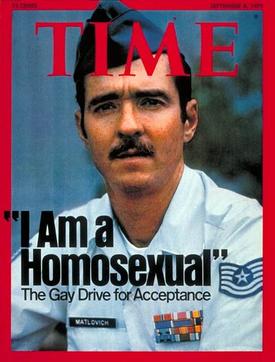
1975 - Two decades before Ellen Degeneres did it, Air Force Tech Sergeant Leonard Matlovich, recipient of both the Purple Heart and the Bronze Star, came out on the cover of Time magazine. Not only was Matlovich eventually given a general discharge, he was also excommunicated by The Church of Jesus Christ of Latter-day Saints, because that's what Jesus would have done.
1986 - The first episode of The Oprah Winfrey Show aired; conveniently, it was hosted by Oprah Winfrey.
1991 - The Republic of Macedonia gained its independence from Yugoslavia.
*
share on: facebook
Tuesday, September 07, 2010
"I Will Survive" by Gloria Gaynor
Like I need a reason to a) play this song, or b) say hey to the classy lady who sings it. Heyheyhey! I do, however, have a very specific reason today; namely that it's her birthday! Why, of all people, should Gloria Gaynor not be allowed to benefit from her own cheerleading?
For everything the song I Will Survive means to all those who hold it dear, I can only say that it means more to me with each passing crisis. It's so much more than a disco love song, so much more than a gay anthem, it's a reminder that all troubles pass - a lesson too easily forgotten, especially in times when we are beset (or feel beset, anyway) by those troubles. Given the innumerable gifts I as her fan have received from her, how can I not then return the favour?
*
share on: facebook
Elia Kazan: A Fink For Liberty?
His was one of Hollywood's most brilliant careers and his films are among the finest ever made - A Streetcar Named Desire (1951), On the Waterfront (1954), and A Face in the Crowd (1957), to name just three. Sadly, both Elia Kazan's legacy and his stature as an artist may be permanently tainted...
 During testimony he gave before the House Un-American Activities Committee in January 1952, Kazan named names, identifying people he knew to be Communists. Though he was neither the first nor the only person to do so, no serious charges were laid as a result of his testimony, and he didn't in fact name anyone who hadn't been previously named, the damage was done.
Kazan's detractors ever since have been legion; so, now, are his apologists, of which I am one*.
It's become a popular fiction to blame the studio heads for pressuring Kazan to name names, which initially he had refused to do; now, normally I don't need any excuse at all to blame anything at all from hangnails to genocide on a studio head, but I cannot do it in this case. Kazan was a committed socialist all his life, and simply opposed to the tyranny represented by Communism; the only one to blame for pressuring him into testifying is Josef Stalin, whose reign of terror was responsible for the death and/or murder of millions.
Though his career was wounded, Kazan didn't let the attempted assassination by leftie politics slow him down. Quite the contrary: while he continued to make films about issues, films like Splendor in the Grass (1961), America, America (1963), and The Last Tycoon (1976), and direct plays in between (which anyway had been his first love, creatively) he also began writing novels later in life, including one he later made into a film, The Arrangement.
Born this day in 1909, Elia Kazan died in September 2003 - shortly after his 94th birthday - having been acknowledged by the Academy in 1999 for his body of work with a Lifetime Achievement Award, which was presented to him by no less luminaries than by Martin Scorsese and Robert De Niro - even though several notable names present remained seated and refused to clap during Kazan's obligatory standing ovation.
*
share on: facebook
During testimony he gave before the House Un-American Activities Committee in January 1952, Kazan named names, identifying people he knew to be Communists. Though he was neither the first nor the only person to do so, no serious charges were laid as a result of his testimony, and he didn't in fact name anyone who hadn't been previously named, the damage was done.Kazan's detractors ever since have been legion; so, now, are his apologists, of which I am one*.
It's become a popular fiction to blame the studio heads for pressuring Kazan to name names, which initially he had refused to do; now, normally I don't need any excuse at all to blame anything at all from hangnails to genocide on a studio head, but I cannot do it in this case. Kazan was a committed socialist all his life, and simply opposed to the tyranny represented by Communism; the only one to blame for pressuring him into testifying is Josef Stalin, whose reign of terror was responsible for the death and/or murder of millions.
Though his career was wounded, Kazan didn't let the attempted assassination by leftie politics slow him down. Quite the contrary: while he continued to make films about issues, films like Splendor in the Grass (1961), America, America (1963), and The Last Tycoon (1976), and direct plays in between (which anyway had been his first love, creatively) he also began writing novels later in life, including one he later made into a film, The Arrangement.
Born this day in 1909, Elia Kazan died in September 2003 - shortly after his 94th birthday - having been acknowledged by the Academy in 1999 for his body of work with a Lifetime Achievement Award, which was presented to him by no less luminaries than by Martin Scorsese and Robert De Niro - even though several notable names present remained seated and refused to clap during Kazan's obligatory standing ovation.
* * *
*My opposition, as always, is to tyranny - whether it be from Stalinism, McCarthyism, or leftie-ism - namely, the tendency amongst progressive types to eat their own, all the while allowing the Right free rein in destroying the world with their lies.*
share on: facebook
"Stop Your Sobbing" by The Pretenders
In honour of the birthday of Chrissie Hynde I thought I'd take my readers all the way back to 1979 and the first single ever by The Pretenders, Stop Your Sobbing...
Released as the opening salvo of the band's first album - the seminal punk/New Wave hybrid Pretenders - Stop Your Sobbing was originally written by Ray Davies for his band, The Kinks*, and was produced by yet another music industry legend, Nick Lowe. In another of those crazy twists of Fate which makes writing about pop culture so entertaining, while Hynde hadn't yet met Davies when The Pretenders began climbing the charts with an old Kinks song, by 1983 they knew each other well enough to collaborate on a major project together - a daughter named Natalie Rae Hynde. History does not record whether Stop Your Sobbing was in Hynde's (or indeed Davies') repertoire of lullabies, but in this reporter's opinion with the right arrangement it might just do very well for that purpose.
Here the band is seen performing the song live** in 1980 on Thames Television's Kenny Everett Video Show, which starred (appropriately enough) Kenny Everett.
*Which appeared on their debut album, Kinks, in 1964 - an album released in the US as You Really Got Me.
**Meaning only that they were live in the studio when the cameras rolled; as with most such performances - be they on this show or the more famous Top of the Pops, the band were merely miming to the record.
*
share on: facebook
Happy Birthday Chrissie Hynde
 The late Seventies and early Eighties were not a great time to be a woman in music - unless, that is, you were Chrissie Hynde. Yet her good times were born out of some really bad times... For instance, she was a student at Kent State University during the shootings that occurred there in May 1970; among the fatalities was a friend of hers, Jeffrey Miller.
As an American in London in 1973 she dreamed of being in a band, only the dream kept eluding her. Through a lover, Nick Kent, she landed a short-lived job at the UK's most influential music publication, New Musical Express, and still later worked at Malcolm McLaren and Vivienne Westwood's then-little-known clothing store, SEX. After a few false starts at joining a band, by 1978 she had met Pete Farndon, James Honeyman-Scott, and Martin Chambers and was fronting The Pretenders; the following year they had the first of their many hits, Stop Your Sobbing, originally recorded by The Kinks.
Thirty years later and The Pretenders are still together, although she (and her gravelly sweet vocals) are the only constants in the lineup; despite this, she has repeatedly refused to be billed as Chrissie Hynde and the Pretenders, which can only be interpreted as an eschewal by her of the cult of personality which often emerges around singers in bands...
*
share on: facebook
"Still Falls The Rain" by Edith Sitwell
Still Falls the Rain
(The Raids, 1940, Night and Dawn)
Still falls the Rain -
Dark as the world of man, black as our loss-
Blind as the nineteen hundred and forty nails
Upon the Cross
Still falls the Rain
With a sound like the pulse of the heart that is changed to the hammer-beat
in the Potter's Field, and the sound of the impious feet
On the Tomb:
Still falls the Rain
In the Field of Blood where the small hopes breed and the human brain
Nurtures its greed, that worm with the brow of Cain.
Still falls the Rain
At the feet of the Starved Man hung upon the Cross.
Christ that each day, each night, nails there
have mercy on us-
On Dives and on Lazarus:
Under the Rain the sore and the gold are as one.
Still falls the Rain-
Still falls the Blood from the Starved Man's wounded Side:
He bears in his Heart all wounds- those of the light
that died
The last faint spark
In the self-murdered heart, the wounds of the sad, uncomprehending dark,
The wounds of the baited bear -
The blind and weeping bear whom the keepers beat
On his helpless flesh... the tears of the hunted hare.
Still falls the Rain-
Then - O Ile leape up to my God: who pulles me doune-
See, see where Christ's blood streames in the firmament:
It flows from the Brow we nailed upon the tree
Deep to the dying, to the thirsting heart
That holds the fires of the world - dark-smirched with pain
As Caesar's laurel crown.
Then sounds the voice of One who like the heart of man
Was once a child who among beasts has lain-
'Still do I love, still shed my innocent light, my Blood for thee'.
*
share on: facebook
(The Raids, 1940, Night and Dawn)
Still falls the Rain -
Dark as the world of man, black as our loss-
Blind as the nineteen hundred and forty nails
Upon the Cross
Still falls the Rain
With a sound like the pulse of the heart that is changed to the hammer-beat
in the Potter's Field, and the sound of the impious feet
On the Tomb:
Still falls the Rain
In the Field of Blood where the small hopes breed and the human brain
Nurtures its greed, that worm with the brow of Cain.
Still falls the Rain
At the feet of the Starved Man hung upon the Cross.
Christ that each day, each night, nails there
have mercy on us-
On Dives and on Lazarus:
Under the Rain the sore and the gold are as one.
Still falls the Rain-
Still falls the Blood from the Starved Man's wounded Side:
He bears in his Heart all wounds- those of the light
that died
The last faint spark
In the self-murdered heart, the wounds of the sad, uncomprehending dark,
The wounds of the baited bear -
The blind and weeping bear whom the keepers beat
On his helpless flesh... the tears of the hunted hare.
Still falls the Rain-
Then - O Ile leape up to my God: who pulles me doune-
See, see where Christ's blood streames in the firmament:
It flows from the Brow we nailed upon the tree
Deep to the dying, to the thirsting heart
That holds the fires of the world - dark-smirched with pain
As Caesar's laurel crown.
Then sounds the voice of One who like the heart of man
Was once a child who among beasts has lain-
'Still do I love, still shed my innocent light, my Blood for thee'.
*
share on: facebook
Remembering... Dame Edith Sitwell

Writer and critic Edith Sitwell wrote poetry (including Still Falls The Rain, appropriately enough for the day about the London Blitz) for love, but wrote nonfiction (including two studies of Elizabeth I - also entirely appropriate for the day*) for money. Nevertheless, today her poetry is obscure, at best, while her histories maintain the popularity they've had since they were published. That's what love gets you, I suppose...
In Sitwell's case, love also brought her a dose of heartache; when she was 40 she fell in love with the Russian painter Pavel Tchelitchew, who was then 29. Whether or not she knew he was gay when she did probably didn't matter, at least not to her heart.
As she got older Dame Edith Sitwell's feuds got feudier, her manner of dress more outlandish, and understandably her legend grew, as no one loves a freaky weirdo like the English. While Edith Sitwell lived - beginning on this day in 1887 - obscurity just would not do; her December 1964 death has given her - and her eccentricity - its rightful place amongst the greats.
*In terms of synergy, September 7th is one of the best days of the year at the Pop Culture Institute.
*
share on: facebook
In Memoriam: Elizabeth I

Although the standard reasoning in the 16th Century was that women were the weaker vessel, it was nevertheless a time of outstanding women. Few of them, though, were as exceptional as Elizabeth I - born on this day in 1533 - who would eventually give her name to the Elizabethan Age; fluent in several languages, she translated many classical texts, notably The Consolation of Philosophy by Boethius.
Of course book learning is all well and good, but to survive 45 years on the throne, in what was definitely a man's world, and succumb to neither marriage proposals or assassination required a different kind of intelligence altogether; Her Majesty had it in abundance. Throughout the seven decades in which she lived (which, in those days, was in itself a feat) she was tested time and again and every time she rose to the challenge.
It was by 'marrying her people', though, that the Queen proved that she understood how monarchy works better than any before and most since - it survives because of the will of the people. That will, born of respect, was hers because she both earned and reciprocated it - not least by her insistence that 'I have no desire to make windows into men's souls' at a time when the religiously intolerant were seemingly obsessed with ferreting out blasphemy by doing that very thing...
*
share on: facebook
Grandma Moses: A Vision of America
Anna Mary Moses wasn't trained as a painter; originally she excelled at needlepoint and embroidery. However, as arthritis encroached after her seventieth birthday she switched to painting. Fortunately her eyesight held out, and thereafter she proceeded to create some of the loveliest folk art ever.
 Over the final thirty years of her life, the woman known as Grandma Moses painted an American idyll consisting mainly of winter scenes set in upstate New York and Appalachia. One of her paintings - entitled The Fourth of July and made in honour of President Dwight D. Eisenhower - hangs in the White House today.
Her work was first discovered in 1938 by the wealthy art collector Louis J. Caldor, who brought her to the attention of art dealer Otto Kallir. And the rest, as they say, is pop culture*...
Born on this day in 1860, Grandma Moses died in December 1961, having lived long enough to see her hundredth birthday proclaimed 'Grandma Moses Day' by New York governor Nelson Rockefeller.
*Literally! The character of Granny Moses played by Irene Ryan in the sitcom The Beverly Hillbillies was not only named after her but modeled after her as well, at least in appearance.
*
share on: facebook
Over the final thirty years of her life, the woman known as Grandma Moses painted an American idyll consisting mainly of winter scenes set in upstate New York and Appalachia. One of her paintings - entitled The Fourth of July and made in honour of President Dwight D. Eisenhower - hangs in the White House today.Her work was first discovered in 1938 by the wealthy art collector Louis J. Caldor, who brought her to the attention of art dealer Otto Kallir. And the rest, as they say, is pop culture*...
Born on this day in 1860, Grandma Moses died in December 1961, having lived long enough to see her hundredth birthday proclaimed 'Grandma Moses Day' by New York governor Nelson Rockefeller.
*Literally! The character of Granny Moses played by Irene Ryan in the sitcom The Beverly Hillbillies was not only named after her but modeled after her as well, at least in appearance.
*
share on: facebook
"That'll Be The Day" by Buddy Holly & The Crickets
He was so prolific in the four short years of his career that Buddy Holly didn't release his last single until 1969 - a full decade after his death; not only that, he was so young when he did it all that today would only have been his 74th birthday. From his unique look to his signature sound to his tragic young death, he really was the Father of Rock and Roll.
That'll Be the Day was originally released in April 1958, less than a year before his untimely death in February 1959; its title was derived from the John Wayne film The Searchers, in which it was the oft-used catchphrase of Wayne's character, Ethan Edwards.
*
share on: facebook
Pop History Moment: The First Night of the Blitz
When it came to villainy, few excelled like the Nazis, and the Blitz was almost* the pinnacle of their savagery; fortunately, the British were at a slightly higher pinnacle of their own at this time, and so withstood what was intended to demoralize them with considerable aplomb.

The London Blitz - which began on this day in 1940 - eventually lasted six months, stretched through a bone-chilling winter and a sodden spring that was little better, and included at one stretch 76 consecutive nights of bombing in which Londoners of all stripe (or at least those who couldn't afford to move themselves or at least their children to the countryside), huddled in makeshift shelters and Tube stations.
And through it all they could be heard singing: pop songs or hymns, patriotic or propagandist, merry or maudlin...
So many bombs were dropped that nearly seventy years on they're still being dug up; yet casualties predicted to number a million or more, in the end amounted to just over 50,000. Certainly great swathes of the city were left in rubble but in the end many historic buildings were missed or sustained only minor damage. Most famous of these is St Paul's Cathedral, shown above during a particularly fierce firefight in December 1940 which was quickly dubbed The Second Great Fire of London; according to reports, German bombs could be heard bouncing off the dome, which is lead. Still, Sir Christopher Wren's masterpiece - like the nation that housed it - never fell.
It was Robert Davies who ultimately saved St. Paul's from total destruction, defusing a bomb which had struck the church; when the bomb was later detonated it left a hundred foot crater in Hackney Marshes. Davies, understandably, was awarded the George Cross, which was instituted by George VI during the Blitz to award the almost daily occurrences of civilian bravery which were inspired by the Blitz.
*The Holocaust, of course, being the worst.
*
share on: facebook
POPnews: September 7th

[When Leonardo da Vinci's masterpiece the Mona Lisa was discovered missing from the Musee du Louvre by Louis Béroud, French police likely shrugged and made a maddeningly apathetic sound, as if to say 'Yeah, but what are you going to do, ah?'; although Guillaume Apollinaire was briefly jailed for the crime, and he in turn tried to implicate Pablo Picasso, neither of them was guilty. It would be two years before Vincenzo Peruggia got done for doing the deed, when he tried to sell the work to the Uffizi Gallery in Firenze.]
1191 - England's King Richard I defeated Saladin at the Battle of Arsuf during the Third Crusade.
1776 - In what came to be known as the world's first submarine attack, the American submersible craft Turtle under the command of Ezra Lee attempted to attach a time bomb to the hull of British Admiral Richard Howe's flagship HMS Eagle in New York Harbor. Although Lee's efforts would be for naught - he gave up after two failed tries - it didn't stop the Turtle's builder, David Bushnell, from trying various sea-going means of sabotage, including an attack on the HMS Cerberus in 1777 using floating mines.
1812 - At the Battle of Borodino Napoleon and his Grande Armée defeated the Russian forces of Alexander I under Mikhail Kutuzov near the village of Borodino; it would prove to be the single bloodiest day of the French invasion of Russia during the Napoleonic Wars, with fatalities in the tens of thousands.
1818 - King Carl III of Sweden was crowned King of Norway in Trondheim, uniting the kingdom of Sweden-Norway under his personal rule as per the terms of the Treaty of Kiel.
1822 - Dom Pedro I declared the independence of Brazil from Portugal on the shores of São Paulo's Ipiranga River with the words 'Independence or death!'; the Portugese regent's declaration greatly appealed to Brazilian nationalists, and would later became known as 'O grito do Ipiranga' or 'The Cry of Ipiranga'.
1876 - In Northfield, Minnesota, Jesse James and the James-Younger Gang attempted to rob the town's bank but were surrounded by an angry mob and nearly killed; in addition to some of the members of the gang, Joseph Lee Heywood and Nicholas Gustafson perished on that day. The event was later immortalized in the 1972 film The Great Northfield, Minnesota Raid which starred Robert Duvall as Jesse James and Cliff Robertson as Cole Younger.
1901 - The Boxer Rebellion in China officially ended with the signing of the Boxer Protocol; contrary to popular belief, Barbara Boxer had nothing to do with either the rebellion or the protocol that ended it, since there is no popular belief of the sort. I just made that up to see if you've been paying attention.
1911 - French poet Guillaume Apollinaire was arrested and put in jail on suspicion of stealing the Mona Lisa from the Musee du Louvre on August 21st of that year when in fact it was Vincenzo Peruggia who hid in a broom closet until after closing and walked out of the museum with it under his coat.
1915 - Former cartoonist Johnny Gruelle was awarded a patent for his Raggedy Ann doll; the doll was marketed in conjunction with a series of children's books, in what was then a new innovation.
1921 - The first Miss America Pageant was held, in Atlantic City, New Jersey; originally a two-day event called the Atlantic City Pageant, the winner of its beauty contest (named Margaret Gorman) wasn't even called Miss America until the following year, but she did win a three-foot tall trophy of a golden mermaid. Just what every woman needs...
1936 - Benjamin, the last Tasmanian Tiger, died - rendering the species thylacine extinct.
1953 - Nikita Khrushchev became head of the Soviet Union's Central Committee.
1963 - The Pro Football Hall of Fame opened in Canton, Ohio, with 17 charter members.
1969 - The first episode of Monty Python's Flying Circus was recorded; when it aired on October 5th it was diffidently received, although in a very short span of time it would go on to give generations of geeks entire routines to memorize, which they would do instead of dating.
1978 - While walking across London's Waterloo Bridge, Bulgarian dissident Georgi Markov was assassinated by Bulgarian secret police agent Francesco Gullino by means of a ricin pellet fired from a specially-designed umbrella. Markov died four days later, whereas Gullino is thought to be a free man to this day.
1979 - The Entertainment and Sports Programming Network (or ESPN) made its debut.
1986 - Desmond Tutu became the first black man to lead the Anglican Church in South Africa.
1996 - Rapper Tupac Shakur was shot four times at the intersection of East Flamingo Road and Koval Lane in Las Vegas after he attended the Mike Tyson/Bruce Seldon bout at the MGM Grand; he died six days later.
2008 - Jonathan Larson's musical Rent closed on Broadway after ripping off Sarah Schulman's novel People In Trouble for 12 years.
*
share on: facebook
Subscribe to:
Posts (Atom)