Prior to his death, Eddie Cantor was one of the biggest stars in the world. Time, though, has not been kind to his memory, and in the years since then his contemporaries -
George Burns,
Bob Hope,
Jack Benny - saw their careers flourish while Cantor's legacy has languished.
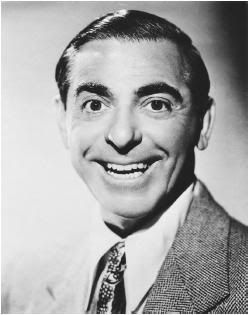
Cantor's career began as a singing waiter at
Coney Island, where his accompanist was his fellow future legend
Jimmy Durante. Cantor made the transition to
vaudeville as early as 1907, working his way up to headlining for
Florenz Ziegfeld by 1916 alongside such stars as
Will Rogers and
W.C. Fields, at which point he'd already begun appearing in films. Cantor's first radio appearance was in 1931, and he made the transition to television almost the minute it went on the air in the late 1940s.
Although he was financially wiped out by the
Stock Market Crash of 1929, the
Great Depression also gave Cantor's career (not to mention his bank account) just the boost it needed. His recordings of songs like
Cheer Up, Smile, Nertz! were just what the public needed, and his book
Caught Short! A Saga of Wailing Wall Street was credited by none other than
H. L. Mencken himself for single-handedly taking the depression out of the Depression.
Part of the reason Cantor's popularity has not been sustained, I think, is that he often worked in
blackface; even though he frequently worked alongside the black minstrel
Bert Williams - unlike, say,
Al Jolson - blackface of the malicious variety practiced on
Amos 'n' Andy has rightly been out of favour since the 1930s.
Despite his use of blackface, though, Cantor's politics were always in the right place.
When he was hosting
The Colgate Comedy Hour in the 1950s he had on a young performer named
Sammy Davis, Jr. Cantor was so familiar with Davis during the broadcast - hugging him, wiping Davis' brow with his own handkerchief, and so forth - that NBC protested by threatening to pull their backing from the show. Cantor's response was to book Davis for the rest of the season. He had responded in a similar manner when during the late 1930s he was outspoken in his opposition to Adolf Hitler's Nazis, and many affiliates refused to carry his show.
Late in life, Eddie Cantor suffered from heart troubles, and it was a heart attack that claimed him on this day in 1964; the following year he was awarded an honorary Oscar for his body of work in the movies, charitable work on behalf of the
March of Dimes (which he co-founded), and in general his contributions in all areas of show business over most of the previous 60 years.
*
share on:
facebook
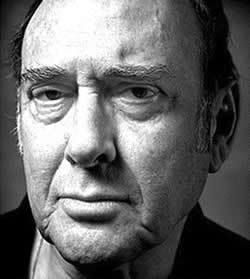 Yet, if it was up to him, he would have spent his career between the wickets - as a cricketer - instead of writing the important works of political and social realism he did. In fact, Pinter's works are so important, he became an adjective: Pinter-esque. In a Pinter play, as much can be said with a pause as with words.