Friday, January 28, 2011

The Death of Henry VIII

Photobucket

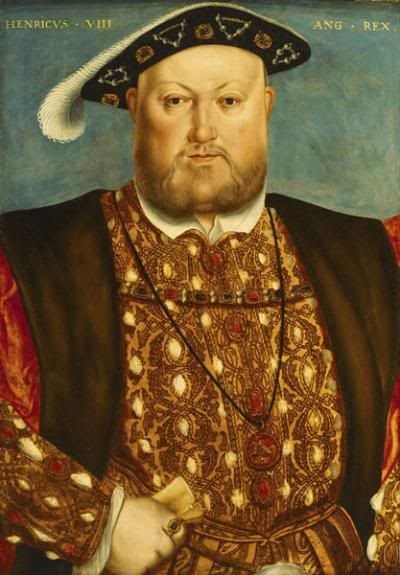
It was just past 2 AM when Henry VIII breathed his last, on this day in 1547, at the Palace of Whitehall in London. Having lived lavishly, and ruled tyrannically, he died ignominiously; his legendary beauty and strength gone to a life of dissipation, in the last hours of his life he was unable to speak or move or even offer his last confession (a rite of which he was sorely in need).

Long plagued by an ulcerated leg wound suffered at a joust in 1536, it's been the received wisdom for three centuries that his death had been hastened by the onset of syphilis; contemporary biographers also feel that it's just as likely the impaired mental state famously demonstrated in his final years was the result of untreated Type II diabetes. Born in June 1491, he was six months to the day shy of 56, and died on what would have been his father Henry VII's 90th birthday.

His nine-year-old son - for whom he had so devoutly wished that he broke with Rome, cast off wives, and generally carried on like a 16th Century King - became Edward VI under a council of regency which numbered 16 peers of the realm (as per the terms of the Act of Succession of 1543); from among them Edward Seymour, 1st Earl of Hertford - his mother Jane Seymour's brother - was chosen by them to serve England's new King as Lord Protector.

Henry VIII's body was buried at St George's Chapel in Windsor Castle alongside his beloved Queen Jane, but his spirit haunts history still; nearly 500 years after his death he remains one of the most biographied people who ever lived.

In addition to appearances both major and minor in myriad books, he's been played on film by Charles Laughton in The Private Life of Henry VIII (1933), Robert Shaw in A Man for All Seasons (1966), Richard Burton in Anne of the Thousand Days (1969), and Sid James in Carry On Henry (1970), and has more recently been played by Eric Bana in The Other Boleyn Girl; on television he's been played by Keith Michell in The Six Wives of Henry VIII (1973), Jared Harris in a BBC adaptation of The Other Boleyn Girl (2003), and Jonathan Rhys-Meyers in The Tudors (2007).
*
share on: facebook

Pop History Moment: The Space Shuttle Challenger Disaster


NASA's 25th Space Shuttle mission - STS-51-L - had been eagerly anticipated, since it was to be the first one to carry a civilian, thanks to the efforts of the Teacher in Space Project. Although less than five years old (the first was launched in April 1981) the Space Shuttle program, like many modern marvels, was already being greeted with a blasé reaction from the public; the inclusion of New Hampshire high school teacher Christa McAuliffe, though, ensured that classrooms around the world were eagerly tuned in on this day in 1986 to watch as 73 seconds in - at 11:39 AM EST - the craft disintegrated...

All seven crew members - Michael J. Smith, Dick Scobee, Ronald McNair, Ellison Onizuka, Gregory Jarvis, Judith Resnik and McAuliffe herself - died; there is some evidence that Smith knew something was happening (on recordings he can be heard to say 'Uh oh') but he may have been reacting to the loss of pressure in the fuel tank. There is also evidence that not all of the astronauts died instantly, although at an altitude of 14.6 km they would have certainly lost consciousness within seconds.

It's one moment most Gen-Xers share (not unlike the Kennedy Assassination for the previous generation); we all remember where we were when we heard it'd happened. I was in school (of course) about halfway through lunch, when I noticed a few of the girls crying; I asked what was the matter and that's when I heard the terrible news.

It was also one of the defining moments for the relatively new network CNN, and for those of us who didn't see it live we saw it there hundreds of times over the next couple of weeks, as officials gradually came to the conclusion that faulty O-rings had been to blame. That so much complex and expensive technology could be destroyed by its most low-tech component should be a valuable lesson for us all, a humbling reminder in the face of our collective hubris that we are not even a fraction as mighty as we may think we are.
*
share on: facebook

POPnews - January 28th

Photobucket
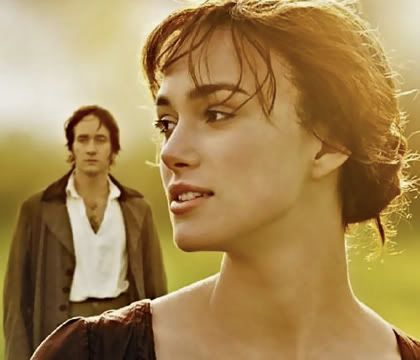
[An unfortunate allergy to the excessively mannered drawing-room comedies of Jane Austen has always prevented me from actually finishing a whole one of her novels, a dire situation only partially ameliorated by their numerous film and television adaptations; I can, without too much trouble, get through a whole one of them, however - such as Ang Lee's 1995 film Sense and Sensibility (which won an Oscar for its screenwriting star Emma Thompson) and this 2005 version of Pride and Prejudice starring the all-too lovely Keira Knightley - mainly because once my brain glazes over at the intricacies of Regency-era social discourse I can continue to admire the costumes, scenery, art direction and/or whatever bit of scrummy is portraying the cause of the heroine's busted corset stays, in this case Matthew Macfadyen as Mr. Darcy.]

814 CE - Charlemagne died; he was succeeded by his son Louis the Pious.

1077 - Following the Walk to Canossa, the excommunication of Holy Roman Emperor Henry IV was lifted as easily as the gates to Canossa Castle were opened to him, settling the Investiture Controversy between himself and Pope Gregory VII.

1521 - The Diet of Worms began, presided over by Holy Roman Emperor Charles V; it would last until May 25th, and in the process judge Martin Luther guilty of Protestantism for the heresies apparently contained in his 95 Theses, which had already been condemned by Pope Leo X in the papal bull Exsurge Domine, issued the year before.

1547 - England's King Henry VIII died; he was succeeded by his nine year old son, who became Edward VI, and the first of that country's truly Protestant Kings.

1573 - The articles of Warsaw Confederation were signed, sanctioning freedom of religion in Poland.

1621 - Pope Paul V died; he would be succeeded by Gregory XV on February 9th.

1624 - Britain's first Caribbean colony, at Saint Kitts, was founded by Sir Thomas Warner.

1754 - Horace Walpole coined the word 'serendipity' in a letter to Horace Mann.

1813 - Pride and Prejudice, by Jane Austen, was first published in the United Kingdom by T. Egerton of Whitehall.

1846 - The Battle of Aliwal, marking a turning point in the First Anglo-Sikh War, saw Ranjodh Singh Majithia defeated by the British troops of Sir Harry Smith.

1878 - Yale Daily News became the first daily college newspaper in the United States.

1902 - The Carnegie Institution was founded in Washington, DC, with a $10 million gift from robber baron turned philanthropist Andrew Carnegie.

1917 - The first municipally owned streetcars began service in San Francisco.

1922 - The Knickerbocker Storm - the worst snowfall in the history of Washington, DC - caused the roof of the Knickerbocker Theater to collapse, which is the single most fatal event in the city's history.

1932 - Japanese forces attacked Shanghai.

1933 - The name Pakistan was coined by Choudhary Rehmat Ali Khan and was accepted by the Indian Muslims, who then adopted it for the Pakistan Movement, which was seeking independence from the United Kingdom.

1965 - The current design of the Flag of Canada - chosen by an act of Parliament after several years of occasionally acrimonious debate - was proclaimed by Elizabeth II in her role as Queen of Canada; designed by George F. G. Stanley and John Matheson, it was first flown on February 15th of that year, which is marked by the little-celebrated holiday National Flag of Canada Day.

1977 - The first day of the Great Lakes Blizzard of 1977 - which affected much of Upstate New York, but Buffalo, Syracuse, Watertown, and surrounding areas especially - with each of these areas accumulating close to 10 feet of snow in a single day.

1986 - The Space Shuttle Challenger disintegrated shortly after liftoff, killing all seven astronauts on mission STS-51-L.
*
share on: facebook

Thursday, January 27, 2011

Remembering... John Updike

Photobucket

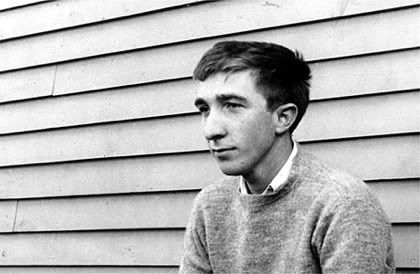
One of the most prolific and sensitive chroniclers of 20th Century suburban angst died, of lung cancer, on this day in 2009 at the age of 76; through the course of his series of books (Rabbit, Run, Rabbit Redux, Rabbit Is Rich, Rabbit At Rest, and Rabbit Remembered) John Updike followed the rise and fall of one such suburbanite, Harry 'Rabbit' Angstrom. The third and fourth of these earned him the Pulitzer Prize.

Yet for all that his repute was based on those five, Updike was very prolific author indeed, responsible for as many as a hundred books; excelling at the art of the short story, he'd contributed hundreds of them to The New Yorker since 1954, in addition to reviews and poems. Among his other famous works is The Witches of Eastwick, which was made into a film directed by George Miller in 1987, a 2000 stage musical by John Dempsey and Dana P. Rowe, and twice over a television series - first in 2002 and again in 2009*.

For all his obsession with the motivations of adultery, Updike didn't describe the mechanics it well at all; in November 2008 he was given a lifetime achievement award by the UK's Literary Review, which annually sponsors the Bad Sex in Fiction Award - the only one this author truly covets (aside from the Nobel, of course).

*The shows, both entitled Eastwick, were ill-fated; the former - starring Jason O'Mara, Marcia Cross, Kelly Rutherford, and Lori Loughlin - exists only as a pilot, and the latter - with Paul Gross, Lindsay Price, Jaime Ray Newman and Rebecca Romijn - aired 11 episodes before being cancelled (leaving 2 unaired in its initial US run).
*
share on: facebook

"Misguided Angel" by Cowboy Junkies


Birthday wishes go out today to Margo Timmins, for more than twenty years now the ethereal voice of her brother Michael's band, Canadian roots music pioneers Cowboy Junkies.

The song Misguided Angel (which Timmins herself believes is the best one she ever wrote) originally appeared on the 1988 album The Trinity Session - the band's second album, which was recorded live at Toronto's Church of the Holy Trinity, and which provided them with their breakthrough; the version released as a single in 1988 was recorded in one take, a testament to the artistry of all the musicians involved.
*
share on: facebook
Happy Birthday Ethan Mordden

To paraphrase the site near the top of my blogroll, 'why oh why' are most of the people I like best also the worst served by the Internet Photo Gods? But more importantly: 'why oh why' have those same deities forsaken me yet again, so soon after the last time*? Obviously, it's time to ritually sacrifice another issue of Life magazine in order to appease them.

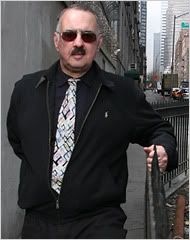
PhotobucketEver since I was introduced to his 'Buddies' cycle of novels shortly after the release of 1985's I've a Feeling We're Not in Kansas Anymore - thus rendering me incapable of complete loathing for twinks** - I have eagerly followed the fictional exploits of Carlo, Dennis Savage, J. (formerly Little Kiwi), Cosgrove, and Bud with the same fascination I've followed the semi-fictional real-life archetypes upon whom they were based.

Mordden is more than a deft writer of fiction, though; his nonfiction works include histories of Broadway musical theatre and an adept perspective on classic film and the artists who made them, as well as a recent biography of Florenz Ziegfeld which somehow found its way into the collection of the Pop Culture Institute***.

Born on this day in 1949, Mordden lives in Manhattan, the city he has so eloquently described and inhabited lo these many years...

*I'm still reeling over the numerous House of Grimaldi bloodbaths of the past four weeks.
**Thanks a lot!
***In the interest of full disclosure: the book nearly caught fire like a comet entering the atmosphere, so quickly did I snatch it off the shelf in the store when I first saw it.
*

share on: facebook

POPnews - January 27th

Photobucket
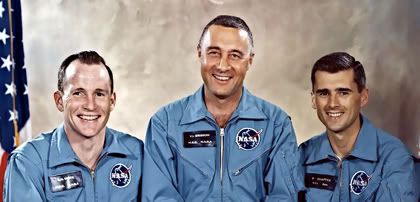
[Although the ignition source of the fire which killed Grissom, White, and Chaffee on this day in 1967 was never conclusively identified, the astronauts' deaths were attributed to a wide range of lethal design hazards in the early Apollo command module - the kind of clusterfuck which that normally comes from accepting the lowest bid.]


661 CE - The Rashidun Caliphate ended with death of Ali.

1142 - General Yue Fei of the Southern Song Dynasty was executed on orders of Chancellor Qin Hui which may or may not have come directly from Emperor Gaozong; nevertheless, for his groundless act Qin Hui is today remembered as a traitor to the Han race whereas Yue Fei is still considered a paragon of loyalty.

1186 - King of Germany, King of Italy, and Holy Roman Emperor Henry VI (the son and heir of the Holy Roman Emperor Frederick I and Beatrix of Burgundy) married Constance of Sicily, who was herself the sole legitimate heir of Sicily's King William II - thus adding that crown to his already impressive collection.

1595 - Following a failed attack on San Juan, Puerto Rico, English privateer Sir Francis Drake died of dysentery off the Panamanian coast near Portobelo; he was 55.  Drake was later buried at sea in a lead coffin wearing his full armour - a treasure which continues to elude discovery to this day...

1606 - Guy Fawkes and his co-conspirators went on trial in London's Westminster Hall for their role in the Gunpowder Plot.

1785 - The University of Georgia was founded, making it the first public university in the United States.

1870 - The Kappa Alpha Theta fraternity was founded at DePauw University.

1880 - Thomas Edison filed a patent for the electric-incandescent lamp, more commonly known today as a light-bulb.

1888 - The National Geographic Society was incorporated in Washington, DC, by Gardiner Greene Hubbard - having been founded two weeks earlier at the Cosmos Club.

1909 - The Young Left was founded in Norway.

1918 - The first hostilities occurred in the Finnish Civil War - pitting the White Guards and the German Empire against the Red Guards and the Russian SFSR.

1939 - The Lockheed P-38 Lightning made its first flight.

1944 - The 900-day Siege of Leningrad was lifted after the 13-day Leningrad-Novgorod Strategic Offensive saw Soviet forces rout the city's Nazi occupiers.

1945 - The Nazi concentration camp at Auschwitz was liberated.

1951 - Nuclear testing at the Nevada Test Site began with a one-kiloton bomb dropped on Frenchman Flats.

1967 - Gus Grissom, Edward White and Roger Chaffee were killed when a fire broke out during a training exercise on the Apollo I spacecraft.

1973 - Colonel William Nolde was killed in action at An Loc eleven hours before the signing of the Paris Peace Accords officially ended the Vietnam War, making him the conflict's last recorded American combat casualty.

1996 - International Holocaust Remembrance Day was first celebrated in Germany.

2003 - The first selections for the National Recording Registry were announced by the Library of Congress; they included 50 diverse offerings such as those made by Thomas Edison when first exhibiting his phonograph in 1888, the Metropolitan Opera's Mapleson Cylinders, Ragtime piano rolls by Scott Joplin, Booker T. Washington's 1895 Atlanta Exposition speech, and a recording of Casey at the Bat as performed by vaudevillian DeWolf Hopper among others.
*

share on: facebook

Wednesday, January 26, 2011

Vintage Stand-Up: Ellen DeGeneres


Birthday wishes go out to Ellen DeGeneres, seen here in a 1989 episode of HBO's One Night Stand; watch as the Queen of Nice riffs on first impressions in her inimitable meandering, hilarious way.
*
share on: facebook

World City-Zen: Sydney

Photobucket

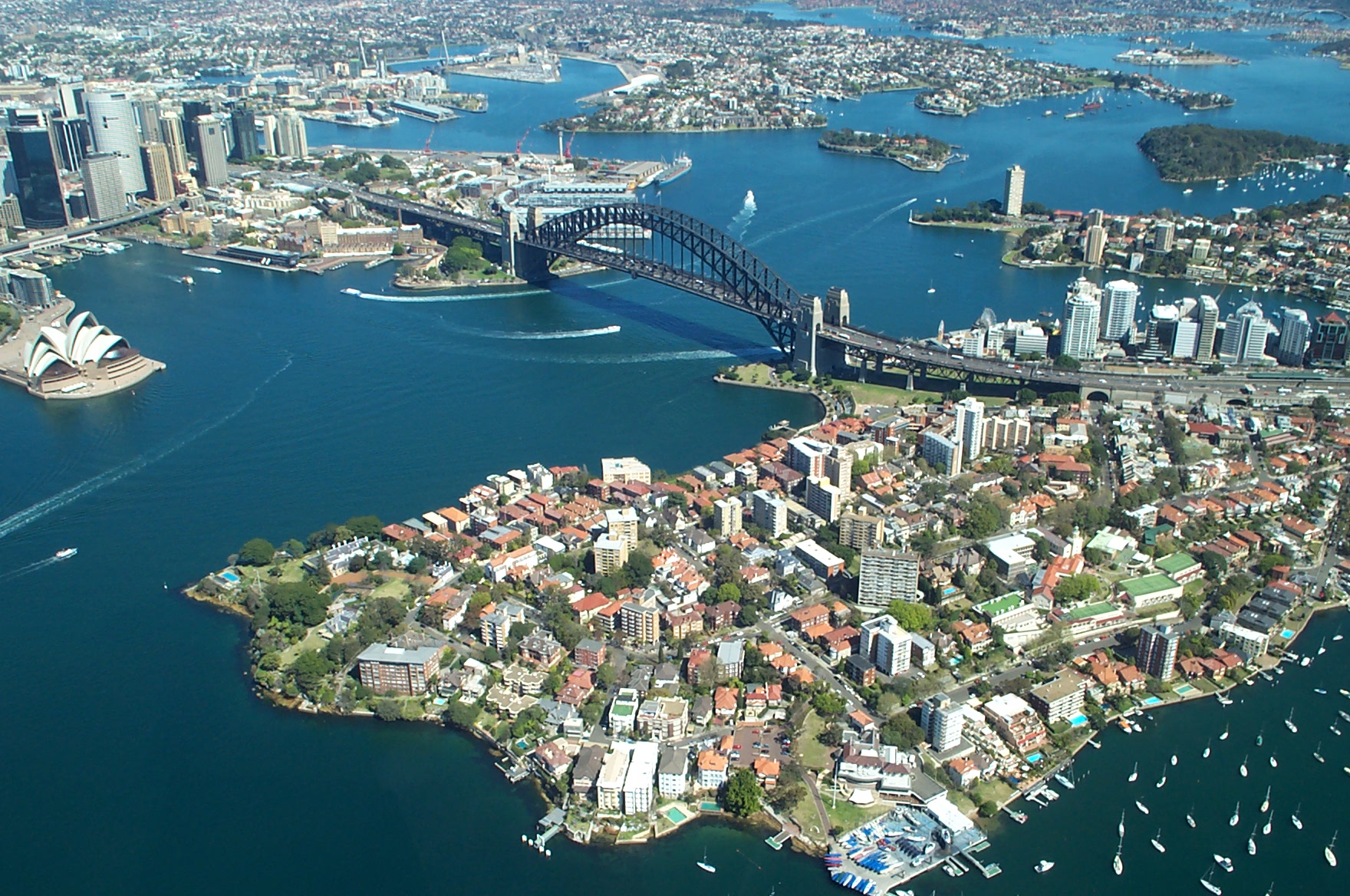
Although the first Sydney-siders arrived in the region as long as 30,000 years ago - drawn by the area's abundant natural charms - it was in 1770 that Lieutenant James Cook landed in Botany Bay on the Kurnell Peninsula and made first contact with an Aboriginal tribe known as the Gweagal. There he found an enormous archipelago-like natural harbour, balmy weather, and all the resources necessary to start a fledgling colony off right, albeit unnecessarily cluttered up by a whole lot of brown people who didn't speak any English.

Still, it took nearly a generation for Arthur Phillip to get the British government to allow him to establish a convict settlement there... Arriving at the helm of the First Fleet in January 1788 - which had left Portsmouth in May 1787 - 1373 British were left to deal with 4-8,000 natives whom they called Eora (despite the fact that they were actually the Cadigal people) - none of which boded well for the aboriginals.

On this day in 1788 Philip and his crew landed at Sydney Cove on Port Jackson and founded a town they named for their patron - Home Secretary Thomas Townshend, Lord Sydney; it didn't take long for those twin British advances - infrastructure and smallpox - to make themselves known. Most of the aboriginal resistance to colonization would be blunted by the latter, even as the colonials' decimation of the aboriginals would be aided by the former.

On its way to becoming the largest city in Australia, Sydney has exerted an enormous influence - cultural, political, economic - on the life of the country. As a repository of landmarks, it's home to the iconic Opera House and the Taronga Zoo among many others, world class night-life at Kings Cross, and the annual Gay and Lesbian Mardi Gras. For nature lovers the beaches (such as Manly, Botany Bay, and Bondi) to the East*, the Blue Mountains to the West, the Hawkesbury River to the North and the Royal National Park to the South can't be beat.

In fact, after a life spent traveling the world on behalf of the Pop Culture Institute I can easily see settling down there myself, and enjoying my dotage turning as brown and wrinkly as an old scrotum amongst its palm tree-lined streets; I may even thrash about in the water a bit and see if I can catch me a lifesaver - although given my luck I'll probably only get a shark!

*As much as the bodies on them.
*

share on: facebook

What's The Occasion? Australia Day

Photobucket

Try as I might to entice Australian readers to this blog, statistically they are currently holding steady in eighth place, down from sixth place in 2009; although intellectually I can understand that most of my traffic would come from the the US, Canada, and the UK there are still more readers here from Germany, France, the Netherlands, Italy, and Brazil than Australia, which my Commonwealth heart finds irksome.

May I suggest this Australia Day that in the interests of national pride any Australians who happen upon this blog post tell all their friends about it and encourage them to visit here often; when they do, they shouldn't hesitate to leave comments suggesting what topics of interest I might include so as to keep them coming back. Strictly in the interests of Australian nationalism, mind you, and not selfishly motivated to give me more traffic...

Celebrating the arrival of the First Fleet at Port Jackson in Sydney Harbour in 1788, Australians today mark the occasion of Australia Day with barbecues, drunkenness, and gunpowder... So pretty much the same as every other day. Unique features of the day include the investment of new members into the Order of Australia as well as the Australian of the Year awards, and a televised address from the Prime Minister.
*
share on: facebook

POPnews - January 26th

Photobucket
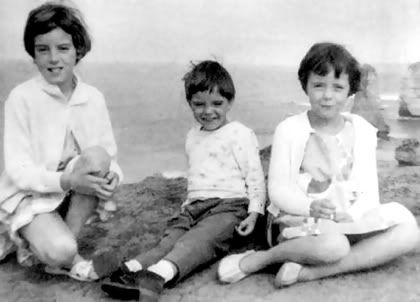
[The disappearance of Jane (9), Arnna (7), and Grant (4) - collectively known as the Beaumont Children - marked a major loss of innocence in Australian culture, as previously that country's parents had considered their children safe from human predators; prompting the largest and most prolonged investigation in Australian history, and despite the identification of four plausible suspects - including Bevan Spencer von Einem, Arthur Stanley Brown, James O'Neill, and Derek Percy - no trace of any of the children has ever been found.]

1531 - An estimated 30,000 people died when Lisbon was hit by an earthquake.

1700
- The magnitude 9 Cascadia Earthquake took place off the west coast of the North America, as evidenced by Japanese records of a tsunami which struck the east coast of that country and the carbon dating of tree rings in the affected area.

1736
- Poland's King Stanislaus I abdicated his throne.

1788
- The British First Fleet, led by Arthur Phillip, sailed into Sydney Harbour to establish Sydney, the first permanent European settlement on the continent; today the event is commemorated as Australia Day.

1808 - The Rum Rebellion - the only successful (albeit short-lived) armed takeover of the government in Australian history - occurred twenty years to the day after the colony was founded, when Governor William Bligh was deposed by forces loyal to John Macarthur.

1837
- Michigan became the 26th US state.

1856 - The first Battle of Seattle occurred when US Marines from the USS Decatur - commanded by Guert Gansevoort and anchored in Elliott Bay - fired upon Suquamish and Duwamish attackers after an all day battle with settlers; the Native Americans reported 28 dead and 80 wounded. Part of the Puget Sound War, the battle occurred one year to the day after Washington Territory governor Isaac Stevens imposed the Point No Point Treaty on the S'Klallam, the Chimacum and the Skokomish tribes at Point No Point, on the northern tip of the Kitsap Peninsula. Stevens had only recently declared a 'war of extermination' against all the indigenous peoples of the region.

1861 - Louisiana seceded from the United States to join the Confederate States of America.

1905 - The Cullinan Diamond was discovered; it was later presented to King Edward VII and has been incorporated into the British Crown Jewels.

1911 - Richard Strauss' opera Der Rosenkavalier received its debut performance at the Dresden State Opera.

1934 - Harlem's Apollo Theater was reopened.

1950 - The Constitution of India was adopted, and India became a republic; the date is now celebrated in that country as Republic Day.

1966 - The Beaumont Children went missing from Glenelg Beach near Adelaide, South Australia, during a family picnic on that year's Australia Day.

1988 - Andrew Lloyd Webber's The Phantom of the Opera debuted on Broadway at the Majestic Theatre; it is currently the longest-running show in the history of the Great White Way, with more than 9,500 performances in that location alone, surpassing Lloyd Webber's other monster hit Cats in January 2006.

1993 - Vaclav Havel was elected President of the newly created Czech Republic.

1998 - During a televised press conference from the White House, US President Bill Clinton insisted he 'did not have sexual relations' with Monica Lewinsky; it was later revealed, however, that she'd had sexual relations with him, which is (regardless of what your definition of 'is' is) still none of our damn business - and hardly on a par with forcing the President to resign over the discovery that he'd authorized the burglary of the Democratic Party headquarters in the Watergate hotel, for which it was retaliation.

2001 - On India's Republic Day, an earthquake centered at Gujarat killed 30,000 and injured 55,000 more.

2004 - President Hamid Karzai signed the new constitution of Afghanistan.

2005 - Condoleezza Rice was sworn in as US Secretary of State.
*
share on: facebook

Tuesday, January 25, 2011

"No One" by Alicia Keys


Her performance of this very song at the Inauguration of Barack Obama only served to underline what her fans already knew about birthday gal Alicia Keys - that no one* can deliver an inspirational lyric with the same gusto she can.

Speaking of No One - which originally appeared on her third album, 2007's As I Am - it has become her most successful single to date, which bodes well for the talented singer and pianist, as it means her career is not in a long downward trajectory from her first smash hit Fallin', but rather moves upwards from strength to strength as she does.

*'No One', get it? Like the title of the song?
*

share on: facebook

Gratuitous Brunette: Robinho

Photobucket

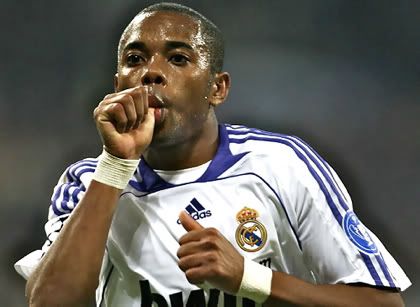
Seeing as this portion of the day is all about Brazil, I thought I'd take the opportunity to bolster my sports coverage with a photo of the footballer and noted paulista, Robinho, the Manchester City footballer born on this day in 1984 in the coastal city of São Vicente, in the state of São Paulo. Often called 'the new Pelé', Robinho was actually mentored by the football great both as a youth and when he played for Santos; his transfer from Real Madrid was the richest in history, worth a reported £32.5 million.

Robinho's success has brought the issue of São Paulo's robust gang culture into the world's headlines, as his mother Marina de Silva Souza was kidnapped from her home in Praia Grande in November 2004. She was released unharmed six weeks later after he paid a substantial ransom.

Oh, and by the way... The trademark thumb-sucking he does whenever he scores a goal is a tribute to his infant son; while it seems to draw considerable ire to him, in the opinion of the Pop Culture Institute it's quite sweet.
*
share on: facebook

World City-Zen: São Paulo

Photobucket

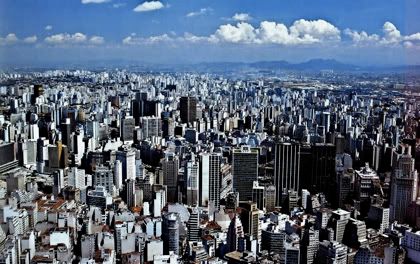
On this day in 1554 two Jesuit missionaries named Manuel da Nóbrega and José de Anchieta founded a mission, with the intention of 'saving' the area's indigenous Tupi-Guarani people; from its humble beginnings as the village of São Paulo dos Campos de Piratininga, São Paulo became what is today the second most populous city in the Americas, and one of the five largest in the world. Given its prime location in the Brazilian Highlands close by the Tietê River - at the mid-point between the resource rich interior of the country and the port at São Vicente, overlooking the port city of Santos - São Paulo has always played a crucial role in the life of the country.

Formally recognized as a city in 1711, São Paulo's early economy was born from coffee; in 1822 it was also the birthplace of the country's independence, when the Prince of Beira defied his father João VI's order to return from exile to Portugal by declaring Independencia ou morte (Independence or death!) to became Pedro I.

Modern São Paulo - from its name alone, the most logical capital of the State of São Paulo - is centred on Avenida Paulista; a paulista, of course, is the name for a person from the state of São Paulo, while a resident of the city is both a paulista and a paulistano. The avenue is the location of some of the tallest buildings in Brazil, and has frequently been compared to Manhattan's Fifth Avenue. Among the other tourist attractions the city boasts are its highest point, Pico do Jaraguá, Ibirapuera Park, and the São Paulo Museum of Art - which was opened by Elizabeth II in November 1968. Tourists also flock to the city for the São Paulo Gay Parade, which makes its way down Paulista Avenue each June.
*
share on: facebook

"At Last" by Etta James


Birthday wishes go out today to Etta James, whose best known song made the news in 2009 when it was performed by Beyonce* at the Neighborhood Ball following the Inauguration of Barack Obama, during which performance the new president shared a romantic dance with First Lady Michelle Obama.

Here we see James herself performing the title track to her breakthrough album in a fairly recent clip, since old school footage of her is tragically rare. Yet her 1961 version of the ballad At Last, while far and away the most famous**, wasn't its debut; the song was first performed in the 1941 Sonja Henie vehicle Sun Valley Serenade, whereas it was first sung by Ray Eberle and Pat Friday in the same year's film Orchestra Wives, with music in both instances supplied by Glenn Miller.

*Who played Etta James in the 2008 film Cadillac Records opposite Adrien Brody, and somehow or other managed not to screw up the arrangement when she sang it.
**IMHO.
*

share on: facebook

What's The Occasion? Burns Night

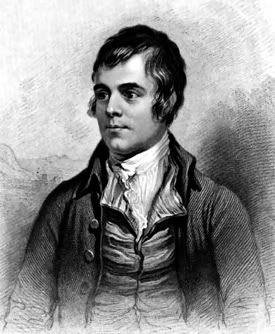
For most of us our birthday is a private occasion, into which we occasionally invite a few friends; still others of us are needy lucky enough to have the anniversaries of our birth noted in media, even (horror of horrors!) exploited as the subject of posts on obscure blogs. The rare few, however, are still having their special day celebrated centuries after it's technically been rendered redundant by death...

PhotobucketBorn on this day in 1759, Robert Burns definitely falls into the final category; not only was the Bard of Ayrshire wildly successful in his life, his fame continues to grow apace since his early death in July 1796, at the age of 37.

An excellent example of a person born at the right place and the right time, Burns' legacy has not only grown in his native Scotland but was transplanted all over the world thanks to that country's invasion of the world following the Highland Clearances; they called it the British Empire, but let's be realistic... The English left just as soon as they could, took all the money they made and went back to London, leaving Scots and Irish in their wake.

Which is why there's no worldwide celebration of St. George's Day, but there are Burns Night suppers throughout the Scottish Diaspora on or around January 25th throughout North America, in Australia and New Zealand, and many other places besides. Even more startling is that Burns' fame has grown despite the fact that he was a poet, a profession whose death knell has been sounding for years.
*
share on: facebook

POPnews - January 25th

Photobucket
[From a sleepy village located in the Brazilian Highlands beneath the Serra do Mar cliffs and centred around the Colégio de São Paulo de Piratininga (from whence the Roman Catholic Church would systematically rob the indigenous Tupi-Guarani people of their religion and way of life) São Paulo has grown into the richest, most populous city in the country - with a population above 11 million - as well as making itself home to many of the tallest buildings in Brazil.]

41 CE - After a night of negotiation, Claudius was accepted as Roman Emperor by the Senate.

1494 - Alfonso II became King of Naples.

1533 - England's King Henry VIII secretly married his second wife, Anne Boleyn.

1554
- The Brazilian city of São Paulo was founded by Jesuit missionaries Manuel da Nóbrega and José de Anchieta.

1573 - At the Battle of Mikatagahara Takeda Shingen defeated Tokugawa Ieyasu.

1792 - The London Corresponding Society was founded.

1858 - After the Wedding March by Felix Mendelssohn was played at the marriage of Victoria, Princess Royal (Queen Victoria's eldest daughter) to Frederick of Prussia, it became the de rigeur recessional at most subsequent weddings.

1879 - The Bulgarian National Bank was founded.

1881 - Thomas Edison and Alexander Graham Bell formed the Oriental Telephone Company.

1890 - Nellie Bly completed the round-the-world journey she'd begun '72 days, six hours, eleven minutes and fourteen seconds' earlier, in November 1889.

1909 - Richard Strauss' opera Elektra premiered at the Dresden State Opera.

1919 - The League of Nations was formed.

1924 - The first Olympic Winter Games were held at Chamonix, France.

1937 - The soap opera The Guiding Light made its debut - on NBC radio!

1949 - The first annual Emmy Awards were presented at the Hollywood Athletic Club.

1971 - Charles Manson - along with 'Family' members Patricia Krenwinkel, Susan Atkins, and Leslie Van Houten - were found guilty of the 1969 Tate-LaBianca murders.

1993 - Following a shooting outside CIA headquarters in Langley, Virginia, two employees - Lansing H. Bennett and Frank Darling - were killed and three others wounded by Mir Aimal Kasi; Kasi was executed for his crimes in November 2002.

1994 - The Clementine space probe was launched, with the intention of studying the Moon and the near-Earth asteroid 1620 Geographos.

1995 - During what has been rather blandly dubbed the Norwegian Rocket Incident Russia almost launched a nuclear attack after it mistook Black Brant XII, a Norwegian research rocket, for a US Trident missile.
*
share on: facebook

Monday, January 24, 2011

Standup by Jimeoin


Birthday wishes go out to Ulster-style comedian, Jimeoin, whose low-key delivery has been yielding big laughs since the early 90s, shortly after he moved to Australia. Originally working as a landscape gardener, his absurdist take on life naturally leant itself more to comedy clubs than hydrangeas, and he was off. He still enjoys the great outdoors, however, and combines extensive touring with opportunities to golf and fish - expeditions he now often films for TV specials.

Already a well-known fixture in the Australian domestic film and television market, with appearances in the films The Craic (1999) and The Extra (2005) - which he co-wrote and starred in with longtime collaborator Bob Franklin - Jimeoin has also become a legend for his eponymous television program, which ran for three seasons (1994-95). He's also become well-known for the sets he's performed at the Melbourne International Comedy Festival, as well as appearing on television in America, Canada, and the UK.
*
share on: facebook

Happy Birthday Maria Tallchief

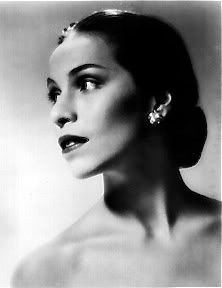
Maria Tallchief was the first American woman to achieve the vaunted status of prima ballerina; this was all the more amazing since she was also the first Native American to be acclaimed in ballet. Gaining her start in 1942 with the Ballet Russe de Monte Carlo, she later moved to the New York City Ballet, during which time she had a six-year childless marriage with famed choreographer George Balanchine, and where she danced until she was 40.

PhotobucketBorn on this day in 1925, Tallchief trained in California under Bronislava Nijinska, who encouraged her to live every part of her life as though she were a ballerina. This early form of creative visualization would prove wildly successful...

During her marriage to Balanchine Tallchief acted as his muse, dancing the lead in his ballets The Firebird and his own distinctive staging of The Nutcracker, which has become the standard; following their divorce she married the aviator Elmourza Natirboff and subsequently builder Henry 'Buzz' Paschen, with whom she had a daughter, poet and educator Elise Paschen.

Maria Tallchief has been honoured by the name Wa-Xthe-Thomba ('Woman of Two Worlds'), which was granted to her by the Governor of Oklahoma, her birth state. She was awarded the Kennedy Center Honors in 1996, at the same time as Johnny Cash, Jack Lemmon, Edward Albee, and Benny Carter and received the National Medal of Arts from the National Endowment of the Arts in 1999. She is also honoured in the statue The Five Moons - alongside Yvonne Chouteau, Rosella Hightower, Moscelyne Larkin and Marjorie Tallchief - located in the garden of the Tulsa Historical Society.
share on: facebook

In Memoriam: Farinelli

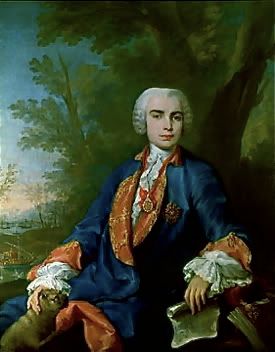
While the famed castrato Farinelli may be the first man ever featured on the Pop Culture Institute with no balls*, one should never mistake the lack of testes for a lack of manhood**; not only was Farinelli an acclaimed operatic singer, he was also a kind of a human bed warmer, taken to more aristocratic bosoms than perfume and/or diamonds, specifically because he practiced the ultimate form of contraception...

PhotobucketBorn on this day in 1705, as a boy he moved with his family moved to Naples where he attended the Conservatory of Santa Maria di Loreto; there, under the tutelage of Nicola Porpora, it was intended that the boy would study to be a composer. However, his father's early death seems to have prompted his castration, whereby he could become a singer to support his family. In that era, as many as 4,000 boys a year underwent the procedure in hopes that they would become famed singers, which puts the whole boy band mania of our times into perspective.

Farinelli's career trajectory was steep; he moved from Rome to Vienna to München, and all around Italy in the process, during which tours he was hailed by fans and composers alike, and even received by royalty. In very real terms, Farinelli was the first rock star; everyone wanted to work with him for his virtuosity, which is the same reason so many others seemed to want to sleep with him.

One person who perhaps fit into both categories was the composer and noted whoopsie George Frideric Handel, whose attempts to lure Farinelli to London were intermittently successful; still, the divo seems to have preferred Paris and Madrid, where he settled in the court of Philip V in order to try and cure the King's serious depression. In August 1737 Farinelli was named a criado familiar (an honorary member of the Royal Family) and thereafter never sang in public. Nine years later, Farinelli's influence at court increased upon the accession of Ferdinand VI; following the subsequent accession of Charles III in 1759, music fell from favour at the Spanish court, and suddenly Farinelli was out of a job. He retired to Bologna with a generous pension and, while he received many famous visitors there, grew lonely - having outlived most of his contemporaries.

Farinelli died in September 1782, following which his remains moved around a bit due to the vagaries of war; he was last disinterred in 2006 so scientists could study his vocal mechanism via bone structure and DNA. A 1994 biopic, Farinelli directed by Gérard Corbiau and starring Stefano Dionisi (voiced by Derek Lee Ragin), was released to much art-house acclaim, just as a resurgence in the countertenor was occurring; the countertenor voice is the closest to the castrato, and the spontaneous appearance of numerous performers skilled in it in the 1990s allowed for a rebirth of interest in Baroque opera, although it meant that the women who had been playing these so-called 'trouser roles' had to go back to playing female characters.

*Even though, in saying so, I've passed up an awesome opportunity to slander Canadian Prim(e) Minister Stephen Harper who, it should be noted, must have a Hell of a pair to have even tried a tenth of the crap he has.
**Since we all know it's the cock that determines manhood - which is why it's called 'the manhood', duh!
*

share on: facebook

"Simple Man" by Klaus Nomi


Klaus Nomi's early death cut short a recording career which bordered on performance art. That his performance career was also out there is a given; by putting a New Wave twist on the Weimar-era's Brechtian theatrics (looking like a cross between the MC from Cabaret and Max Headroom) Nomi was something American audiences at that time were unused to seeing.

A fixture in the rich cultural life of Manhattan's East Village in the 1970s and early 1980s - alongside such towering figures as Charles Ludlam, Joey Arias, Jean-Michel Basquiat, Keith Haring, and Kenny Scharf - Nomi's greatest renown came when he was chosen by David Bowie to appear with him on a December 1979 episode of Saturday Night Live.

Nomi was one of the first celebrity casualties of AIDS; I stood over his panel when the Quilt came to Ottawa, and even though I'd never heard any of his work at that point, I was well aware of who he was. I have since enlightened my ignorance, and I can say his influence is both quite thorough and entirely deserving. His countertenor/falsetto lives on aurally in the work of Jimmy Somerville and his aesthetic (as well as his sound) can be detected in the work of Tiger Lillies.

He may have called his album Simple Man, but Klaus Nomi was anything but; born on this day in 1944, he died in August 1983.
*
share on: facebook

POPnews - January 24th

Photobucket
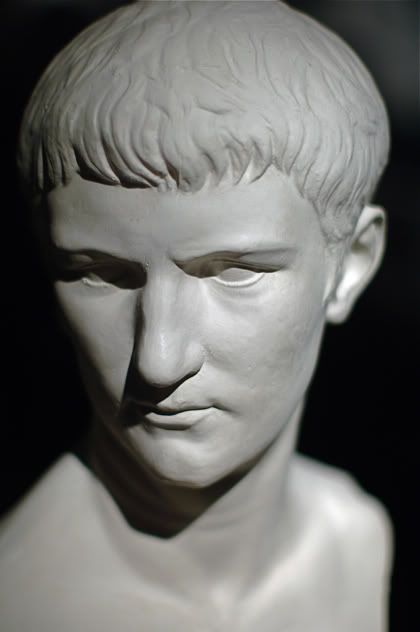
[Caligula, Rome's third Emperor, began his reign in March 37 CE promisingly enough; after a couple of years, however, something hastened his descent into depravity. Possibly the job went to his head, or he may have developed some kind of mental illness. Whatever the reason, he comes down to us through history as a right perv, as famously portrayed by Malcolm McDowell in the 1979 film Caligula - aka 'the most expensive porno ever made'.]

41 CE - Caligula was assassinated by his Praetorian Guards.

1742 - Prince-elector Charles VII Albert of Bavaria became Holy Roman Emperor.

1848 - Gold was discovered by James W. Marshall at Sutter's Mill, near Sacramento, California.

1857 - The University of Calcutta was formally established, making it the first full-fledged university in south Asia.

1859 - Following the political union of Moldavia and Wallachia, Alexandru Ioan Cuza was elected the first Domnitor or ruler of the aptly-named United Principalities of Wallachia and Moldavia.

1887 - At the Battle of Dogali Abyssinian troops under Ras Alula Engida defeated an Italian force commanded by Colonel Tommaso De Cristofori.

1907 - The Boy Scout movement was founded by Robert Baden-Powell.

1916 - In Brushaber v. Union Pacific Railroad, the Supreme Court of the United States declared the federal income tax constitutional.

1924 - Petrograd, formerly St. Petersburg, was renamed Leningrad; Leningrad, formerly Petrograd, has since been renamed St. Petersburg.

1927 - The Pleasure Garden - the first film directed by Alfred Hitchcock - opened in London, following the success of The Lodger, which was made after but released before.

1936 - Albert Sarraut began his second term as Prime Minister of France.

1943 - At the height of World War II US President Franklin D. Roosevelt and British Prime Minister Winston Churchill concluded a 10-day conference in Casablanca.

1961 - A B-52 Stratofortress bomber carrying two hydrogen bombs broke up and crashed over Goldsboro, North Carolina; one weapon nearly detonated, and its uranium core is still lost.

1966 - An Air India Boeing 707 jet named Kanchen-junga and piloted by J. T. D'Souza crashed into Mont Blanc, on the approach to Geneva airport, killing 117; among those killed was Dr. Homi J. Babha, who had recently been named chairman of India's Atomic Energy Commission.

1977 - At the Massacre of Atocha in Madrid - during the Spanish transition to democracy - 5 were killed and four injured by members of the far-right group Alianza Apostólica Anticomunista.

1984 - The first Apple Macintosh was sold.

1986 - NASA's Voyager 2 spacecraft passed Uranus; the usual jokes were made that are inevitably made whenever anyone mentions Uranus, most of them by me.

1993 - Turkish journalist and writer UÄŸur Mumcu was assassinated by a jihadist car bomb in Ankara.

2003 - The US Department of Homeland Security began its first day of business.
*
share on: facebook