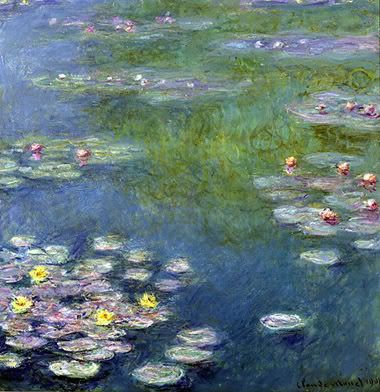
The father of French impressionist painting studied the methods of English landscape painters John Constable and J. M. W. Turner while exiled in England in 1870 during the Franco-Prussian War; it was there he created many iconic English landscapes before returning to France via Holland the following year, painting as he went...
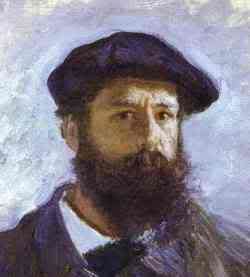 Born on this day in 1840, Claude Monet favoured the en plein air method, which provided the impetus for many an artist to escape the confines of the studio and seek out glade and vale rather than exclusively garret or atelier in which to commit their daubings to the ages. In contrast to other painters of his era, though - Henri Rousseau, for instance - Monet favoured the controlled nature of gardens over the chaos of actual nature. He found much to paint along the banks of both the Seine and the Thames that was natural yet tamed.
Married to Camille Doncieux shortly before moving to England, her death in September 1879 deeply affected him for the rest of his life. Plagued by poverty, he continued to work profusely so as to ward off the scourge of debt; in 1886 he attempted suicide by throwing himself in the Seine, related almost entirely to the dire state of his finances. In 1892 he was married again, this time to Alice Hoschedé.
By the end of the 1910s Monet began to develop cataracts on his eyes, and underwent two surgeries to correct the condition in 1923; while saving his vision, the operations seem to have affected his relationship to colour, and he repainted many works in a bluer hue than they had been previously.
When he died in December 1926, Claude Monet was the grand old man of French art; bequeathing his house and beloved garden in Giverny - where he painted, among others, the work at the top of this post - to the Institut de France, today they are preserved much as he left them and maintained by the Fondation Claude Monet in his memory.
*
share on: facebook





No comments:
Post a Comment