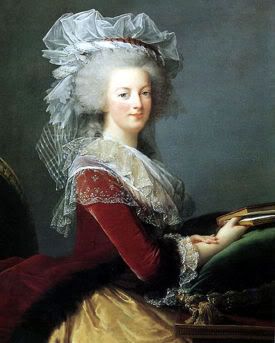
 And so it was. In 1767 she was formally betrothed to the Dauphin of France (later the hapless Louis XVI), and finally married by proxy in 1770 following three years of negotiations over dowries and the other fine points of royal marriage. Then the shy yet regal girl began her journey from the heart of Europe to Versailles - out of the frying pan, into the fire.
Court life at Schönbrunn and Hofburg was downright private compared to the same at her new French home, where anyone from peasant to noble might just wander into the palace seeking an audience. It was a highly political place (in both senses - namely, concerned with the politics of the country and the world yet riven with its own factions and issues) and Marie Antoinette was no politician. Had she been, she might have survived what was to come.
Originally much beloved by the people, especially for her patronage of the fine arts (especially music) - her former teacher, Christoph Willibald Gluck, went on to much fame - as history was to show it didn't take long for that mob to turn ugly, blaming all the failings of its French politicians on its most high-profile Austrian possession. Outrageously slandered throughout her lifetime and for many years afterward, it's taken centuries for the light of truth to be shone on the life and character of Marie Antoinette.
The quintessential revisionist text (and I use the word here in its most positive sense) is Lady Antonia Fraser's Marie Antoinette, The Journey (2001) which, with solid research and sterling insight, offers a glimpse into the life of a woman tragically caught in the crossfire of history.
*
share on: facebook





2 comments:
Hello, I like the blog.
It is beautiful.
Sorry not write more, but my English is bad writing.
A hug from Portugal
Welcome, and thank you for your kind words...
~ MSM
Post a Comment