Showing posts with label 1471. Show all posts

Tuesday, January 18, 2011

POPnews - January 18th

Photobucket
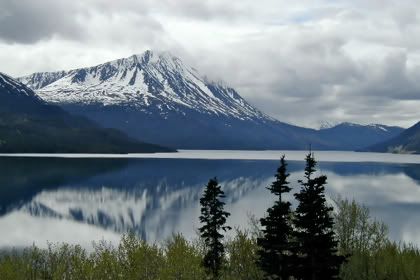
[Normally Tagish Lake in Canada's Yukon is as tranquil as this picture would suggest; certainly it was just before it was struck by a meteorite on this day in 2000, and indeed it would be again after more than 500 fragments - most the size and with the appearance of charcoal briquettes scattered over the lake's Taku Arm - had been gathered up and analyzed. Initially as large as 4 metres in diameter and weighing 56 tonnes, less than a quarter of the meteorite was ever recovered, suggesting it had experienced significant vaporization upon entering the Earth's atmosphere.]

474 CE - Leo II became Byzantine Emperor following the death of his grandfather Leo I; his reign would last just ten months, and after his suspicious death there were rumours he'd been poisoned by his mother Ariadne so her husband Zeno could become emperor, which he did.

1126 - Emperor Huizong abdicated the throne of China in favour of his son, Emperor Qinzong.

1213 - Georgia's Queen regnant Tamar died; she was succeeded by her son, George IV.

1471 - Japan's Emperor Go-Hanazono died; he'd already abdicated in favour of his son - who reigned as Emperor Go-Tsuchimikado - in 1464.

1591 - King Naresuan of Siam killed Crown Prince Minchit Sra of Burma in hand-to-hand combat - albeit while riding war elephants - which event is now observed as Royal Thai Armed Forces Day.

1701 - Frederick I, formerly the Elector of Brandenburg and Duke of Prussia, crowned himself the first King of Prussia - although to soothe the nerves of the Holy Roman Emperor, Leopold I, he styled himself King in Prussia instead.

1871 - Wilhelm I was proclaimed the first German Emperor in the Hall of Mirrors of the Palace of Versailles near the end of the Franco-Prussian War; the empire he commanded became known as the Second Reich.

1915 - Japan issued the Twenty-One Demands to the Republic of China in a bid to increase its power in East Asia.

1919 - The Paris Peace Conference - whose mandate was to divvy up a world recently devastated by World War I - opened at the Palace of Versailles. The story of the conference, and the numerous egos that ran it, is brilliantly told in Margaret MacMillan's Paris 1919: Six Months That Changed the World.

1943 - The first uprising of Jews in the Warsaw Ghetto - oddly enough, known as the Warsaw Ghetto Uprising - took place.

1955 - The Battle of Yijiangshan occurred on the Yijiangshan Islands, pitting the National Revolutionary Army of Wang Shen-Ming against the victorious Zhang Aiping's People's Liberation Army during the First Taiwan Strait Crisis.

1958 - Canadian Willie O'Ree, the first black player in the NHL, made his debut when he took to the ice for the Boston Bruins against the Montreal Canadiens.

1977 - The worst rail crash in Australian history occurred at Granville, near Sydney, killing 83.

1990 - Washington, DC mayor Marion Barry was arrested for drug possession during an FBI sting.

1994 - During the Cando Event - a possible bolide impact over Cando, Spain - witnesses claim to have seen a fireball in the sky lasting for almost one minute.

1995 - Cave paintings estimated to be at least 17,000 years old were discovered at Vallon-Pont d'Arc in France.

1997 - Norway's Boerge Ousland became the first person to cross Antarctica alone and unaided.

2000 - The Tagish Lake Meteorite impacted the Earth at Tagish Lake in Canada's Yukon.

2003 - A bushfire killed 4 people and destroyed more than 500 homes in the Australian capital of Canberra.
*
share on: facebook

Tuesday, May 04, 2010

POPnews - May 4th

Photobucket
[It's always interested me how, from the vast number of pictures taken, some of them - like John Filo's Pulitzer Prize-winner of 14 year-old runaway Mary Ann Vecchio keening over the dead body of Jeffrey Miller moments after he was shot and killed while protesting the US invasion of Cambodia - end up becoming iconic. Certainly the award helps, since it guarantees a wider distribution, but three other students - Allison Beth Krause, Sandra Lee Scheuer, and William Knox Schroeder - were also killed that terrible day in 1970 at Kent State, and it seems no similar photos exist of their tragic deaths under such ugly circumstances.]

1415 - Religious reformers John Wycliffe and Jan Hus were condemned as heretics at the Council of Constance; initially called by Holy Roman Emperor Sigismund to try and solve the Western Schism (caused by there being three popes simultaneously, which is almost too many to fit in a Volkswagen, or its 15th Century equivalent anyway) the Council also ruled on issues of national sovereignty versus papal authority, the rights of pagans, and what constituted a just war. The chief result of the Council, though, was a book entitled Ars moriendi, or The Art of Dying.

1471 - During the Wars of the Roses, Edward IV defeated a Lancastrian army at the Battle of Tewkesbury and killed Edward of Westminster - son of Henry VI and Margaret of Anjou - making him the only Prince of Wales to ever die in battle. His widow, Anne Neville, later married the man who became Richard III.

1493 - Pope Alexander VI divided the New World between Spain and Portugal along the Demarcation Line in the papal bull Inter Caetera.

1626 - Dutch explorer Peter Minuit arrived in New Netherland (now better known as Manhattan) aboard the See Meeuw to take up his post as third director-general of the Dutch West India Company.

1814 - The former French Emperor Napoleon Bonaparte came ashore at Portoferraio on the island of Elba to begin his exile, having arrived in the middle of the night before.

1859 - The Cornwall Railway was opened by Albert, Prince Consort, linking Plymouth in Devon with Falmouth in Cornwall across the Royal Albert Bridge (which he'd also opened, two days earlier) .

1869 - The Naval Battle of Hakodate took place off the coast of Hokkaidō, between whatever boats the crumbling Tokugawa shogunate could muster and the Imperial Japanese Navy; an imperial victory hastened the demise of the already waning Boshin War and greatly strengthened the position and prestige of Emperor Meiji.

1886 - At the Haymarket Square Riot a bomb was thrown at policemen trying to break up a labor rally in Chicago, killing constable Mathias J. Degan; in retaliation the police fired into the crowd, themselves killing ten and wounding as many as 60, although many of the injured may have succumbed to friendly fire.

1904 - The United States began construction on the Panama Canal; the canal was an initiative of President Theodore Roosevelt, who later appointed John Frank Stevens as Chief Engineer on the project.

1910 - The Royal Canadian Navy was created under the leadership of Rear-Admiral Charles Kingsmill.

1924 - The 1924 Summer Olympics opened in Paris; it would be the last Olympiad organized by Pierre de Coubertin.

1932 - Mobster Al Capone began serving an eleven-year prison sentence for tax evasion at the Federal Penitentiary in Atlanta; while there he played the bigshot, which resulted in his transfer to Alcatraz in August 1934.

1949 - The entire Torino F. C. (except for one player who did not take the trip due to an injury) were killed in a plane crash near the Basilica of Superga on the outskirts of Torino, in Italy.

1953 - Ernest Hemingway was awarded the Pulitzer Prize for his novel The Old Man and the Sea.

1961 - During the American Civil Rights Movement the Freedom Riders began a series of bus trips through the South - from Washington, DC, to New Orleans - in order to test a Supreme Court decision known as Boynton v. Virginia. Along the way the riders were harassed, attacked, and arrested. By September more than 450 riders had participated in at least one of 60 rides, and succeeded in embarrassing the Kennedy Administration, which had previously been lax in its attempts to end racial segregation.

1970 - The Ohio National Guard - sent to Kent State University after the ROTC building there was burnt down by protesters opposed to the Vietnam War - specifically the US invasion of Cambodia - opened fire on unarmed students, killing four and wounding nine others.

1980 - President-for-Life Josip Broz Tito of Yugoslavia forfeited his title at the age of 87.

1982 - The British destroyer HMS Sheffield was hit by an Argentinian Exocet missile during the Falklands War, killing 20; after the ship was struck the surviving crew, waiting to be rescued, sang Always Look on the Bright Side of Life from Monty Python's Life of Brian to keep their spirits up. While not destroyed in the attack, the ship foundered six days later in high seas while being towed back to England by HMS Yarmouth for repairs.

2000 - Ken Livingstone became the first Mayor of London; re-elected once, he was denied a third term by Boris Johnson in 2008.
*
share on: facebook

Wednesday, April 14, 2010

POPnews - April 14th

Photobucket
[Shortly after noon on this day in 1935 a cloud of dust traveling 100 kilometres (60 miles) an hour came swirling out of the American West over the Great Plains... Not the first - and by no means the last - by 1940 dust storms such as this one had forced 2.5 million people to flee what was left of their farms for greener pastures, while an untold quantity of the once-fertile topsoil that had once upon a time made those farms bountiful ended up at the bottom of the Atlantic Ocean.]

43 BCE - At the Battle of Forum Gallorum Mark Antony - while besieging Julius Caesar's assassin Decimus Junius Brutus in Mutina - defeated the forces of the consul Pansa, who was killed.

1434 - The foundation stone of Cathedral St. Peter and St. Paul in Nantes was laid by John, Duke of Brittany and Jean de Malestroit, Bishop of Nantes; the first architect on the site was Guillaume de Dammartin, who was later replaced by Mathurin Rodier.

1471 - In England, Yorkist forces under Edward IV defeated their Lancastrian opponents under the Earl of Warwick at the Battle of Barnet, during which Warwick was killed and following which the deposed monarch was able to resume his throne - the first and only English King to do so*.

*Charles II technically became King upon the removal of his father Charles I's head in January 1649, but since Parliament under Oliver Cromwell had abolished the monarchy as it abolished its monarch, technically the succession was broken - at least in England.

1775 - The first abolition society in the North America - the Society for the Relief of Free Negroes Unlawfully Held in Bondage - was established in Philadelphia by Benjamin Franklin and Benjamin Rush.

1846 - The Donner Party of pioneers departed for California from Springfield, Illinois, on what would become a year-long journey of hardship, cannibalism, and survival.

1865 - US Secretary of State William H. Seward and his family were attacked in his home by Lewis Powell at the same time as President Abraham Lincoln was being shot at Ford's Theatre by John Wilkes Booth; a third attack, against Vice President Andrew Johnson - meant to be carried out by George Atzerodt - was not.

1881 - The Four Dead in Five Seconds Gunfight erupted in El Paso, Texas.

1894 - Thomas Edison demonstrated the kinetoscope - a device for peep-show viewing using photographs that flip in sequence, a precursor to movies.

1912 - The British passenger liner RMS Titanic hit an iceberg in the North Atlantic just before midnight; the so-called un-sinkable ship sank within hours, with the loss of more than 1,500 lives.

1927 - The first Volvo rolled off the assembly line in Gothenburg.

1931 - The Spanish Cortes deposed King Alfonso XIII and proclaimed the 2nd Spanish Republic.

1935 - 'Black Sunday' - arguably the single worst dust storm of the US Dust Bowl - reduced visibility to five feet in some places, smothering wild and domesticated animals and people alike in its relentless advance; stretching from the Dakotas to Texas, drought coupled with unwise farming methods and a lack of understanding about conservation almost brought the once-rich agricultural output of the nation to a standstill.

1943 - James Boarman, Fred Hunter, Harold Brest and Floyd G. Hamilton took part in an attempted escape from Alcatraz. Boarman was shot in the water and is presumed dead; although his body was never found, his accomplices were all recaptured.

1958 - The Soviet satellite Sputnik 2 fell from orbit after a mission duration of 162 days.

1968 - At the 41st Academy Awards, an unprecedented tie between Katharine Hepburn (for The Lion in Winter) and Barbra Streisand (for Funny Girl) resulted in the two sharing that year's Best Actress Oscar.

1978 - At a series of demonstrations in Tbilisi, thousands of Georgians protested against the attempt by the Soviet authorities to change the constitutional status of their language.

1994 - In a friendly fire incident during Operation Provide Comfort in northern Iraq, two US Air Force aircraft mistakenly shot down two US Army helicopters, killing 26 people.

2002 - Venezuelan President Hugo Chavez returned to office two days after being ousted and arrested by his country's military.

2005 - The Oregon Supreme Court nullified nearly 3,000 marriage licenses issued to gay couples a year earlier by Multnomah County.
*

share on: facebook