Saturday, January 22, 2011
"Oh Sherrie" by Steve Perry
Birthday wishes go out to Steve Perry, former bellower with stadium-rock giants Journey, whose 1984 debut solo album Street Talk yielded this track, Oh Sherrie (written for his then-girlfriend Sherrie Swafford) which peaked at #3 on the Billboard charts and whose video was in heavy rotation on the still-fledgling MTV that year.
*
share on: facebook


Pop History Moment: The Death of Queen Victoria
More than just a woman died on this day in 1901; indeed, more than just a Queen. No less than the Victorian Era died with her, an age in which the scientific and cultural advancements of the Industrial Revolution were tempered by various deleterious 'isms' - militarism, colonialism, and parochialism to name just three.
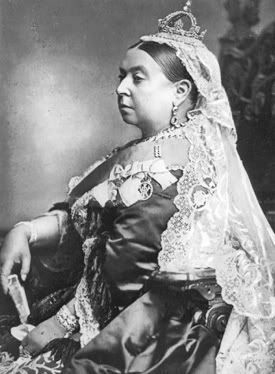 Born in May 1819, when she came to the throne in June 1837 Britain was already a formidable world power; throughout that reign her influence came to be felt everywhere in the world, not just the quarter of it directly under her sway. The British monarchy also went from an executive to a constitutional one during her tenure; similarly, the decadence of the Royal Family into which she'd been born gave way to a more sedate one with which Britain's burgeoning middle class - always a perennial bugbear where royalty and aristocracy are concerned - could have greater sympathy.
There are memorials to her on every continent, be they geographical features (Victoria Falls and Lake Victoria in Africa, Burma's Mount Victoria), political regions (Victoria and Queensland states in Australia), urban centres (Regina and Victoria in Canada), and even a village in Newfoundland! Her birthday is celebrated in Canada still as Victoria Day.
Likewise there are statues, plaques, paintings, and other pictorial tributes too numerous to mention; some are lovingly tended still while others, such as those in India and Ireland, have been removed or renamed in the backlash following the independence of those countries. This is not counting the images of her on money, coins, and stamps (where she was first to appear - on the Penny Black - in 1840) which surely number in the millions.
Today her descendants reign over much of Europe (the sovereigns of England, Norway, Sweden, Denmark, and Spain) and would reign over much more of it, given half a chance (the would-be monarchs of Romania, Serbia, Greece, Russia, France, and Germany); yet Victoria was also a carrier of hemophilia, which she unwittingly passed to many of these royal houses as well, most famously destabilizing the Russian monarchy. World War I to her would have been a family scrap, fought as it was between three of her grandsons - the German Kaiser, the British King, and the Russian Tsar.
She survived three assassination attempts to surpass her grandfather George III as the oldest British monarch ever (81 years and 240 days) just three days before her own death; her great-great granddaughter passed this landmark herself in December 2007. Victoria's reign lasted 63 years, 216 days, which the current Queen will not attain for six more years.
Queen Victoria died at her favourite home, Osborne House on the Isle of Wight, with her son and heir at her side; she was 81.
A renewed interest in the life of Queen Victoria is beginning to be felt in bookstores and on television sets throughout the world, beginning with Dame Judi Dench's stellar portrayal of her in 1997's film Mrs. Brown and continuing with Carrolly Erickson's recent biography Her Little Majesty. Also in theatres of late has been The Young Victoria, in which Emily Blunt undertook the title role with considerable aplomb.
*
share on: facebook
Born in May 1819, when she came to the throne in June 1837 Britain was already a formidable world power; throughout that reign her influence came to be felt everywhere in the world, not just the quarter of it directly under her sway. The British monarchy also went from an executive to a constitutional one during her tenure; similarly, the decadence of the Royal Family into which she'd been born gave way to a more sedate one with which Britain's burgeoning middle class - always a perennial bugbear where royalty and aristocracy are concerned - could have greater sympathy.There are memorials to her on every continent, be they geographical features (Victoria Falls and Lake Victoria in Africa, Burma's Mount Victoria), political regions (Victoria and Queensland states in Australia), urban centres (Regina and Victoria in Canada), and even a village in Newfoundland! Her birthday is celebrated in Canada still as Victoria Day.
Likewise there are statues, plaques, paintings, and other pictorial tributes too numerous to mention; some are lovingly tended still while others, such as those in India and Ireland, have been removed or renamed in the backlash following the independence of those countries. This is not counting the images of her on money, coins, and stamps (where she was first to appear - on the Penny Black - in 1840) which surely number in the millions.
Today her descendants reign over much of Europe (the sovereigns of England, Norway, Sweden, Denmark, and Spain) and would reign over much more of it, given half a chance (the would-be monarchs of Romania, Serbia, Greece, Russia, France, and Germany); yet Victoria was also a carrier of hemophilia, which she unwittingly passed to many of these royal houses as well, most famously destabilizing the Russian monarchy. World War I to her would have been a family scrap, fought as it was between three of her grandsons - the German Kaiser, the British King, and the Russian Tsar.
She survived three assassination attempts to surpass her grandfather George III as the oldest British monarch ever (81 years and 240 days) just three days before her own death; her great-great granddaughter passed this landmark herself in December 2007. Victoria's reign lasted 63 years, 216 days, which the current Queen will not attain for six more years.
Queen Victoria died at her favourite home, Osborne House on the Isle of Wight, with her son and heir at her side; she was 81.
A renewed interest in the life of Queen Victoria is beginning to be felt in bookstores and on television sets throughout the world, beginning with Dame Judi Dench's stellar portrayal of her in 1997's film Mrs. Brown and continuing with Carrolly Erickson's recent biography Her Little Majesty. Also in theatres of late has been The Young Victoria, in which Emily Blunt undertook the title role with considerable aplomb.
*
share on: facebook
Pop History Moment: Apple Announces The Macintosh
Apple Computers chose this day in 1984 - during Super Bowl XVIII - to announce its new breakthrough in personal computing, the Macintosh.
The ad, created by Chiat/Day and directed by Ridley Scott (fresh off the triumph of his film Blade Runner) played heavily on that year's 1984-mania, inspired by George Orwell's iconic novel; it features Anya Major as the runner and an audience of predominantly skinheads (since they were the only people available willing to shave their heads to be an extra in a TV spot).
The airtime alone cost $800,000.
*
share on: facebook
POPnews - January 22nd
[What the opponents of Roe v. Wade seem unable or unwilling to understand - I mean, how could they, since a diet of strong rhetoric is antithetical to understanding - is that absolutely no one is pro-abortion... If they were I'd be the first person to oppose them. Being pro-choice is about not wanting strangers to be able to tell you what to do with your body; once these zealots get the right to force women to carry babies they don't want to full term, whose bodies are they going to go after next? I think I know. Will they allow me to force them not to go to church anymore? I didn't think so..]
565 CE - Eutychius was deposed as Patriarch of Constantinople by his eventual successor, John Scholasticus, while celebrating the feast day of St. Timotheus; Byzantine Emperor Justinian the Great had masterminded the coup himself, but didn't live to see Eutychius return from his exile at Amasea a dozen years later and resume the role during the reign of Justin II.
1506 - The first contingent of 150 Swiss Guards arrived at the Vatican.
1863 - The January Uprising broke out in Poland, Lithuania and Belarus; the aim of the national movement is to regain Polish-Lithuanian-Ruthenian Commonwealth from occupation of Russia.
1877 - Anglican clergyman Arthur Tooth was taken into custody at London's Horsemonger Lane Gaol after being prosecuted for using ritualist practices.
1879 - During the Anglo-Zulu War Zulu troops defeated British troops at the Battle of Isandlwana while on the same day at Battle of Rorke's Drift 139 British soldiers successfully defend their garrison against an intense assault by four to five thousand Zulu warriors.
1890 - The United Mine Workers of America was founded in Columbus, Ohio.
1901 - Queen Victoria died; Edward VII became King.
1905 - When unarmed, peaceful demonstrators marching to present a petition to Tsar Nicholas II were gunned down by the Imperial Guard in St. Petersburg the day became known as Bloody Sunday, and the event sparked the 1905 revolution.
1924 - Ramsay MacDonald became the UK's first Labour Prime Minister.
1931 - Sir Isaac Isaacs was sworn in as the first Australian-born Governor-General of Australia.
1957 - New York City's 'Mad Bomber', George P. Metesky, was arrested in Waterbury, Connecticut, and charged with planting more than 30 bombs since 1940.
1968 - Rowan & Martin's Laugh-In made its television debut on NBC.
1973 - The US Supreme Court handed down its decision in the case of Roe v. Wade; the measure was opposed only by Byron White and William Rehnquist.
1987 - R. Budd Dwyer, a state politician from Pennsylvania embroiled in controversy, committed suicide on live television during a press conference.
1992 - Dr. Roberta Bondar became the first Canadian woman in space during NASA's Space Shuttle mission STS-42.
1997 - Madeleine Albright became the first woman to serve as US Secretary of State.
1999 - Australian missionary Graham Staines and his two sons were burned alive by a mob of radical Hindus while sleeping in their car in Eastern India.
2002 - Kmart Corp became the largest retailer in American history to file for bankruptcy protection under Chapter 11.
2007 - The jury portion of the trial against Robert Pickton, accused of being Canada's worst serial killer, opened in New Westminster, British Columbia; in December 2007 he was found guilty on six counts of second-degree murder, and still awaits trial on 20 more.
*
share on: facebook
Friday, January 21, 2011
The Death of Billy Tipton
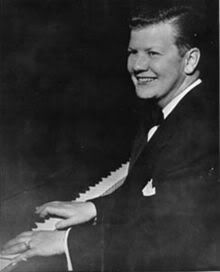 Death has a way of bringing out even the darkest secrets; such was the case when, on this day in 1989, the jazz pianist Billy Tipton died.
Paramedics in Spokane, Washington, trying to revive Tipton discovered that he was technically a she, a fact Tipton had managed to conceal from several long-term live-in lovers and even his step-children.
The life and disguise of Billy Tipton is more fully explored in Diane Wood Middlebrook's book Suits Me: The Double Life of Billy Tipton.
*
share on: facebook
Now Showing - Benny Hill's "How To Meet Beautiful Women"
Born on this day in 1924, Benny Hill may have occupied one of the lower rungs on Britain's comedy ladder, but what his humour lacked in subtlety and sophistication it more than made up for in popularity and laughs. Snobs may turn up their noses, but every so often I like a good cleavage joke, y'know? Plus that bit with the pheasant plume beneath the lady's farthingale is a riot!
At the time of Hill's death in April 1992 he was a national treasure, one whose low-brow antics were nevertheless as beloved as he was... Even more amazing is that they were mainly done without dialogue, which for a writer is both a revelation and a warning...
*
share on: facebook
Remembering... George Orwell
Although his was was a short life, it occurred in interesting enough times that by the time he died - of tuberculosis, aged 46, on this day in 1950 - George Orwell had managed to leave behind a body of work which blurred the lines between fiction, journalism, and social commentary; while such a phenomenon is de rigeur these days in the 1930s and 1940s it simply wasn't done, and was born out of Orwell's own chafing against authority, which he had shown even as a schoolboy at Eton.
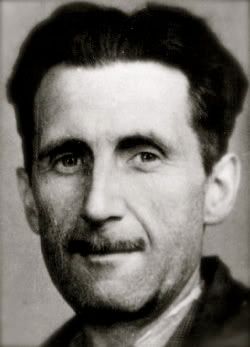 Yet despite all this, despite his having written such influential novels as Animal Farm and Nineteen Eighty-Four, it's his essays for which I am most grateful. One essay in particular - Politics and the English Language - provides the only rules I observe whenever I come to write:
Whenever I feel badly about having not been able to attend university, a skim through Orwell is enough to cheer me up, for he was as financially unable as am I; yet of all the qualities that make him a good writer (compassion, sensitivity, insight) none of these can be taught in a classroom. Bright, rebellious, bloody-minded - these are the Orwellian qualities I have always sought to encourage in myself; I consider it a singular honour to have even a particle of Orwell's legacy alive in me.
*
share on: facebook
Yet despite all this, despite his having written such influential novels as Animal Farm and Nineteen Eighty-Four, it's his essays for which I am most grateful. One essay in particular - Politics and the English Language - provides the only rules I observe whenever I come to write:- Never use a metaphor, simile, or other figure of speech which you are used to seeing in print.
- Never use a long word where a short one will do.
- If it is possible to cut a word out, always cut it out.
- Never use the passive voice where you can use the active.
- Never use a foreign phrase, a scientific word, or a jargon word if you can think of an everyday English equivalent.
- Break any of these rules sooner than say anything outright barbarous.
Whenever I feel badly about having not been able to attend university, a skim through Orwell is enough to cheer me up, for he was as financially unable as am I; yet of all the qualities that make him a good writer (compassion, sensitivity, insight) none of these can be taught in a classroom. Bright, rebellious, bloody-minded - these are the Orwellian qualities I have always sought to encourage in myself; I consider it a singular honour to have even a particle of Orwell's legacy alive in me.
*
share on: facebook
Pop History Moment: Passage of the Sullivan Ordinance
History is littered with failed attempts at social engineering; just a dozen years before the Temperance movement helped the United States to make the grand-doozy of them all - Prohibition - New York City's aldermen, led by the legendary Timothy 'Big Tim' Sullivan, attempted one of their own - in this case, against smoking...
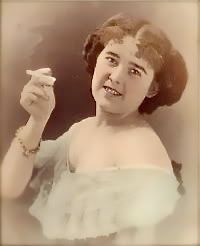 The Sullivan Ordinance, passed on this day in 1908 by Messrs. Redmond, Devine, McCann, Reardon, Walsh, Kenny, Mulcahy, Delancey, Gaynor, Schloss and Schneider of the city's Committee on Laws of the Board of Aldermen purported to protect women from the horrors of tobacco (as well as the more grievous sin of being 'unladylike'); Alderman B.W.B. Brown and his colleague Alderman Doull both dissented, citing legal reasons, namely that such a measure was unconstitutional. While the Ordinance wouldn't prohibit women from smoking, it would prevent them from smoking in public, by threatening the licenses of any establishments who served them.
The following day, one Katie Mulcahey was arrested for smoking, and was defiant before a night court judge: 'No man shall dictate to me.' She was fined $5, and when she was unable to pay, sent to jail. She is the only offender of the Sullivan Ordinance in the public record and, having paid her debt to society, fades from history...
Misplaced gallantry was to blame, as usual; the protection of women is typically a two-faced venture anyway, but even given the misogyny of the times, and the fact that efforts by women to protect themselves were generally suppressed, there must have been something greater at play. Big Tim himself died of syphilis in August 1913, and he damn sure didn't catch it from his wife, so you get some kind of an idea how he really felt about protecting women.
In the end it was Hizzoner himself, George B. McClellan Jr, who overturned the ordinance two weeks later; McClellan achieved his greatest renown when, on the following Christmas Eve, he suspended the business licenses of every movie house in the city - which then numbered more than 550 - on the grounds that motion pictures caused moral decay. Some folks, it seems, never learn...
*
share on: facebook
The Sullivan Ordinance, passed on this day in 1908 by Messrs. Redmond, Devine, McCann, Reardon, Walsh, Kenny, Mulcahy, Delancey, Gaynor, Schloss and Schneider of the city's Committee on Laws of the Board of Aldermen purported to protect women from the horrors of tobacco (as well as the more grievous sin of being 'unladylike'); Alderman B.W.B. Brown and his colleague Alderman Doull both dissented, citing legal reasons, namely that such a measure was unconstitutional. While the Ordinance wouldn't prohibit women from smoking, it would prevent them from smoking in public, by threatening the licenses of any establishments who served them.The following day, one Katie Mulcahey was arrested for smoking, and was defiant before a night court judge: 'No man shall dictate to me.' She was fined $5, and when she was unable to pay, sent to jail. She is the only offender of the Sullivan Ordinance in the public record and, having paid her debt to society, fades from history...
Misplaced gallantry was to blame, as usual; the protection of women is typically a two-faced venture anyway, but even given the misogyny of the times, and the fact that efforts by women to protect themselves were generally suppressed, there must have been something greater at play. Big Tim himself died of syphilis in August 1913, and he damn sure didn't catch it from his wife, so you get some kind of an idea how he really felt about protecting women.
In the end it was Hizzoner himself, George B. McClellan Jr, who overturned the ordinance two weeks later; McClellan achieved his greatest renown when, on the following Christmas Eve, he suspended the business licenses of every movie house in the city - which then numbered more than 550 - on the grounds that motion pictures caused moral decay. Some folks, it seems, never learn...
*
share on: facebook
POPnews - January 21st

[Although it was to be the first of America's nuclear submarines, the then-ultra modern (not to mention ironically monikered) USS Nautilus launched on this day in 1954 was actually the sixth vessel of the US Navy to be named for the cephalopod which has remained so unchanged for millions of years it is known as a living fossil. There's a joke in there somewhere about the Eisenhowers, I'm sure, but try as I might I can't quite find it...]
1118 - Pope Paschal II died; he was succeeded by Gelasius II three days later.
1525 - Switzerland's Anabaptist Movement was born when Conrad Grebel, Felix Manz, George Blaurock, and about a dozen others baptized each other in the Zürich home of Manz's mother, breaking a thousand-year tradition of church-state union.
1643 - Dutchman Abel Tasman became the first European to visit Tonga.
1749 - The Verona Philharmonic Theatre was destroyed by fire; it was rebuilt in 1754 and had to be rebuilt again after being destroyed by Allied bombers in February 1945.
1793 - Having been found guilty of treason by the French Convention, France's deposed King Louis XVI went to the guillotine as 'Citizen Louis Capet'.
1861 - Jefferson Davis resigned from the US Senate.
1864 - The Tauranga Campaign started during New Zealand's Maori Wars.
1893 - The Tati Concessions Land, formerly part of Matabeleland, was formally annexed to the Bechuanaland Protectorate which is now Botswana.
1908 - New York City passed the Sullivan Ordinance, which prohibited women from smoking in public; it was later vetoed by the mayor.
1915 - Kiwanis International was founded in Detroit, Michigan.
1919 - Korea's Emperor Gojong of Joseon died; he was succeeded by his son, Sunjong.
1924 - Russian leader Vladimir Ilyich Lenin died.
1948 - The Flag of Quebec was adopted and flown for the first time, over the National Assembly; the day is marked annually there as Flag Day.
1950 - Alger Hiss was convicted of perjury.
1954 - First Lady Mamie Eisenhower launched USS Nautilus - the world's first nuclear-powered submarine - at Groton, Connecticut.
1968 - A B-52 bomber crashed near Thule Air Base in Greenland, contaminating the area after its nuclear payload ruptured; one of the four bombs remained unaccounted for after the cleanup operation was complete.
1977 - President Jimmy Carter pardoned Vietnam War draft dodgers.
2002 - The Canadian dollar set an all-time low of 61.79 cents against the US dollar; good times...
2004 - The residence of reporter Juliet O'Neill was searched by the Royal Canadian Mounted Police (RCMP) investigating leaks concerning the ongoing travesty surrounding the unlawful and groundless deportation of Maher Arar to Syria, which resulted in his torture.
*
share on: facebook
Thursday, January 20, 2011
"So Help Me Girl" by Gary Barlow
Birthday wishes go out today to Gary Barlow, the former member and principal songwriter of the boy band Take That, whose solo career has proven very successful indeed - even if it pales in comparison to that of his fellow band mate, Robbie Williams...
So Help Me Girl was released in July 1997 in the UK as the third single from his debut album, Open Road, while it became his first US single in September of that year; the song went all the way to 11 in the UK but failed to crack the Top 40 Stateside, stalling at 44*. The album's first two singles - Forever Love and Love Won't Wait - both went to the Number One spot in the UK.
So Help Me Girl was originally performed by American country singer Joe Diffie in 1994, and was written by Howard Perdew and Andy Spooner.
*On the Hot 100, that is; it did, however, get all the way to #3 on the Adult Contemporary chart.
*
share on: facebook
Happy Birthday Your Royal Highness
When it was announced that Mathilde d'Udekem d'Acoz was engaged to marry Belgium's heir apparent Prince Philippe, Duke of Brabant, in 1999 the country was, to put it mildly, taken by surprise*; the Prince had never been romantically linked in public to any woman before, despite then being nearly forty years old...
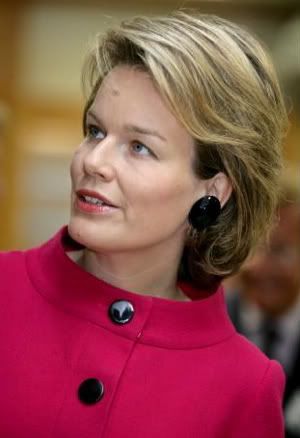 One further surprise concerned his future bride's heritage; a noblewoman of Walloon heritage and descendant of Poland's Sapieha family, when she one day becomes Queen she will be the first Belgian-born woman to fulfill that role.
Following their December 1999 marriage, the Duke and Duchess set about increasing the size of the Belgian Royal Family, which they have done (so far) by four... Princess Elisabeth, born in October 2001, is poised to be the country's first queen regnant, following a change to the country's laws of succession in 1991; she was followed into the nursery by Prince Gabriel (in August 2003), Prince Emmanuel (in October 2005), and Princess Eléonore (in April 2008).
In addition to a regular schedule of royal duties, Her Royal Highness works on behalf of the Princess Mathilde Fund, which was established by donation of the monetary gifts the couple received upon their marriage. The Foundation's special focus is on aiding the most vulnerable in Belgian society, and annually (since 2001) has awarded the Princess Mathilde Prize in order to support special initiatives toward that end.
*Or inasmuch as such a thing is possible, at least, the Belgians being renowned for their unflappability.
*
share on: facebook
One further surprise concerned his future bride's heritage; a noblewoman of Walloon heritage and descendant of Poland's Sapieha family, when she one day becomes Queen she will be the first Belgian-born woman to fulfill that role.Following their December 1999 marriage, the Duke and Duchess set about increasing the size of the Belgian Royal Family, which they have done (so far) by four... Princess Elisabeth, born in October 2001, is poised to be the country's first queen regnant, following a change to the country's laws of succession in 1991; she was followed into the nursery by Prince Gabriel (in August 2003), Prince Emmanuel (in October 2005), and Princess Eléonore (in April 2008).
In addition to a regular schedule of royal duties, Her Royal Highness works on behalf of the Princess Mathilde Fund, which was established by donation of the monetary gifts the couple received upon their marriage. The Foundation's special focus is on aiding the most vulnerable in Belgian society, and annually (since 2001) has awarded the Princess Mathilde Prize in order to support special initiatives toward that end.
*Or inasmuch as such a thing is possible, at least, the Belgians being renowned for their unflappability.
*
share on: facebook
The Martyrdom of Saint Sebastian
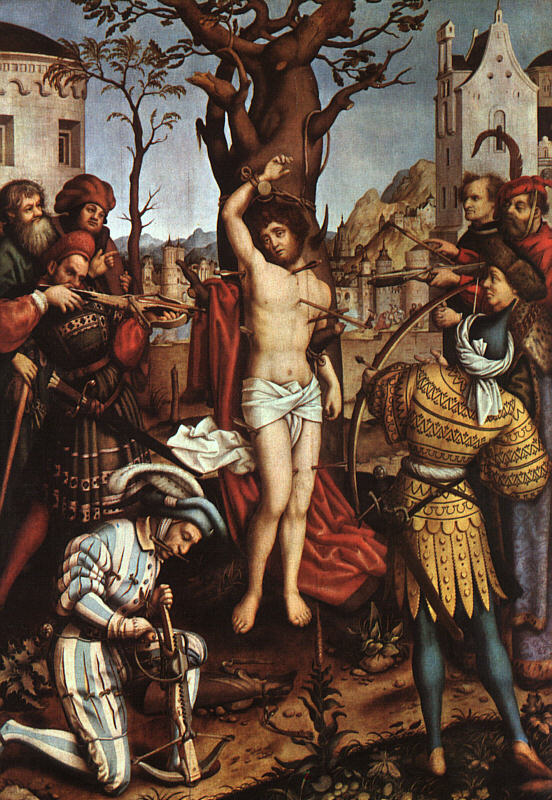
Although the date Saint Sebastian died (let alone the year*) cannot be known for certain, the event is commemorated by the Catholic Church on this day, which makes this as good a day as any for me to write about it. The fact of the matter is that so little is known about him - and his story is so close to the myths of Apollo anyway - that he may, in fact, have never existed; it wouldn't be the first time Christians made someone up in their relentless drive to wipe out every belief that came before them... Not by a long shot!
A n y w a y... For those of you unfamiliar with the story, apparently Sebastian was serving as a captain of the Praetorian Guard while secretly practicing Christianity; he was discovered, naturally enough, and was sentenced to death during Roman Emperor Diocletian's persecution of Christians. In fact, despite being riddled with arrows once he miraculously didn't die of his wounds, and so had to be martyred twice! Still, whether he's real or not Saint Sebastian has precisely the kind of realness we value above all others here at the Pop Culture Institute - namely, that he exists in an abundance of art. He is, in fact, one of the most frequently depicted of the early Christian martyrs**.
Almost always shown as a handsome young man - as he is in the work shown above, by Hans Holbein the Elder - he has also been captured on canvas by Botticelli, Perugino, Titian, Pollaiuolo, Giovanni Bellini, Guido Reni (who painted him seven times), Mantegna (three times), Hans Memling, Gerrit van Honthorst, Luca Signorelli, El Greco, Honore Daumier, John Singer Sargent and Louise Bourgeois among many others. A 1976 film about him - Sebastiane, directed by Derek Jarman - drew on the homoerotic aspects inherent in many of the depictions of the saint, and in doing so drew a great deal of controversy*** to both the film and himself. All of which means that, in addition to his patronage of soldiers, plagues, arrows, and athletes, Saint Sebastian has become the de facto patron saint of gay men as well.
*Possibly 288 CE.
**Alongside the likes of Joan of Arc, for instance.
***Or, to use a more correct term, publicity.
*
share on: facebook
Pop History Moment: The Inauguration Of Barack Obama
Thanks entirely to the mismanagement of George W. Bush and the complete failure of neoconservatism, the 44th President of the United States came to office - on this day in 2009 - facing the kind of uphill battle that would make a Sherpa go pale... Not only did he have to live up to the expectations of the majority of Americans who voted for him (as well as the vast numbers of people the world over who currently support him) in a way that is in keeping with his own evident integrity*, he came to office faced with the potentially fatal opprobrium of millions of racists among his own citizens, as well as all of those people whose lives in Christ seem to be inspiring them to call on their redneck brethren to hasten his death. Because that's what Jesus would do.
Being a lifelong cynic, when something or someone seems too good to be true I am immediately wary; yet I've never been wary of Barack Obama, not in the least. True, he seems to be going out of his way to coddle the people who didn't vote for him, even though nothing he ever does will ever be good enough for them**. He also seems to be doing what he feels is right vis-a-vis the whole 'ending discrimination' thing; again, despite the fact that his foes get off on discrimination, and seem to feel they should have the Constitutional right to do it, even though the US Constitution couldn't be clearer than the teachings of Christ that such behaviour is wrong.
*Especially for a politician!
**Again, no matter what they say, because of a) his name, and b) his colour, and for no other reason.
*
share on: facebook
The House of Grimaldi: The Death of Antonio I
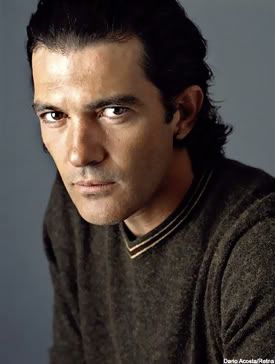
My more 'with it' readers will already have ascertained that the picture at right is obviously not one of Antonio I, Prince of Monaco; it is, in fact, a picture of Antonio Banderas. Alas, the Google gods have not seen fit to supply me with any image of this elusive Grimaldi - foiled yet again! - and so I have had to make do. I figured since I have to spend a certain amount of time writing this, I might as well have something I like looking at when I do.
 Rather than dampening my zeal for writing about the House of Grimaldi, though, the paucity of available information on them tells me that I am moving the Pop Culture Institute in the right direction; namely that of creating original content for the Internet, rather than simply posting about the same old crap that a million others do, say, every time Lindsay Lohan does whatever it is she does, especially if it involves a gusset.
A n y w a y... Antonio I was born in January 1661, to Louis I and Catherine Charlotte de Gramont. His June 1688 marriage, to Maria of Lorraine, was personally arranged by France's King Louis XIV; in those days, of course, the Grimaldis were more or less based in the French court at the Palace of Versailles. The couple would eventually have six children, only two of whom - Louise-Hippolyte and Margaretha - would survive infancy.
Assuming the throne following the death of his father in January 1701, in addition to being the Prince of Monaco and the Duke of Valentinois, Antonio I had added to his family's list of hereditary titles when he was created the first Marquis of Baux, a title by tradition given to the eldest son and heir. Following the death of Antonio I on this day in 1731, five days shy of his 70th birthday, a minor controversy occurred... Since at the time a female succession was generally frowned upon, as part of a deal brokered with the Sun King it was agreed that Louise-Hippolyte's husband Jacques François Goyon de Matignon would be given the surname Grimaldi, and co-rule with her when the time came. Which is exactly what came to pass*...
*Alas, although it came to pass, it didn't go so well; as popular as Louise-Hippolyte was among her subjects, that's how unpopular her husband would be. But that's a story best left for another day...
*
share on: facebook
Rather than dampening my zeal for writing about the House of Grimaldi, though, the paucity of available information on them tells me that I am moving the Pop Culture Institute in the right direction; namely that of creating original content for the Internet, rather than simply posting about the same old crap that a million others do, say, every time Lindsay Lohan does whatever it is she does, especially if it involves a gusset.A n y w a y... Antonio I was born in January 1661, to Louis I and Catherine Charlotte de Gramont. His June 1688 marriage, to Maria of Lorraine, was personally arranged by France's King Louis XIV; in those days, of course, the Grimaldis were more or less based in the French court at the Palace of Versailles. The couple would eventually have six children, only two of whom - Louise-Hippolyte and Margaretha - would survive infancy.
Assuming the throne following the death of his father in January 1701, in addition to being the Prince of Monaco and the Duke of Valentinois, Antonio I had added to his family's list of hereditary titles when he was created the first Marquis of Baux, a title by tradition given to the eldest son and heir. Following the death of Antonio I on this day in 1731, five days shy of his 70th birthday, a minor controversy occurred... Since at the time a female succession was generally frowned upon, as part of a deal brokered with the Sun King it was agreed that Louise-Hippolyte's husband Jacques François Goyon de Matignon would be given the surname Grimaldi, and co-rule with her when the time came. Which is exactly what came to pass*...
*Alas, although it came to pass, it didn't go so well; as popular as Louise-Hippolyte was among her subjects, that's how unpopular her husband would be. But that's a story best left for another day...
*
share on: facebook
"Remembering Audrey": A Tribute To Audrey Hepburn
Describing the appeal of Audrey Hepburn, who died on this day in 1993, is like describing the appeal of fresh air, cool water, or a baby's smile; not only is it impossible - although here those who knew her best try their hardest - it's entirely beside the point. As with many of the best things in life, why they're the best means less than the simple enjoyment, enlightenment, and enrichment they bring...
Whether acting in a movie or acting on behalf of the world's most vulnerable people - its children - everything Audrey Hepburn did was imbued with grace; since she moved through the world in an aura of compassion, everyone who met her was utterly charmed. An even greater tragedy than her early death from cancer - aged only 63 - was that because of it she was unable to do all she wanted to do; so while her life was cut short, her work lives on - both through UNICEF and through the Audrey Hepburn Children's Fund.
*
share on: facebook
Remembering... Audrey Hepburn
Can it really be nearly two decades now since this light went out in the world? Amazingly, yes; it was on this day in 1993 that Audrey Hepburn died.
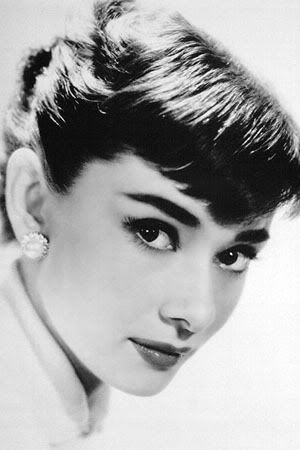 Unlike so many others, though, who are glowingly eulogized just weeks before people's true feelings begin to emerge, there have been no attempts to assassinate the character of Audrey Hepburn in the years since her passing. The simple reason for this is that the actress and humanitarian imbued everyone she knew, everyone she met, and a considerable number of total strangers as well, with a magic that few of us - myself included - can hope to understand.
It was more than beauty, though she had that in abundance; it was kindness, a kindness born of the worst kind of cruelty. Having lived in Arnhem, on the front lines of the Nazi invasion, and then through the subsequent occupation of The Netherlands during World War II, having served that country's Resistance as a teenage courier despite considerable peril, when she later visited refugees on behalf of UNICEF - for which work she was awarded the Presidential Medal of Freedom - she understood what their privation, their suffering, entailed first hand.
She won The Big Four, which feat alone would have made her a rare breed; she was a fashion icon who cared not a whit for clothes, a natural entertainer yet not needy, modest when she had every reason to brag... In short, she was a consummate human being, and her very existence gives us hope that we may someday see her like again.
*
share on: facebook
Unlike so many others, though, who are glowingly eulogized just weeks before people's true feelings begin to emerge, there have been no attempts to assassinate the character of Audrey Hepburn in the years since her passing. The simple reason for this is that the actress and humanitarian imbued everyone she knew, everyone she met, and a considerable number of total strangers as well, with a magic that few of us - myself included - can hope to understand.It was more than beauty, though she had that in abundance; it was kindness, a kindness born of the worst kind of cruelty. Having lived in Arnhem, on the front lines of the Nazi invasion, and then through the subsequent occupation of The Netherlands during World War II, having served that country's Resistance as a teenage courier despite considerable peril, when she later visited refugees on behalf of UNICEF - for which work she was awarded the Presidential Medal of Freedom - she understood what their privation, their suffering, entailed first hand.
She won The Big Four, which feat alone would have made her a rare breed; she was a fashion icon who cared not a whit for clothes, a natural entertainer yet not needy, modest when she had every reason to brag... In short, she was a consummate human being, and her very existence gives us hope that we may someday see her like again.
*
share on: facebook
Happy Birthday Your Royal Highness
When it was announced, in January 1999, that the Queen's youngest son Prince Edward would be marrying Sophie Rhys-Jones the chattering classes momentarily became the snickering classes; Prince Edward, of course, had always been the quiet one, demonstrably ill-suited to military service, theatrical even...
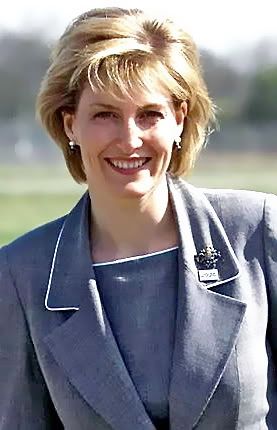 Their wedding that June came at a time when the Royal Family was desperately in need of a 'New Diana', or so the tabloids said; the image of courtiers shuddering at the thought of another strong-willed neurotic whirlwind capable of wielding her popularity as a cudgel in their midst is one which amuses me still...
Originally determined to keep her job as co-founder (with Murray Harkin) of RJH Public Relations, in the end it was her own indiscretion (as much as the entrapment of the tabloid journalist Mazher Mahmood of News of the World) that, in 2002, finally put an end to the myth that such a thing was possible.
In fact, both the Earl and Countess had been drawing increasing ire for the perception that they'd been using their royal status to get ahead in business; the 'fake sheik' scandal merely proved the tipping point, whereupon they both withdrew from the private sector.
In recent years they have taken on an increasing share of public duties, especially in light of the Queen Mother's March 2002 death and the modest curtailment of duties by the Queen following her 80th birthday in April 2006.
Currently the chatelaine of Bagshot Park in Surrey, the Countess of Wessex is patron of Girlguiding UK and Colonel-in-Chief of the Queen Alexandra's Royal Army Nursing Corps among others. Her Royal Highness has had three difficult births to date: the first (in December 2001) was ectopic and did not carry to term, the second (in November 2003) resulted in the birth of Lady Louise Windsor (who arrived a month early, but was otherwise healthy), the third (in December 2007) saw the arrival of the Queen's eighth grandchild James, Viscount Severn.
*
share on: facebook
Their wedding that June came at a time when the Royal Family was desperately in need of a 'New Diana', or so the tabloids said; the image of courtiers shuddering at the thought of another strong-willed neurotic whirlwind capable of wielding her popularity as a cudgel in their midst is one which amuses me still...Originally determined to keep her job as co-founder (with Murray Harkin) of RJH Public Relations, in the end it was her own indiscretion (as much as the entrapment of the tabloid journalist Mazher Mahmood of News of the World) that, in 2002, finally put an end to the myth that such a thing was possible.
In fact, both the Earl and Countess had been drawing increasing ire for the perception that they'd been using their royal status to get ahead in business; the 'fake sheik' scandal merely proved the tipping point, whereupon they both withdrew from the private sector.
In recent years they have taken on an increasing share of public duties, especially in light of the Queen Mother's March 2002 death and the modest curtailment of duties by the Queen following her 80th birthday in April 2006.
Currently the chatelaine of Bagshot Park in Surrey, the Countess of Wessex is patron of Girlguiding UK and Colonel-in-Chief of the Queen Alexandra's Royal Army Nursing Corps among others. Her Royal Highness has had three difficult births to date: the first (in December 2001) was ectopic and did not carry to term, the second (in November 2003) resulted in the birth of Lady Louise Windsor (who arrived a month early, but was otherwise healthy), the third (in December 2007) saw the arrival of the Queen's eighth grandchild James, Viscount Severn.
*
share on: facebook
Pop History Moment: The Inauguration of JFK
Way, way, way back in the olden days - when it was expected that an eloquent person would be elected President - this is the kind of non-partisan unity-making speech one came to expect from the Leader of the Free World. So while John F. Kennedy's personal life may not have been entirely above reproach, when he was at the microphone - when it actually mattered - he was a leader.
The ideals expressed in this speech - the abolition of poverty, support for the family of nations and the quest for peace - were seemingly antithetical to the previous Administration, built even as it was on the previous President's promise (spoken twice! yet never once meant) to uphold and defend the Constitution of the United States.
The light at the end of the tunnel is this; on this day in 2009, at another inauguration which contained echoes of this previous one, someone took the oath of office (or tried to, anyway - thanks for nothing Chief Justice John Roberts, you douchebag) who wasn't even born on this day in 1960, and there's nothing but hope in the land that he, unlike his predecessor, will actually obey it.
[FULL TEXT]
*
share on: facebook
POPnews - January 20th

[While the city of Rio de Janeiro was founded in March 1565 by Estácio de Sá, the area where it was eventually established was first explored by Gaspar de Lemos on this day in 1502, 63 years earlier. Which begs the question: what the heck were they waiting for? More paradise?]
250 CE - Emperor Decius began a widespread persecution of Christians in Rome with the martyrdom of Pope Fabian; thanks to his efforts, not only do most Christians still have an entirely unfounded persecution complex but ever since then around the world they've been complicit in the persecution of millions of people over the past two millenia - what with the Crusades and the witch-burnings, missionaries and sectarianism and being all judgemental against the express orders of Jesus, leading to the murders and suicides of untold numbers, many of them their fellow Christians. So thanks for that half-assed effort, Emperor Decius, you shit... At least Diocletian put a little effort into it.*
*While it's not entirely tongue-in-cheek, my tongue was in the vicinity of my cheek when I wrote this. ~ MSM
1320 - Duke Wladyslaw Lokietek became King of Poland.
1356 - Scotland's Kind Edward Balliol abdicated.
1502 - The location of the present-day city of Rio de Janeiro was first explored, giving the area its name.
1523 - Christian II was forced to abdicate as King of Denmark and Norway; after he'd gone into exile the crown was offered to his uncle, Frederick of Holstein, who reigned as Frederick I.
1576 - The Mexican city of León was founded by order of the viceroy Don Martín Enríquez de Almanza.
1649 - England's King Charles I went on trial for treason and other 'high crimes'.
1839 - At the Battle of Yungay, Chile defeated an alliance between Peru and Bolivia.
1841 - Hong Kong Island was occupied by the British when Captain Charles Elliot of the Royal Navy landed at Possession Point; the occupation was formalized by the Treaty of Nanking in August 1842.
1921 - The first Constitution of Turkey was ratified; the country had until recently been part of the Ottoman Empire.
1936 - Edward VIII was proclaimed King of England following the death of his father, George V.
1942 - At the Wannsee Conference - held in the Berlin suburb of Wannsee at the height of World War II - senior Nazi officials decided on the 'Final Solution to the Jewish Question', accelerating The Holocaust.
1972 - After British Prime Minister Edward Heath rose in the House of Commons and announced unemployment figures of 1,023,583 - the highest rate of joblessness in the United Kingdom since the 1930s - Speaker of the House of Commons Selwyn Lloyd was forced to suspend the sitting for ten minutes before order could be restored.
1987 - Church of England envoy Terry Waite was kidnapped in Lebanon, where he was held captive for 1,763 days; he was finally released in November 1991.
1990 - The Black January crackdown of Azerbaijani pro-independence demonstrations was undertaken by the Soviet army in Baku.
1994 - Telesat Canada's Anik E-1 communications satellite spun out of control, forcing newspapers and radio and TV broadcasters to scramble to re-establish their news feeds.
2001 - Philippine president Joseph Estrada was ousted in the EDSA II Revolution and was succeeded by Gloria Macapagal-Arroyo.
*
share on: facebook
Wednesday, January 19, 2011
"Better Get To Livin' " by Dolly Parton
Proof that, unlike some of her contemporaries, Dolly Parton is an artist rather than merely a performer, here she is still crafting exceptional music with positive messages four decades after she first sashayed onto a Nashville stage.
Taken from the exceptionally named 2007 album, Backwoods Barbie, it's Better Get to Livin' - which song was co-written by Kent Wells, and which Steve Lippman-directed video features an appearance by funny lady and a favourite of ours here at the Pop Culture Institute, Amy Sedaris.
*
share on: facebook
Subscribe to:
Posts (Atom)