Sunday, November 07, 2010

POPnews - November 7th

Photobucket
[Actually, Sir Donald Smith had to drive in two last spikes on
this day in 1885, as he bent the first one; fortunately he
only financed the railway, and didn't build it.
]

1492 - The Ensisheim Meteorite - the oldest meteorite with a known date of impact - struck the Earth around noon in a wheat field outside the village of Ensisheim, in the Alsace region of France; it is still preserved there in the Regency Palace.

1665 - The London Gazette - the official record of the British government and the oldest such publication extant - was first published.

1786 - Pupils of the composer William Billings founded the Stoughton Musical Society in Boston, making it the oldest musical organization in the US.

1848 - Whig Zachary Taylor was elected 12th US President over Democrat Lewis Cass.

1876 - Rutherford B. Hayes was elected 19th US President over Democrat Samuel J. Tilden.

1885 - Construction - begun in 1881 - ended on the Canadian Pacific Railway with the driving of the Last Spike by Sir Donald Smith, in Craigellachie, British Columbia. The promised railroad had been key in bringing Canada's westernmost province into Confederation in 1870.

1916 - Woodrow Wilson was elected to a second term as US President over Republican Charles Evans Hughes.

1929 - New York City's Museum of Modern Art opened to the public.

1932 - Buck Rogers in the 25th Century aired on radio for the first time.

1933 - Fiorello H. LaGuardia was elected the 99th mayor of New York City.

1940 - In Tacoma, Washington, the middle section of the Tacoma Narrows Bridge (known as 'Galloping Gertie') collapsed in a windstorm, a mere four months after the bridge's completion.

1944 - Franklin D. Roosevelt was elected to an unprecedented fourth term as US President over Republican Thomas E. Dewey.

1967 - Carl B. Stokes was elected mayor of Cleveland, Ohio, making him the first black mayor of a major American city.

1972 - Richard Nixon was elected to a second term as US President over Democrat George McGovern.

1983 - A concealed bomb exploded inside the U.S. Capitol Building outside the Senate Chamber, causing $250,000 in damages and ruining a portrait of Daniel Webster; since the Senate had been adjourned for nearly four hours at the time the corridor where the explosion occurred was empty, and no one was injured or killed. Marilyn Buck, Laura Whitehorn, and Linda Evans were later sentenced for their part in the blast, as well as other bombings at Ft. McNair, and the Washington Navy Yard.

1989 - Douglas Wilder won the gubernatorial election in Virginia, becoming the first elected black governor in the United States.

1990 - Mary Robinson became the first woman to be elected President of the Republic of Ireland.

1991 - Magic Johnson held a press conference to announce that he was infected with HIV; he thereupon retired from the NBA.

2000 - George W. Bush was 'elected' 43rd US President over Democrat Al Gore (although the controversial results would not be verified until January 6th, 2001, when the electoral college votes were ratified during a raucous joint-session of Congress - just two weeks before the inauguration); in the same election Hillary Rodham Clinton was elected to the United States Senate, becoming the first former First Lady to win a public office in the United States.
*
share on: facebook

Saturday, November 06, 2010

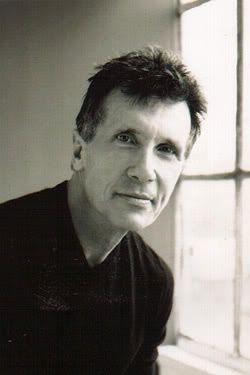
Michael Cunningham: A Homo at the End of the World

Handsome, erudite Michael Cunningham is the author of six novels - Golden States (1984), A Home at the End of the World (1990), 1995 Flesh and Blood (1995), The Hours (1998), Specimen Days (2005), and By Nightfall (2010) - plus an acclaimed work of nonfiction, Lands End: A Walk in Provincetown (2005) which blends history and creative nonfiction to create a portrait of the fabled resort town he loves...

Photo Sharing and Video Hosting at PhotobucketBorn on this day in 1952, Cunningham attended Stanford University, and later the University of Iowa, where he was awarded a Master of Fine Arts degree from the Iowa Writers' Workshop; his early short stories appeared in the Atlantic Monthly and the Paris Review.

Although openly gay, Cunningham resents (as well he should) being pigeon-holed as a 'gay writer'; despite this, he has always been out. Understandably, there is still a tendency in the conservative book trade to treat a 'gay writer' as a niche writer, to only promote their work in the gay press, and to only stock their works in gay bookstores - stores which are dwindling in number as big box bookstores continue to gobble up their smaller counterparts in an attempt to create a monopoly.

Cunningham, though, has found a wide readership, and deserves much credit for being a gay writer who brings gay characters into the larger mainstream context (despite the threat of being labeled 'hetero-normative' by militants in the blogosphere and beyond). His novel The Hours won the 1999 Pulitzer Prize for Fiction, a PEN/Faulkner Award, as well as a Gay, Lesbian, Bisexual, and Transgendered Book Award; it was also made into a smash-hit movie, which won an Academy Award for Nicole Kidman (who played Virginia Woolf in it). He also wrote the screenplay for a film version of A Home at the End of the World.

Partnered for nearly 20 years, Cunningham teaches at the Fine Arts Work Center in Provincetown, and in the creative writing MFA program at Brooklyn College. He lives in New York City.
*
share on: facebook

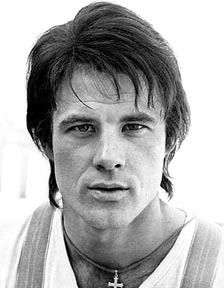
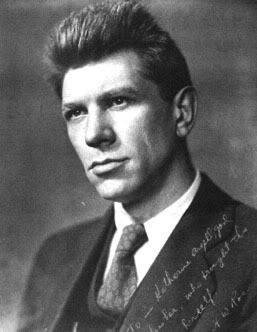
Remembering... Brad Davis

Politically, Brad Davis has served the AIDS movement well, since he is widely regarded as the first well-known heterosexual man to die of AIDS; Magic Johnson notwithstanding, the myth that men can contract the disease exclusively through heterosexual sex has largely been debunked.

Photo Sharing and Video Hosting at PhotobucketAlthough Davis (born on this day in 1949) technically died of an assisted suicide in September 1991, he did have AIDS at the time; whether or not he was strictly heterosexual, though, remains a matter for debate. His widow insists he was, but then she would; Davis had been addicted to needle drugs prior to his sobriety in 1981, which in theory could have led to a relapse and accounted for his infection.

Or he could have dabbled in the man-on-man action; judging by the photo he certainly would have been given ample opportunity. Certainly he was no stranger to it, having been an actor in New York in the 1970s and having appeared in 1978's Midnight Express (which featured a graphic prison rape) and Rainer Werner Fassbinder's Querelle (1983), as well as playing the lead in the original run of Larry Kramer's The Normal Heart (1985), which was about AIDS.

Davis kept his illness (along with many other things) secret right up until the end; in his last film appearance (which was posthumous) he played himself in The Player (1992).
*
share on: facebook

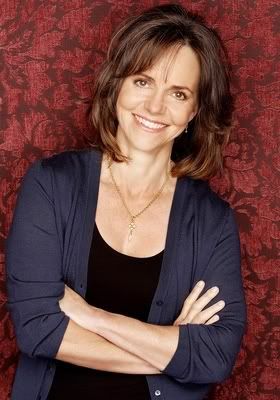
Happy Birthday Sally Field

Amazingly, Sally Field today turns 64; even more amazingly, she still looks like Sally Field, rather than a Frankenstein's monster version of Sally Field, a fate which has befallen many of the women of her generation in Hollywood. (This means you, Joan Van Ark...)

Photo Sharing and Video Hosting at PhotobucketAlthough renowned for such comedy fare as TV's Gidget (1965-1966) and The Flying Nun (1967-1970), and later for films like Punchline (1988) and the hilarious Soapdish (1991), Field has also excelled at drama, turning in a searing and prescient performance in Not Without My Daughter (1991).

Still acting, Field returned to TV recently in the show Brothers & Sisters, which was created by the well-respected gay playwright and all-around wunderkind Jon Robin Baitz. Then, in 2007 Field won an Emmy for portraying Nora Holden Walker on Brothers & Sisters, which was given an unexpected boost of publicity when Fox censored anti-war remarks she made during her acceptance speech.

The two-time Oscar winner - for Norma Rae (1979) and Places in the Heart (1984) - will always have a place in my heart for her portrayal of M'Lynn Eatenton in Steel Magnolias (1989), which I mention so often on this blog it's in danger of becoming an inside joke.

That's right: we like her! We really like her! (Aw, c'mon; you didn't think I'd write a post about Sally Field and not go there, didja?)
*
share on: facebook

"The Goonies Are Good Enough" by Cyndi Lauper


It's not Cyndi Lauper's birthday or anything, but the earlier Glenn Frey video got me thinking about music videos tied to the promotion of movies and television; You Belong to the City was obviously tied to the TV show Miami Vice, and this one to the Steven Spielberg movie The Goonies.

In many ways (not all of them good), the film was a watershed for Cyndi; hired as its musical director she got to choose the music for the soundtrack from the bands she admired most, including a spot of early exposure for The Bangles. She worked so hard on the project though that she was hospitalized, although the reason for this was not entirely the movie's fault.

I love the song and its video to bits (even though Cyndi's continuing involvement with professional wrestling nearly spelled the death of her career). Old-school wrestlers such as The Iron Sheik, Captain Lou Albano, Roddy Piper, André the Giant, 'Classy' Freddie Blassie, The Fabulous Moolah & Nikolai Volkoff appear, along with the cast of the movie (including a cameo by Spielberg himself!), members of The Bangles, Cyndi's then-boyfriend and manager David Wolff, and Cyndi's mom Catrine, who also appeared in Girls Just Want to Have Fun with Albano.

She cut The Goonies 'R' Good Enough from her set list in 1987, but reinstated it in 2006, to much acclaim from her fans. It's enduring fame resides in the fact that it was the first two-part music video, although the second part is rarely seen these days.

Except, of course, on the Pop Culture Institute... Enjoy!
*
share on: facebook

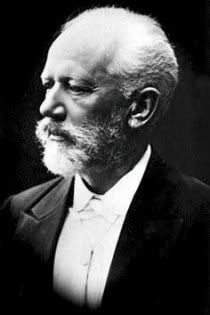
The Death of Tchaikovsky

Born in May 1840*, the musically precocious child who would become Piotr Ilyich Tchaikovsky began piano lessons at the age of five, and within three years had surpassed his teacher; despite this epic talent, he was trained as a civil servant at the School of Jurisprudence in St. Petersburg.

Photo Sharing and Video Hosting at PhotobucketIt was his mother's death from cholera when he was 14 that caused him to turn to music for solace; whether he found it there is a matter of debate, but a month after she died he'd composed a waltz in her honour, and from that point he never stopped composing.

By 1862 he had convinced his father to support him, quit his civil service job, and joined the St Petersburg Conservatory, where he studied under his cousin Nikolai Zaremba and Anton Rubinstein.

In July 1877, Tchaikovsky married Antonina Miliukova, despite a frank assertion that he did not love her and never would; the composer's homosexuality has been much debated, mainly by those whose agenda cannot allow its admission. Nevertheless, five days after his marriage, he attempted suicide - a sure sign that not all was well on the honeymoon; six weeks after marrying they separated for good. She died in 1917, having spent the last twenty years of her life in an insane asylum.

For a time the suffering caused by coming to terms with his sexuality seems to have given Tchaikovsky's work the poignant melancholy for which it is renowned; as successful as his career would become, though, it was a palace built of clouds, and could not last.

That year, Tchaikovsky acquired a patroness, named Nadezhda von Meck, whose beneficence allowed him to quit the Conservatory and focus on composing; over the next 13 years they would exchange more than 1200 letters but, despite a couple of chance encounters, never spoke. Instead they treated the 1884 marriage of Tchaikovsky's niece Anna Lvovna Davydova to von Meck's son Nikolay as a symbolic substitute for a marital union of their own. Von Meck withdrew her patronage and friendship suddenly in 1890, citing bankruptcy.

Tchaikovsky died nine days after the debut of his Sixth Symphony - the Pathétique - under mysterious (or at least peculiar) circumstances. Although his death has been attributed to cholera, it may have been that he drank cholera-tainted water on purpose, so as to end his life. One theory, which is gaining much popular traction, is that he had been condemned by a 'court of honour' of his old classmates at the School of Jurisprudence; either he could suffer the public revelation of his homosexuality, the ruin of his reputation, and exile to Siberia, or kill himself. In the end it may have been arsenic poisoning - whose symptoms resemble cholera - that did the deed.

Stricken ill, Tchaikovsky repeatedly refused to see a doctor; in his final delirium, he called out only for his old friend von Meck. He died in his brother's apartment at about 3 am on this day in 1893. He was 53.

Tchaikovsky's funeral was arranged and paid for by the Tsar, Alexander III, which shows the high regard in which he was held (but which may support another theory, that it was the Tsar and not the court of honour who had ordered his suicide). 8,000 people attended his memorial service at Kazan Cathedral in St. Petersburg, chosen from a list of 60,000 who expressed a desire to attend. He was buried in the Tikhvin Cemetery at the Alexander Nevsky Monastery.

20 years later, Russians were still commemorating the day Tchaikovsky died - albeit in a less frank way than we do here at the Pop Culture Institute...

*Or April, depending on whether you prefer the Julian or Gregorian calendars...  For the record, here we use the Gregorian calendar, which is used pretty much everywhere in the world today.
*
share on: facebook

In Memoriam: Harold Ross

The founding editor of The New Yorker was a mass of contradictions; his brash personality and occasional philistinism clashed with the sophisticated tone and intellectualism of the magazine he created and launched in 1925. He was, in the words of his successor, 'a genius in disguise'...

Photo Sharing and Video Hosting at PhotobucketBorn on this day in 1893, Ross began his career as a journalist writing for newspapers beginning in high school; by 1918 he landed a job with Stars and Stripes, where he made many influential contacts that would come in handy later: Alexander Woollcott, Cyrus Baldridge, Franklin Pierce Adams, and Jane Grant, who would become his first wife in addition to helping him co-found what was then an entirely new kind of publication. Through Woollcott many members of the Algonquin Round Table would come to write for him as well.

The New Yorker was a success nearly from its inception; having survived six turbulent months at the outset, the magazine went on to weather the worst years of the Great Depression with an increase in both subscriptions and ad revenues, mainly due of course to the exceptional talent on staff, including James Thurber, E. B. White, Katharine S. White, S. J. Perelman, Janet Flanner (aka 'Genet'), Wolcott Gibbs, John O'Hara, Robert Benchley, and Dorothy Parker. Much of Ross' success as an editor can be credited to his knack for spotting and nurturing talent in writers, although he often did so in a bullying manner.

Ross died in December 1951, at which time he was replaced by William Shawn; during his tenure as editor, Harold Ross personally oversaw 1,399 issues of The New Yorker.

In 2006 the whole of the magazine's output - 4,109 issues published over 80 years from February 1925 - were put onto DVD-ROM and sold as a set, one of which was snapped up by the Pop Culture Institute for its archive; it currently resides next to a companion coffee table book and CD-ROM collection of cartoons from the landmark publication, released the previous year. Together they bring to light not only Harold Ross' brilliant idea - that being a New Yorker is a state of mind rather than a geographical situation - as well as his life's work.
*
share on: facebook

"You Belong To The City" by Glenn Frey


What day couldn't be improved by a glimpse of the Manhattan skyline? And what video couldn't be improved by the inclusion of a little Crockett & Tubbs?

As promotional tie-ins go (and there were so many of this kind of video in the 80s they're practically a sub-genre unto themselves) I think this one is done pretty well, especially in how it integrates the footage from Miami Vice, giving the video a sense of time (the show aired at 10 pm Friday during its first 2 seasons).

Birthday wishes go out today to Glenn Frey, whose musical impressive musical resume before and after he co-founded the Eagles includes this little ditty, You Belong to the City, from 1985.
*
share on: facebook

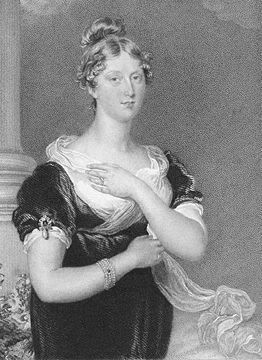
"An Address to the People on The Death of the Princess Charlotte" by Percy Bysshe Shelley

Photobucket
I. THE Princess Charlotte is dead. She no longer moves, nor thinks, nor feels. She is as inanimate as the clay with which she is about to mingle. It is a dreadful thing to know that she is a putrid corpse, who but a few days since was full of life and hope; a woman young, innocent, and beautiful, snatched from the bosom of domestic peace, and leaving that single vacancy which none can die and leave not...
With these words did poet Percy Bysshe Shelley attempt to assuage the immense national grief at the passing (on this day in 1817) of the Heiress Presumptive, Princess Charlotte Augusta of Wales; of course, the fact that he later went into a bit of political rant on behalf of the perpetrators of the Pentrich Rising is neither here nor there...

[READ THE REST]
*
share on: facebook

POPnews - November 6th

Photobucket
[The Hawker Hurricane was as instrumental in winning
the Battle of Britain as the brave flyboys who flew them.
]

1528 - Shipwrecked Spanish conquistador Álvar Núñez Cabeza de Vaca became the first known European to set foot in Texas, apparently.

1789 - Pope Pius VI appointed Father John Carroll as the first Roman Catholic bishop in the United States, to serve the Archdiocese of Baltimore.

1844 - The Dominican Republic adopted its first constitution.

1860 - Abraham Lincoln was elected 16th US President over Southern Democrat John C. Breckinridge, Constitutional Unionist John Bell, and Northern Democrat Stephen A. Douglas.

1861 - Jefferson Davis was elected President of the Confederate States of America.

1865 - CSS Shenandoah, commanded by the Confederate Navy's Captain James Waddell, became the last combat unit of the American Civil War to surrender - to the HMS Donegal's Captain James Aylmer Dorset Paynter of Britain's Royal Navy - after circumnavigating the globe on a voyage during which it sank or captured 37 vessels; the Shenandoah fired the last shots of the war off the Aleutian Islands.

1869 - Rutgers College defeated Princeton University (then known as the College of New Jersey) 6-4 at the first official intercollegiate American football game, held in New Brunswick, New Jersey.

1888 - Benjamin Harrison was elected 23rd US President over Democratic incumbent Grover Cleveland.

1900 - William McKinley was elected to a second term as US President over Democrat William Jennings Bryan.

1928 - Herbert Hoover was elected 31st US President over Democrat Al Smith.

1935 - The first flight of the Hawker Hurricane occurred at Brooklands, during which the prototype fighter plane was flown by P.W.S. 'George' Bulman.

1942 - Carlson's Patrol - undertaken by the 2nd Marine Raider Battalion under the command of Evans Carlson during the Guadalcanal Campaign - began; lasting until December 4th, the patrol would prevent troops of the Imperial Japanese Army under Toshinari Shōji from escaping the island, inflicting losses of around 500 while sustaining only 16 fatalities.

1947 - Meet The Press - which had begun on radio on the Mutual Broadcasting System in 1945 - made its television debut, before settling into a weekly schedule by September 12th of the following year. The show's first moderator was Martha Rountree, who had created the show's format along with Lawrence E. Spivak.

1956 - Dwight D. Eisenhower was elected to a second term as US President over Democrat Adlai Stevenson.

1975 - The Green March began when as many as 350,000 unarmed Moroccans converged on the southern city of Tarfaya and waited for a signal from King Hassan II to cross into Western Sahara with the aim of putting pressure on Spain to hand over the province to Morocco; the terms of the Madrid Accords, which were signed by Spain, Morocco, and Mauritania, did not solve the impasse over Spanish Sahara, and the region remains in political limbo.

1977 - The Kelly Barnes Dam - located above Toccoa Falls Bible College near Toccoa, Georgia - failed, killing 39.

1984 - Ronald Reagan was elected to a second term as US President over Democrat Walter Mondale, who had previously served as Vice President under Jimmy Carter.

1999 - Australians voted to retain Elizabeth II as Queen of Australia in a referendum, although there remains some debate as to whether or not Her Majesty or Her Majesty's Governor-General is currently head of state there.

2004 - An express train collided with a stationary car near the English village of Ufton Nervet, killing 7 and injuring 150.
*
share on: facebook

Friday, November 05, 2010

"Bridge Over Troubled Water" by Simon & Garfunkel


The title track from Simon and Garfunkel's final album Bridge over Troubled Water has long been renowned for its healing properties; the combination of kind words and angelic vocals have assuaged untold broken hearts and frazzled nerves in the past...

The Pop Culture Institute is proud to post this song today as a public service both in celebration of the birth of its vocalist Art Garfunkel (for once, without the harmonies of Paul Simon) and in the hopes that it can provide some measure of healing from the numerous wounds of those eight terrible years.

The clip is taken from the duo's highly popular Concert in Central Park, held in September 1981.
*
share on: facebook

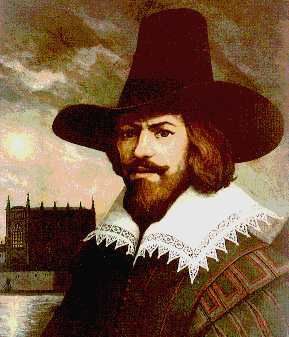
Pop History Moment: The Gunpowder Plot

The most serious terrorist threat in British history wasn't last month or even last year, nor was it even remotely Islamic in nature; in fact, it was over 400 years ago - and it was a band of Roman Catholics, fine Christians all, who were responsible for plotting mass murder most heinous...

Photo Sharing and Video Hosting at PhotobucketOn this day in 1605 a certain Justice of the Peace named Thomas Knyvet discovered Guy Fawkes in the undercroft of the Houses of Parliament among 36 barrels of gunpowder, kindling, and touchpaper. Although he said his name was 'John Johnson' when he was captured, Fawkes didn't try to deny what he was doing; the point of the Plot was to kill the King and Queen along with most of the Protestant aristocracy at the State Opening of Parliament, then install the nine-year-old Princess Elizabeth on the throne as a Catholic monarch.

Typically, the thwarted plot unleashed a wave of hatred directed at all Catholics in Britain, who were persecuted for more than 200 years as a result; the hatred of Papists was then imported to the American colonies, where it lasted a hundred and fifty years longer still. Although England had been on the threshold of Catholic Emancipation the day before it, the day after the Gunpowder Plot such an action had become unthinkable. The terrorists had, in true terrorist tradition, succeeded brilliantly in undermining their own cause even as they failed to undermine Parliament in any way.

The plot itself had been masterminded by Robert Catesby, who was by then no stranger to treason; four years earlier he had conspired with the Earl of Essex to assassinate Elizabeth I, but because his role in that matter was minor he was merely deprived of his property and not his head as was Essex. Immediately after the arrest of Guy Fawkes, Catesby (along with a few of his fellow plotters) fled to Holbeach House near Kingswinford in Staffordshire, where he died two weeks later during a fracas with arresting officers under Richard Walsh, the sheriff of Worcester.

Other plotters included Thomas Winter (also spelled Wintour), Robert Winter, Christopher Wright, Thomas Percy (also spelled Percye), John Wright, Ambrose Rokewood, Robert Keyes, Sir Everard Digby, Francis Tresham, Father Henry Garnet (the group's confessor), and Catesby's servant, Thomas Bates; for his part, Fawkes was the demolitions expert, having had much experience in the use of explosives when he served as a mercenary in the army of Archduke Albert of Austria, during the Dutch Revolt.

Had the plot been successful it would have not only destroyed the Palace of Westminster but the equally priceless Westminster Abbey as well, and would have blown out every window in a 1 km radius; as it is, the old palace stood for another couple of centuries, when in October 1834 it was destroyed by an accidental fire.

Amazingly, Fawkes was rated #30 on a 2002 list of the 100 Greatest Britons, which shouldn't surprise me since Oliver Cromwell came 10th, but it does dismay me nonetheless; I wonder if, 400 years from now, Britons will feel the same about Abu Hamza al-Masri or even Osama bin Laden...
*
share on: facebook

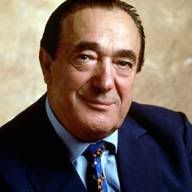
Good Riddance: The Death of Robert Maxwell

Normally, of course, I love a rags-to-riches story; it gives me something compelling to think about as I'm sitting here in this pile of rags. Whenever the ascent of a person from poverty to wealth and fame involves perseverance, creativity, and even good fortune, it gives me at least a reason to cheer. There is, however, a dark side to the myth of a self-made man...

Photo Sharing and Video Hosting at PhotobucketOf course, ambition in and of itself is not so bad; in the case of Robert Maxwell (whose capacity for rapacity is well-documented), when ambition comes with a side-order of ruthlessness and cruelty, that's not so good. Perhaps his years in Westminster (as a Labour Party MP for Buckingham of all things, from 1964-70) rendered him physically incapable of telling the truth; no matter, as scandal dogged him throughout his endeavours in the book trade he made the leap into newspapers, purchasing the UK's Daily Mirror, where having to tell the truth would be less of a bugbear. Even his attacks on Rupert Murdoch - which normally would be enough to make me admire anyone, even Hitler - do nothing to assuage the smarminess and corruption of the man in my eyes.

In this instance I am with Ian Hislop (although I'm sure I'd hate to know what he'd think of me and my little enterprise), TV personality, editor of the satirical magazine Private Eye, and the only person in British media at the time with the stones to take him on; as such, the magazine was successfully sued by Maxwell several times. One of those times Private Eye said that Maxwell looked like a criminal, for which he was awarded a substantial sum; no word yet on what happened when it turned out the criminal actually was a criminal. Not that it would have mattered, as by the time it was revealed that the criminal in question had engaged in stock manipulation schemes, diverted pension funds into his own pocket, and generally mucked about in the favourite pastimes of the kleptocracy (a la Lord Black, another swell guy) he was dead.

The end came on this day in 1991, at the age of 68; Maxwell is presumed to have fallen overboard from his luxury yacht, Lady Ghislaine, while cruising off the Canary Islands. Whether you think his death was an accident, suicide, or murder probably says as much about you as how you feel about him. Whatever fate befell him, he was lauded by the mucky-mucks and given a veritable state funeral in Israel, even though rumours that he was killed after trying to blackmail Mossad still linger; as do allegations that at the time of his death Germany had been investigating him for his role in possible war crimes committed there in 1945.

Perhaps, then, it's not so far-fetched an idea that this was one self-made man who could also have merely self-destructed...
*
share on: facebook

"Mrs. Brown, You've Got A Lovely Daughter" by Herman's Hermits


Birthday wishes go out today to Peter Noone, the face and voice of British Invasion stalwarts Herman's Hermits, whose songs weren't the hits they might have been, considering their enduring popularity to this day...

One such tune is Mrs. Brown, You've Got a Lovely Daughter which, like the video clip above, hails from 1965; it, along with another of the band's signature numbers, I'm Henry VIII, I Am, were never even released as singles in the UK even though both would end up topping the Billboard Hot 100 chart in the US.
*
share on: facebook

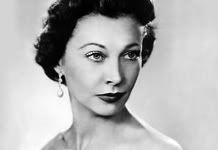
In Memoriam: Vivien Leigh

For all that actors decry being type-cast, there may be something to it; in Vivien Leigh's case, it gave her a deep well from which to draw... Whether playing Ophelia in Hamlet on the West End stage or Scarlett O'Hara in Gone with the Wind (1939) - which was neither her first role nor even her first notable role but nonetheless the one that made her a star - Vivien Leigh's chillingly honest portrayal of moody women made her so much more than just a pretty face, which otherwise might have been her fate.

Photo Sharing and Video Hosting at PhotobucketEven when cast against type - as, say, a prostitute in Waterloo Bridge (1940), or a higher class of prostitute now called a socialite, Emma Hamilton in That Hamilton Woman (1941) - she brought hidden depths to these roles that the general public could scarcely fathom. Those who worked with her, though... They knew. They knew that she could be happy and smiling one moment and then turn on a dime into a shrieking harpy. Temperament, they called it in those days; today we call it bipolar disorder.

Even though manic-depression occasionally affected her career, she continued to act through the Fifties and Sixties, in such classic films as A Streetcar Named Desire (1951), The Roman Spring of Mrs. Stone (1961) and the oft-overlooked classic Ship of Fools (1965); in all three (but as Blanche DuBois in Streetcar especially) she brought equal parts fury and frailty to her portrayals which make them simultaneously difficult to watch and impossible to ignore.

In another time, our own for instance, she could have served as a great role model for people who are similarly afflicted; her second husband, Laurence Olivier, gave her credit for how hard she struggled to control and conceal her condition. As it was, the stigma attached to mental illness would have surely ended her career before it had begun, had she not had the good fortune to be born one of the most beautiful women who ever lived. The standard wisdom is that her looks hampered her career, while it is my opinion that they allowed her any career she did have at all, possibly even sparing her a lobotomy and life in an institution.

Born on this day in 1913, Leigh died of tuberculosis in July 1967, aged only 53.
*

share on: facebook

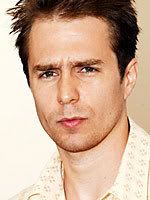
Happy Birthday Sam Rockwell

This is not an age in which quirky actors do well, which makes the success of Sam Rockwell all the more satisfying; his choices are daring and varied, his portrayals go further than they need to, and his fans - myself, obviously, among them - reap the reward.

Photo Sharing and Video Hosting at PhotobucketRockwell's films, which veer wildly between indie and studio fare, include Galaxy Quest (1999), The Green Mile (1999), Charlie's Angels (2000), and The Hitchhiker's Guide to the Galaxy (2005); all four currently reside in the collection of the Pop Culture Institute.

In Charlie's Angels he plays a seemingly meek dot-com industrialist who morphs into a venal LA douchebag so convincingly I found myself in the theatre scratching my head as to why they'd cast two different actors to play the same role; in Galaxy Quest he turns the role of the thankless ensign who gets killed early on in the episode into a star turn; in The Green Mile he plays a racist psychotic named 'Wild Bill' Wharton, who watches an innocent man preparing to die for a heinous crime Wharton committed; and in Hitchhiker he plays one of the greatest characters of modern times, Zaphod Beeblebrox, with the exact quantities of aplomb and arrogance necessary.

Expect more of the same from Sam Rockwell in the years to come; which means, of course, not knowing what to expect except that it'll be different from anything else he's ever done...
*
share on: facebook

"Cuts Like A Knife" by Bryan Adams


Seen here rocking out on stage at Live Aid in July 1985, it's birthday boy Bryan Adams at just about the peak of his cool; shortly thereafter his work would devolve into moribund balladry, culminating with a spot of blah intended to clarify the matter of his sexuality, courtesy of a single with a laughably rhetorical title, Have You Ever Really Loved a Woman?. In recent years, only Cloud Number Nine and When You're Gone have come close to re-capturing the sound he'd once had.

Cuts Like a Knife was the title track to Adams' 1983 third album, which also spawned the monster hit power ballads Straight from the Heart and This Time; while he'd already had a modicum of success in Canada with his first two albums - 1980's Bryan Adams and You Want It You Got It from 1981 - both the Cuts Like a Knife album and its successor Reckless elevated Adams into the ranks of international superstardom.
*

share on: facebook

POPnews - November 5th

Photobucket
[Sometime between 1892 and 1896 editorial cartoonist Charles Lewis Bartholomew rendered this amusing image pertaining to the Election of 1872, in which suffragist Susan B. Anthony voted for Ulysses S. Grant, despite his protestations against women being allowed that very right; she's seen here chasing him while Uncle Sam laughs in the background. For her temerity, Anthony was arrested two weeks later; little more than a hundred years later, she could have paid the fine she eventually got with money bearing her image.]

1530 - St. Felix's Flood destroyed the Dutch city of Reimerswaal; the oft-flooded city was completely abandoned by 1632, and today nothing but the name remains, preserved as the name of a municipality in that country's province of Zeeland.

1605 - A plot led by Robert Catesby to blow up the English Houses of Parliament was thwarted when Sir Thomas Knyvet, a justice of the peace, found Guy Fawkes amid barrels of gunpowder in a cellar beneath the Palace of Westminster; the event is still celebrated in England and the more English parts of the Commonwealth (such as Newfoundland) as Bonfire Night.

1688 - The so-called Glorious Revolution began when William of Orange landed at Brixham, in Devon; the invasion had been ready to go sooner, but was delayed to coincide with the anniversary of the Gunpowder Plot, giving England's anti-Catholic movement the necessary symbolism to justify its sectarian warmongering.

1768 - The Treaty of Fort Stanwix - the purpose of which was to adjust the boundaries between Indian lands and white settlements set forth in the Thirteen Colonies' Proclamation of 1763 - was signed by Sir William Johnson and representatives of the Iroquois Six Nations (the Mohawk, Oneida, Onondaga, Cayuga, Seneca, and Tuscarora) at Fort Stanwix in Upstate New York .

1831 - Nat Turner, leader of an abortive-yet-bloody slave rebellion the previous August, was tried, convicted, and sentenced to death.

1872 - Ulysses S. Grant was elected to a second term over Democrat Horace Greeley*; the Equal Rights Party had also nominated Victoria Woodhull to the presidency with former slave Frederick Douglass as her running mate. The first election held after the foundation of the National Woman Suffrage Association and the American Woman Suffrage Association (both in 1869) it was during this election that suffragist Susan B. Anthony, in defiance of the law, voted for the first time. She was later fined $100 for her effrontery, although her uppity-ness remains priceless...

*Who died on November 29th, less than a month after the election.

1895 - George B. Selden was granted the first US patent - US patent 549160 - for an automobile; Selden's hideously polluting invention would later most famously bring an end to human life on the planet, and in the meantime cause untold suffering and destruction.

1912 - Woodrow Wilson was elected 28th US President, defeating Republican incumbent William Howard Taft and Progressive former Republican President Theodore Roosevelt.

1913 - King Otto of Bavaria was deposed by his cousin, Prince Regent Ludwig, who assumed the title Ludwig III.

1916 - The Everett Massacre took place as mis-communication led to a shoot-out between IWW organizers and local police in Washington state, killing as many as 12 and wounding more than 20.

1925 - British secret agent Sidney Reilly - considered to be among Ian Fleming's inspirations for the super spy James Bond - was executed by the OGPU, the secret police of the Soviet Union.

1940 - Franklin Delano Roosevelt was elected to an unprecedented third term as US President over Republican Wendell Willkie.

1942 - The Second Battle of El Alamein was won by an Allied force under Britain's Harold Alexander and Bernard Montgomery at El Alamein, in Egypt; Axis commanders Ettore Bastico of Italy and Erwin Rommel of Nazi Germany escaped the hostilities unscathed, while Rommel's countryman Georg Stumme perished in the fighting.

1967 - The Hither Green rail crash killed 49 people in the United Kingdom; among the survivors was Robin Gibb of the Bee Gees.

1968 - Richard M. Nixon was elected 37th US President over Democrat Hubert Humphrey and Independent George Wallace.

1987 - Govan Mbeki was released from custody at Robben Island after serving 24 years of a life sentence for terrorism and treason; one day his son, Thabo Mbeki, would follow his fellow prisoner, Nelson Mandela, into the presidency of South Africa.

1990 - Rabbi Meir Kahane, founder of the far-right Kach movement, was assassinated after a speech at a New York City Marriott hotel; his suspected killer El Sayyid Nosair was later acquitted of murder but convicted on gun possession charges. Later he and Shaikh Omar Abdel Rahman would receive life sentences for the 1993 World Trade Center bombing; their defense in that instance was funded by Osama bin Laden. In December 2000, Kahane's son and daughter-in-law would also be assassinated, but their five daughters were somehow spared in the same attack.

1995 - André Dallaire made a (thankfully) lacklustre attempt to assassinate Canadian Prime Minister Jean Chrétien at the Prime Minister's official residence, 24 Sussex Drive, but was thwarted when the PM's quick-thinking wife Aline encountered Dallaire and rushed back into the bedroom, locking the door behind her. While waiting for the RCMP detail on duty to get their shit together - it took them as long as seven minutes to respond - one or the other of the Chrétiens is said to have been armed with a particularly pointy bit of Inuit sculpture, just in case...

1996 - Bill Clinton was elected to a second term as US President over Republican Bob Dole.
*
share on: facebook

Thursday, November 04, 2010

Happy Birthday Kathy Griffin


The all-too-meagre birthday wishes of this rinky-dink blog can't mean a hill of beans to D-List superstar Kathy Griffin, but that's not going to stop me from offering them...

I never would have thought - all those years ago when I was glued to the television watching Suddenly Susan in order to perv on Nestor Carbonell - that a decade later I would instead be hanging on every word the red-headed office loudmouth had on offer, not least of which appear on Bravo's Kathy Griffin: My Life on the D-List.

Here Kathy Griffin appears on one of the last talk shows that'll still have her - The Late Late Show with Craig Ferguson - in order to show off her growing family of Emmy Awards, dish the dirt, and generally be fabulous!
*

share on: facebook

"Anthem for Doomed Youth" by Wilfred Owen

What passing-bells for these who die as cattle?
Only the monstrous anger of the guns.
Only the stuttering rifles' rapid rattle
Can patter out their hasty orisons.
No mockeries now for them; no prayers nor bells;
Nor any voice of mourning save the choirs,
The shrill, demented choirs of wailing shells;
And bugles calling for them from sad shires.

What candles may be held to speed them all?
Not in the hands of boys, but in their eyes
Shall shine the holy glimmers of good-byes.
The pallor of girls' brows shall be their pall;
Their flowers the tenderness of patient minds,
And each slow dusk a drawing-down of blinds.
*
share on: facebook

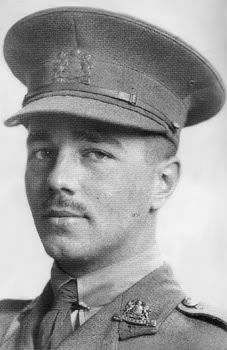
Remembering... Wilfred Owen

The idea that war is somehow glamourous is not an opinion common among fighting men, no matter what the politicians who wage it at their expense would have us think; for striking a killing blow at the heart of such a misguided notion we have men like Wilfred Owen to thank.

Photo Sharing and Video Hosting at PhotobucketIn verses like Anthem for Doomed Youth, Owen decries the horrors of modern warfare in no uncertain terms. Thematically daring, Owen's works are also structurally innovative; although only five of his poems were published during his lifetime, he is now generally thought of as one of the foremost poets of the era. To a large extent, Owen used poetry to help him recover from the worst effects of war which, in addition to its value in disabusing society at large of the nationalistic and patriotic brainwashing behind every bullet and bomb, makes his a very great talent indeed.

Born in March 1893, and enlisting in October 1915, by January 1917 he was back in England, suffering from shell-shock; when his friend and hero Siegfried Sassoon returned from the Front with a head injury, Owen decided it was his duty to take his place, so as to continue cataloguing the inhumanity of humanity's oldest sport at close range.

Alas, he got a little too close; Wilfred Owen was killed in action on this day in 1918, at the crossing of the Sambre-Oise Canal - one of the last Allied victories of World War I - just a week before the Armistice was signed. He was 25. As the bells of peace were ringing, his parents were receiving the telegram that their elder son wouldn't be coming home; he is buried in the communal cemetery at Ors, in France, near where he fell.

After Owen's death his brother and literary executor Harold Owen tried to eradicate all evidence of Wilfred Owen's homosexuality, failing miserably as this post attests; in doing so, Harold Owen gave aid and comfort to the myth that a man who loves men cannot be noble. It is a testament to Wilfred Owen's friends Robbie Ross, Osbert Sitwell, and C. K. Scott-Moncrieff (not to mention Siegfried Sassoon himself) that, even half a century before there was a community to do so, there was a culture that would nurture his whole memory.
*
share on: facebook

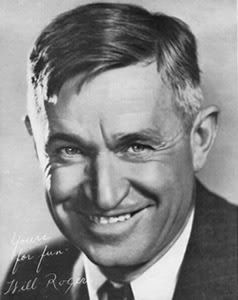
In Memoriam: Will Rogers

Maybe it's just my natural cynicism talking, but there's something about the homespun aw-shucks folksiness of Will Rogers that's never sat right with me; he is most famous for saying 'I never met a man I didn't like', yet every time I hear it my bullshit-detector starts a-quiverin' somethin' fierce. I mean, I am well into men, and I've met literally thousands of them I fairly despise...

Photo Sharing and Video Hosting at PhotobucketOf course, he is a product of a different time and place than I am, which is the same Will Rogers-esque homily I often use to explain away any incongruities I might encounter, wherever whenever and in whomever I might encounter them.

Born on this day in 1879, Oklahoma's favourite son never let a lack of interest in book-learning slow him down; he left the Dog Iron Ranch where he was born (near present-day Oologah, Oklahoma) in 1901, setting out for Argentina, where he planned to be a gaucho. When that plan fell through, he headed to South Africa, where he broke horses for the British until the end of the Boer War.

Once his services were no longer needed, he hired himself out to a series of circuses - visiting Australia in the process. By the time he returned Stateside a few years later he was already a seasoned performer, doing tricks with a lariat while discussing the news of the day in a gentle, conversational tone and with a commonsensical insight which was in every way wiser than (and therefore preferable to) the more overtly intellectual (and therefore somewhat off-putting) approach favoured by the other pundits of that era.

By 1915, Rogers was appearing in Florenz Ziegfeld's Midnight Frolic, a nightly revue at a cabaret built on the top floor of the fabled New Amsterdam Theatre in the heart of Times Square, which was then the epicentre of American show business; contacts he made there quickly became fans, and those fans in high places were to serve him very well indeed as he made his way from stage to screen and then to radio.

Friend to Kings and cowboys, Presidents and postmen alike, when Rogers died in August 1935 at the outset of a round-the-world flight with his friend Wiley Post, it was said to be the greatest single outpouring of public grief America had seen since the death of Lincoln; to this day tributes to him abound throughout Oklahoma and beyond. He's been revived on Broadway (portrayed by Keith Carradine) and lives on through the magic of DVD, even within the collection of the Pop Culture Institute, which is curated by none other than cynical old me.
*
share on: facebook

POPnews - November 4th

Photobucket
[Anyone who thinks former California governor Ronald Reagan's landslide victory over incumbent Democratic president Jimmy Carter on this day in 1980 is too much Republican red for their liking should definitely not click on the image and see the mandate he was given upon his 1984 re-election over Carter's former Vice President Walter Mondale.]

1501 - Catherine of Aragon met Arthur Tudor - to whom she'd been betrothed and married by proxy for years - at the Hampshire village of Dogmersfield; they were married at St. Paul's Cathedral ten days later, and following Arthur's death in April 1502 she married his younger brother, who would grow up to become Henry VIII.

1677 - The woman who would later become England's Queen Mary II married William, Prince of Orange; during their brief co-reign (less than six years) they would be known as William and Mary, and after her death in 1694 he would reign alone as William III.

1737 - The Teatro di San Carlo was inaugurated; built by Giovanni Antonio Medrano and Angelo Carasale for Charles III of Naples it was the largest opera house in its day, seating 3,300, and today it is the oldest still-active opera house in Europe.

1856 - James Buchanan was elected 15th US President over Republican John C. Frémont and former Whig president Millard Fillmore of the Know-Nothing Party.

1861 - The University of Washington opened in Seattle as the Territorial University, just a decade after the arrival of the first white settlers to the area.

1884 - Grover Cleveland was elected 22nd US President over Republican James G. Blaine.

1918 - The German Revolution began when 40,000 sailors took over the port in Kiel, and ended just days later with the abdication of Kaiser Wilhelm II.

1921 - Japanese Prime Minister Hara Takashi was assassinated in Tokyo.

1922 - British archaeologist Howard Carter and his men found the entrance to the tomb of King Tutankhamun in Egypt's Valley of the Kings following a fifteen year search, although he would wait three weeks for his patron, Lord Carnarvon, to arrive before opening it.

1924 - Calvin Coolidge was elected to a second term as US President over Democrat John W. Davis and Progressive Robert M. La Follette, Sr.. Also in that election, both Nellie Tayloe Ross of Wyoming and Miriam 'Ma' Ferguson of Texas were elected governor of their states; since Ross was inaugurated 16 days before Ferguson, though, she wins the title of the first female governor in US history.

1928 - Arnold Rothstein, New York City's most notorious gambler, died of injuries he received the previous day when he was shot while playing poker at the Park Central Hotel.

1952 - Dwight D. Eisenhower was elected 34th US President over Democrat Adlai Stevenson.

1960 - Filming wrapped on the troubled production of The Misfits - written by Arthur Miller and directed by John Huston - starring Marilyn Monroe, Clark Gable, Montgomery Clift, Eli Wallach, and Thelma Ritter. It would be the last film for Monroe and Gable.

1970 - 'Genie', a 13-year-old feral child whose actual name is Susan Wiley, was seized by the authorities in Temple City, California, having been locked in a bedroom for most of her life.

1979 - The Iran hostage crisis began when Iranian radicals, mostly students, invaded the US embassy in Tehran and took 90 hostages (53 of whom were American).

1980 - Ronald Reagan was elected 40th US President in a landslide over Democratic incumbent Jimmy Carter, independent John B. Anderson, and Libertarian Ed Clark.

1993 - Jean Chrétien took office as Prime Minister of Canada.

1995 - Israel's Prime Minister Yitzhak Rabin was assassinated by Yigal Amir, an extreme right-wing Israeli opposed to Rabin's support for the Oslo Accords.

2008 - Barack Obama was elected 44th US President over Republican Senator John McCain.
*
share on: facebook

Wednesday, November 03, 2010

"To Sir, With Love" by Lulu


Before she was Edina Monsoon's only client she was a fresh-faced gamine with a taste for interracial (and intergenerational!) hanky-panky; in recent years, Lulu has endured failed marriages - first to a Bee Gee then to a hairdresser - and performances with Take That to become a bonafide fame survivor.

Happy Birthday Lulu!
*
share on: facebook