Tuesday, November 23, 2010

POPnews - November 23rd

Photobucket
[This pivotal moment in the life of Lyndon B. Johnson - the administration of the oath of office by Judge Sarah T. Hughes, which occurred at 2:23 PM on November 22nd, 1963, following the assassination of John F. Kennedy earlier that day, in the presence of grieving former First Lady Jacqueline Kennedy, new First Lady Claudia 'Lady Bird' Johnson, and Jack Valenti (among many others) - was recorded for posterity by Cecil W. Stoughton of the White House Press Office. It remains one of the most famous images ever made; by this day in 1963 (LBJ's first full day in office) hundreds of millions of people had seen it.]

1499 - Perkin Warbeck, pretender to the English throne, was hanged at Tyburn following several abortive attempts to escape from the Tower of London.

1644 - Areopagitica - a pamphlet decrying censorship written by John Milton - was published.

1808 - French and Polish forces commanded by Jean Lannes defeated a Spanish army under Francisco Castaños at the Battle of Tudela during the Peninsular War.

1867 - England's Manchester Martyrs - William Philip Allen, Michael Larkin, and Michael O'Brien - were hanged for rescuing Thomas J. Kelly and Timothy Deasy (their brethren in an organization called the Irish Republican Brotherhood) from jail by killing Charles Brett, a police officer. Brett was the first member of the Manchester City Police to be killed in the line of duty.

1876 - William M 'Boss' Tweed, disgraced grand sachem of Tammany Hall, was handed over to the authorities in New York City, having been captured after fleeing the country the previous year on corruption charges.

1890 - William III of the Netherlands died without a male heir, the laws having already been changed to allow his daughter Wilhelmina to assume the throne - an act which saved the Dutch monarchy from extinction; Holland has not had a King since, but will again some day if the current Crown Prince Willem-Alexander succeeds his mother Queen Beatrix as expected.

1903 - Tenor Enrico Caruso had his American debut in Rigoletto at New York City's Metropolitan Opera.

1910 - Johan Alfred Ander was the last person to be executed in Sweden.

1934 - An Anglo-Ethiopian boundary commission working in the Ogaden region (bordering Kenya, Somalia, and Djibouti) discovered an Italian garrison stationed at Walwal, which lay well within Ethiopian territory; their presence led to an international diplomatic situation known as the Abyssinia Crisis and, later still, to Italy's ill-fated conquest of Ethiopia.

1936 - Life magazine was reborn under the publisher of Time magazine, Henry Luce.

1943 - The Deutsche Opernhaus on Bismarckstraße in Berlin's Charlottenburg neighbourhood was destroyed; it would eventually be rebuilt in 1961 and be called the Deutsche Oper Berlin.

1946 - The Workers Party of South Korea was founded.

1955 - The United Kingdom transferred authority over the Cocos Islands to Australia.

1963 - The first episode of Doctor Who - entitled An Unearthly Child - aired on the BBC.

1979 - Thomas McMahon was sentenced to life in prison for the murders of Lord Mountbatten, the Dowager Baroness Brabourne, the Hon. Nicholas Knatchbull, and crewman Paul Maxwell onboard Mountbatten's boat, Shadow V, in August 1979; he was released in 1998.

1984 - A fire broke out in the London Underground's Oxford Circus station shortly after 10 PM, trapping thousands and injuring 14 but resulting in no fatalities.

2003 - Georgian President Eduard Shevardnadze resigned amid protests against his rule.

2005 - Ellen Johnson-Sirleaf became the first woman elected to lead an African nation, in this case Liberia.

2007 - MS Explorer - a cruise liner carrying 154 people on a sight-seeing tour of Antarctica in the Southern Ocean south of Argentina - sank after striking an unidentified object in Bransfield Strait off King George Island near the South Shetland Islands; all those on board were put into lifeboats and eventually rescued by the Norwegian vessel MS Nordnorge with no fatalities.
*

share on: facebook

Monday, November 22, 2010

"Suicide Blonde" by INXS


On this day in 1997 Michael Hutchence - lead singer and front man of the energetic Australian rock band INXS - was found dead in Room 524 of the Ritz-Carlton Hotel in Sydney's tony Double Bay neighbourhood, apparently the victim of an accident which had occurred while he was engaging in autoerotic asphyxiation. Hutchence and his bandmates were then in the midst of the final leg of a tour in support of their recently released 10th studio album Elegantly Wasted.

As is usually the case with an untimely death - especially one which occurred under mysterious circumstances - Hutchence's death has not only created more questions than answers but resulted in a lengthy legal rigamarole as well.  It also gave the above former good-time song morose undertones - even before the overdose of Hutchence's longtime love and baby mama* Paula Yates in September 2000.

*With whom he had a daughter, Heavenly Hiraani Tiger Lily - who now lives with Yates' ex 'Saint' Bob Geldof for some reason.
*

share on: facebook

Pop History Moment: The Killing of JFK


The dozen or so times I've watched this seem to bear out the prevailing opinion that the President was shot twice, or at least by two people: once or twice in the chest from a long distance (probably by Lee Harvey Oswald) and once again in the head at close range, probably by the driver of the car, Secret Service Agent William 'Bill' Greer.

This enduring mystery and the concomitant obfuscation it engendered plagues the American psyche still...

Yet it also seems like the truth could potentially reveal itself at any moment; the principal players are all dying off, and surely one of them one day, in some kind of morphine-induced stupor, will confess all they know in order to lighten their soul's load as it prepares to leave its death bed. Not that it matters, except in bringing closure; it won't bring him back, nor will it undo the many grave injustices that were committed in its doing.

When John F. Kennedy was assassinated on this day in 1963 the larger portion of the American Dream died with him; as with the previous killings of Lincoln (and, to a lesser extent, those of Garfield and McKinley) the idea that anyone who assumes the highest office in the land - if they are able to grasp the American imagination, or bring about any substantive progress - can and will be killed for doing so, has almost certainly discouraged many great visionaries from even attempting it, leaving the field wide open for the merely ambitious, grasping, or power-hungry.

For all his faults as President, Kennedy brought into office a sense that hope can prevail; his murder only proved that hope, like happiness, fame, or power, is but fleeting. Anyway, his role over the more than forty years since he was killed as Holy Martyr to the Republic is one which is more enduring than any eight year Presidency could ever hope to be.

Any assassin (or assassins) who wished to snuff out President Kennedy's light on that cold sunny Friday in Dallas only succeeded in making it burn brighter.
*

share on: facebook

POPnews - November 22nd

Photobucket
[Joseph Stalin refused to attend the Cairo Conference if Chiang Kai-shek was going to be there; he only had a few days to sulk, though, as the Tehran Conference was soon organized to keep the big diva in the loop.]


498 CE - After the death of Anastasius II, Symmachus was elected Pope in the Lateran Palace, while Laurentius was elected Pope in Santa Maria Maggiore; Laurentius was supported by Byzantine Emperor Anastasius, but Symmachus had the support of the more powerful Theodoric the Great, King of the Goths, and so prevailed.

1573 - The Brazilian city of Niterói was founded by the Tupi chief Araribóia - who, following his conversion to Roman Catholicism in 1568, would later be re-named Martim Afonso after the Portugese explorer Martim Afonso de Sousa; nevertheless, Niterói remains the only Brazilian city to have been founded by a non-assimiliated non-Christian Brazilian Amerindian.

1574 - Chile's Juan Fernández Islands were discovered by accident, when Juan Fernández was blown off course during a voyage from Peru to the Chilean city of Valparaiso; the islands were later home to Alexander Selkirk, whose four-year exile there following a disagreement with captain of the St. George William Dampier inspired Daniel Defoe's novel Robinson Crusoe.

1718 - Pirate Edward Teach (better known as Blackbeard) was killed in battle off the coast of North Carolina during an engagement with Lt. Robert Maynard.

1830 - Having defeated the Tory government of the Duke of Wellington at the polls, Earl Grey of the Whig Party became Britain's Prime Minister when he was invited to form the United Kingdom's next government by King William IV.

1869 - The tea clipper Cutty Sark was launched from Dumbarton, in Scotland; one of the last clippers ever to be built, it remains one of only three such 19th Century vessels still surviving to this day despite a fire aboard it in May 2007.

1935 - The China Clipper left Alameda, California, with a cargo of more than 110,000 pieces of airmail; it arrived in Manila on the 29th. The first trans-Pacific airmail delivery was nearly a failure when the plane couldn't clear the Golden Gate Bridge (then still under construction) and pilot Edwin C. Musick had to make a daring pass under it to avoid crashing.

1943 - US President Franklin D. Roosevelt, British Prime Minister Winston Churchill, and Chinese leader Chiang Kai-Shek met at the Cairo Conference to discuss ways to defeat Japan in the ongoing War in the Pacific.

1975 - Juan Carlos I was declared King of Spain following the death of Francisco Franco.

1977 - British Airways inaugurated regular Concorde service between London and New York.

1987 - An unknown person wearing a Max Headroom mask intruded upon the signals of two Chicago telelvision stations; neither WGN-TV nor WTTW were ever able to determine who had committed these acts of piracy.

1988 - The first prototype of the B-2 Spirit stealth bomber was revealed.

1989 - Lebanese President Rene Moawad was assassinated when a bomb went off near his motorcade as it passed through West Beirut; no investigation into the attack has ever been carried out.

1990 - Margaret Thatcher resigned as Prime Minister following a political assassination at her party's conference, in which she failed to retain the leadership of Britain's Conservative Party.

1995 - Pixar's Toy Story was released, making it the first all-CGI animated feature; today it remains one of the best, but because of its script, not the CGI.

2002 - Anti-Miss World protests in Abuja, Nigeria, killed 100.

2003 - England won the Rugby World Cup.

2004 - Ukraine's Orange Revolution began, eventually unseating Prime Minister Viktor Yanukovych in favour of Viktor Yushchenko, amid charges that the former had poisoned the latter with dioxin.

2005 - Angela Merkel was elected Chancellor of Germany, the first woman to ever hold that post.
*

share on: facebook

Sunday, November 21, 2010

Goldie Hawn Discusses The Intelligence Gap With Dean Martin


This delightful interaction between birthday gal Goldie Hawn and cool cat Dean Martin proves that Goldie's not half as dumb as she'd have you believe... Which is quite an act, if you can master it.
*
share on: facebook

Happy Birthday Goldie Hawn

Photobucket

Although her first gig was on the short-lived sitcom Good Morning, World, Goldie Hawn soon thereafter burst into the public consciousness as the giggliest part of the ensemble sketch show Rowan & Martin's Laugh-In. It took a trio of movies, though - Cactus Flower*, There's a Girl in My Soup and Butterflies Are Free - to prove to that, while she was effervescent and sweet off camera as well as on, the ditz act was just that.

Appearances in Shampoo, The Sugarland Express, and Foul Play helped her career maintain its momentum despite such meteoric early success; it was 1981, though, that added an untold trajectory to Goldie Hawn's career. That was the year she appeared in Private Benjamin with Eileen Brennan and Armand Assante - which is exactly how I would have cast it - and it was clear that she had become a star for the ages...

She hasn't exactly rested on her laurels; since leaving the army Hawn has also starred in such fan favourite films as Swing Shift, the Vancouver-shot Bird on a Wire, and of course as part of the electrifying ensemble of The First Wives Club.

Nowadays, Hawn's fondness for the movies seems to have slipped; recently she and longtime love Kurt Russell decamped to Vancouver for the sake of their son Wyatt, whose dream was to play hockey. They've since left, but the few years they were here only served to confirm what Vancouverites have long known - that in addition to her skills as an actor, Goldie Hawn is also one of the world's great people. Currently she's engaged in charity work, empowering girls around the world, and being a grandma, which is the greatest kind of humanitarian work there is.

*For which she won an Oscar.
*

share on: facebook

Gratuitous Brunette: Ken Griffey, Jr.

Photobucket

My complete lack of knowledge of sports - as much as my fear of jocks - probably prevents me from posting more stories about athletes... Still, you'll never find a better athletic supporter than me. (And I mean that!)

Birthday wishes go out today to Ken Griffey, Jr. - the former Seattle Mariner, Cincinnati Red, and current Chicago White Sock whose turns at bat have earned him accolades, as well as Hall of Fame buzz even before retirement. The fact that he can so confidently handle 42 inches of wood makes him okay in my books...
*
share on: facebook

"An Englishman In New York" by Quentin Crisp


For the life of me, I'll never understand what might have moved Sting to write a song about Quentin Crisp as long ago as 1987*... Oh for the clear** mind of the typical YouTube commenter, who mainly attribute the inspiration to Sting's being gay. Apparently they missed the small blurb in the obscure newspaper that one time about him having all those tantric sex marathons with Trudie Styler.

A n y w a y... Here's An Englishman in New York, from Sting's album ...Nothing Like the Sun, which has a pretty funky sound if I do say so myself!

*Then again, I secretly think all straight people are homophobic, so what do I know?
**That is to say empty...
*

share on: facebook

Remembering... Quentin Crisp

PhotobucketPublication of his 1968 memoir The Naked Civil Servant scandalized a society clearly in need of scandalizing; in being among the first to force the British reading public to come to terms with its own homophobia not only did Quentin Crisp secure his legacy, he made life easier for subsequent generations of homos - not to mention eccentrics...

Born Christmas Day 1908, as early as 1930 Crisp was a fixture of the British capital, haunting the pubs and dive bars of Soho in search of like-minded companions; although he did find some* he found more foes than friends, all of which anecdotes eventually made their way into his book.

In 1975 The Naked Civil Servant was made into a television movie starring John Hurt; buoyed by the success of the film (which, in turn, boosted the sales of his book) Crisp moved to New York, where he would remain until his death on this day in 1999**. In the intervening years, Crisp distinguished himself by providing opinionated sound-bites to the press and 'singing for his supper', taking dinner invitations from anyone willing to pick up the check.

Plans are afoot for Hurt to star in a sequel to The Naked Civil Servant entitled An Englishman In New York, whose title is derived from the 1987 song by Sting of the same name***, so look for interest in the life and personality of Quentin Crisp to continue unabated...

*Since we are everywhere, always have been, and always will be...
**Even though he died in England, on the eve of a national speaking tour, his ashes were later scattered over Manhattan.
***From the album
...Nothing Like the Sun.
*

share on: facebook

"It's Oh So Quiet" by Björk


Hard as it is to resist Björk under normal circumstances, when she covers the classic Betty Hutton song Blow a Fuse and has the video directed by Spike Jonze I'm already writhing on the floor begging for mercy...

It's Oh So Quiet originally appeared on the 1995 album Post; in terms of chart position it remains her biggest single, although Big Time Sensuality is nothing to be sneezed at. (Unless that's what you're into.)

Anyway, today is Björk's birthday, so why not put on a swan dress and watch Dancer in the Dark?
*
share on: facebook

Saturday, November 20, 2010

Pop History Moment: The Wedding of Elizabeth and Philip

Britain on this day in 1947 was a nation sorely in need of a spectacle... With rationing still tight and evidence of bomb damage liberally scattered around the capital - and in plenty of other British cities and towns as well - the Royal Family did what it seems to do by instinct and found itself with a beautiful, confident princess ready to marry a dashing naval officer who was himself a prince...

Photo Sharing and Video Hosting at PhotobucketSo while the prospect had been the cause of some 'trouble and strife' within the family itself*, the people of Britain, the Commonwealth, and indeed the world reacted to the impending nuptials with their usual lack of reason, bless 'em. More than 2500 gifts arrived, which were then put on display in Buckingham Palace; among them were some of the most priceless of all in those lean times - rationing coupons, which enabled the bride to have her dress.

In the bridal party were Elizabeth's sister Princess Margaret Rose, their cousin Princess Alexandra of Kent; Lady Caroline Montagu-Douglas-Scott; Princess Alice, Duchess of Gloucester; the bride's second cousin, Lady Mary Cambridge; Lady Elizabeth Mary Lambart (now Longman); The Honourable Pamela Mountbatten (now Hicks); and two maternal cousins, The Honourable Margaret Elphinstone (now Rhodes) and The Honourable Diana Bowes-Lyon (now Somervell). Serving as pages were Prince William of Gloucester and Prince Michael of Kent.

Still, for all the closed-door machinations involved, the lavish affair at Westminster Abbey went off without a hitch, as these royal events so often do; the morning of the wedding Prince Philip was created Duke of Edinburgh - the third such creation in history**. Britain not only got its spectacle that day, but over the next 60 years the marriage of Elizabeth and Philip would provide, pound for pound, some of the best entertainment value of the 2oth Century, an investment that keeps on giving into the third millennium...

*Philip was Greek Orthodox; the Queen (later the Queen Mother) referred to Philip as 'The Hun'; Philip's sisters weren't invited because they'd all married German princes; the King's sister Princess Mary, Princess Royal refused to attend because the Duke of Windsor (or more specifically the Duchess of Windsor) wasn't invited...
**The first Duke of Edinburgh was Prince William Henry, the younger brother of George III, who passed the title to his son, Prince William Frederick before it went extinct; the second was Queen Victoria's son Prince Alfred, whose contribution to history was surviving an assassination attempt in Australia at the hands of Henry James O'Farrell in March 1868 and whose daughter became the redoubtable Marie of Romania.
*

share on: facebook

"Sabotage" by Beastie Boys


Birthday wishes go out to Mike D, whose nearly thirty year tenure as drummer with the Beastie Boys has produced a rock/rap hybrid known as rapcore yet only seven albums. Still, there's something to be said for choosing quality over quantity...

Sabotage was the 1st single from the band's 1994 fourth album Ill Communication; the accompanying video, directed by Spike Jonze, is an affectionate parody of 70s cop shows, such as Hawaii Five-0, Streets of San Francisco, S.W.A.T., Baretta, and Starsky and Hutch. Mike D's character in this clip is billed as Alasondro Alegré as 'The Chief'...
*
share on: facebook

Friday, November 19, 2010

The Death of Thomas Ince

It is telling that the best-produced things ever made in Hollywood are its scandals; then again, scandals cannot be slashed by the censor's blue pencil, trashed by meddlesome studio executives, or even have their storylines obfuscated by the work of many hands (from writers to directors to actors) without making them better. Unlike films.

Photo Sharing and Video Hosting at PhotobucketThe 'death/murder' of Thomas Ince is not just one of the more delicious examples of Hollywood scandal, but it was also one of the first, and the more myth accrues to it the better it gets. No writer - and certainly no director or actor - could (or would dare to) make up such a thing...

Our story opens in 1924, aboard a yacht, called the Oneida; the yacht is owned by a fabulously wealthy newspaper publisher of some renown named William Randolph Hearst. It's sailing the California coast on this particular weekend is in honour of the 42nd birthday of Thomas Ince, a well-known director of silent films; also onboard are Hearst's lover Marion Davies, actor Charlie Chaplin, newspaper columnist Louella Parsons, author Elinor Glyn and film actresses Aileen Pringle, Jacqueline Logan, Seena Owen, Margaret Livingston and Julanne Johnston. All is going splendidly until...

Hearst sees Ince canoodling with Davies. Shots ring out, Ince slumps to the floor, and Hearst's publicity machine goes into instant overdrive in order to smother the scandal at its source. Chaplin's silence can be bought; there's already more dirt on him than a coffin lid. Parsons received a lifetime contract with Hearst News ensuring she can scribble her drivel for an obscene paycheque for the rest of her life, becoming the most powerful woman in Hollywood in the process. Marion Davies only needs another cocktail, another line of blow, and another wheel barrow full of jewellery to shut her up.

Still, though, the rumours began to spread, and no one seems to know why; it's not like actresses gossip or anything... No, as a plot element that would be too far-fetched.

15 years later, when Orson Welles was planning his masterpiece Citizen Kane, he began asking around about Hearst, and claims that's when Herman J. Mankiewicz told him the story. Thirty years after that and the story resurfaced in Kenneth Anger's hilariously slanderous Hollywood Babylon, and thirty years later again the events of that fateful weekend served as the basis for both a 1996 book entitled Murder at San Simeon by Hearst's granddaughter - a scandal-maker in her own right named Patty Hearst - and finally a movie by Peter Bogdanovich (Welles' favourite ass-kisser) called The Cat's Meow (2001) in which Ince was played by none other than Cary Elwes.

True or not, the story is so much more entertaining than the fact that Ince went into the weekend with severe indigestion, and may have just had a heart attack and died; that is just the sort of banal drivel one has come to expect from Hollywood - only with more explosions, maybe a car chase and, oh yes, plenty of CGI!
*
share on: facebook

"Mata Hari" by Ofra Haza


Born on this day in 1957, Ofra Haza was Israel's first internationally acclaimed pop music superstar; of Yemenite Jewish ancestry, from the poor Tel Aviv neighborhood of Hatikvah Haza rose, and had already released four popular albums* when, in 1983, she was entered into the Eurovision Song Contest. Although she came second, behind the Luxembourg entry - Corinne Hermes, who sang Si la vie est cadeau - her showing vaulted Haza to fame throughout Europe.

This track - Mata Hari, from Haza's unreleased 1995 album Queen in Exile - was chosen to represent the singer's exceptional skills for obvious reasons; not only is it well sung, but regular readers of this blog will already know of my abiding interest in its subject, making it an all around ideal fit for the Pop Culture Institute.

Ofra Haza's life was made all the more poignant by two events: first, in February 1987**, Haza walked away from a plane crash*** on the Israeli-Jordanian border, a day she always celebrated thereafter as her second birthday; second, in February 2000 Haza died under mysterious circumstances. Conflicting reports say that either she died of AIDS - with which she was infected by her husband Doron Ashkenazi, who died of a crack overdose in April 2001 - or that she died following a massive beating, a rumour that had such validity it was later investigated by Israeli police.

Whatever the cause of her death her family has not been forthcoming with the details, out of respect for her memory...

*1980's Al Ahavot Shelanu (Our Love), 1981's Bo Nedaber (Let's Talk), plus 1982's Pituyim (Temptations) and Li-yeladim (Children's Songs).
**Coincidentally, the 28th anniversary of the so-called
The Day the Music Died in which Buddy Holly, Ritchie Valens, and J.P. 'The Big Bopper' Richardson died.
***The first of two... The plane in which she was traveling - Flight 316 from London to Israel - was struck by lightning in April 1994 and was forced to make an emergency landing.
*

share on: facebook

Pop History Moment: Abraham Lincoln Delivered The Gettysburg Address

US President Abraham Lincoln's stirring words (delivered on this day in 1863) serve to remind us of the high-minded ideals upon which the nation he led was founded, ideals which he - along with thousands of his countrymen - fought and died for; yet the Gettysburg Address also echoes with a kind of hollowness, given how much work remains undone... Delivered upon the dedication of the Soldiers' National Cemetery in Gettysburg, Pennsylvania, they are brief but moving:

Photo Sharing and Video Hosting at PhotobucketFour score and seven years ago*, our fathers brought forth upon this continent a new nation: conceived in liberty, and dedicated to the proposition that all men are created equal.

Now we are engaged in a great civil war. . . testing whether that nation, or any nation so conceived and so dedicated. . . can long endure. We are met on a great battlefield of that war.

We have come to dedicate a portion of that field as a final resting place for those who here gave their lives that this nation might live. It is altogether fitting and proper that we should do this.

But, in a larger sense, we cannot dedicate. . . we cannot consecrate. . . we cannot hallow this ground. The brave men, living and dead, who struggled here have consecrated it, far above our poor power to add or detract. The world will little note, nor long remember, what we say here, but it can never forget what they did here.

It is for us the living, rather, to be dedicated here to the unfinished work which they who fought here have thus far so nobly advanced. It is rather for us to be here dedicated to the great task remaining before us. . . that from these honored dead we take increased devotion to that cause for which they gave the last full measure of devotion. . . that we here highly resolve that these dead shall not have died in vain. . . that this nation, under God, shall have a new birth of freedom. . . and that government of the people. . . by the people. . . for the people. . . shall not perish from this earth.

*On this day in 2007, when I first posted this piece, I'd intended its original title -
Seven Score And Four Years Ago - to be a humourous spin on the opening line of the Gettysburg Address, 'Four score and seven years ago...' Then I counted. Sure enough, this day in 2007 was seven score and four years to the day that President Abraham Lincoln first made his most famous oration. Spooky...
*

share on: facebook

POPnews - November 19th

Photobucket
[Even for mid-century ad copy - which could blow smoke with the best of them, even when not shilling for Big Tobacco - any and all of the enthusiasm for the Ford Edsel is here entirely a product of the copywriter's fevered imagination; then again, having devoured the First Season of Mad Men in its entirety I can almost understand what pressures drove them to lie their faces off like this.]

1095 - The Council of Clermont, called by Pope Urban II to discuss sending the First Crusade to the Holy Land, opened.

1493 - Christopher Columbus became the first European to arrive at an island he named San Juan Bautista (later renamed Puerto Rico), which he'd sighted the day before.

1816 - Warsaw University was established.

1850 - Upon the refusal of the position by Samuel Russell Alfred Lord Tennyson replaced William Wordsworth as England's poet laureate, apparently; it was a position he would hold until his death in October 1892.

1863 - US President Abraham Lincoln delivered the Gettysburg Address at the dedication ceremony of a military cemetery in Gettysburg, Pennsylvania.

1941 - Following a battle between HMAS Sydney and HSK Kormoran, the two ships sank each other off the coast of Western Australia, with the loss of 645 Australians and about 77 German seamen.

1942 - Soviet forces under General Georgy Zhukov launched a series of counterattacks dubbed Operation Uranus during the Battle of Stalingrad, turning the tide of the battle in the USSR's favor.

1943 - The Nazis liquidated Janowska concentration camp in Lemberg (Lviv), western Ukraine, murdering at least 6,000 Jews after a failed uprising and mass escape attempt.

1954 - Sammy Davis, Jr., lost his left eye in an automobile accident in San Bernardino, California; in exchange for his recovery he converted to Judaism.

1955 - National Review began spewing its filth and lies, ably assisted by William F. Buckley, Jr., an old filth and lies spewer from way back.

1959 - The Ford Motor Company announced it was discontinuing its unpopular Edsel.

1961 - Michael Rockefeller, son of New York governor Nelson Rockefeller, disappeared in the jungles of Papua New Guinea.

1967 - TVB, Hong Kong's first wireless commercial television station, was established.

1969 - Soccer player Pelé scored his 1,000th career goal; unable to watch this singular event were Apollo 12 astronauts Pete Conrad and Alan Bean, who on the same day landed at Oceanus Procellarum (aka the 'Ocean of Storms') making them the third and fourth humans to walk on the Moon.

1976 - Jaime Ornelas Camacho took office as the first President of the Regional Government of Madeira in Portugal.

1977 - Egyptian President Anwar Sadat became the first Arab leader to officially visit Israel, when he met President Ephraim Katzir and Prime Minister Menachem Begin before addressing the Knesset in Jerusalem, seeking a permanent peace settlement.

1990 - Pop group Milli Vanilli were stripped of their Grammy Award because the duo did not sing at all on their album Girl You Know It’s True, the vocals having been supplied in their entirety by session musicians.

1994 - The first drawing of the UK's National Lottery was held; initially hosted by Noel Edmonds, he soon handed over hosting duties to Anthea Turner and Gordon Kennedy.

1997 - Bobbi McCaughey gave birth to septuplets in only the second known case where all seven babies were born alive; they would go on to become the first set of septuplets to survive infancy, with all seven still alive and living in Des Moines, Iowa, as of 2010.
*

share on: facebook

Thursday, November 18, 2010

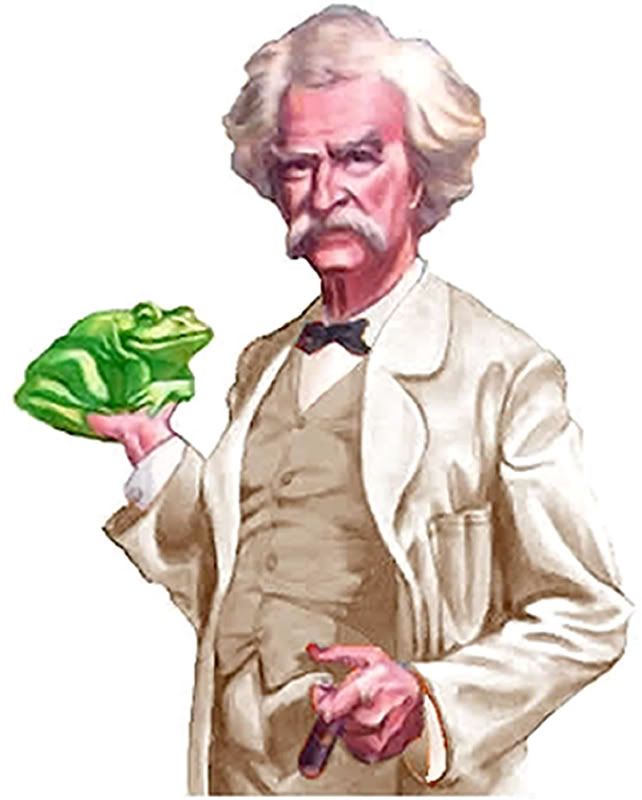
"The Celebrated Jumping Frog of Calaveras County" by Mark Twain

Photobucket

[Mark Twain's story The Celebrated Jumping Frog of Calaveras County was first published in 1865 - in an issue of the New York Saturday Press bearing today's date - as Jim Smiley and his Jumping Frog; it had been written at the behest of Twain's friend Artemus Ward, and would establish Twain as the era's foremost humourist.]

I
n compliance with the request of a friend of mine, who wrote me from the East, I called on good-natured, garrulous old Simon Wheeler, and inquired after my friend's friend, Leonidas W. Smiley, as requested to do, and I hereunto append the result. I have a lurking suspicion that Leonidas W. Smiley is a myth; that my friend never knew such a personage; and that he only conjectured that, if I asked old Wheeler about him, it would remind him of his infamous Jim Smiley, and he would go to work and bore me nearly to death with some infernal reminiscence of him as long and tedious as it should be useless to me. If that was the design, it certainly succeeded.

I found Simon Wheeler dozing comfortably by the bar-room stove of the old, dilapidated tavern in the ancient mining camp of Angel's, and I noticed that he was fat and bald-headed, and had an expression of winning gentleness and simplicity upon his tranquil countenance. He roused up and gave me good-day. I told him a friend of mine had commissioned me to make some inquiries about a cherished companion of his boyhood named Leonidas W. Smiley—Rev. Leonidas W. Smiley, a young minister of the Gospel, who he had heard was at one time a resident of Angel's Camp. I added that, if Mr. Wheeler could tell me any thing about this Rev. Leonidas W. Smiley, I would feel under many obligations to him.

Simon Wheeler backed me into a corner and blockaded me there with his chair, and then sat me down and reeled off the monotonous narrative which follows this paragraph. He never smiled, he never frowned, he never changed his voice from the gentle-flowing key to which he tuned the initial sentence, he never betrayed the slightest suspicion of enthusiasm; but all through the interminable narrative there ran a vein of impressive earnestness and sincerity, which showed me plainly that, so far from his imagining that there was any thing ridiculous or funny about his story, he regarded it as a really important matter, and admired its two heroes as men of transcendent genius in finesse. To me, the spectacle of a man drifting serenely along through such a queer yarn without ever smiling, was exquisitely absurd. As I said before, I asked him to tell me what he knew of Rev. Leonidas W. Smiley, and he replied as follows. I let him go on in his own way, and never interrupted him once:
*
share on: facebook

"Steamboat Willie" starring Mickey Mouse


On this day in 1928 the Walt Disney and Ub Iwerks cartoon Steamboat Willie was released; the film itself is a parody of the Buster Keaton film Steamboat Bill Jr.. Notable as the first cartoon to sync pictures and sound, it was also the first of Disney's offerings to feature Mickey Mouse - here pitted against longtime Disney villain Peg-Leg Pete... Opening at New York City's 79th Street Theatre, it played ahead of the independent film Gang War, which is all but forgotten today, except as a footnote in the story of Steamboat Willie.

Since 1998 Steamboat Willie has been on the National Film Registry, putting it under the protection of the Library of Congress.
*
share on: facebook

The Death of Gia Carangi

With all due respect to Suzy Parker, Lauren Hutton, and even Janice Dickinson, the world's first supermodel was a wild child from Philadelphia with a European look and a dangerous side that would prove as prophetic as it was sexy...

PhotobucketBorn in January 1960, Gia Carangi's childhood was marred by her parents' constant squabbling, which drove her to seek solace on the mean streets - and by the early Seventies few streets were meaner than those of North Philly; at the age of 17 she took off for Manhattan, and having worked for such noted fashion photographers as Francesco Scavullo, Arthur Elgort, Richard Avedon, and Chris von Wangenheim in short order she soon found herself the most sought-after fashion model in the world.

Regular readers of the Pop Culture Institute will be all too aware of the corrosive effects of fame on the young, effects which derailed not just the career but eventually as well the life of Gia Carangi...

A regular at famed nightspots Studio 54 and the Mudd Club, Carangi soon tried cocaine and eventually heroin, which would prove her downfall; the double shock of two deaths, one year apart - first of Gia's mentor Wilhelmina Cooper in March 1980 then that of Chris von Wangenheim in March 1981 - hastened Carangi's headlong slide when she chose to take solace in her addiction. Posing for her last Cosmopolitan cover in the winter of 1982, she was caught with drugs on a shoot in Africa in 1983 and her career was over.

The last five years of her life were spent in and out of various rehab and detox environments, punctuated by short-lived relationships with both women and men; Gia Carangi died on this day in 1986, one of the first prominent female figures to die of AIDS. The entire sad story - in which most of her highs were themselves lows - is told in Stephen Fried's book Thing of Beauty; the book was loosely adapted for television, and made into the 1998 TV-movie Gia, starring a then-obscure Angelina Jolie, who won a Golden Globe for her work.
*
share on: facebook

Pop History Moment: "Calvin and Hobbes" Debuts

Photobucket

On this day in 1985 Universal Press Syndicate debuted the comic strip Calvin and Hobbes, by Bill Watterson. In the same way Calvin baited his tiger trap with tuna and caught himself Hobbes, so did Watterson bait his strip with razor-sharp insight into the human psyche and catch himself a cult following; during its decade-long run each and every tantrum, flight of fancy, and philosophical discourse left the strip's regular readers enraptured. I know I for one hoped it would go on forever...

More than a decade after Watterson called it quits (on the last day of 1995) the entire strip was published in a hard cover collectors' edition, which has yet to find its way into the collection of the Pop Culture Institute*...

*This is a hint, for any of you potential benefactors out there... After all, 'Tis the Season and all that.
*

share on: facebook

"Reefer Man" by Cab Calloway


In a way it's no shock to learn that famed bandleader Cab Calloway (who died on this day in 1994) was born on Christmas Day, in 1907; not only was he prodigiously gifted, but he was incredibly generous with those gifts all his life. During the darkest years of the Great Depression, Calloway's high-energy song-and-dance-filled recordings and radio broadcasts, film and nightclub appearances livened up many a dark night, and even when he occasionally indulged in a bit of tear-mongering - such as with St. James Infirmary Blues - audiences could be guaranteed that it would be far more entertaining than mere self-pity.

Whether teamed up with Betty Boop - who sashayed her way through his classic Minnie the Moocher in a way he could only dream of - with his band or on his own, seen here taking the time out to campaign on behalf of relaxed marijuana laws with the song Reefer Man.
*
share on: facebook

Happy Birthday Margaret Atwood

She traced the outlines of her life well enough in Cat's Eye (1988) so that even the most casual observer could recognize her from the shape she'd made there; still, never be fooled by any writer who uses their own facts to fill out their fiction. Often, rather than verisimilitude, it's a very personal form of subterfuge they have in mind...

Photo Sharing and Video Hosting at PhotobucketBorn on this day in 1939, Atwood's childhood was peripatetic; she never attended a full year of school until the 8th Grade, when her father gave up his job as a field biologist for a professorship at the University of Toronto (if Cat's Eye is to be believed, anyway). An early reader - both voracious in scope and catholic in taste - Atwood began writing at the age of 16 (what we call around here 'a late bloomer'); she soon made up for her patchy education and laggard start by obtaining her university degree and self-publishing her first book of poems, Double Persephone, both in 1961.

By 1964 she'd won her first Governor-General's Award, for The Circle Game, and just like that she was off; her first novel, 1969's The Edible Woman is notable not just for its distinctly Canadian setting, but for its humour, a quality for which she has not been overpraised but which is nevertheless there, in amongst the eloquence of her phrasing and vivid characterization.

Ever since the outset of the 1970s, then, she has been a prolific writer of fiction, non-fiction, poetry, essays, and investigations into the Canadian identity; simply by outliving her idols she stands as the undisputed Queen of Canadian Literature. Approaching seventy, Atwood shows no signs of relenting, for which I am grateful (despite the groaning of my bookshelves). There are very few writers whose works I snap up the instant they're published, but she is at the top of that short list, a sensation with which the much-lauded author is well familiar I am sure.

In 2008, Atwood hit the zeitgeist jackpot by publishing Payback: Debt and the Shadow Side of Wealth just as the world's rich decided to make it that little bit harder for the other 95% of us... It's a slim volume - derived from her Massey Lectures - but fairly bulges with the wit, insight, and commonsense we who revere her have come to expect.
*
share on: facebook

POPnews - November 18th

Photobucket
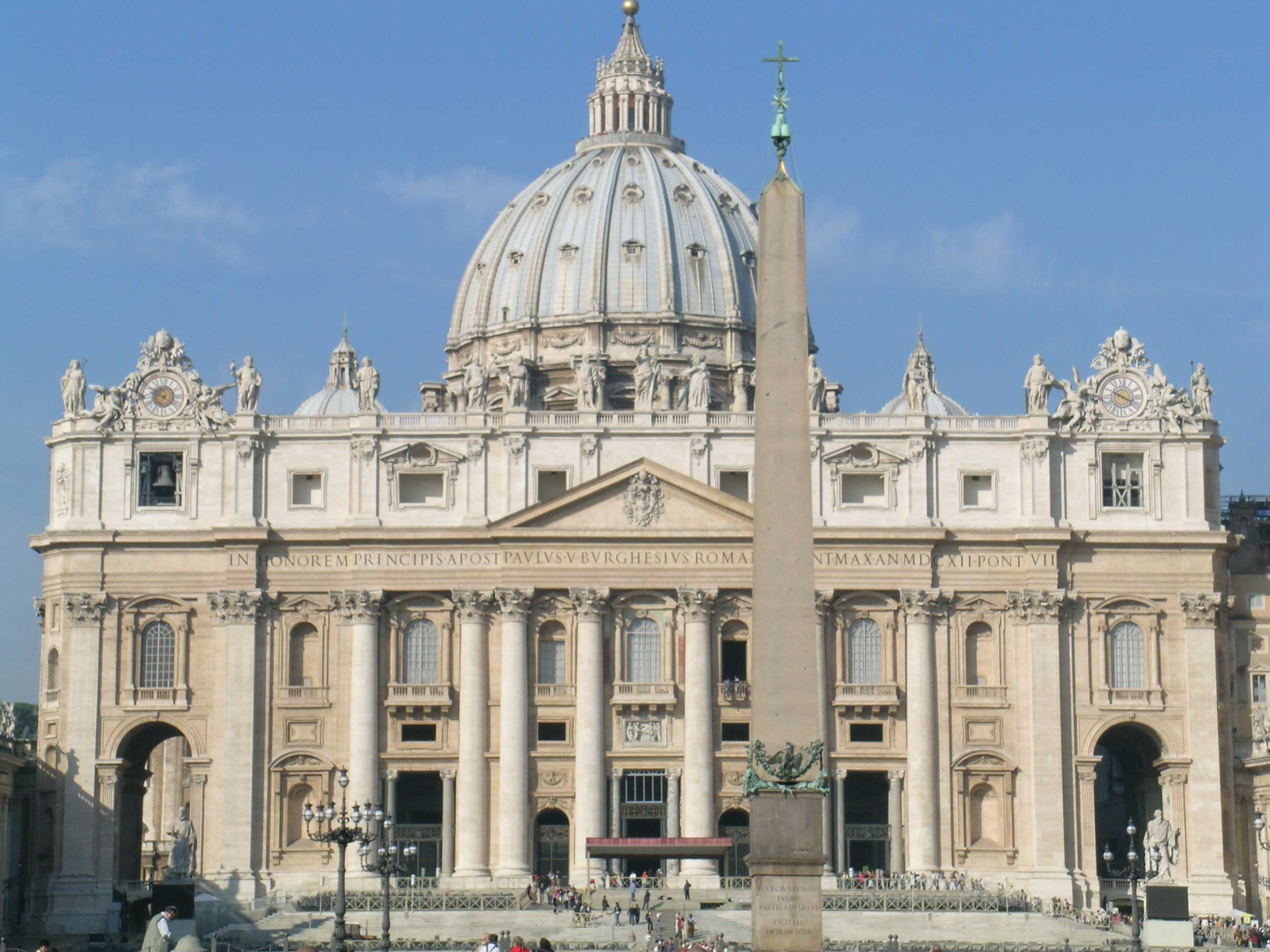
[By 1450, when this image was made, the Renaissance St. Peter's Basilica which had grown up around the tomb of Saint Peter had itself grown too old-fashioned for the silk- and velvet-dressed, perfumed and bejewelled he-men who lived and worked there; originally intending to preserve the old building, Pope Julius II eventually tore one architectural masterpiece down with an unshakable faith that someday an even greater one would arise...]

326 CE - The Old St. Peter's Basilica was consecrated, during the papal reign of St. Sylvester I.

1302 - When Pope Boniface VIII issued the Papal bull Unam sanctam - 'The One Holy' - it wasn't the first bull issued by a Pope (and Lord knows it wouldn't be the last) but it was one of the strongest statements to date about Papal infallibility, and is probably responsible for that holier-than-Thou attitude of theirs the rest of us must contend with to this day.

1307 - According to legend, William Tell shot an apple off his son's head.

1477 - When William Caxton produced Dictes, or Sayengis of the Philosophres (written by the King's brother-in-law Earl Rivers, whose sister Elizabeth married Edward IV), it would be the first book printed on a printing press in England.

1626 - The extensively remodeled St. Peter's Basilica was re-consecrated by Pope Urban VIII.

1803 - At Battle of Vertières, the last major battle of the Haitian Revolution, Jean-Jacques Dessalines defeated French troops under Vicomte de Rochambeau - leading to the establishment of the first black republic in the Western Hemisphere, the Republic of Haiti, where the day is still celebrated.

1863 - Denmark's King Christian IX signed that country's November Constitution, which (in part) declared Schleswig to be part of Denmark; this was seen by the German Confederation as a violation of the London Protocol and would eventually lead to the German-Danish War of 1864.

1865 - Mark Twain's story The Celebrated Jumping Frog of Calaveras County was first published, in the New York Saturday Press.

1905 - Denmark's Prince Carl became King Haakon VII of Norway following the 1905 dissolution of the union between the two countries.

1916 - The First Battle of the Somme ended when British Expeditionary Force commander Douglas Haig called off the battle - which had started on July 1st.

1928 - The animated short Steamboat Willie, the first fully-synchronized sound cartoon, was released; directed by Walt Disney and Ub Iwerks, it featured the second appearances of cartoon stars Mickey and Minnie Mouse. This date is also considered by the Disney Corporation to be Mickey's birthday.

1929 - The Grand Banks earthquake - a submarine seismic event recorded at 7.2 on the Richter scale and centred on the Grand Banks in the Atlantic Ocean off the south coast of Newfoundland - broke 12 underwater transatlantic telegraph cables and triggered a tsunami that destroyed many south coast communities in the Burin Peninsula area.

1947 - A fire at Ballantyne's Department Store fire in Christchurch killed 41, making it the worst such catastrophe in New Zealand history.

1978 - At the Jonestown incident in Guyana, Jim Jones led his Peoples Temple cult in a mass murder-suicide that claimed 918 lives in all, 909 of them at Jonestown itself, including over 270 children; the event had been precipitated by the fact-finding mission of Congressman Leo Ryan (D.-Calif.) and his subsequent murder (along with four journalists) at the hands of Jonestown thugs, also on this day.

1985 - Bill Watterson's legendary comic strip Calvin and Hobbes debuted.

1987 - During a fire in London, 31 people died at the city's busiest Tube station, King's Cross St Pancras.

1991 - Following the 87-day siege of Vukovar, that Croatian city capitulated to the besieging Yugoslav People's Army and allied Serb paramilitary forces.

2000 - Welsh beauty Catherine Zeta-Jones married Hollywood royalty Michael Douglas at New York City's famed Plaza Hotel.

2003 - The UK's Local Government Act 2003 received Royal Assent, repealing the Thatcher government's controversial anti-gay amendment Section 28 in England and Wales; Scotland had already repealed it in June 2000 with the passage of its Ethical Standards in Public Life etc. (Scotland) Act 2000. First passed in May 1988 and championed by, among many others, Michael Howard, Section 28 remains one of the most loathsome pieces of legislation ever produced by the Mother of All Parliaments.
*
share on: facebook