Thursday, August 05, 2010

POPnews - August 5th

Photobucket
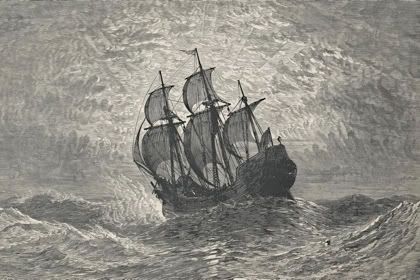
[The Mayflower, shown here in a rather romantic engraving.]

642 CE - At the Battle of Maserfield - which may have been on this day in 642 CE, or else on this day in 641 CE (at least according to the Venerable Bede) but probably wasn't on this day in 644 CE as reported by the Annales Cambriae (who knows what they were thinking!) - Penda of Mercia defeated and killed Oswald of Bernicia. Not content with this victory, Penda then went all early medieval on his foe and dismembered him; also in on the action on that day was Mercian ally Cynddylan ap Cyndrwyn of Powys.

910 CE - The last major Viking army to raid England was defeated at the Battle of Tettenhall - near modern-day Wolverhampton - by a combined force led by Edward the Elder, King of Wessex, and Earl Aethelred of Mercia.

1100
- England's King Henry I was crowned at Westminster Abbey; the fourth son of William the Conqueror succeeded his older brother William II following a suspicious hunting accident in New Forest three days earlier.

1305 - William Wallace was captured by the English at Robroyston, near Glasgow; from there he was transported to London, where he would be executed on August 23rd.

1388 - According to the Scottish*, at the Battle of Otterburn - a border skirmish between the Scottish and the English in Northumbria - Scotland's commander James Douglas, 2nd Earl of Douglas was given the ultimate Pyrrhic victory over England's Henry 'Hotspur' Percy, son of the first Earl of Northumberland; while Douglas was clearly the victor in the field he also died in battle.

*According to the English the battle was fought on August 19th; since they lost, it's only fair that they also lose the right to select the day of the battle. ~ MSM

1583 - Sir Humphrey Gilbert established England's first North American colony - at first little more than a seasonal fishing station - at St. John's, Newfoundland, at the same time claiming the entire island and much of the sea around it in the name of Elizabeth I.

1620 - The Mayflower - mastered by Christopher Jones - first attempted to depart England via Southampton on its first attempt to reach the New World; shortly after leaving port, her sister ship the Speedwell developed a leak, and the Pilgrim Fathers were forced to put in at Dartmouth in order to make necessary (and costly) repairs - and not for the last time, either. Later on, it would be revealed that the source of the damage to the Speedwell was sabotage by the crew, who were reluctant to take on such a lengthy, dangerous commitment for the poor compensation they were offered.

1716 - The Battle of Petrovaradin took place, giving the Habsburg Empire (with its Hungarian and Croatian allies) under Prince Eugene of Savoy a decisive victory over the Ottoman Empire and its commander, Silahdar Damat Ali Pasha, who died in battle.

1735 - In an important early victory for freedom of the press, New York Weekly Journal publisher John Peter Zenger was acquitted of seditious libel for criticizing the city's royal governor, William Cosby, on the basis that what he'd published was true. Zenger's attorney in the action was Andrew Hamilton, who defended him on a pro bono basis; in gratitude, Hamilton was later awarded the freedom of the city of New York.

1763 - During the so-called Pontiac's War, at the Battle of Bushy Run, British forces led by Henry Bouquet defeated a combined force of Delaware, Shawnee, Mingo, and Huron warriors under Chief Pontiac's commanders Guyasuta and Keekyuscung (who died in battle) at Bushy Run in western Pennsylvania.

1772 - The First Partition of Poland began; within 25 years the three partitions in total would bring an end to the Polish-Lithuanian Commonwealth.

1862 - At the Battle of Baton Rouge - during the American Civil War - along the Mississippi River near the Louisiana capital Confederate troops drove Union forces back into the city.

1884 - The cornerstone of the Statue of Liberty's pedestal was laid.

1906 - Sydney's Central Railway Station was opened.
Photobucket1925 - The political party Plaid Cymru was established - partly to preserve Welsh language and culture, which was then at risk of dying out - and partly to remove Wales from the political control of Great Britain in the most excruciatingly polite way possible - although Plaid Cymru members David John Williams and Lewis Valentine were jailed for their part in the September 1936 burning of the bombing school at RAF Penrhos, an action which saw their membership numbers double.

1957 - After five years of local success in Philadelphia, American Bandstand made its national TV debut on ABC affiliates in the United States, hosted by Dick Clark. It ran daily during the week (either live or on kinescope) until 1963, when it became a weekly show, typically airing on Saturday afternoons. Turns out the show had a good beat and you could dance to it; it ran until 1989.

1962 - Nelson Mandela was captured and imprisoned in the Johannesburg Fort. He would spend 18 of his 27 years in jail at Robben Island; in 1982 he was moved to Pollsmoor and subsequently Victor Verster Prison, from which he was famously released in February 1990.

1964 - American aircraft from carriers USS Ticonderoga and USS Constellation bombed North Vietnam as part of Operation Pierce Arrow in retaliation for strikes against US destroyers in the Gulf of Tonkin Incident. The effective start of the air portion of the Vietnam War, the operation yielded the conflict's first prisoner of war, Everett Alvarez Jr., who endured 8 and a half years of torture while in captivity.

1981 - US President Ronald Reagan fired 11,359 striking air traffic controllers, which I'm sure had nothing whatsoever to do with the major increase in airline fatalities through the 1980s. After all, who cares about public safety when there's a union to be broken?
*
share on: facebook

Wednesday, August 04, 2010

"On The Sunny Side Of The Street" by Louis Amstrong


While Louis Armstrong* always maintained he was born on the 4th of July, 1900, in the years following his July 1971 death it was discovered that this was a bit of patriotic wishful thinking; he was in fact born on this day in 1901!

The grandson of slaves, born out of wedlock, he lived as a child in the rough neighbourhood of Uptown New Orleans... Despite having everything against him from the start - or, then again, likely because of it - Louis Armstrong rose to the kind of enduring prominence of the sort which even the ambitious go-getters of Striver's Row could only dream. For a child harbouring a talent as vast as his, there was no better place for him to have grown up... The honky-tonks and speakeasies of Storyville and Bourbon Street and the French Quarter were then alive with the mixture of ragtime and Creole music that would one day become known as jazz - a form which he would one day do much to innovate and popularize and indeed even help to invent. It's just further proof that 'the right place and the right time' may not always be apparent from up close.

In the last years of Armstrong's life he said 'I think I had a beautiful life. I didn't wish for anything that I couldn't get and I got pretty near everything I wanted because I worked for it.' After his death his colleague Duke Ellington said it even more succinctly: 'He was born poor, died rich, and never hurt anyone along the way.'

On the Sunny Side of the Street first appeared in 1930 - with music composed by Jimmy McHugh and lyrics by Dorothy Fields - in the Broadway musical Lew Leslie's International Revue, starring Harry Richman and Gertrude Lawrence; it has since been recorded by a veritable Who's Who of musical talent, including Benny Goodman, Dizzy Gillespie, Count Basie, Ella Fitzgerald, Judy Garland, Jo Stafford, Frank Sinatra, and Cyndi Lauper. This performance of it by the man himself is from April 1958.

*There remains some debate over just how to pronounce his name... Early in his career he seemed to favour 'Louie', even going so far as to pronounce it that way on recordings; this French pronunciation would be in keeping with his having been born in New Orleans. Then again, later in life he was known to pronounce it 'Lewis', as he did on his famous recording of Hello Dolly! - which version seems to have been embraced ever since his death, especially by white scholars.
*
share on: facebook

Tuesday, August 03, 2010

"Shoop" by Salt N Pepa


In this landmark work of old school hip-hop feminism, Salt axes the timeless question 'What's my weakness?; Pepa's answer, naturally enough, is emphatic - 'Men!'

Ah men... I've devoted almost my entire life to the admiration of and obsession over their virile forms, and the gay ones have repaid me by aggressively ignoring me; still, it's better than the routine menacing I've gotten from the straight ones, I suppose. More importantly, I haven't allowed this combination of celibacy and terrorism to change how I feel about them*.

In honour of Spinderella's birthday then, here is a bit of fun courtesy of Salt-N-Pepa from all the way back in 1993; Shoop first appeared on the band's fourth album Very Necessary, which was very necessary listening material itself that year.

*Maybe I should have, but then again weaknesses don't exactly respond to logic...
*
share on: facebook

POPnews Extra - August 3rd

Photobucket

On this day in 2005, Lee Seung Seop - an industrial boiler mechanic from the South Korean city of Daegu - died of exhaustion and dehydration after playing StarCraft at an Internet cafe continually for almost 50 hours. The victim was a well-known video game addict who'd recently been both fired from his job and dumped by his girlfriend for his reluctance to put down the joystick.
*
share on: facebook

POPnews - August 3rd

Photobucket
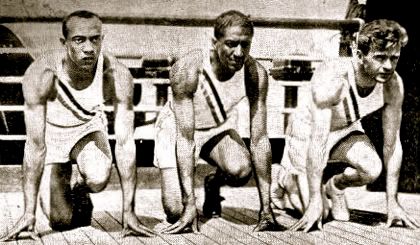
[When Ralph Metcalfe, Jesse Owens, and Frank Wykoff posed for this publicity shot on-board the ocean liner SS Manhattan as part of the largest American Olympic team to date they were not only boldly repudiating the cockamamie ideas a certain sawed-off Austrian paper-hanger had about so-called 'racial purity' but confronting some pretty deep-seated prejudices from back home as well.]

435 CE - The deposed Patriarch of Constantinople Nestorius - who is fortuitously considered the originator of Nestorianism - was exiled by Byzantine Emperor Theodosius II to a monastery in Egypt's Great Oasis of Hibis (also known as al-Khargah).

881 CE
- Louis III, King of Western Francia, defeated the Vikings at the Battle of Saucourt-en-Vimeu, an event celebrated in the poem Ludwigslied.

Photobucket1460 - Scotland's King James II died, aged only 29, when the cannon he was standing next to during a siege of Roxburgh Castle exploded; he was succeeded by his 9-year-old son, James III, who governed under the regency of his mother Mary of Guelders until her death in December 1463*. The siege, on the other hand, was continued by the late King's commander George Douglas, 4th Earl of Angus. After the castle capitulated a few days later, the widowed queen ordered it demolished.

*Following her death the regency passed to James Kennedy, Bishop of St Andrews (who had also served as regent to James II), and Gilbert, Lord Kennedy, until 1466, and then to Robert, Lord Boyd until 1469, at which time he attained his majority.

1492
- Christopher Columbus set out on his famous voyage of discovery to the New World from Palos de la Frontera.

1527 - The first-known letter from North America was sent by John Rut, who had just arrived at St. John's, Newfoundland, to King Henry VIII back in England, detailing the number and nationality of fishing vessels in the vicinity.

1645 - During the Thirty Years' War at the Second Battle of Nördlingen (also known as the Battle of Allerheim) the combined French and Weimar forces of Louis II de Bourbon, Prince de Condé, and Vicomte de Turenne scored a victory over the Bavarian Johann von Werth and Franz Baron von Mercy of the Holy Roman Empire, who died in battle.

1811 - Jungfrau - the third highest summit in the Bernese Alps - was ascended for the first time by the Meyer brothers, sons of the topographer J. R. Meyer.

1852 - The first Harvard-Yale Regatta - itself the first American intercollegiate athletic event - was held between (you guessed it!) Yale and Harvard; for the record, Harvard won...

1913 - The Wheatland Hop Riot - a labour action involving the Industrial Workers of the World - occurred at the Durst Ranch near Wheatland, California.

1914 - Germany declared war on France at the outset of what would become known as World War I.

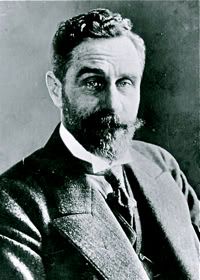
Photobucket1916 - Irish rebel Sir Roger Casement (shown, at left) was hanged at London's Pentonville Prison, having undergone the Rite of Christian Initiation of Adults and been accepted into the Roman Catholic faith while incarcerated at the Tower of London; Casement's legacy remains a conflicted one, since any efforts on his behalf in favour of the independence of Ireland were tainted after his death by revelations contained in the so-called Black Diaries he kept that he was not only actively but pretty unapologetically homosexual.

1923 - At 2:47 AM Republican Calvin Coolidge was sworn in as the 30th President of the United States following the death of Warren G. Harding the previous day; the presidential oath was administered by Coolidge's father, John Calvin Coolidge, Sr, who was a notary public.  The office of Vice President was left vacant until the 1924 Election, at which time Coolidge was re-elected alongside Charles G. Dawes.

 1934 - Hitler became Führer of Germany after combining the Presidency and Chancellorship.

1936 - Jesse Owens won the 100-metre dash at the Berlin Olympics, defeating Ralph Metcalfe, who was also black.

1949 - The National Basketball Association (NBA) was founded in New York City with the merger of the Basketball Association of America (BAA) and the National Basketball League (NBL).

1958 - The nuclear submarine USS Nautilus became the first such vessel to reach the North Pole by traveling beneath the Arctic ice cap.

1966 - Controversial comedian Lenny Bruce was found dead on the floor of the bathroom of his Hollywood Hills home at 8825 N. Hollywood Blvd.; he was 40.  Although the official cause of death was 'acute morphine poisoning caused by an accidental overdose' and Bruce was known to be a heavy drug user, the legal battles he faced in his later years - brought on by obscenity charges pressed by people with little or no understanding of the First Amendment - couldn't have helped matters.

2001 - The Real IRA detonated a car bomb in the London borough of Ealing, injuring seven people.

2005 - Mauritania's President Maaouya Ould Sid'Ahmed Taya was overthrown in a military coup while attending the funeral of Saudi Arabia's King Fahd in Riyadh.
*
share on: facebook

Monday, August 02, 2010

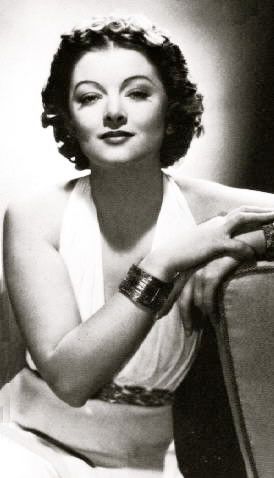
In Memoriam: Myrna Loy

Many actresses complain about the lack of interesting roles available to women after they've reached a certain age; others refuse to accept that just because they're not asked to play romantic leads anymore that the roles of mother and matron somehow aren't interesting, when in fact mothers and matrons are some of the most interesting people in the world...

PhotobucketMyrna Loy - born on this day in 1905 - is clearly of the latter category, born a member of perhaps the last generation to hold a mother (with her wisdom, insight, and experience) in higher esteem than an ingenue. In fact, Loy's own ingenue roles - beginning with 1925's notorious What Price Beauty? opposite Natacha Rambova and Nita Naldi - were a mish-mash of grotesque stereotypes compared to the mid-career roles in which she played the dream wife and the dream mother.

Yet off camera, Loy was more circumspect; 'Some perfect wife I am,' she once said, referring to her typecasting. 'I've been married four times, divorced four times, have no children, and can't boil an egg.'

It's specifically because she had no children of her own to keep her legacy alive - a situation in which I find myself - that the Pop Culture Institute has undertaken to fulfill that role itself, by posting her name and her picture as often as feasible. To a certain extent, though, the movies she made - including a record fourteen memorable pairings with William Powell - are the children she never had; not only do they do their part to keep the memory of Myrna Loy alive, but they provide me with countless hours of the most enjoyable 'research' imaginable...
*
share on: facebook

"Foxtrot Uniform Charlie Kilo" by Bloodhound Gang


I suppose I could have marked the birthday of Jimmy Pop - born on this day in 1971 - with the Bloodhound Gang's monster smash hit The Bad Touch*; instead I've decided to post another of their songs, one which effectively demonstrates the band's wit by stringing together a series of euphemisms for genitalia under an entirely suggestive title, as well as Mr. Pop's facility with lead vocals - a skill much in evidence ever since he co-founded the group in 1992.

Foxtrot Uniform Charlie Kilo first appeared on the band's 2005 fourth album Hefty Fine, which was a long overdue follow up to their previous effort Hooray for Boobies, released in 1999, which topped charts around the world on the strength of The Bad Touch.

*A song many people still insist is called
The Discovery Channel, even though it obviously couldn't be - for legal reasons.
*
share on: facebook

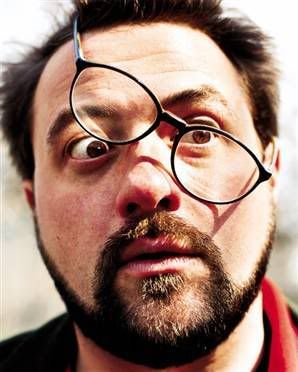
Happy Birthday Kevin Smith

Inasmuch as he is the voice of his generation - disgruntled, suspicious, hilarious - Kevin Smith would just have to have a love-hate relationship with pop culture, wouldn't he? His characters have all invariably worshiped its hollow allure, overthought its shallow content, and sifted what gems they could from its detritus in search of something to fill the spiritual void left in them by their soulless Baby Boomer parents...


Photo Sharing and Video Hosting at Photobucket
Beginning with Clerks in 1994*, Smith has used suburban new Jersey to represent the emotional landscape in which many of those his age were raised; Mallrats and Chasing Amy continued the story in 1995 and 1997 respectively.

His masterpiece came in 1999 when the film Dogma tested Smith's abilities, yielding a work of extraordinary genius as a result; equally genius was the decision - made by Miramax - to release it on Good Friday, accurately predicting the rage of Christians who'd never seen the movie and never would to call for its censorship, thus ensuring huge ticket sales and critical acclaim. Needless to say, I love it when that happens...

2001 brought a return to the fictionalized version of Red Bank, with the stoner movie instant classic Jay and Silent Bob Strike Back; he followed it up with Jersey Girl and Clerks II, and continued expanding the View Askewniverse in 2008 with Zack and Miri Make a Porno while Red State may or may not see the light of day yet in 2010. In the meantime Smith is slated to direct A Couple of Dicks - a buddy cop picture starring Bruce Willis and Tracy Morgan.

The canon of Kevin Smith's work tends to highlight the plight of lost souls, underdogs, and unrepentant losers - all of them searching for something, or someone, or to mean something to someone. Smith's skill as a filmmaker is that he lets them do it, all the while filling out the hollow and deepening the shallow with the kind of dialogue I for one pray for, but never seem to get, in real life.

*Made for $27,575 at the same convenience store where he worked.
*
share on: facebook

POPnews - August 2nd

Photobucket
[This February 1937 cover of Bernarr Macfadden's Physical Culture
magazine
describes marijuana as a 'sex-crazing drug menace' -
almost as though that were a bad thing!
]

686 CE - Pope John V died; he was succeeded by Pope Conon on October 21st. As it happens, Conon was a compromise candidate... Initially the clergy favoured archpriest Petros, while the military favoured another priest named Theodoros, and it took a couple of months of delicate diplomacy to solve the quandary.

1100 - England's King William II - better known as William Rufus - died while on a hunting trip in New Forest, when his companion Walter Tyrrel accidentally struck him in the chest with a stray arrow intended for a buck; he was succeeded by his younger brother, who reigned as Henry I.

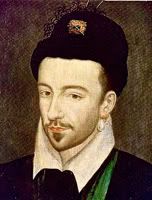
Photobucket1589 - France's King Henri III (shown, at right) died, having been stabbed by a Dominican friar named Jacques Clément the previous day while lodged with his army at Saint-Cloud during preparations for an impending siege of Paris... Clément himself was killed on the spot by the King's bodyguard. The last of the Valois kings (his own marriage to Louise of Lorraine being childless likely due to his rather open homosexuality) the fourth son of Henri II and Catherine de' Medici was succeeded by the Huguenot King of Navarre Henri III, who would reign as the first of the Bourbon kings under the name Henri IV - although he wouldn't be crowned until February 1594, having been forced first by the Catholic League and then by Spain to win the throne through a rather arduous conquest.

1610
- Henry Hudson reached what would later be called Hudson Bay on board Discovery, thinking he'd passed through the Northwest Passage into the Pacific Ocean.

1790 - The first US Census was conducted.

1798 - During the French Revolutionary Wars the Battle of the Nile (Battle of Aboukir Bay) concluded in a British victory for Sir Horatio Nelson over French vice-admiral François-Paul Brueys D'Aigalliers, who died in battle.

1870 - Tower Subway, the first underground tube railway in the world, opened in London; not a subway in the modern sense but more a horizontal lift, it connected Tower Hill to Vine Lane south of the River Thames.

1903 - The Internal Macedonian Revolutionary Organization led an unsuccessful rebellion against the rule of the Ottoman Empire, an event now known as the Ilinden-Preobrazhenie Uprising.

1916 - Austro-Hungarian sabotage was blamed for causing the sinking of the Italian battleship Leonardo da Vinci in the harbour at Taranto, killing 249 of the thousand men aboard; although the vessel was salvaged after World War I, planned repairs were never finished, and it was sold for scrap in 1923.

1923 - Following the sudden death, at San Francisco's Palace Hotel, of Warren G. Harding - who took ill a week earlier during a visit to Vancouver - his Vice President Calvin Coolidge became the 30th President of the United States.

1934 - Adolf Hitler became Führer of Germany following the death of Reichspräsident Paul von Hindenburg.

1937 - Marijuana was made illegal in the United States following passage of the Marihuana Tax Act.

1943 - PT-109 was rammed by the Japanese destroyer Amagiri in the Blackett Strait between the Solomon Islands of Kolombangara and Arundel; in charge of the vessel was Lieutenant, junior grade (LTJG) John F. Kennedy, future US President, who managed to save all but two* of his crew from the ship, which sank. Kennedy then led his crew to safety by swimming to uninhabited Plum Pudding Island** (deep in enemy waters which were also shark- and crocodile-infested) before they could be rescued, six days later, from the more resource rich Olasana Island nearby.

*Seamen Andrew Jackson Kirksey and Harold W. Marney.
**Which was renamed Kennedy Island in his honour.

1945 - The Dutch Royal Family returned to Holland from their exile in Canada, apparently.

1964 - During the Gulf of Tonkin Incident North Vietnamese gunboats allegedly fired on US destroyers USS Maddox and the USS Turner Joy, an event which President Lyndon B. Johnson used as a justification for the Vietnam War (despite the fact that it may have never happened) under the terms of the Gulf of Tonkin Resolution.

1967 - The second Blackwall Tunnel opened, connecting the London boroughs of Greenwich and Tower Hamlets.

1973 - A flash fire killed 51 at the Summerland amusement centre at Douglas on the Isle of Man.

1980 - The Pro Football Hall of Fame Game ended with 5:24 remaining when it was canceled due to severe lightning, ending the game in a 0-0 tie.

1990 - Iraq invaded Kuwait - or 'Province 19' as Saddam Hussein liked to call it - sparking the first Gulf War.
*
share on: facebook

Sunday, August 01, 2010

"Fight The Power" by Public Enemy


Birthday wishes go out today to Chuck D, influential rapper and founding member of pioneering hip-hop band Public Enemy, who once upon a time ensured that rap was a revolutionary form, concerning itself with social justice and cultural enfranchisement rather than dissing women and other minorities while engaging in the greedy pursuit of gratuitous bling. Good times...

Fight the Power is the signal anthem of the American black inner-city; it first appeared in 1989, on the soundtrack to Spike Lee's film Do the Right Thing, and was later re-released in 1990 on the band's third album Fear of a Black Planet. Lee also directed two videos for the song, one a typical cross-promotional effort featuring scenes from the film and this one, which simulated a political rally and features a cameo by Tawana Brawley, whose perjury threatened to set the entire black community back almost as much as Reverend Al Sharpton's spirited defense of her.

Chuck D's mad skillz here are complemented by the manic energy of Flavor Flav and phat beatz pounded out by The Bomb Squad, who produced the track.
*
share on: facebook

POPnews - August 1st


[Video Killed the Radio Star, by The Buggles,
was the first video ever to air on MTV.]

30 BCE - Octavian (later known as Augustus) entered Alexandria and brought it under the control of the Roman Republic, causing his foe Mark Antony to commit suicide that very day and his foe's ho Cleopatra to follow suit soon after.

1291 - The Swiss Confederation was formed with the signing of the Federal Charter.

1492 - The Alhambra Decree - passed by King Ferdinand and Queen Isabella of Spain in March - took effect, either driving the Jews out of Spain or else forcing them to convert to Roman Catholicism.

1820 - London's Regent's Canal opened.

1828 - Britain's Bolton and Leigh Railway opened to freight traffic, connecting the Manchester Bolton & Bury Canal at Bolton to the Leeds and Liverpool Canal at Leigh.

1831 - A new John Rennie-designed London Bridge opened, replacing the far more famous medieval one; King William IV and Queen Adelaide attended a banquet in a pavilion erected on the bridge in honour of the event. In April 1968 the bridge was sold to oilman Robert P. McCulloch, who ordered it painstaking disassembled and rebuilt as part of an Anglophilic theme park in Lake Havasu City, Arizona It has since been replaced by yet another bridge, this time designed by Mott, Hay and Anderson.

1842 - The Lombard Street Riot erupted - not in San Francisco, as you might expect, but in Philadelphia.

1876 - Colorado became the 38th US state.

1907 - Robert Baden-Powell opened a Boy Scout camp on Brownsea Island in Dorset's Poole Harbour to field test the ideas laid out in his acclaimed book Scouting for Boys.

1936 - The Games of the XI Olympiad were opened in Berlin.

1944 - Anne Frank made the last entry in her diary.

1966 - Charles Whitman killed 15 people at The University of Texas at Austin before being killed by the police.

1968 - Hassanal Bolkiah was crowned the 29th Sultan of Brunei.

1977 - Former Lockheed U-2 pilot Francis Gary Powers crashed the news helicopter he was flying in the Sepulveda Basin Recreation Area just a few miles short of the Burbank Airport; also killed in the crash was NBC newsman George Spears, with whom he'd been covering forest fires in the vicinity of Santa Barbara. According to his son, Francis Gary Powers Jr., the experienced pilot crashed because he'd reported a fuel gauge error to a mechanic - when the plane's fuel gauge indicator displayed 'Empty' there was actually had enough fuel for thirty more minutes of flight time - who apparently made the repair without telling anyone.

1981 - MTV made its broadcast debut.

1993 - The Great Flood of 1993, which had inundated an area of Missouri 1200 km (745 miles) long and 700 km (435 miles) wide - or about 840,000 km² (320,000 square miles) - since April, and would continue to do so until October, came to a peak; at it's worst, the rising water at St. Louis topped 15.1 m (49.6 feet), nearly 6 m (20 feet) above flood stage and easily surpassing the Great Mississippi Flood of 1927. The 16 m (52-foot)-high St. Louis Floodwall, built to handle the volume of the 1844 flood, was able to keep the 1993 flood out with just over 60 cm (two feet) to spare!

2004 - A supermarket fire in the Paraguayan capital of Asunción killed as many as 396 people and injured 500; according to survivors doors within the complex were closed under the direction of the owners, Juan Pío Paiva and his son, Víctor Daniel, deliberately trapping people inside in order to prevent them from fleeing with merchandise without paying for it - a claim the management of the shopping centre has denied.

2007 - The I-35W Mississippi River Bridge - spanning the Mississippi River in Minneapolis, Minnesota - collapsed during the evening rush hour, killing thirteen people and injuring 145; the tragedy sparked a brief public debate about the state of America's crumbling infrastructure... That is until (and I'm guessing here) some celebrity or other did something stupid, at which point the media got back to reporting on what's really important.
*
share on: facebook

Saturday, July 31, 2010

POPnews - July 31st

Photobucket
[Leave it to a bunch of men to find some way to get a car on the Moon!]

30 BCE - At the Battle of Alexandria Roman general Mark Antony achieved a minor victory over the forces of Octavian near the end of the Final War of the Roman Republic; although most of Antony's army subsequently deserted - which later led to his suicide - Octavian successfully invaded Egypt and became the first Roman Emperor.

1009 - Sergius IV succeeded John XVIII to become the 142nd pope.

1423 - During the Hundred Years' War a combined Scottish, Breton, and French army under John Stewart, 2nd Earl of Buchan was defeated at the Battle of Cravant, on the banks of the river Yonne; following the victory the English and Burgundian forces of Thomas Montacute, 4th Earl of Salisbury took more than 2,000 prisoners.

1451 - Jacques Cœur was arrested on the orders of France's King Charles VII, accused of poisoning in the February 1450 death of the King's mistress, Agnès Sorel.

1498 - On his third voyage to the Western Hemisphere, Christopher Columbus became the first European to visit the island of Trinidad.

1667 - The Treaty of Breda ended the Second Anglo-Dutch War.

1777 - The Second Continental Congress passed a resolution that the services of Marquis de Lafayette 'be accepted, and that, in consideration of his zeal, illustrious family and connexions, he have the rank and commission of major-general of the United States.'

1856 - The city of Christchurch was granted a Royal Charter, a first for New Zealand.

1865 - The first narrow gauge mainline railway in the world opened at the Australian town of Grandchester.

1930 - The radio mystery program The Shadow was aired for the first time as part of the Detective Story Hour.

1945 - John K. Giles attempted to escape from Alcatraz aboard the Army launch General Frank M. Coxe; very nearly successful, he was apprehended at Fort McDowell on Angel Island and returned to prison.

1948 - New York City's Idlewild Field was rededicated New York International Airport (only to be later renamed John F. Kennedy International Airport).

1961 - The first All-Star Game tie in major league baseball history occurred when the game was stopped in the 9th inning because of rain at Biston's Fenway Park.

1964 - Ranger 7 sent back the first close-up photographs of the moon, including images 1,000 times clearer than anything ever seen from earth-bound telescopes.

1971 - Apollo 15 astronauts David Scott and James Irwin became the first to ride in a Lunar Rover on the moon while Alfred Worden orbited overhead with a camera, comprehensively mapping the lunar surface.

1981 - General Omar Torrijos - commander of the Panamanian National Guard and de facto leader of Panama - died in a plane crash; it is now thought that the crash was an assassination masterminded by the CIA, although the best source of information on that matter is Manuel Noriega. Best known for negotiating 1977's Torrijos-Carter Treaties, which returned sovereignty of the Panama Canal to Panama, in May 2004 his son, Martín Torrijos, won the presidential election, taking office the following September.

1998 - The British Government announced a total ban on the use of landmines, less than a year following the death of Diana, Princess of Wales, whose last campaign before she died called for the elimination of the devices.

2006 - Fidel Castro handed over power temporarily to his brother Raúl Castro, which was a cause for celebration in Miami's La Pequeña Habana.

2007 - Operation Banner - the presence of the British Army in Northern Ireland, and the longest-running British Army operation ever - came to an end.
*
share on: facebook

Friday, July 30, 2010

"Running Up That Hill" by Kate Bush


Today's birthday gal is Kate Bush, the darling of fan and critic and pundit alike, whose artistic music even today gets played on the radio, in amongst the caterwauling of twinks and premeditated pap the music industry insists on pushing so it can blame poor sales figures on illegal file-sharing.

Running Up That Hill was the first single from her 1985 album Hounds of Love; oddly enough* this video was rarely shown in the United States at the time of its release, with channels such as MTV preferring to show a live clip from British chat show Wogan instead. Theories about why range from the simple 'it's too arty' to 'there's no lip-synch' to 'it's too sexy', so the Pop Culture Institute invites you to watch it now, maybe for the first time.

Bush's fellow dancer in the video is Michael Hervieu; the piece they're dancing was choreographed by Dyanne Gray.

*Or not, depending on your level of cynicism.
*
share on: facebook

Now Showing: Disney's "Flowers and Trees"


On this day in 1932 Walt Disney's Flowers and Trees - remembered by history as both the first cartoon short to use Technicolor and the first winner of the Academy Award in the cartoon short category - made its debut on movie screens across the United States. This memorable addition to Disney's Silly Symphonies franchise was directed by Burt Gillett and released by United Artists.

The cartoon short had already been in production in black and white when Disney saw tests of three-strip Technicolor being conducted by Herbert Kalmus; not only was Flowers and Trees converted into colour but so were subsequent Silly Symphonies, although those cartoons featuring Mickey Mouse would remain black and white until 1935's The Band Concert.

Savvy businessman that he was, Disney held a monopoly on three-strip Technicolor until September 1935, forcing his chief competitiors Ub Iwerks* and Max Fleischer to use the inferior two-strip Cinecolor process.

*The rivalry between Ub Iwerks and Walt Disney is a long and storied one... Iwerks was one of the first Disney animators, but Disney's perfectionism led to his resignation; Iwerks went on to found his own company, which failed, and then found great success with Warner Bros. and Leon Schlesinger Productions before returning to Disney in the 1940s - where he perfected the process whereby animation and live-action could co-exist on the screen.
*
share on: facebook

"If You Tolerate This Your Children Will Be Next" by Manic Street Preachers


Birthday wishes go out today to Sean Moore - drummer, songwriter, and occasional trumpeter for the Welsh band Manic Street Preachers. Although described by his mates as 'the quiet one' he is nevertheless the driving force behind the oft-charted hit-makers; the band's biography goes even further, stating unequivocally that Moore is 'quite possibly the only person in rock who doesn't take the Manics seriously'.

If You Tolerate This Your Children Will Be Next first appeared as the first single from Manic Street Preachers' 1998 fifth album This Is My Truth Tell Me Yours; in keeping with an unwritten tradition, I'd been intending to post the actual video, but when it wasn't available I was driven to find an acoustic version because I love it so much, and amazingly I found this one, which is awfully good as well.

The song is one of two chart toppers for the Preachers, and like many modern rock songs* drew its inspiration from the Spanish Civil War - in particular by George Orwell's first-hand account of that conflict, Homage to Catalonia; the title of the song, in fact, comes from a Republican poster of the time. The song also holds the Guinness Book's record for the longest Number One song title without brackets; it's been covered by David Usher on his 2003 album, Hallucinations, and is said to be a favourite of Radiohead's laugh-a-decade front man Thom Yorke.

*Pretty much just The Clash's Spanish Bombs, but who can resist the chance at a bit of sarky? Not I!
*
share on: facebook

Pop History Moment: Jimmy Hoffa Went Missing

On this day in 1975 disgraced Teamsters president Jimmy Hoffa went missing from the parking lot of the Machus Red Fox restaurant in suburban Detroit, where he'd been due to meet fellow labour leaders Anthony 'Tony Jack' Giacalone from Detroit and Anthony 'Tony Pro' Provenzano of Union City, New Jersey; from this simple event has come one of the greatest mysteries of modern times...

PhotobucketThe question of who killed the once-powerful labour leader - as much as where his body might be - has electrified the popular media practically from the moment it occurred.

Since theories are like assholes*, Hoffa's disappearance practically became a cottage industry over the ensuing thirty years. Naturally enough, the FBI had its own theory - the infamous Hoffex Memo - which led the pack of wanton speculation and outright lies; the first break in the case - leading many to consider the mystery solved - came with the deathbed confession of Frank Sheeran, which appeared in Charles Brandt's 2004 book I Heard You Paint Houses. The simple answer derived from the book is that Hoffa was abducted from the parking lot, shot at a home in a suburb northeast of Detroit, then cremated within an hour and scattered the same day at the nearby Grand Lawn Cemetery.

Hoffa was the subject of the 1992 movie, aptly entitled Hoffa, in which the man himself was played by the man himself, Jack Nicholson.

*E'rybody gots one.
*
share on: facebook

POPnews - July 30th

Photobucket
[England captain Bobby Moore accepted the coveted (and only recently recovered) Jules Rimet Trophy from his Queen on this day in 1966 and fortunately neither from World Cup Willie nor a dog called Pickles.]

762 CE - The city of Baghdad was founded by Abu Ja'far Al-Mansur.

1419 - The First Defenestration of Prague occurred when seven members of that city's council were thrown from a window at Charles Square's Novoměstská radnice (Town Hall) by a crowd of radical Hussites under the command of Jan Želivský; those who didn't die from the fall were handily dispatched by the angry mob waiting in the street below. Upon hearing the news, King Václav IV reportedly suffered such a shock that he died shortly after.

1619 - The first representative assembly in the Americas, the House of Burgesses, convened for the first time, in Jamestown; it was presided over by the Governor, George Yeardley, who appointed the journalist John Pory as speaker - although Pory was, in fact, little more than a recording secretary.

1729 - The city of Baltimore was founded, named after Cecilius Calvert, 2nd Baron Baltimore; it then took the city more than 200 years to spawn John Waters, who would go on to immortalize it so memorably on film. Well worth the wait, I'd say...

1756 - Bartolomeo Rastrelli presented the newly-built Catherine Palace in Tsarskoye Selo to Russia's Empress Elizabeth and her courtiers.

1811 - For having uttered the Grito de Dolores in September 1810 - thereby setting off the Mexican War of Independence - Father Miguel Hidalgo y Costilla, leader of the insurgency, was executed by the Spanish outside the Government Palace of Chihuahua.

1825 - Malden Island was discovered by Captain George Anson, Lord Byron, of the HMS Blonde, who'd been charged with the solemn duty of repatriating the remains of the King and Queen of Hawai'i - Kamehameha II and Kamāmalu - after they died of measles during a state visit to Britain; the island was named for Lieutenant Charles Robert Malden, the ship's navigator, who first sighted it.

1859 - The first ascent of Grand Combin, one of the highest summits in the Alps, was made by Charles Sainte-Claire Deville with Basile Dorsaz and brothers Daniel, Emmanuel and Gaspard Balleys.

1871 - The Staten Island Ferry Westfield's boiler exploded, killing more than 85 people.

Photobucket1916 - A series of small deliberately-set fires triggered an explosion at a munitions depot on New Jersey's Black Tom Island, in New York Harbor near Jersey City, killing 7 and injuring hundreds... Despite the low death count (which can be attributed to the fact that it occurred just after 2 AM) the explosion caused massive damage (valued at some $20 million*) lodging shrapnel in the Statue of Liberty** and the clock tower of the Jersey Journal building in Journal Square a mile away, as well as breaking windows all over Lower Manhattan (as far north as Times Square) and elsewhere in a radius estimated at 40 kilometres (25 miles). The initial blast - equivalent to an earthquake of between 5 and 5.5 on the Richter Scale - could be felt as far away as Philadelphia and Maryland, and as the fire continued to rage throughout the day there were dozens of smaller explosions at the site. While the crime remains officially unsolved, German saboteurs (such as Lothar Witzke and Franz von Papen) have been blamed for what is still one of the worst acts of terrorism to have ever been committed on US soil. The story has been thrillingly retold in The Detonators: The Secret Plot to Destroy America and an Epic Hunt for Justice by Chad Millman.

*Akin to $390 million in today's money! Imperial Germany was later sued for damages; a $50 million settlement (like, $976 million today) was ordered paid to the Lehigh Valley Railroad Company in 1953, and the last payment was finally made in 1979.
**The arm and torch of the Statue of Liberty closed as a result of the explosion, and have yet to reopen!

1932 - The Games of the X Olympiad (or the 10th Olympic Summer Games) opened in Los Angeles; plagued by the worsening Great Depression, the games had just half as many participants as the 1928 Games held in Amsterdam, and weren't even attended by US President Herbert Hoover.

1945 - The Japanese submarine I-58 sank the USS Indianapolis (CA-35), killing 883 seamen.

1954 - Elvis Presley made his first public performance at the Overton Park Shell in Memphis, Tennessee, performing as part of the Blue Moon Boys, who opened for Slim Whitman.

1956 - In God We Trust was made the official motto of the United States, when President Dwight D. Eisenhower signed a Joint Resolution passed by Congress.

1966 - At Wembley Stadium, host England won the World Cup, defeating what was then West Germany 4-2.

1971 - David Scott and James Irwin - on board the Apollo Lunar Module module Falcon - landed on the moon with first Lunar Rover as part of the Apollo Program's Apollo 15 mission.

1980 - Vanuatu gained its independence from France and the UK.

2002 - The accounting law referred to as 'The Sarbanes Oxley Act' was signed into law by US President George W. Bush.

2006 - BBC Two aired the final broadcast of Top of the Pops after 42 years, during which time every notable (as well as many not) act in the music business appeared.
*
share on: facebook