Friday, August 06, 2010
"Walk On The Wild Side" by Lou Reed
Walk on the Wild Side was first recorded by Lou Reed for his 1972 album Transformer; the song is a thinly-veiled biography of the lives and loves of several of the regular superstars at Andy Warhol's New York studio, The Factory - namely Holly Woodlawn, Candy Darling, Joe Dallesandro, Jackie Curtis and Joe Campbell (referred to in the song by his nickname Sugar Plum Fairy). Reed later confessed the inspiration for the song was Nelson Algren's 1956 novel, A Walk on the Wild Side.
Originally this post showed a clip of Reed performing the song on Late Night with David Letterman, sometime in the mid- to late-90s, complete with references to oral sex given by transsexuals and everything; this replacement clip is of a similar vintage, but taken from an unknown source.
*
share on: facebook


In Memoriam: Andy Warhol
The father of Pop, Andy Warhol, was both revered and reviled in his lifetime; how he was seen in the years between his birth - on this day in 1928 - and his untimely death in February 1987 is pretty much how he's been regarded ever since, although to be fair there's a little more reverence and a little less revulsion in the ongoing cultural assessment of him with each passing year. Not that we here at the Pop Culture Institute have ever been anything less than reverent towards him - in our own irreverent way, of course...
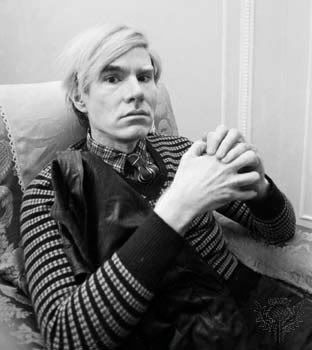 Because he took art seriously but refused to afford himself the same, because he skewered pomposity at every turn with a certain cheeky pomposity of his own, because he wouldn't kiss the ass of gallery directors and owners and the art buying elite but preferred to create and sell his art at his own Factory (let alone because he dared to call his studio - his sacred atelier! - anything as honest as a factory!) and because his earliest successes came as a commercial artist, the Art Establishment at the time often jeered at his work. Not that it mattered; the louder they jeered the more (and better) it sold! If anything he was living proof of the maxim 'you can't sell out if you don't buy in'.
It's just as likely, though, that because he never starved, never really visibly or outwardly suffered for his art*, both he and it lacked the necessary gravitas to be taken seriously by the same pretentious blowhards who shivered in garrets while living on a diet of coffee and cigarettes because they didn't understand art and culture (let alone how they could be marketed and sold) as well as Warhol did. Jealousy, pure jealousy, explains away so much...
Yet his influence on all aspects of culture - including of course pop culture, which he can be said to have founded - cannot be ignored. His famous maxim, stating that 'in the future, everyone will be famous for 15 minutes' has been taken utterly to heart, at least on television, where legions of maladjusted attention whores routinely threaten to crowd out genuinely talented people whether with their head games, sociopathic neediness, and/or off-key warbling... Each of them dreaming of being famous not for their talent or achievements (which is as it should be) but simply for being famous. One wonders what Warhol would have thought of the world he has wrought; likely he'd think it was 'neat' - the most commonly used word in his diaries, which around here have taken on Biblical overtones since they were edited together by Pat Hackett and published in 1989**.
One also wonders what he'd have thought of the plethora of pop culture portrayals of him his extraordinary persona has yielded... Thanks to such performances as Crispin Glover in Oliver Stone's 1991 film The Doors, David Bowie in Julian Schnabel's 1996 film Basquiat, Jared Harris in Mary Harron's 1996 film I Shot Andy Warhol, or even Guy Pearce in George Hickenlooper's 2007 film Factory Girl, which was about the life of Warhol's brightest superstar (and Pop Culture Institute fave) Edie Sedgwick, Warhol's distinctive affect is as recognizable today as it ever was. I think he'd think that was 'neat'...
*
*He was shot, by Valerie Solanas, in June 1968 - but he was already famous by then, so it sort of doesn't count.
**Plus, they have one all-important thing the Bible doesn't - an index!
*
share on: facebook
Because he took art seriously but refused to afford himself the same, because he skewered pomposity at every turn with a certain cheeky pomposity of his own, because he wouldn't kiss the ass of gallery directors and owners and the art buying elite but preferred to create and sell his art at his own Factory (let alone because he dared to call his studio - his sacred atelier! - anything as honest as a factory!) and because his earliest successes came as a commercial artist, the Art Establishment at the time often jeered at his work. Not that it mattered; the louder they jeered the more (and better) it sold! If anything he was living proof of the maxim 'you can't sell out if you don't buy in'.It's just as likely, though, that because he never starved, never really visibly or outwardly suffered for his art*, both he and it lacked the necessary gravitas to be taken seriously by the same pretentious blowhards who shivered in garrets while living on a diet of coffee and cigarettes because they didn't understand art and culture (let alone how they could be marketed and sold) as well as Warhol did. Jealousy, pure jealousy, explains away so much...
Yet his influence on all aspects of culture - including of course pop culture, which he can be said to have founded - cannot be ignored. His famous maxim, stating that 'in the future, everyone will be famous for 15 minutes' has been taken utterly to heart, at least on television, where legions of maladjusted attention whores routinely threaten to crowd out genuinely talented people whether with their head games, sociopathic neediness, and/or off-key warbling... Each of them dreaming of being famous not for their talent or achievements (which is as it should be) but simply for being famous. One wonders what Warhol would have thought of the world he has wrought; likely he'd think it was 'neat' - the most commonly used word in his diaries, which around here have taken on Biblical overtones since they were edited together by Pat Hackett and published in 1989**.
One also wonders what he'd have thought of the plethora of pop culture portrayals of him his extraordinary persona has yielded... Thanks to such performances as Crispin Glover in Oliver Stone's 1991 film The Doors, David Bowie in Julian Schnabel's 1996 film Basquiat, Jared Harris in Mary Harron's 1996 film I Shot Andy Warhol, or even Guy Pearce in George Hickenlooper's 2007 film Factory Girl, which was about the life of Warhol's brightest superstar (and Pop Culture Institute fave) Edie Sedgwick, Warhol's distinctive affect is as recognizable today as it ever was. I think he'd think that was 'neat'...
*
*He was shot, by Valerie Solanas, in June 1968 - but he was already famous by then, so it sort of doesn't count.
**Plus, they have one all-important thing the Bible doesn't - an index!
*
share on: facebook
POPnews - August 6th
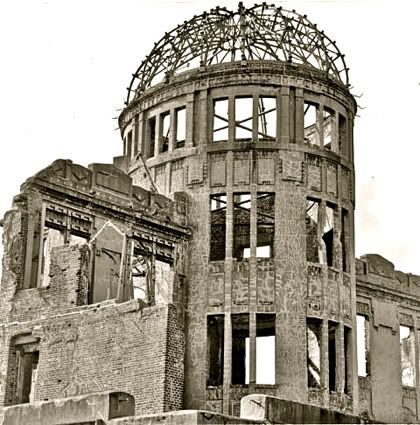
[Originally built as an exhibition hall by Czech architect Jan Letzel, the since-renamed Genbaku (or atomic bomb) Dome represents ground zero of the bombing of Hiroshima, even though the actual hypocentre of the blast was 150 m (490 feet) away and 600 m (1,968 feet) in the air. As the city was being rebuilt, debate raged over whether to leave the structure standing or demolish it; today its ruin serves as the centrepiece of the Hiroshima Peace Memorial Park - as well as an elegant tombstone for as many as 200,000 people killed either directly or indirectly by the blast (many of whom were simply vaporized) - making it a very poignant tribute to survival indeed...]
1284 - The Italian city-state of Pisa was defeated at the Battle of Meloria by Genoa - thereby ruining its once-mighty naval power over the issue of which city had sovereignty over the islands of Sardinia and Corsica.
1538 - Gonzalo Jiménez de Quesada founded the Colombian city of Bogotá.
1661 - The Treaty of The Hague was signed by Portugal and the Dutch Republic, whereby the latter relinquished control over its South American holding of New Holland - better known today as Brazil - to the former.
1806 - Francis II - the last Holy Roman Emperor - abdicated; don't feel bad for him, though, as he was still Emperor of Austria.
1825 - Bolivia gained its independence from Spain.
1845 - The Russian Geographical Society was founded in Saint Petersburg.
1862 - During the American Civil War the Confederate ironclad warship CSS Arkansas was scuttled on the Mississippi River after suffering damage in a battle with USS Essex at the Battle of Baton Rouge the previous day.
1538 - Gonzalo Jiménez de Quesada founded the Colombian city of Bogotá.
1661 - The Treaty of The Hague was signed by Portugal and the Dutch Republic, whereby the latter relinquished control over its South American holding of New Holland - better known today as Brazil - to the former.
1806 - Francis II - the last Holy Roman Emperor - abdicated; don't feel bad for him, though, as he was still Emperor of Austria.
1825 - Bolivia gained its independence from Spain.
1845 - The Russian Geographical Society was founded in Saint Petersburg.
1862 - During the American Civil War the Confederate ironclad warship CSS Arkansas was scuttled on the Mississippi River after suffering damage in a battle with USS Essex at the Battle of Baton Rouge the previous day.
1870 - The Battle of Wörth was fought during the Franco-Prussian War, resulting in a decisive Prussian victory for Emperor Friedrich III over French commander Patrice MacMahon; the engagement could more rightly be called the Battle of Reichshoffen, however, or else the Second Battle of Wörth - the first one having been fought in December 1793, at which French general Lazare Hoche handed the Prussians a defeat during the Napoleonic Wars.
1890 - The first person ever to die in the electric chair, William Kemmler, was executed at New York state's Auburn Prison.
1926 - Gertrude Ederle became the first woman ever to swim the English Channel.
1930 - Judge Joseph Force Crater stepped into a taxi in New York City and was never seen again...
1942 - Wilhelmina of the Netherlands became the first reigning Queen ever to address a Joint Session of the US Congress.
1945 - The Japanese city of Hiroshima was devastated by an atomic bomb - nicknamed 'Little Boy' - dropped from the American B-29 bomber Enola Gay.
1956 - The DuMont Television Network made its final broadcast, which was a boxing match at the St. Nicholas Arena.
1961 - Soviet cosmonaut Gherman Titov spent the day in space on board Vostok 2, in the meantime orbiting the Earth 17 times; Titov's flight came just four months after Yuri Gagarin's historic single orbit aboard Vostok 1 on April 12th.
1962 - Jamaica gained its independence from the United Kingdom while remaining within the Commonwealth.
1987 - Dr David Owen resigned as leader of Britain's Social Democratic Party following a vote by party members to merge with the Liberal Party, with which it had sided during the 1983 and 1987 General Elections as the SDP-Liberal Alliance; following the merger the party called itself the Liberal Democrats, although a few stalwarts of the old party (including Owen himself) held out as the SDP throughout 1988.
1988 - The Tompkins Square Park Police Riot in New York City spurred reform of the NYPD, who were responsible for the melee that transpired that night.
1996 - Punk legends Ramones gave their final concert, at The Palace in Los Angeles.
*
share on: facebook
Thursday, August 05, 2010
"Intergalactic" by The Beastie Boys
Birthday wishes go out today to Adam Yauch who, as MCA, has been rocking audiences for more than twenty years with Beastie Boys; as can be expected, said wishes don't just emanate from the Earth but rather are - wait for it... - intergalactic in nature.
Intergalactic dropped as part of the Beastie's 1998 album Hello Nasty; the song, naturally, contains a sample from Sergei Rachmaninoff's Prelude in C-sharp minor, has been used in the Futurama episode Hell Is Other Robots in which Beastie Boys appeared (as heads in jars, natch!), and even received the ultimate pop culture honour when it was included in a 'Weird Al' Yankovic polka medley, Polka Power! from his 1999 album Running with Scissors.
The award-winning video you see here was directed by ADC, under the pseudonym of Nathanial Hornblower; it's a parody of Japanese Kaiju films, specifically Johnny Sokko and his Flying Robot. Duh...
*
share on: facebook
POPnews - August 5th
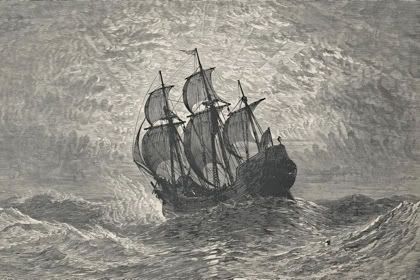
[The Mayflower, shown here in a rather romantic engraving.]
642 CE - At the Battle of Maserfield - which may have been on this day in 642 CE, or else on this day in 641 CE (at least according to the Venerable Bede) but probably wasn't on this day in 644 CE as reported by the Annales Cambriae (who knows what they were thinking!) - Penda of Mercia defeated and killed Oswald of Bernicia. Not content with this victory, Penda then went all early medieval on his foe and dismembered him; also in on the action on that day was Mercian ally Cynddylan ap Cyndrwyn of Powys.
910 CE - The last major Viking army to raid England was defeated at the Battle of Tettenhall - near modern-day Wolverhampton - by a combined force led by Edward the Elder, King of Wessex, and Earl Aethelred of Mercia.
1100 - England's King Henry I was crowned at Westminster Abbey; the fourth son of William the Conqueror succeeded his older brother William II following a suspicious hunting accident in New Forest three days earlier.
1305 - William Wallace was captured by the English at Robroyston, near Glasgow; from there he was transported to London, where he would be executed on August 23rd.
1388 - According to the Scottish*, at the Battle of Otterburn - a border skirmish between the Scottish and the English in Northumbria - Scotland's commander James Douglas, 2nd Earl of Douglas was given the ultimate Pyrrhic victory over England's Henry 'Hotspur' Percy, son of the first Earl of Northumberland; while Douglas was clearly the victor in the field he also died in battle.
910 CE - The last major Viking army to raid England was defeated at the Battle of Tettenhall - near modern-day Wolverhampton - by a combined force led by Edward the Elder, King of Wessex, and Earl Aethelred of Mercia.
1100 - England's King Henry I was crowned at Westminster Abbey; the fourth son of William the Conqueror succeeded his older brother William II following a suspicious hunting accident in New Forest three days earlier.
1305 - William Wallace was captured by the English at Robroyston, near Glasgow; from there he was transported to London, where he would be executed on August 23rd.
1388 - According to the Scottish*, at the Battle of Otterburn - a border skirmish between the Scottish and the English in Northumbria - Scotland's commander James Douglas, 2nd Earl of Douglas was given the ultimate Pyrrhic victory over England's Henry 'Hotspur' Percy, son of the first Earl of Northumberland; while Douglas was clearly the victor in the field he also died in battle.
*According to the English the battle was fought on August 19th; since they lost, it's only fair that they also lose the right to select the day of the battle. ~ MSM
1583 - Sir Humphrey Gilbert established England's first North American colony - at first little more than a seasonal fishing station - at St. John's, Newfoundland, at the same time claiming the entire island and much of the sea around it in the name of Elizabeth I.
1620 - The Mayflower - mastered by Christopher Jones - first attempted to depart England via Southampton on its first attempt to reach the New World; shortly after leaving port, her sister ship the Speedwell developed a leak, and the Pilgrim Fathers were forced to put in at Dartmouth in order to make necessary (and costly) repairs - and not for the last time, either. Later on, it would be revealed that the source of the damage to the Speedwell was sabotage by the crew, who were reluctant to take on such a lengthy, dangerous commitment for the poor compensation they were offered.
1716 - The Battle of Petrovaradin took place, giving the Habsburg Empire (with its Hungarian and Croatian allies) under Prince Eugene of Savoy a decisive victory over the Ottoman Empire and its commander, Silahdar Damat Ali Pasha, who died in battle.
1735 - In an important early victory for freedom of the press, New York Weekly Journal publisher John Peter Zenger was acquitted of seditious libel for criticizing the city's royal governor, William Cosby, on the basis that what he'd published was true. Zenger's attorney in the action was Andrew Hamilton, who defended him on a pro bono basis; in gratitude, Hamilton was later awarded the freedom of the city of New York.
1763 - During the so-called Pontiac's War, at the Battle of Bushy Run, British forces led by Henry Bouquet defeated a combined force of Delaware, Shawnee, Mingo, and Huron warriors under Chief Pontiac's commanders Guyasuta and Keekyuscung (who died in battle) at Bushy Run in western Pennsylvania.
1772 - The First Partition of Poland began; within 25 years the three partitions in total would bring an end to the Polish-Lithuanian Commonwealth.
1862 - At the Battle of Baton Rouge - during the American Civil War - along the Mississippi River near the Louisiana capital Confederate troops drove Union forces back into the city.
1884 - The cornerstone of the Statue of Liberty's pedestal was laid.
1906 - Sydney's Central Railway Station was opened.
 1925 - The political party Plaid Cymru was established - partly to preserve Welsh language and culture, which was then at risk of dying out - and partly to remove Wales from the political control of Great Britain in the most excruciatingly polite way possible - although Plaid Cymru members David John Williams and Lewis Valentine were jailed for their part in the September 1936 burning of the bombing school at RAF Penrhos, an action which saw their membership numbers double.
1957 - After five years of local success in Philadelphia, American Bandstand made its national TV debut on ABC affiliates in the United States, hosted by Dick Clark. It ran daily during the week (either live or on kinescope) until 1963, when it became a weekly show, typically airing on Saturday afternoons. Turns out the show had a good beat and you could dance to it; it ran until 1989.
1962 - Nelson Mandela was captured and imprisoned in the Johannesburg Fort. He would spend 18 of his 27 years in jail at Robben Island; in 1982 he was moved to Pollsmoor and subsequently Victor Verster Prison, from which he was famously released in February 1990.
1964 - American aircraft from carriers USS Ticonderoga and USS Constellation bombed North Vietnam as part of Operation Pierce Arrow in retaliation for strikes against US destroyers in the Gulf of Tonkin Incident. The effective start of the air portion of the Vietnam War, the operation yielded the conflict's first prisoner of war, Everett Alvarez Jr., who endured 8 and a half years of torture while in captivity.
1981 - US President Ronald Reagan fired 11,359 striking air traffic controllers, which I'm sure had nothing whatsoever to do with the major increase in airline fatalities through the 1980s. After all, who cares about public safety when there's a union to be broken?
*
share on: facebook
Wednesday, August 04, 2010
"On The Sunny Side Of The Street" by Louis Amstrong
While Louis Armstrong* always maintained he was born on the 4th of July, 1900, in the years following his July 1971 death it was discovered that this was a bit of patriotic wishful thinking; he was in fact born on this day in 1901!
The grandson of slaves, born out of wedlock, he lived as a child in the rough neighbourhood of Uptown New Orleans... Despite having everything against him from the start - or, then again, likely because of it - Louis Armstrong rose to the kind of enduring prominence of the sort which even the ambitious go-getters of Striver's Row could only dream. For a child harbouring a talent as vast as his, there was no better place for him to have grown up... The honky-tonks and speakeasies of Storyville and Bourbon Street and the French Quarter were then alive with the mixture of ragtime and Creole music that would one day become known as jazz - a form which he would one day do much to innovate and popularize and indeed even help to invent. It's just further proof that 'the right place and the right time' may not always be apparent from up close.
In the last years of Armstrong's life he said 'I think I had a beautiful life. I didn't wish for anything that I couldn't get and I got pretty near everything I wanted because I worked for it.' After his death his colleague Duke Ellington said it even more succinctly: 'He was born poor, died rich, and never hurt anyone along the way.'
On the Sunny Side of the Street first appeared in 1930 - with music composed by Jimmy McHugh and lyrics by Dorothy Fields - in the Broadway musical Lew Leslie's International Revue, starring Harry Richman and Gertrude Lawrence; it has since been recorded by a veritable Who's Who of musical talent, including Benny Goodman, Dizzy Gillespie, Count Basie, Ella Fitzgerald, Judy Garland, Jo Stafford, Frank Sinatra, and Cyndi Lauper. This performance of it by the man himself is from April 1958.
*There remains some debate over just how to pronounce his name... Early in his career he seemed to favour 'Louie', even going so far as to pronounce it that way on recordings; this French pronunciation would be in keeping with his having been born in New Orleans. Then again, later in life he was known to pronounce it 'Lewis', as he did on his famous recording of Hello Dolly! - which version seems to have been embraced ever since his death, especially by white scholars.
*
share on: facebook
Tuesday, August 03, 2010
"Shoop" by Salt N Pepa
In this landmark work of old school hip-hop feminism, Salt axes the timeless question 'What's my weakness?; Pepa's answer, naturally enough, is emphatic - 'Men!'
Ah men... I've devoted almost my entire life to the admiration of and obsession over their virile forms, and the gay ones have repaid me by aggressively ignoring me; still, it's better than the routine menacing I've gotten from the straight ones, I suppose. More importantly, I haven't allowed this combination of celibacy and terrorism to change how I feel about them*.
In honour of Spinderella's birthday then, here is a bit of fun courtesy of Salt-N-Pepa from all the way back in 1993; Shoop first appeared on the band's fourth album Very Necessary, which was very necessary listening material itself that year.
*Maybe I should have, but then again weaknesses don't exactly respond to logic...
*
share on: facebook
POPnews Extra - August 3rd
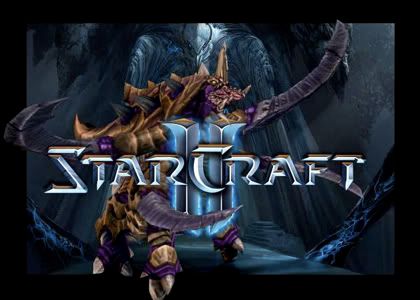
On this day in 2005, Lee Seung Seop - an industrial boiler mechanic from the South Korean city of Daegu - died of exhaustion and dehydration after playing StarCraft at an Internet cafe continually for almost 50 hours. The victim was a well-known video game addict who'd recently been both fired from his job and dumped by his girlfriend for his reluctance to put down the joystick.
*
share on: facebook
POPnews - August 3rd
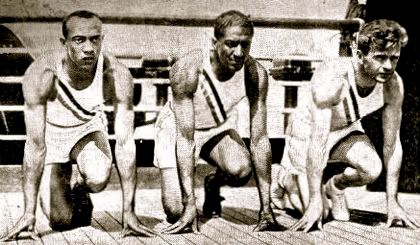
[When Ralph Metcalfe, Jesse Owens, and Frank Wykoff posed for this publicity shot on-board the ocean liner SS Manhattan as part of the largest American Olympic team to date they were not only boldly repudiating the cockamamie ideas a certain sawed-off Austrian paper-hanger had about so-called 'racial purity' but confronting some pretty deep-seated prejudices from back home as well.]
435 CE - The deposed Patriarch of Constantinople Nestorius - who is fortuitously considered the originator of Nestorianism - was exiled by Byzantine Emperor Theodosius II to a monastery in Egypt's Great Oasis of Hibis (also known as al-Khargah).
881 CE - Louis III, King of Western Francia, defeated the Vikings at the Battle of Saucourt-en-Vimeu, an event celebrated in the poem Ludwigslied.
 1460 - Scotland's King James II died, aged only 29, when the cannon he was standing next to during a siege of Roxburgh Castle exploded; he was succeeded by his 9-year-old son, James III, who governed under the regency of his mother Mary of Guelders until her death in December 1463*. The siege, on the other hand, was continued by the late King's commander George Douglas, 4th Earl of Angus. After the castle capitulated a few days later, the widowed queen ordered it demolished.
*Following her death the regency passed to James Kennedy, Bishop of St Andrews (who had also served as regent to James II), and Gilbert, Lord Kennedy, until 1466, and then to Robert, Lord Boyd until 1469, at which time he attained his majority.
1492 - Christopher Columbus set out on his famous voyage of discovery to the New World from Palos de la Frontera.
1527 - The first-known letter from North America was sent by John Rut, who had just arrived at St. John's, Newfoundland, to King Henry VIII back in England, detailing the number and nationality of fishing vessels in the vicinity.
1645 - During the Thirty Years' War at the Second Battle of Nördlingen (also known as the Battle of Allerheim) the combined French and Weimar forces of Louis II de Bourbon, Prince de Condé, and Vicomte de Turenne scored a victory over the Bavarian Johann von Werth and Franz Baron von Mercy of the Holy Roman Empire, who died in battle.
1811 - Jungfrau - the third highest summit in the Bernese Alps - was ascended for the first time by the Meyer brothers, sons of the topographer J. R. Meyer.
1852 - The first Harvard-Yale Regatta - itself the first American intercollegiate athletic event - was held between (you guessed it!) Yale and Harvard; for the record, Harvard won...
1913 - The Wheatland Hop Riot - a labour action involving the Industrial Workers of the World - occurred at the Durst Ranch near Wheatland, California.
1914 - Germany declared war on France at the outset of what would become known as World War I.
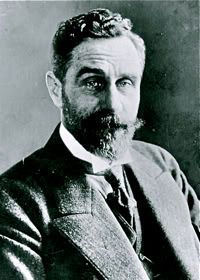 1916 - Irish rebel Sir Roger Casement (shown, at left) was hanged at London's Pentonville Prison, having undergone the Rite of Christian Initiation of Adults and been accepted into the Roman Catholic faith while incarcerated at the Tower of London; Casement's legacy remains a conflicted one, since any efforts on his behalf in favour of the independence of Ireland were tainted after his death by revelations contained in the so-called Black Diaries he kept that he was not only actively but pretty unapologetically homosexual.
1923 - At 2:47 AM Republican Calvin Coolidge was sworn in as the 30th President of the United States following the death of Warren G. Harding the previous day; the presidential oath was administered by Coolidge's father, John Calvin Coolidge, Sr, who was a notary public. The office of Vice President was left vacant until the 1924 Election, at which time Coolidge was re-elected alongside Charles G. Dawes.
1934 - Hitler became Führer of Germany after combining the Presidency and Chancellorship.
1936 - Jesse Owens won the 100-metre dash at the Berlin Olympics, defeating Ralph Metcalfe, who was also black.
1949 - The National Basketball Association (NBA) was founded in New York City with the merger of the Basketball Association of America (BAA) and the National Basketball League (NBL).
1958 - The nuclear submarine USS Nautilus became the first such vessel to reach the North Pole by traveling beneath the Arctic ice cap.
1966 - Controversial comedian Lenny Bruce was found dead on the floor of the bathroom of his Hollywood Hills home at 8825 N. Hollywood Blvd.; he was 40. Although the official cause of death was 'acute morphine poisoning caused by an accidental overdose' and Bruce was known to be a heavy drug user, the legal battles he faced in his later years - brought on by obscenity charges pressed by people with little or no understanding of the First Amendment - couldn't have helped matters.
2001 - The Real IRA detonated a car bomb in the London borough of Ealing, injuring seven people.
2005 - Mauritania's President Maaouya Ould Sid'Ahmed Taya was overthrown in a military coup while attending the funeral of Saudi Arabia's King Fahd in Riyadh.
*
share on: facebook
Monday, August 02, 2010
In Memoriam: Myrna Loy
Many actresses complain about the lack of interesting roles available to women after they've reached a certain age; others refuse to accept that just because they're not asked to play romantic leads anymore that the roles of mother and matron somehow aren't interesting, when in fact mothers and matrons are some of the most interesting people in the world...
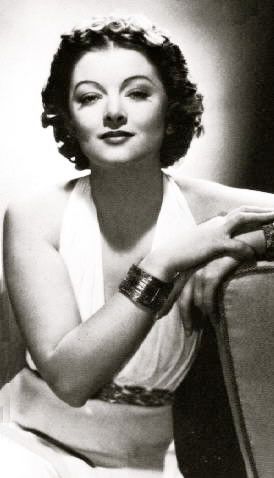 Myrna Loy - born on this day in 1905 - is clearly of the latter category, born a member of perhaps the last generation to hold a mother (with her wisdom, insight, and experience) in higher esteem than an ingenue. In fact, Loy's own ingenue roles - beginning with 1925's notorious What Price Beauty? opposite Natacha Rambova and Nita Naldi - were a mish-mash of grotesque stereotypes compared to the mid-career roles in which she played the dream wife and the dream mother.
Yet off camera, Loy was more circumspect; 'Some perfect wife I am,' she once said, referring to her typecasting. 'I've been married four times, divorced four times, have no children, and can't boil an egg.'
It's specifically because she had no children of her own to keep her legacy alive - a situation in which I find myself - that the Pop Culture Institute has undertaken to fulfill that role itself, by posting her name and her picture as often as feasible. To a certain extent, though, the movies she made - including a record fourteen memorable pairings with William Powell - are the children she never had; not only do they do their part to keep the memory of Myrna Loy alive, but they provide me with countless hours of the most enjoyable 'research' imaginable...
*
share on: facebook
Myrna Loy - born on this day in 1905 - is clearly of the latter category, born a member of perhaps the last generation to hold a mother (with her wisdom, insight, and experience) in higher esteem than an ingenue. In fact, Loy's own ingenue roles - beginning with 1925's notorious What Price Beauty? opposite Natacha Rambova and Nita Naldi - were a mish-mash of grotesque stereotypes compared to the mid-career roles in which she played the dream wife and the dream mother.Yet off camera, Loy was more circumspect; 'Some perfect wife I am,' she once said, referring to her typecasting. 'I've been married four times, divorced four times, have no children, and can't boil an egg.'
It's specifically because she had no children of her own to keep her legacy alive - a situation in which I find myself - that the Pop Culture Institute has undertaken to fulfill that role itself, by posting her name and her picture as often as feasible. To a certain extent, though, the movies she made - including a record fourteen memorable pairings with William Powell - are the children she never had; not only do they do their part to keep the memory of Myrna Loy alive, but they provide me with countless hours of the most enjoyable 'research' imaginable...
*
share on: facebook
"Foxtrot Uniform Charlie Kilo" by Bloodhound Gang
I suppose I could have marked the birthday of Jimmy Pop - born on this day in 1971 - with the Bloodhound Gang's monster smash hit The Bad Touch*; instead I've decided to post another of their songs, one which effectively demonstrates the band's wit by stringing together a series of euphemisms for genitalia under an entirely suggestive title, as well as Mr. Pop's facility with lead vocals - a skill much in evidence ever since he co-founded the group in 1992.
Foxtrot Uniform Charlie Kilo first appeared on the band's 2005 fourth album Hefty Fine, which was a long overdue follow up to their previous effort Hooray for Boobies, released in 1999, which topped charts around the world on the strength of The Bad Touch.
*A song many people still insist is called The Discovery Channel, even though it obviously couldn't be - for legal reasons.
*
share on: facebook
Happy Birthday Kevin Smith
Inasmuch as he is the voice of his generation - disgruntled, suspicious, hilarious - Kevin Smith would just have to have a love-hate relationship with pop culture, wouldn't he? His characters have all invariably worshiped its hollow allure, overthought its shallow content, and sifted what gems they could from its detritus in search of something to fill the spiritual void left in them by their soulless Baby Boomer parents...
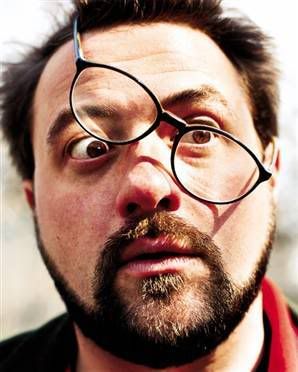
His masterpiece came in 1999 when the film Dogma tested Smith's abilities, yielding a work of extraordinary genius as a result; equally genius was the decision - made by Miramax - to release it on Good Friday, accurately predicting the rage of Christians who'd never seen the movie and never would to call for its censorship, thus ensuring huge ticket sales and critical acclaim. Needless to say, I love it when that happens...
2001 brought a return to the fictionalized version of Red Bank, with the stoner movie instant classic Jay and Silent Bob Strike Back; he followed it up with Jersey Girl and Clerks II, and continued expanding the View Askewniverse in 2008 with Zack and Miri Make a Porno while Red State may or may not see the light of day yet in 2010. In the meantime Smith is slated to direct A Couple of Dicks - a buddy cop picture starring Bruce Willis and Tracy Morgan.
The canon of Kevin Smith's work tends to highlight the plight of lost souls, underdogs, and unrepentant losers - all of them searching for something, or someone, or to mean something to someone. Smith's skill as a filmmaker is that he lets them do it, all the while filling out the hollow and deepening the shallow with the kind of dialogue I for one pray for, but never seem to get, in real life.
*Made for $27,575 at the same convenience store where he worked.
*
share on: facebook
His masterpiece came in 1999 when the film Dogma tested Smith's abilities, yielding a work of extraordinary genius as a result; equally genius was the decision - made by Miramax - to release it on Good Friday, accurately predicting the rage of Christians who'd never seen the movie and never would to call for its censorship, thus ensuring huge ticket sales and critical acclaim. Needless to say, I love it when that happens...
2001 brought a return to the fictionalized version of Red Bank, with the stoner movie instant classic Jay and Silent Bob Strike Back; he followed it up with Jersey Girl and Clerks II, and continued expanding the View Askewniverse in 2008 with Zack and Miri Make a Porno while Red State may or may not see the light of day yet in 2010. In the meantime Smith is slated to direct A Couple of Dicks - a buddy cop picture starring Bruce Willis and Tracy Morgan.
The canon of Kevin Smith's work tends to highlight the plight of lost souls, underdogs, and unrepentant losers - all of them searching for something, or someone, or to mean something to someone. Smith's skill as a filmmaker is that he lets them do it, all the while filling out the hollow and deepening the shallow with the kind of dialogue I for one pray for, but never seem to get, in real life.
*Made for $27,575 at the same convenience store where he worked.
*
share on: facebook
POPnews - August 2nd

[This February 1937 cover of Bernarr Macfadden's Physical Culture
magazine describes marijuana as a 'sex-crazing drug menace' -
almost as though that were a bad thing!]
686 CE - Pope John V died; he was succeeded by Pope Conon on October 21st. As it happens, Conon was a compromise candidate... Initially the clergy favoured archpriest Petros, while the military favoured another priest named Theodoros, and it took a couple of months of delicate diplomacy to solve the quandary.
1100 - England's King William II - better known as William Rufus - died while on a hunting trip in New Forest, when his companion Walter Tyrrel accidentally struck him in the chest with a stray arrow intended for a buck; he was succeeded by his younger brother, who reigned as Henry I.
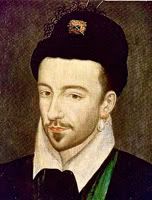 1589 - France's King Henri III (shown, at right) died, having been stabbed by a Dominican friar named Jacques Clément the previous day while lodged with his army at Saint-Cloud during preparations for an impending siege of Paris... Clément himself was killed on the spot by the King's bodyguard. The last of the Valois kings (his own marriage to Louise of Lorraine being childless likely due to his rather open homosexuality) the fourth son of Henri II and Catherine de' Medici was succeeded by the Huguenot King of Navarre Henri III, who would reign as the first of the Bourbon kings under the name Henri IV - although he wouldn't be crowned until February 1594, having been forced first by the Catholic League and then by Spain to win the throne through a rather arduous conquest.
1610 - Henry Hudson reached what would later be called Hudson Bay on board Discovery, thinking he'd passed through the Northwest Passage into the Pacific Ocean.
1790 - The first US Census was conducted.
1100 - England's King William II - better known as William Rufus - died while on a hunting trip in New Forest, when his companion Walter Tyrrel accidentally struck him in the chest with a stray arrow intended for a buck; he was succeeded by his younger brother, who reigned as Henry I.
1589 - France's King Henri III (shown, at right) died, having been stabbed by a Dominican friar named Jacques Clément the previous day while lodged with his army at Saint-Cloud during preparations for an impending siege of Paris... Clément himself was killed on the spot by the King's bodyguard. The last of the Valois kings (his own marriage to Louise of Lorraine being childless likely due to his rather open homosexuality) the fourth son of Henri II and Catherine de' Medici was succeeded by the Huguenot King of Navarre Henri III, who would reign as the first of the Bourbon kings under the name Henri IV - although he wouldn't be crowned until February 1594, having been forced first by the Catholic League and then by Spain to win the throne through a rather arduous conquest.1610 - Henry Hudson reached what would later be called Hudson Bay on board Discovery, thinking he'd passed through the Northwest Passage into the Pacific Ocean.
1790 - The first US Census was conducted.
1798 - During the French Revolutionary Wars the Battle of the Nile (Battle of Aboukir Bay) concluded in a British victory for Sir Horatio Nelson over French vice-admiral François-Paul Brueys D'Aigalliers, who died in battle.
1870 - Tower Subway, the first underground tube railway in the world, opened in London; not a subway in the modern sense but more a horizontal lift, it connected Tower Hill to Vine Lane south of the River Thames.
1903 - The Internal Macedonian Revolutionary Organization led an unsuccessful rebellion against the rule of the Ottoman Empire, an event now known as the Ilinden-Preobrazhenie Uprising.
1916 - Austro-Hungarian sabotage was blamed for causing the sinking of the Italian battleship Leonardo da Vinci in the harbour at Taranto, killing 249 of the thousand men aboard; although the vessel was salvaged after World War I, planned repairs were never finished, and it was sold for scrap in 1923.
1923 - Following the sudden death, at San Francisco's Palace Hotel, of Warren G. Harding - who took ill a week earlier during a visit to Vancouver - his Vice President Calvin Coolidge became the 30th President of the United States.
1934 - Adolf Hitler became Führer of Germany following the death of Reichspräsident Paul von Hindenburg.
1937 - Marijuana was made illegal in the United States following passage of the Marihuana Tax Act.
1943 - PT-109 was rammed by the Japanese destroyer Amagiri in the Blackett Strait between the Solomon Islands of Kolombangara and Arundel; in charge of the vessel was Lieutenant, junior grade (LTJG) John F. Kennedy, future US President, who managed to save all but two* of his crew from the ship, which sank. Kennedy then led his crew to safety by swimming to uninhabited Plum Pudding Island** (deep in enemy waters which were also shark- and crocodile-infested) before they could be rescued, six days later, from the more resource rich Olasana Island nearby.
*Seamen Andrew Jackson Kirksey and Harold W. Marney.
**Which was renamed Kennedy Island in his honour.
1945 - The Dutch Royal Family returned to Holland from their exile in Canada, apparently.
1964 - During the Gulf of Tonkin Incident North Vietnamese gunboats allegedly fired on US destroyers USS Maddox and the USS Turner Joy, an event which President Lyndon B. Johnson used as a justification for the Vietnam War (despite the fact that it may have never happened) under the terms of the Gulf of Tonkin Resolution.
1967 - The second Blackwall Tunnel opened, connecting the London boroughs of Greenwich and Tower Hamlets.
1973 - A flash fire killed 51 at the Summerland amusement centre at Douglas on the Isle of Man.
1980 - The Pro Football Hall of Fame Game ended with 5:24 remaining when it was canceled due to severe lightning, ending the game in a 0-0 tie.
1990 - Iraq invaded Kuwait - or 'Province 19' as Saddam Hussein liked to call it - sparking the first Gulf War.
*
share on: facebook
Sunday, August 01, 2010
"Fight The Power" by Public Enemy
Birthday wishes go out today to Chuck D, influential rapper and founding member of pioneering hip-hop band Public Enemy, who once upon a time ensured that rap was a revolutionary form, concerning itself with social justice and cultural enfranchisement rather than dissing women and other minorities while engaging in the greedy pursuit of gratuitous bling. Good times...
Fight the Power is the signal anthem of the American black inner-city; it first appeared in 1989, on the soundtrack to Spike Lee's film Do the Right Thing, and was later re-released in 1990 on the band's third album Fear of a Black Planet. Lee also directed two videos for the song, one a typical cross-promotional effort featuring scenes from the film and this one, which simulated a political rally and features a cameo by Tawana Brawley, whose perjury threatened to set the entire black community back almost as much as Reverend Al Sharpton's spirited defense of her.
Chuck D's mad skillz here are complemented by the manic energy of Flavor Flav and phat beatz pounded out by The Bomb Squad, who produced the track.
*
share on: facebook
POPnews - August 1st
30 BCE - Octavian (later known as Augustus) entered Alexandria and brought it under the control of the Roman Republic, causing his foe Mark Antony to commit suicide that very day and his foe's ho Cleopatra to follow suit soon after.
1291 - The Swiss Confederation was formed with the signing of the Federal Charter.
1492 - The Alhambra Decree - passed by King Ferdinand and Queen Isabella of Spain in March - took effect, either driving the Jews out of Spain or else forcing them to convert to Roman Catholicism.
1820 - London's Regent's Canal opened.
1291 - The Swiss Confederation was formed with the signing of the Federal Charter.
1492 - The Alhambra Decree - passed by King Ferdinand and Queen Isabella of Spain in March - took effect, either driving the Jews out of Spain or else forcing them to convert to Roman Catholicism.
1820 - London's Regent's Canal opened.
1828 - Britain's Bolton and Leigh Railway opened to freight traffic, connecting the Manchester Bolton & Bury Canal at Bolton to the Leeds and Liverpool Canal at Leigh.
1831 - A new John Rennie-designed London Bridge opened, replacing the far more famous medieval one; King William IV and Queen Adelaide attended a banquet in a pavilion erected on the bridge in honour of the event. In April 1968 the bridge was sold to oilman Robert P. McCulloch, who ordered it painstaking disassembled and rebuilt as part of an Anglophilic theme park in Lake Havasu City, Arizona It has since been replaced by yet another bridge, this time designed by Mott, Hay and Anderson.
1842 - The Lombard Street Riot erupted - not in San Francisco, as you might expect, but in Philadelphia.
1876 - Colorado became the 38th US state.
1907 - Robert Baden-Powell opened a Boy Scout camp on Brownsea Island in Dorset's Poole Harbour to field test the ideas laid out in his acclaimed book Scouting for Boys.
1936 - The Games of the XI Olympiad were opened in Berlin.
1944 - Anne Frank made the last entry in her diary.
1966 - Charles Whitman killed 15 people at The University of Texas at Austin before being killed by the police.
1968 - Hassanal Bolkiah was crowned the 29th Sultan of Brunei.
1977 - Former Lockheed U-2 pilot Francis Gary Powers crashed the news helicopter he was flying in the Sepulveda Basin Recreation Area just a few miles short of the Burbank Airport; also killed in the crash was NBC newsman George Spears, with whom he'd been covering forest fires in the vicinity of Santa Barbara. According to his son, Francis Gary Powers Jr., the experienced pilot crashed because he'd reported a fuel gauge error to a mechanic - when the plane's fuel gauge indicator displayed 'Empty' there was actually had enough fuel for thirty more minutes of flight time - who apparently made the repair without telling anyone.
1981 - MTV made its broadcast debut.
1993 - The Great Flood of 1993, which had inundated an area of Missouri 1200 km (745 miles) long and 700 km (435 miles) wide - or about 840,000 km² (320,000 square miles) - since April, and would continue to do so until October, came to a peak; at it's worst, the rising water at St. Louis topped 15.1 m (49.6 feet), nearly 6 m (20 feet) above flood stage and easily surpassing the Great Mississippi Flood of 1927. The 16 m (52-foot)-high St. Louis Floodwall, built to handle the volume of the 1844 flood, was able to keep the 1993 flood out with just over 60 cm (two feet) to spare!
2004 - A supermarket fire in the Paraguayan capital of Asunción killed as many as 396 people and injured 500; according to survivors doors within the complex were closed under the direction of the owners, Juan Pío Paiva and his son, Víctor Daniel, deliberately trapping people inside in order to prevent them from fleeing with merchandise without paying for it - a claim the management of the shopping centre has denied.
2007 - The I-35W Mississippi River Bridge - spanning the Mississippi River in Minneapolis, Minnesota - collapsed during the evening rush hour, killing thirteen people and injuring 145; the tragedy sparked a brief public debate about the state of America's crumbling infrastructure... That is until (and I'm guessing here) some celebrity or other did something stupid, at which point the media got back to reporting on what's really important.
*
share on: facebook
Saturday, July 31, 2010
POPnews - July 31st

[Leave it to a bunch of men to find some way to get a car on the Moon!]
30 BCE - At the Battle of Alexandria Roman general Mark Antony achieved a minor victory over the forces of Octavian near the end of the Final War of the Roman Republic; although most of Antony's army subsequently deserted - which later led to his suicide - Octavian successfully invaded Egypt and became the first Roman Emperor.
1009 - Sergius IV succeeded John XVIII to become the 142nd pope.
1423 - During the Hundred Years' War a combined Scottish, Breton, and French army under John Stewart, 2nd Earl of Buchan was defeated at the Battle of Cravant, on the banks of the river Yonne; following the victory the English and Burgundian forces of Thomas Montacute, 4th Earl of Salisbury took more than 2,000 prisoners.
1451 - Jacques Cœur was arrested on the orders of France's King Charles VII, accused of poisoning in the February 1450 death of the King's mistress, Agnès Sorel.
1498 - On his third voyage to the Western Hemisphere, Christopher Columbus became the first European to visit the island of Trinidad.
1667 - The Treaty of Breda ended the Second Anglo-Dutch War.
1777 - The Second Continental Congress passed a resolution that the services of Marquis de Lafayette 'be accepted, and that, in consideration of his zeal, illustrious family and connexions, he have the rank and commission of major-general of the United States.'
1856 - The city of Christchurch was granted a Royal Charter, a first for New Zealand.
1865 - The first narrow gauge mainline railway in the world opened at the Australian town of Grandchester.
1930 - The radio mystery program The Shadow was aired for the first time as part of the Detective Story Hour.
1945 - John K. Giles attempted to escape from Alcatraz aboard the Army launch General Frank M. Coxe; very nearly successful, he was apprehended at Fort McDowell on Angel Island and returned to prison.
1948 - New York City's Idlewild Field was rededicated New York International Airport (only to be later renamed John F. Kennedy International Airport).
1961 - The first All-Star Game tie in major league baseball history occurred when the game was stopped in the 9th inning because of rain at Biston's Fenway Park.
1964 - Ranger 7 sent back the first close-up photographs of the moon, including images 1,000 times clearer than anything ever seen from earth-bound telescopes.
1971 - Apollo 15 astronauts David Scott and James Irwin became the first to ride in a Lunar Rover on the moon while Alfred Worden orbited overhead with a camera, comprehensively mapping the lunar surface.
1981 - General Omar Torrijos - commander of the Panamanian National Guard and de facto leader of Panama - died in a plane crash; it is now thought that the crash was an assassination masterminded by the CIA, although the best source of information on that matter is Manuel Noriega. Best known for negotiating 1977's Torrijos-Carter Treaties, which returned sovereignty of the Panama Canal to Panama, in May 2004 his son, Martín Torrijos, won the presidential election, taking office the following September.
1998 - The British Government announced a total ban on the use of landmines, less than a year following the death of Diana, Princess of Wales, whose last campaign before she died called for the elimination of the devices.
2006 - Fidel Castro handed over power temporarily to his brother Raúl Castro, which was a cause for celebration in Miami's La Pequeña Habana.
2007 - Operation Banner - the presence of the British Army in Northern Ireland, and the longest-running British Army operation ever - came to an end.
*
share on: facebook
Subscribe to:
Posts (Atom)