Showing posts with label 1829. Show all posts

Tuesday, November 30, 2010

POPnews - November 30th

Photobucket
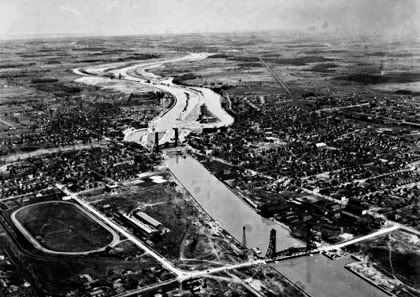
[As it snakes its silvery way 42 kilometres (27 miles) across the Niagara Escarpment from Port Colborne on Lake Erie to Port Weller on Lake Ontario it's easy to forget the very practical purpose the Welland Canal serves; although not initially part of the St. Lawrence Seaway, it nevertheless made its fellow engineering marvel possible by allowing shipping a way around the precipitous, if lovely, cataracts of Niagara Falls.  By opening up trade possibilities between Central Canada and the world - and for many decades at that - it made Ontario the engine of the Canadian economy. And, unlike its equally impressive cousin the Erie Canal, it's still in heavy use.]

1700 - At the Battle of Narva a Swedish relief army of 8,500 men under Charles XII, Carl Gustav Rehnskiöld, and Otto Vellingk defeated a much larger Russian siege force commanded by Charles Eugène de Croÿ, Ivan Trubetskoy, Adam Veyde, Boris Sheremetev, Alexander of Imereti, and Avtomon Golovin early in the conflict which came to be known as the Great Northern War.

1718 - Swedish king Charles XII died during a siege of the Norway's Fredriksten fortress.

1783 - A 5.3 magnitude earthquake struck New Jersey.

1786 - Peter Leopold Joseph of Habsburg-Lorraine, Grand Duke of Tuscany and future Holy Roman Emperor, promulgated a penal reform that made his the first country to abolish the death penalty; because of this, November 30 is commemorated by 300 cities around the world as Cities for Life Day.

1824 - At the behest of William Hamilton Merritt, construction began on the Welland Canal.

1829 - The first incarnation of the Welland Canal opened for its trial run; five years to the day after construction began the schooner Annie & Jane made the inaugural trip with the canal's instigator William Hamilton Merritt aboard.

1868 - The inauguration of a statue of Sweden's King Charles XII took place in Stockholm's Kungsträdgården, 159 years after he was exiled to the Ottoman Empire following a crushing defeat at the Battle of Poltava and upon the sesquicentenary of his death; in recent years the statue has been the focal point of neo-Nazi rallies on this date, which clashes with police and members of left-wing groups have shattered the tranquility of the Swedish capital.

1934 - The steam locomotive Flying Scotsman became the first to officially exceed 100mph.

1936 - The Crystal Palace - crown jewel of Sydenham Hill - was destroyed by fire; originally built for the Great Exhibition of 1851 in London's Hyde Park, Joseph Paxton's architectural whimsy of wrought iron and glass was enlarged upon its removal to Penge Common in 1854.

1940 - Lucille Ball married Desi Arnaz in Greenwich, Connecticut.

1943 - At the Tehran Conference US President Franklin D. Roosevelt, British Prime Minister Winston Churchill, and Soviet leader Joseph Stalin agreed to the planned June 1944 invasion of Europe code-named Operation Overlord.

1953 - Edward Mutesa II, the kabaka of Buganda, was deposed and exiled to London by Sir Andrew Cohen, Governor of Uganda.

1954 - In Sylacauga, Alabama, the Hodges Meteorite - itself a fragment of the Sylacauga meteorite - crashed into the home of Ann Elizabeth Hodges and struck her during her afternoon nap, in the only documented case of a human being hit by a rock from space; while badly bruised on one side she walked away from the accident, although a nearby console radio was destroyed.

1961 - Burma's U Thant was elected the third Secretary-General of the United Nations, following the death of his successor, Dag Hammarskjöld, in a plane crash the previous September.

1966 - Barbados gained its independence from the United Kingdom, with Errol Barrow serving as Elizabeth II's last Premier and first Prime Minister there; lowering the Union Flag and raising the Broken Trident on behalf of Her Majesty that day was HRH the Duke of Kent, who also opened the country's Parliament during the same visit.

1967 - Zulfikar Ali Bhutto founded the Pakistan Peoples Party; its previous leader was his daughter Benazir Bhutto, and its current leadership is split between its founder's grandson Bilawal Bhutto Zardari and son-in-law Asif Ali Zardari, the country's 12th president.

1999 - In Seattle, protests against the WTO Meeting by anti-globalization protesters caught police unprepared, forcing the cancellation of its opening ceremonies. These events have inspired not only a documentary called Breaking the Spell - shot live during the riot by Tim Lewis, Tim Ream, and Sir Chuck A. Rock - but also the Charlize Theron vehicle Battle in Seattle, directed by her longtime squeeze Stuart Townsend.

2004 - Longtime Jeopardy! champion Ken Jennings finally lost, leaving him with $2,520,700 - television's all-time biggest game show haul.

2007 - Leeland Eisenberg entered the presidential campaign office of Hillary Clinton in Rochester, New Hampshire, with a device suspected of being a bomb and held six people hostage for 5 hours.
*
share on: facebook

Friday, October 01, 2010

POPnews - October 1st

Photobucket
[The Siege of Acre was the first engagement of the Third Crusade, which devastated Europe's aristocracy by pitting the good Christians of Europe - who came to the defense of the Kingdom of Jerusalem on the orders of Pope Gregory VIII and his successor Clement III - against Saladin.]

331 BCE - At the Battle of Gaugamela, Alexander the Great defeated Darius III.

1189 - Gerard de Ridefort - grandmaster of the Knights Templar since 1184 - was killed at the Siege of Acre.

1829 - South African College was founded in Cape Town; it was later separated into the University of Cape Town and the South African College Schools.

1894 - Cape Town's Owl Club held its first meeting.

1936 - Francisco Franco's rise to power at the helm of the Nationalists was nearly complete when he was named Generalísimo of the National army and Jefe del Estado (Head of State); following the end of the Spanish Civil War in April 1939 he served as Spain's dictator until his death in November 1975.

1938 - Nazi Germany stole annexed the Sudetenland.

1939 - After the month-long Siege of Warsaw, Nazi Germany's Wehrmacht occupied the city.

1946 - The opening round of the Nuremburg Trials closed; 24 prominent surviving Nazis were tried, four of whom were acquitted and 1 of whom committed suicide before the trial opened.

1949 - The People's Republic of China was proclaimed by Mao Zedong.

1960 - Nigeria gained its independence from the United Kingdom.

1961 - Following a truly bewildering colonial past which saw it passed between Germany, France, and the United Kingdom from 1884 onwards, East and West Cameroon merged as the Federal Republic of Cameroon and finally attained its independence from all of them.

1964 - The Shinkansen bullet train service began between Tokyo and Osaka.

1965 - Indonesia's General Suharto crushed a coup attempt aimed at unseating President Sukarno; millions of Indonesians were killed in its aftermath, which included the liquidation of the Communist Party. Suharto's real motive, however, appears to have been a plot to seize power for himself, which he did in 1967.

1969 - Concorde broke the sound barrier for the first time.

1975 - At a fight dubbed the Thrilla in Manila Joe Frazier was defeated by Muhammad Ali in the 14th round; despite trash-talking prior to the fight, Ali was magnanimous in victory, praising Frazier for 'bringing out the best' in him.

1978 - Tuvalu gained its independence from the United Kingdom.

1982 - Sony launched the first CD player designed for the consumer market.

1991 - New Zealand's Resource Management Act went into effect.

2005 - 23 died and 129 were injured by suicide bombers in Bali.
*
share on: facebook

Wednesday, September 29, 2010

POPnews - September 29th

Photobucket
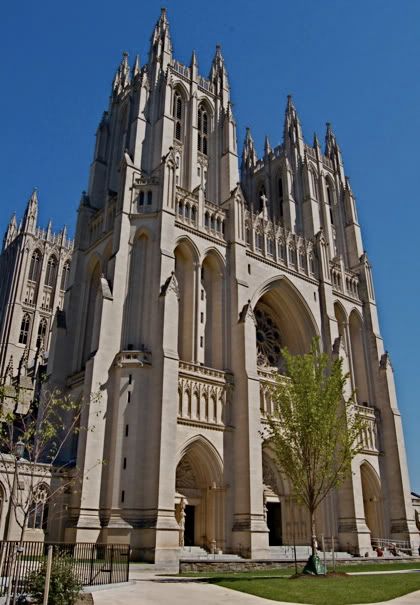
[The Washington National Cathedral is an architectural masterpiece
which glorifies the combination of church and state.
]

1717 - An earthquake struck Antigua Guatemala, destroying more than 3000 of that city's Spanish Mudéjar-influenced colonial buildings and causing authorities to consider moving the capital to a different city; a further series of earthquakes in 1773 finally brought about the move - to the Valley of the Shrine, where it remains to this day with the far less poetic name of Guatemala City.

1829 - London's Metropolitan Police Service was launched by Home Secretary Sir Robert Peel; once known as 'Peelers', police in the English capital are still called 'bobbies' in his honour. At the time of its foundation 'The Met' was the third professional police force in the world, following those in Glasgow and Paris.

1833 - Upon the death of Spain's King Ferdinand VII his wife Maria Christina became queen-regent on behalf of her daughter, who would ascend the throne as Isabella II.

1864 - The Battle of Chaffin's Farm was fought, giving Union general Benjamin F. Butler a victory over the Confederacy's Robert E. Lee and Richard S. Ewell during the American Civil War.

1885 - The first practical public electric tramway in the world was opened in the British seaside resort of Blackpool.

1907 - The cornerstone of the Washington National Cathedral was laid in the presence of President Theodore Roosevelt; the Cathedral had been granted its Charter by an act of Congress in January 1893, and work on the edifice would finally be finished 83 years later to the day.

1916 - John D. Rockefeller became the first billionaire.

1954 - Willie Mays of what was then New York Giants made a famous play known as The Catch at The Polo Grounds during Game 1 of that year's World Series, which pitted the Giants against the Cleveland Indians.

1960 - While visiting the United States, Soviet leader Nikita Khrushchev disrupted a session of the United Nations General Assembly - including a speech by British Prime Minister Harold Macmillan, twice - with a series of temperamental outbursts, including a famous one (which may, in fact, be apocryphal) in which he allegedly banged on his desk with a shoe.

1962 - When Canada's first satellite, Alouette 1, was launched from California's Vandenberg AFB, Canada became only the third country in history to launch such a device; its primary use was scientific - it was designed to study the ionosphere - and it was switched off after a decade. Alouette 1 remains in orbit and may, in theory, still work.

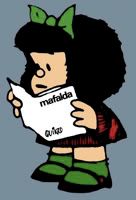
Photobucket1964 - The Spanish-language comic strip Mafalda was first published, in the weekly publication Primera Plana; the brainchild of Argentinian cartoonist Joaquín Salvador Lavado - who's better known as Quino - the little girl with a passion for peace has been entertaining the Latin world ever since, even though her initial run ended in June 1973. Often compared to Charles Schulz's Peanuts (most notably by Umberto Eco in 1968) for its psychological insight into the souls of children, in Mafalda's world adults play a greater role, and the character herself is both more political and rooted in socio-politics as well. Although books of Mafalda strips are widely available in their original language, sadly they are relatively rare in English - providing me with yet another excellent reason to learn Spanish.

1979 - John Paul II became the first Pope to visit Ireland.

1982 - The Tylenol Crisis began when the first of seven individuals died in Chicago; the culprit has never been caught...

1988 - NASA launched STS-26, its first mission after the Space Shuttle Challenger disaster of January 1986.

1990 - Work was completed on the Washington National Cathedral when the last finial was installed in the presence of President George H. W. Bush, 83 years to the day after the cornerstone was laid.

2004 - Burt Rutan's SpaceShipOne performed its first space flight; days later he (and it) would go on to win the lucrative Ansari X Prize; on the same day the asteroid 4179 Toutatis passed within four lunar distances of Earth - although few if any scientists consider the asteroid a warning to the arrogant humans seeking ever easier ways to evade their own planet's gravity.

2006 - US Representative Mark Foley resigned after letting slip that the Republican Party is actually a secret gay organization allegations of inappropriate emails to house pages were revealed.

2007 - Britain's Calder Hall - the world's first commercial nuclear power station, itself part of the vast complex at Sellafield, which came on line in August 1956 and was officially opened by The Queen in October of that year - was demolished in a controlled explosion. At the time of its closing in March 2003 the main reactor had been in continuous operation for nearly 47 years.

2008 - The Dow Jones Industrial Average suffered a 777.68 point drop, the largest in its history. So far...
*
share on: facebook

Tuesday, September 14, 2010

POPnews: September 14th

Photobucket
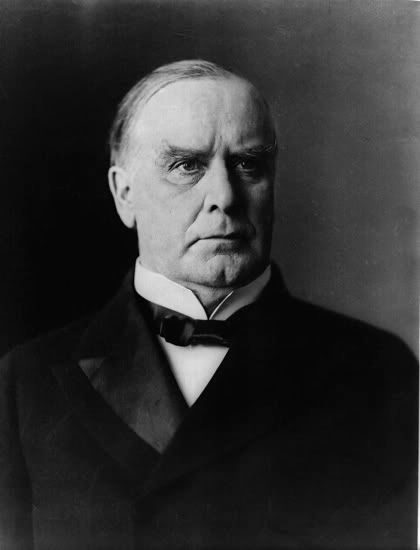
[US President William McKinley's assassination at the hands of Leon Czolgosz resulted in the tightening of security around the Chief Executive, which no one had thought of before since 'being proactive' had yet to be invented.]

81 CE - Domitian became Roman Emperor upon the death of his brother Titus.

1180 - The Battle of Ishibashiyama saw Japan's Minamoto no Yoritomo lead the Minamoto against the Taira (with the assistance of the Miura) in one of the bloodier engagements of the Genpei War; for the record, the Taira's Oba Kagechika was victorious.

1607 - The so-called Flight of the Earls from Ireland's Lough Swilly, in County Donegal, refers to the departure of Hugh O'Neill, 2nd Earl of Tyrone and Rory O'Donnell, 1st Earl of Tyrconnell from the village of Rathmullan along with some ninety members of many prominent Gaelic families on board a French ship bound for the Continent. Some historians have argued that this particularly extreme action was forced upon the Irish nobility by the fallout from the Tudor re-conquest of Ireland, others that it was a strategic mistake that cleared the way for the Plantation of Ulster.

1682 - Bishop Gore School, one of the oldest in Wales, was founded in Swansea; one of its illustrious alumni is Dylan Thomas, whose poetry was first published in the school magazine.

1752 - The British Empire adopted the Gregorian calendar, thereby skipping eleven days (the previous day of this year in England was September 2nd).

1812 - Following the Battle of Borodino during the Napoleonic Wars, French grenadiers entered Moscow; the Fire of Moscow began as soon as Russian troops left the city, and would leave three-quarters of the city in ruins.

1829 - The Ottoman Empire signed the Treaty of Adrianople with Russia, thus ending the Russo-Turkish War.

1862 - The Battle of South Mountain - itself part of the Maryland Campaign - was fought; not only would it give Union generals George B. McClellan, Ambrose Burnside, and William B. Franklin a victory over the Confederacy's Robert E. Lee, the Maryland Campaign is today considered a turning point in Union fortunes during the American Civil War.

1901 - President William McKinley died, eight days after being shot; he was succeeded by his Vice-President Theodore Roosevelt.

1926 - The Liberal Party's William Lyon Mackenzie King defeated Arthur Meighen's Conservatives in a Canadian general election, winning 128 seats to the Conservatives' 91, with 46.1% of the popular vote. The Progressives won 20 seats, with the remaining 6 being divvied up between minor parties.

1944 - Maastricht became the first Dutch city to be liberated by Allied forces.

1948 - The groundbreaking ceremony for United Nations headquarters was held in New York City.

1951 - British Prime Minister Clement Attlee opened the largest oil refinery in Europe, at Fawley on Southampton Water; it remains the largest oil refinery in the UK to this day.

1959 - The Soviet Union's Luna 2 probe crashed onto the Moon, becoming the first man-made object to reach it.

1960 - OPEC was founded.

1975 - Elizabeth Ann Seton - the first American saint - was canonized by Pope Paul VI.

1981 - Marcus Sarjeant - the would-be assassin who'd fired six blanks at the Queen on June 13th - was jailed for five years by Lord Lane; he was released from Grendon psychiatric prison in October 1984 at the age of 20, changed his name, and has endeavoured to make a new life for himself. At least he hasn't tried it again, which seems to make a case for rehabilitation.

1982 - Bachir Gemayel, President-elect of Lebanon, was assassinated; his brother, Amine Gemayel, was later elected in his place, and served as President from 1982 to 1988 instead. Habib Shartouni is considered responsible for the slaying, which was accomplished by means of a bomb planted in Kataeb Party headquarters.

1994 - Major League Baseball canceled its season due to a strike.
*
share on: facebook

Thursday, June 10, 2010

POPnews - June 10th

Photobucket
[If you're like me - and let's face it, would you be if you didn't have to be? - you like gawking at super fit college aged men clad only in revealing sporting costumes, all the while enjoying yourself a pleasant afternoon in an idyllic riverside setting... Which makes the annual Oxford and Cambridge Boat Race the ideal way to combine my hobbies (and/or pervs). The image above shows a practice run by the Cambridge team in 1866 along the River Cam, near the Plough Inn at Fen Ditton. You know the place I mean. Anyway, that year Cambridge lost to Oxford - a race which included a dramatic near-collision with a barge!]

1190 - Holy Roman Emperor Frederick I Barbarossa drowned in Turkey's Saleph river while leading an army to Jerusalem on his way to fight the Third Crusade.

1619 - The Battle of Záblatí proved a turning point in the Bohemian Revolt during the Thirty Years' War when Karel Bonaventura Buquoy won the day for the Holy Roman Empire, while Ernst von Mansfeld suffered heavily losses in personnel and a baggage train as well, following which he was forced to lift the siege of Budějovice.

1692 - During the Salem Witch Trials, Bridget Bishop was hanged at Gallows Hill for 'certaine Detestable Arts called Witchcraft & Sorceries'. Which, I'm sure, is what Jesus would have done...

1719 - The Battle of Glen Shiel proved a decisive victory for its commander Joseph Wightman and put an end to the Jacobite Rising, whose commander Lord George Murray (among others) had hoped to put the Catholic Bonnie Prince Charlie on the throne of England as Charles III in place of the Protestant George I.

1786 - A landslide dam on the Dadu River created by the Kangding Louding earthquake ten days earlier collapsed, killing 100,000 in the Chinese province Sichuan province as far as 1400 km upriver, making it the second deadliest landslide on record.

1805 - Yussif Karamanli signed a treaty ending hostilities with the United States following the First Barbary War; try and guess whether or not that lasted...

1829 - The first Boat Race between the University of Oxford and the University of Cambridge took place; annually pitting eights against each other on the River Thames since 1856 (and four times unofficially elsewhere during the Second World War) the brain-child of Charles Merivale, a student at St John's College, Cambridge, and his chum Charles Wordsworth, who was at Christ Church, Oxford, today the 6.8 km- (4 mile, 374 yard-) long race is attended by a quarter million spectators bankside along the course from Putney to Mortlake, while 7-9 million watch on telly in the UK, and more than 20 million people tune in worldwide.

1838 - At Australia's Myall Creek Massacre 28 Aboriginals were murdered near Inverell, a sheep station in New South Wales; seven of the 11 whites responsible were later found guilty, a first for Australian jurisprudence.

1886 - Following the eruption of New Zealand's Mount Tarawera, 153 people were killed and the country's famous Pink and White Terraces were destroyed.

1924 - Fascists kidnapped and killed Italian socialist leader Giacomo Matteotti in Rome, a crime which historians now believe was ordered by Il Duce himself, Benito Mussolini.

1925 - The inaugural service for the United Church of Canada - a union of Presbyterian, Methodist, and Congregationalist churches - was held in Toronto Arena.

1935 - With the assistance of Bill Wilson, Dr. Robert Smith took his last drink, thereby helping to found Alcoholics Anonymous.

1942 - The Nazi occupiers of Czechoslovakia burned the village of Lidice in reprisal for the earlier killing of Reinhard Heydrich as part of Operation Anthropoid.

1944 - 15-year old Joe Nuxhall of the Cincinnati Reds became the youngest player ever in a Major League game.

1967 - The Six-Day War 'ended' when Israel and Syria agreed to a cease-fire... There are those, however, who feel a war cannot truly be over as long as one side continues to call for the death of all of those on the other side, in addition to all of their co-religionists throughout the world, and the total destruction of their country besides. I'm just saying, is all.

1977 - James Earl Ray escaped from Brushy Mountain State Prison in Petros, Tennessee; he was recaptured three days later.

1986 - Patrick Magee was found guilty of planting the bomb that damaged Brighton's Grand Hotel during a Conservative Party conference in October 1984, killing five.

2001 - Pope John Paul II canonized Lebanon's first female saint, Rafqa.

2003 - The Spirit Rover was launched, beginning NASA's Mars Exploration Rover mission; it landed successfully the following January 4th, three weeks before its twin Opportunity landed on the other side of the planet.
*
share on: facebook

Sunday, April 25, 2010

POPnews - April 25th


[In the years since its composition on this day in 1792, La Marseillaise has fallen in and out of favour almost as dramatically as its own notes rise and fall while being sung...  The rallying cry of the French Revolution, it was adopted as the new Republic's national anthem by the National Convention in July 1795; naturally it was banned outright by those noted monarchists Napoleon, Louis XVIII, and Napoleon III.  Reinstated briefly after the July Revolution of 1830, it wouldn't be until 1879 that it would be permanently enshrined.  It's shown sung here by noted French operatic tenor, Roberto Alagna, in an arrangement by Hector Berlioz, conducted by Semyon Bychkov.]

1185 - Japan's Emperor Antoku drowned, at the age of six, when he was purposely dropped into the Kanmon Straits which separate Kyūshū and Honshū during a sea battle between warring clans and the Imperial Family; he was succeeded by Emperor Go-Toba, who was the fourth son of Emperor Takakura and therefore his predecessor's younger brother.

1605 - Naresuan, King of Siam, died; he was succeeded by his brother Ekathotsarot.

1644 - China's Chongzhen Emperor committed suicide on Jingshan Hill after his capital, Beijing, fell to forces loyal to Li Zicheng; the 16th and last ruler of the Ming Dynasty, his death brought about not only the fall of the Ming Dynasty but led to a period of civil war in which the Southern Ming Dynasty, increasingly harried by Manchus from the north, eventually capitulated as well.  Chongzen was succeeded by Hongguang Emperor and thence the Longwu Emperor, whose own Shun Dynasty lasted less than a year.  Following the Shun Dynasty's defeat after the Battle of Shanhai Pass in May of the following year power passed to the Shunzhi Emperor and the Qing Dynasty - which would rule the country until its monarchy was abolished in 1912 - was established.

1792 - La Marseillaise - the song that would become France's national anthem - was composed by Claude Joseph Rouget de Lisle.

1829 - Charles Fremantle arrived in the HMS Challenger off the coast of modern-day Western Australia prior to declaring the Swan River Colony for the United Kingdom.

1846 - The Thornton Affair - an open skirmish over the disputed border of Texas - triggered the declaration of the Mexican-American War by US President James K. Polk.

1849
- Canada's Governor-General Lord Elgin signed the Rebellion Losses Bill, which outraged the English population of Montreal and triggered rioting in that city.

1915 - The Battle of Gallipoli began with the invasion of Turkey's Gallipoli Peninsula by Australian, British, French and New Zealand troops, who landed at Cape Helles and what is now known as Anzac Cove.

1916 - Anzac Day was commemorated for the first time, on the first anniversary of the landing of the Australian and New Zealand Army Corps (ANZAC) at what is now known as Anzac Cove near Gallipoli in Turkey - events dramatized in Peter Weir's 1981 film Gallipoli, starring a young Mel Gibson.

1938 - The US Supreme Court delivered its opinion in Erie Railroad Co. v. Tompkins and in doing so overturned a century of federal common law regarding diversity jurisdiction.

1944 - The United Negro College Fund was incorporated by Frederick D. Patterson (then president of Tuskegee University), Mary McLeod Bethune (then president of Bethune-Cookman University), and others.

1953 - Francis Crick and James D. Watson published their article Molecular structure of nucleic acids: a structure for deoxyribose nucleic acid in the magazine Nature, making them the first to describing the double helix structure of DNA.

1959 - The St. Lawrence Seaway - linking the Great Lakes to the Atlantic Ocean via the St. Lawrence River and a series of locks and canals - officially opened to shipping; its formal opening on June 26th, though, would attract such VIPs as Elizabeth II, Queen of Canada, and US President Dwight D. Eisenhower.

1974 - The so-called Carnation Revolution - a leftist military coup in Portugal - restored democracy after more than forty years as a corporate fascist state under the Estado Novo, most famously led by António de Oliveira Salazar. The revolution is notable in that the revolutionaries produced no casualties, although government forces did kill four people.

1982 - Having landed a contingent of Royal Marines on South Georgia as part of Operation Paraquet the Royal Navy's destroyer Antrim intercepted and disabled the Argentinian submarine Santa Fe, with the able assistance of her Westland Wessex HAS.Mk3 helicopter; the helicopter's crew had already demonstrated distinction in rescuing 16 SAS commandos from the Fortuna Glacier on April 21st.  Today this very craft resides in the Fleet Air Arm Museum at Yeovilton in Somerset.  VISIT

1986 - Mswati III was crowned King of Swaziland, succeeding his father Sobhuza II.

1988 - A court in Israel sentenced John Demjanuk to die for his having committed war crimes while serving as an SS guard at Treblinka during World War II.

2005 - The final piece of the Obelisk of Axum was returned to Ethiopia after being stolen by the invading Italian army in 1937.

2007 - Boris Yeltsin's funeral was the first to be sanctioned by the Russian Orthodox Church for a Russian head of state since the funeral of Tsar Alexander III in 1894.
*
share on: facebook