Saturday, January 08, 2011

In Memoriam: Soupy Sales

As pranks go, it will go down in the history books as one of the greatest; on New Year's Day 1965 Soupy Sales addressed the kids watching his TV show and asked them to get those 'funny green pieces of paper' from their parents' wallets and purses and send them to him at the station, in exchange for which he'd send them a postcard from Puerto Rico.

PhotobucketHistory doesn't record how much money arrived, but obviously some did, and Sales was suspended from work for two weeks for encouraging children to steal; now who ever said television executives had a sense of humour?

It's just one of the wild stories connected to Soupy Sales, and like many of the others, it's actually true; one of the more ubiquitous untruths had Sales slipping innuendo into the shows to entertain the Moms who might have been watching at home. As though a respected broadcaster like him would ever be caught dead slipping it to other people's mothers, especially in the middle of the day.

Born on this day in 1926, the legendary children's entertainer has two sons - Hunt and Tony Sales - professional musicians who performed with David Bowie in the band Tin Machine - not to mention Todd Rundgren and Iggy Pop - as well as having formed their own band Tony and the Tigers in Detroit; Hunt Sales composed the signature riff in Iggy Pop's classic song Lust For Life.

Alas, Soupy's 83rd birthday would be his last; he died in October 2009.
*
share on: facebook

"Let's Dance" by David Bowie


The David Bowie of this era was the first incarnation of his with which I was familiar; not only was Let's Dance the first song of his I'd knowingly heard, it came from the first album of his (not coincidentally also entitled Let's Dance) I'd ever bought, and so therefore this is the version of him which provides me the necessary context for him and his extraordinary career. Naturally enough, the tres cool video isn't available; in lieu of this, I've decided to post a clip of the man himself performing the song live during his Serious Moonlight tour.

Of course, entire websites are devoted to each of his personae - with their webmasters slavishly devoted to supporting the claim that their favourite is best to the exclusion of all others - but here at the Pop Culture Institute we take the long view... A single-affect Bowie would have burnt out his appeal long before now; it's his chameleonic tendencies which specifically commend him to iconic status*.

Amazingly, today marks Bowie's 64th birthday, and it's one which sees him still going strong despite a 2004 cardiac incident he suffered while performing in Germany.

*That and his willingness to embrace new music, even unto mentoring up-and-coming bands such as Arcade Fire.
*

share on: facebook

In Memoriam: Helmuth Hübener

First, he was a Boy Scout; after the Nazis suppressed that organization, Helmuth Hübener was more or less compelled to join Hitler Youth. However, the events of 1938's Kristallnacht soon enough crystallized his opposition to the atrocities of National Socialism; in his mind both anti-Semitism and totalitarianism ran counter to his Mormon beliefs.

PhotobucketBorn on this day in 1925, Hübener was the youngest person ever sentenced to die by the Volksgerichtshof when, in October 1942, he was beheaded at Berlin's Plötzensee Prison; he was only 17.

Along with friends Karl-Heinz Schnibbe, Rudolf Wobbe, and later Gerhard Düwer, Hübener aided in the delivery of about 60 different pamphlets throughout the city of Hamburg decrying the futility of Germany's erstwhile attempts to conquer the world. He had also been monitoring broadcasts of the BBC, which was strictly verboten and considered treasonous; much of the content of his inflammatory literature was gleaned from this activity. 'Through their unscrupulous terror tactics against young and old, men and women, they have succeeded in making you spineless puppets to do their bidding,' ran one courageous screed.

Although his friends were merely given long prison sentences for the part they played in undermining the Third Reich, the authorities allowed Hübener's death sentence to stand, on account of his extraordinary level of intelligence, brains being the greatest enemy of Fascism.

Today his name lives on in his hometown, where a youth centre and a pathway between Greifswalder Straße and Kirchenweg in the Hamburg neighbourhood of Sankt Georg - appropriately enough, the patron saint of the Boy Scouts - commemorate one teenager's heroic battle against the forces of evil. A movie tentatively entitled Truth & Treason - which has been in various stages of pre-production since 2008 and now seems set for release in 2011 or 2012 - stars Haley Joel Osment as the boy who stood against Hitler while all around him grown men cringed in silence; the short life of Helmuth Hübener is also the basis of Hübener vs Hitler by Richard Lloyd Dewey, which examines these events through a distinctly Christianist lens.
*
share on: facebook

Pop History Moment: LBJ Declares "War on Poverty"

You see, this is what Presidents did in the olden days, kids... They declared a War on Poverty, rather than on the poor, like certain redneck throwbacks I could mention but won't whose father was also President.

PhotobucketIn his State of the Union address on this day in 1964, US President Lyndon Baines Johnson continued to further the agenda set by his predecessor John F. Kennedy, using his substantial powers as a bully for good, rather than declaring an illegal war in a foreign country based on a lie and some specious intelligence... Er, uh... Ha ha ha...

A n y w a y... Instead of that other war, which has become his legacy, LBJ wanted the War on Poverty to continue the work set in motion by the New Deal of another of his great predecessors, Franklin Delano Roosevelt in that other great State of the Union address of January 1941, the Four Freedoms, to which LBJ had been witness as a Representative of Texas' 10th District.

'Because it is right, because it is wise, and because, for the first time in our history, it is possible to conquer poverty...' he intoned, introducing legislation creating the Office of Economic Opportunity, which intervened during a boom economy to give everyone a share of the wealth, not just those who were already wealthy. Nearly 45 years later, it remains to be seen in a War on Poverty can, in fact, be won; but the nobility of the thing was in the attempt, in the desire to make it so, which gave the War on Poverty a moral victory at least.
*
share on: facebook

"In The Ghetto" by Elvis Presley


I suppose there will always be those people who will consider Elvis Presley a racist; indeed, the comments section of this very video at YouTube bristles with enough racism of its own directed at him and his memory to gladden the shrivelled heart of even the most embittered Republican.

Claims that Elvis stole black music and made himself wealthy with it - Chuck D of Public Enemy and Eminem are the most vocal proponents of this theory - are specious at best; without such appropriation, black music might have never made such inroads into white culture in the deeply racist 1950s, bringing with it such stars as Chuck Berry and Little Richard. Recording artist Jackie Wilson goes so far as to insist that this appropriation went both ways, and that what Elvis did was in fact meld black and white music (in later years, Elvis' stage persona and delivery were more Pat Boone than Chuck Berry) making him a unifier as opposed to a polarizer*.

As a Southerner, if Elvis had wanted to he could have been volubly racist and wouldn't have cared who heard him, much like the white bigots who dogged his concerts throughout the South beginning in 1956 - who at one point even torched his car - and more often than not the venues where he appeared had to be protected by the National Guard. Despite the concerted efforts of some to make Elvis into a hater, no claims that he was have ever stuck, even after extensive investigation by such publications as Jet magazine.

By his behaviour alone it appears he did what he could to lower the colour bar in America; one such action was the recording of this extraordinarily sensitive song, which looks at race relations from the most liberal of viewpoints. Still, there's comfort in belief, even if those beliefs are based on misinformation and the unexamined prejudices of other people; certainly it's easier to repeat what someone else has said than it is to develop one's own opinions, a kind of intellectual laziness which is the modern malaise.

Born on this day in 1935, one of identical twins (the elder of whom, Jesse Garon, was stillborn) Elvis Aaron Presley simply appeared at the right time in the right place with the right look and the right sound and took the world by storm. Others - notably Charlie Rich - had a similar look and sound but never caught on like Elvis did.

In The Ghetto was written by Mac Davis and was first recorded by Elvis in 1965; it became a smash hit when it was released as a single in 1969 following his '68 Comeback special. This particular video is of a performance given in 1970 called Elvis: That’s The Way It Is.


*Let's not forget that Berry Gordy groomed his performers at Motown Records by making them listen to the likes of Doris Day and Pat Boone, as reported in J. Randy Taraborrelli's biography of Diana Ross, Call Her Miss Ross...
*

share on: facebook

POPnews - January 8th

Photobucket
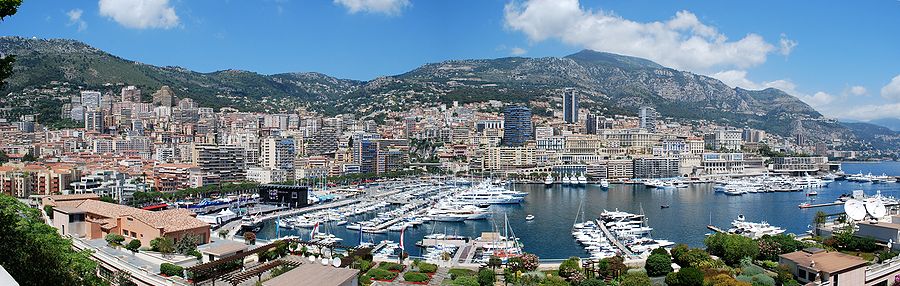
[From a castle on a hill built in 1191, Monaco has grown into an international banking centre, while its princely family the House of Grimaldi has provided France all the fun of a royal family with none of the responsibility.]

871 CE - At the Battle of Ashdown, Ethelred of Wessex and the man who would one day be known as Alfred the Great defeated an invading army of Danes commanded by Halfdan Ragnarsson - killing his fellow king, Bagsecg, in the process.

1297 - Monaco attained its sovereignty when (as the legend has it) Francesco Grimaldi captured the Rock of Monaco from the Genoese after arriving at the gates of Palace of Monaco with his cousin Rainier I, Lord of Cagnes, while both of them were dressed as Franciscan monks; the tiny principality has been ruled by the House of Grimaldi ever since.

1499 - France's King Louis XII married Anne of Brittany, apparently.

1734 - George Frideric Handel's Ariodante had its premiere at the Royal Opera House in London's Covent Garden.

1790 - President George Washington delivered the first State of the Union Address in New York City, which was then the US capital.

1811 - Charles Deslandes led an unsuccessful slave revolt in St. Charles and St. James, Louisiana.

1835 - The US National Debt was $0 for the only time, under President Andrew Jackson.

1877 - Lakota chief Crazy Horse, Cheyenne chief Two Moons, and their warriors fought a battle with Nelson A. Miles of the US Cavalry at the Battle of Wolf Mountain in what was then the Montana Territory.

1912 - The African National Congress was founded.

1918 - US President Woodrow Wilson announced his Fourteen Points for the aftermath of World War I at the Paris Peace Conference - an event best recounted in Margaret Macmillan's Paris 1919: Six Months That Changed The World.

1926 - Abdul-Aziz ibn Saud became the King of Hejaz, renaming it Saudi Arabia.

1940 - Food rationing was introduced in Britain during World War II.

1962 - Leonardo da Vinci's masterpiece, the Mona Lisa, was exhibited in the United States for the first time, at the National Gallery of Art in Washington, DC; the story of the greatest cultural exchange in American history - brokered by First Lady Jacqueline Kennedy, who charmed France's Minister of Cultural Affairs Andre Malraux to do it - was recently told by Margaret Leslie Davis in the pages of Vanity Fair, in an excerpt from her book Mona Lisa in Camelot.

1975 - Ella Grasso became Governor of Connecticut, the first woman to become governor of any state who didn't follow her husband into the job.

1979 - The oil tanker Betelgeuse exploded in Ireland's Bantry Bay, resulting in the so-called Betelgeuse Incident.

1989 - Japan's Showa era ended with the death of Emperor Hirohito; the Heisei era began with the accession of Emperor Akihito.

1991 - A 16-year-old from Richardson, Texas, Jeremy Wade Delle shot himself in front of his English class, inspiring one of Pearl Jam's best-known songs, Jeremy.

2002 - US President George W. Bush signed into law the No Child Left Behind Act; it's been leaving children behind ever since.

2004 - The RMS Queen Mary 2 - the largest passenger ship ever built - was christened by her namesake's granddaughter, Elizabeth II.
*
share on: facebook

Friday, January 07, 2011

"Six String Orchestra" by Scooter and the Electric Mayhem


On this day in 1992 Richard Hunt died of complications related to AIDS; he was 40...

Among Hunt's more memorable creations as a Muppeteer was Scooter, who performed this charming song - Six String Orchestra - in episode 417 of The Muppet Show, accompanied by Floyd Pepper, Janice, Animal and Zoot of the Electric Mayhem.  In interviews 'Scooter' indicated that this was his favourite among the numbers he'd performed, which is why it's posted here.

In addition to Scooter Hunt performed Beaker, Janice, Statler, Sweetums, Junior Gorg, Don Music and Forgetful Jones, as well as Sesame Street's Sully, Wisss on Saturday Night Live, and Charlie Beaver in Emmet Otter's Jug-Band Christmas; episode 3136 of Sesame Street and the movie The Muppet Christmas Carol were dedicated to his memory.
*

share on: facebook

Remembering... Zora Neale Hurston

A woman considered among the brightest lights of the Harlem Renaissance had almost been entirely extinguished by the time of her death in 1960; in fact, the life and great works of Zora Neale Hurston might never have been revived at all had it not been for an even greater renaissance throughout the 1960s and 1970s - the twin awakenings of Women's and Black Studies which have since added much-needed melanin and estrogen to the all-too pale, male-dominated world of letters.

PhotobucketIt is apt that a woman whose work involved folklore engulfed her own life in so many myths of her own; today, we can only be reasonably certain that Hurston was born on this day in 1891, in Notasulga, Alabama, and as a child moved to the first all-black town in the United States, at Eatonville, Florida. Orphaned by the age of 13, Hurston graduated from Morgan Academy in 1918, which may have been about the time she started playing fast and loose with her own chronology...

Though acclaimed early on as a novelist, Hurston was trained as an anthropologist, receiving her degree from Barnard College and later working with Ruth Benedict and Margaret Mead; as moving as her 1937 novel Their Eyes Were Watching God is, her study of voodoo from the same year, Tell My Horse, is just as revealing, although unlike its fictional counterpart, it isn't likely to be made into a Halle Berry movie by Oprah Winfrey with a screenplay by Suzan-Lori Parks. Is all I'm sayin'...*

It is to Alice Walker that credit for the Hurston Renaissance must go, as much as to the timeless vividity of Hurston's own writing; Walker's 1975 article for Ms. Magazine entitled In Search of Zora Neale Hurston had epic repercussions. Hurston had been buried in an unmarked grave; now her home in Fort Pierce, Florida, is a National Historic Landmark.


*Both of these books, plus the 1934 novel Jonah's Gourd Vine are to be found in the collection of the Pop Culture Institute.
*

share on: facebook

"Our Lips Are Sealed" by The Go-Go's


Birthday wishes go out today to Kathy Valentine, bassist for the pioneering all-female band The Go-Go's, whose contribution to Our Lips Are Sealed (from the 1981 album Beauty and the Beat) is a low-down and funky throb beneath what is an otherwise sunny, breezy song.

The video (which was proudly shown here until it was made impossible by the usual suspects - the embedding disablement Nazis over at YouTube) was a mainstay in the early days of MTV, and for more than 25 years has been a part of the soundtrack of summer for me, even in the dampest depths of a Vancouver winter... This replacement features a live lip-synced performance of the song by the band in 1982 on the Australian program Countdown.

So profound is this censorship that the official video posted by the band's record label isn't even available to me in Canada... Boycott EMI!
*
share on: facebook

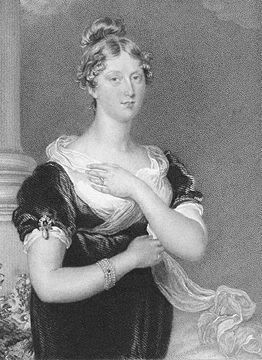
In Memoriam: Princess Charlotte

Amongst counterfactual historians (within whose number I would include myself) one of the greatest of all 'what-ifs' involves Princess Charlotte, the only daughter of the Prince Regent (later George IV) and his despised (by him, at least) wife, Caroline of Brunswick.

PhotobucketDespite the fecundity of George III and his wife Queen Charlotte - they had twelve children survive to adulthood - when Princess Charlotte was born on this day in 1796 the succession was in deep trouble; while his sons had no trouble begetting bastards, finding and impregnating suitable wives was seemingly anathema to them. In order to remedy this dire situation, the King and Parliament offered to underwrite the debts of any Royal Duke willing to do his duty - a considerable expenditure given the profligate ways of 19th Century royalty.

All told, three of them arose to the task: George (then the Prince of Wales) and his younger brothers William, Duke of Clarence, and Edward, Duke of Kent. Clarence's two daughters - Charlotte and Elizabeth - died as infants, while Kent's daughter we will meet later...

Despite the animosity that spawned her - her parents hated each other on sight, and her father had to get so drunk in order to do his constitutional duty it's a wonder he could perform it at all - Princess Charlotte was high-spirited and vivacious, much beloved by the English public at a time when republican sympathies were engulfing Europe (especially France); as a young girl she more or less chose the man she wanted to marry, Prince Leopold of Saxe-Coburg-Saalfeld, and then insisted that he be allowed to court her, despite the fact that he was essentially landless and thus of no strategic or diplomatic value to the Crown. Even if they hadn't been royal, though, Charlotte's father would have still undoubtedly called her princess, so beloved was she by him; a grateful Nation and loving father granted the couple permission to marry, bestowing upon the newlyweds Claremont House as a wedding present.

In an all-too-common tragedy of the times, both Princess Charlotte and her son died in childbirth in November 1817; she was only 21. To put her death into modern context, the death of Diana was a sob compared to the paroxysm of grief that seized Britain as the late Heiress Presumptive's body was conveyed to St. George's Chapel, Windsor, where she would lie with so many of her colourful ancestors past and future.

Her husband would later remarry, to Louise-Marie of Orléans, and in 1831 became the first King of the Belgians; among his illustrious offspring was Empress Carlota of Mexico, named for his first wife. Following the death of George IV in 1830, his brother the Duke of Clarence became William IV, and following his death in 1837 he would be succeeded by their niece, daughter of the late Duke of Kent, a serious young woman whose long reign would impose itself in every corner of the globe and who would give her name to the age - Victoria.

But what if all those Victorians had been Charlottians instead? 'What if' indeed...
*
share on: facebook

POPnews - January 7th

Photobucket
[Is Bill Clinton a liar? It doesn't even matter what your definition of 'is' is - yes, he is. Is lying about adultery grounds for impeachment? Certainly the Pop Culture Institute doesn't think so - at least not compared to lying about weapons of mass destruction in order to provoke a costly foreign war to make your buddies in Big Oil richer than even their greediest imaginations. Just as a strictly hypothetical for instance...]

1325 - Alfonso IV became King of Portugal following the death of his father Denis.

1558 - Calais - a seaport on the English Channel/La Manche which was the final British holding on the Continent - was seized by Francis, duc de Guise, as England's Queen Mary I lay dying in London.

1598 - Boris Godunov seized the throne of Russia.

1608 - Fire destroyed Jamestown, Virginia.

1610 - Galileo Galilei observed the four largest moons of Jupiter for the first time; they were named after the lovers of Zeus (aka Jupiter) - Io, Europa, Ganymede and Callisto - by Simon Marius, but are referred to as the Galilean moons.

1782 - The first American commercial bank - the Bank of North America - opened, at the prodding of Superintendent of Finance Robert Morris, having received its charter from the Congress of the Confederation on the last day of December 1781.

1785 - Frenchman Jean-Pierre Blanchard and American John Jeffries crossed the English Channel from Dover Castle to Guînes (near Calais) in a gas balloon, taking about 2½ hours in which to do it; following their feat of derring-do Blanchard was granted a substantial pension by King Louis XVI.

1835 - The HMS Beagle - with Charles Darwin aboard - anchored off the Chonos Archipelago.

1904 - The distress signal CQD was established - only to be replaced two years later by SOS.

1920 - Republican Speaker of the New York State Assembly Thaddeus C. Sweet refused to seat five duly elected Socialist Party assemblymen - Samuel A. DeWitt, Samuel Orr, Louis Waldman, Charles Solomon, and August Claessens - in direct contravention of the democratic principles he'd only just been sworn to uphold.

1922 - Ireland's Dáil Éireann ratified the Anglo-Irish Treaty by a 64-57 vote.

1924 - George Gershwin completed his famed composition Rhapsody in Blue, which combined elements of classical music and jazz.

1927 - The Savoy Big Five, created by Abe Saperstein of Chicago, played their first game; later that year he changed their name to the Harlem Globetrotters, and a legend was born...

1931 - Guy Menzies made the first solo non-stop flight across the Tasman Sea (from Australia to New Zealand) in 11 hours and 45 minutes, crash-landing near Hari Hari, on New Zealand's west coast - shaving 2½ hours off the time taken by Charles Kingsford Smith and Charles Ulm during their historic first-ever trans-Tasman flight on board the Southern Cross in September 1928.

1935 - Italian dictator Benito Mussolini and French Foreign Minister Pierre Laval signed the Franco–Italian Agreement.

1959 - The United States recognized the government of Fidel Castro.

1973 - Twenty-three year-old Mark Essex fatally shot 9 people and wounded 13 others at the Howard Johnson's hotel on Loyola Avenue in New Orleans before himself being shot to death by police officers; he did forego killing blacks, though, and allowed several to escape during the rampage. At one time a gentle soul who aspired to the ministry, a two-year hitch in the US Navy exposed him to such graphic racism that he snapped... Yet further proof that racism hurts us all.

1993 - The Fourth Republic of Ghana was inaugurated with Jerry Rawlings as President.

1999 - The impeachment trial of US President Bill Clinton began.
*

share on: facebook

Thursday, January 06, 2011

Fond Of Blondes: Tara Spencer-Nairn

PhotobucketLike many Canadian television viewers - frequently numbering in the millions! - I first became aware of the charms of birthday gal Tara Spencer-Nairn via the little show that could, namely Corner Gas... As Officer Karen Pelly, Spencer-Nairn was in every way the ideal foil to Lorne Cardinal's Davis Quinton.

A 1996 graduate of Vancouver Film School, the Montreal native is gradually building herself an impressive resume that includes such movies as 1999's New Waterford Girl and on television in shows as diverse as The Outer Limits and Puppets Who Kill.
*
share on: facebook

"The Hustle" by Van McCoy


One might be forgiven for believing that Van McCoy - who was born on this day in 1940 - was a one-hit wonder; after all, when the song most often identified with you is as popular as The Hustle was in 1975, it can be pretty difficult to top it. Van McCoy, however, was the holder of more than 700 song copyrights, and did much acclaimed work as a producer with such bold-faced names as Gladys Knight and the Pips, Aretha Franklin, and David Ruffin (of The Temptations).

In McCoy's case, though, his legacy was imperiled by his early death, of a heart attack, in July 1979; in lieu of children to act as the executors of his memory, it would take the advent of the Internet age for a website to be built to let the world know of the man's singular achievements in the music industry.
*
share on: facebook

"Anarchy in the UK" by Sex Pistols


This is the single the Sex Pistols were promoting when they were headed to Amsterdam via Heathrow Airport, and things got a little ugly; two days after the fracas and a month after the Bill Grundy incident - on this day in 1977 - Sex Pistols were fired by their record label, EMI.

Anarchy in the UK originally appeared as the band's first single, and was later included on their only album Never Mind the Bollocks, Here's the Sex Pistols, released in 1977; that album, of course, notoriously contained their Jubilee Year hit God Save the Queen.

And how appropriate it should be posted here, 910 years to the day after a previous era of chaos in English life deepened with the coronation of Harold Godwinson...
*
share on: facebook

Pop History Moment: The Coronation of Harold Godwinson

Photo Sharing and Video Hosting at Photobucket
[Here we see Harold Godwinson as he appears on the Bayeux Tapestry.]

On this day in 1066 Harold Godwinson became the last Saxon to be crowned King of England, when he underwent essentially the same ritual at Westminster Abbey he would today: anointing, swearing an oath under God, inviting all those present to challenge his claim, and finally being invested with coronation regalia as a symbol of his regal authority.

Harold's claim to the throne has been hotly disputed over the past nine centuries; while both he and his successor had been promised the crown by Edward the Confessor, Harold seems to have figured that since he was both a Saxon and present (and since then, as now, possession is nine-tenths of the law) he got the Witenagemot to proclaim him their rightful king and the Archbishop of Canterbury, Stigand, to crown him over the other claimant - a man whose belief in his own claim would within the year earn him the eternal sobriquet William the Conqueror for his audacious invasion of the island, capture of the throne, and the eventual destruction of England's native Saxon aristocracy...

As Earl of Wessex Harold's claim was supported by most of his fellow peers, including his sister Edith of Wessex, whose sexless role as Queen consort had caused this mess by failing to provide the kingdom an heir; William's claim came from the Confessor himself during a visit William made to London in 1052. Since Edward the Confessor was in many ways a Norman sell-out, but also a scatterbrained if pious man, he may in fact have promised the throne to both of them at different times to save his own hide.

Harold might just have held his throne if not for the Danes... Forced to fight them at the Battle of Stamford Bridge, he was then compelled to march his weary men south in just four days to counter the invasion of his rival at the Battle of Hastings in October 1066. There Harold made a brave stand, but died in battle, forever changing the course of English history.
*
share on: facebook

POPnews - January 6th

Photobucket
[Also known as the Holy Crown of Hungary - making it the only crown in the world to bear the attribute of holiness - the Crown of St. Stephen spent most of World War II in Fort Knox, and wasn't returned to Hungary until the administration of US President Jimmy Carter. After the fall of Communism in 1991, the crown was added to the arms of Hungary as a symbol of the nation's sovereignty, and on New Year's Day 2000 was moved from the Hungarian National Museum to the Hungarian Parliament Building along with the rest of that country's ancient coronation regalia.]

1205 - Philip of Swabia became King of the Romans.

1449 - Byzantine Emperor Constantine XI was crowned at Mistra.

1540 - England's King Henry VIII married Anne of Cleves.

1643 - A cross was erected atop Mount Royal by Paul Chomedey de Maisonneuve following the subsidence of a flood which had threatened Montreal; the site is still marked by the presence of the Mount Royal Cross, placed there in 1924 by the Société Saint-Jean-Baptiste.

1690 - Joseph, son of Holy Roman Emperor Leopold I, became King of the Romans.

1759 - George Washington married Martha Dandridge Custis.

1824 - The Literary and Historical Society of Quebec was founded in Quebec City by Governor of British North America George Ramsay, Earl of Dalhousie; located at the city's Morrin College since 1868, the college has since been taken over by the society and renamed the Morrin Centre.

1853 - US President-Elect Franklin Pierce, his wife, and son Benny were involved in a train wreck on the Boston and Maine Railroad near Andover, Massachusetts; while the Pierces received only minor injuries, Benny was crushed to death before their very eyes.

1893 - Washington National Cathedral was chartered by Congress; the charter was signed by President Benjamin Harrison.

1907 - Maria Montessori opened her first school and daycare center for working class children in Rome.

1912 - New Mexico became the 47th US state.

1936 - Barbara Hanley became Canada's first female mayor when she got 13 more votes than Robert Streich to become head honcho of the Ontario town of Webbwood, west of Sudbury.

1941 - Franklin Delano Roosevelt delivered his Four Freedoms Speech in that year's State of the Union Address. They are: freedom of speech and expression, freedom of every person to worship in his own way, freedom from want, and freedom from fear.

1942 - Pan American World Airways' Pacific Clipper - with Captain Robert Ford at the helm - arrived at LaGuardia Field's Marine Terminal in New York City after making the first round-the-world trip by a commercial airplane.

1974 - Canada's Global Television network began broadcasting; established by Al Bruner and Peter Hill, in its early days Global was shown in southern Ontario only - on a six-transmitter relay stretching from Windsor to Ottawa - but went national in August 1997 just in time to become the Canadian equivalent of Fox.

1977 - EMI fired the Sex Pistols.

1978 - The Crown of St. Stephen was returned to Hungary from the United States, where it was held after World War II.

1994 - Nancy Kerrigan was clubbed on the right leg by Shane Stant under orders from figure skating rival Tonya Harding; although they both went on to compete in the Winter Olympics in Lillehammer, Kerrigan won a silver medal, while Harding came fourth.

2005 - Edgar Ray Killen was indicted for the 1964 murders of three civil rights workers: James Chaney, Andrew Goodman, and Michael Schwerner. Killen was later convicted on three counts of manslaughter.
*
share on: facebook

Wednesday, January 05, 2011

Pop History Moment: The Death of Edward the Confessor

For most of us, our death causes a period of grief among a select handful of family and friends, the grief passes, and the survivors move on; there are a thankfully small number, though, whose deaths cause unimaginable suffering, military invasion, and the end of a way of life that had endured for a thousand years.

Photo Sharing and Video Hosting at PhotobucketThe death of Edward the Confessor (on this day in 1066) was, naturally enough, of the latter kind. When the son of Ethelred the Unready finally went to his reward, he showed plenty of his father's decisiveness by leaving an unsettled succession; since determining the succession is any dying King's most important job, it's safe to say Edward didn't do his utmost to fulfill his coronation oath - that is, to protect the realm and its subjects.

By temperament and training, Edward had always been partial to Normans, and often favoured them for the Kingdom's top jobs over Saxons; when he chose Robert of Jumièges for Archbishop of Canterbury, well, it's a good thing they didn't have Private Eye in those days, because it was the scandal of the age, seeing as it overrode the express wishes of his own powerful father-in-law, Godwin, Earl of Wessex.

In the end, the Witenagemot chose Harold Godwinson, a Saxon nobleman (Earl of Wessex since 1053, and brother of the Queen) who claimed he'd been promised the throne on Edward's death bed; this rankled the ire of the Duke of Normandy - a man still known as William the Bastard - who had by some means or other extracted the same promise from the feckless, if pious, King (either in 1052 when William visited London, or else in 1064, as a reward for rescuing Edward from a shipwreck).

Then there was a third claim, from King Harald III of Norway... All of which made 1066 a very turbulent year indeed.
*
share on: facebook

In Memoriam: Zulfiqar Ali Bhutto

When considering the Bhutto family legacy thus far, the most important distinction to make is: is a corrupt albeit democratically elected leader better, the same as, or worse than, a dictator? Certainly the followers of the lying murderer General Muhammad Zia-ul-Haq felt the same about Bhutto the father as the followers of equally weaselly General Pervez Musharraf did about his daughter Benazir. So was the voicing of those concerns legitimate worry about widespread corruption in the government of Pakistan, politicking, or merely two-faced scoundrelism on their part? In both cases, though, at least the Bhuttos (and their alleged corruption) had been elected by an expression of popular will, while their harshest critics were (and are) little more than gun-toting thugs.

PhotobucketBhutto was born on this day in 1928, when Pakistan was still a part of British India; his father, Sir Shah Nawaz Bhutto, was prominent in Muslim politics, and served as Prime Minister under the Nawab of Junagadh. Bhutto was one of the wealthiest landowners in the province of Sindh, Western-educated and erudite in the family tradition, as would be his son and grand-daughter.

First a teacher, then a lawyer, in 1957 Bhutto became the youngest member of Pakistan's delegation to the United Nations, and by 1961 was serving as Foreign Minister under President Muhammad Ayub Khan.

Now prominent in the life of Pakistan in his own right, Bhutto founded the Pakistan Peoples Party (PPP) in November 1967. Following massive anti-government protests sponsored by PPP, Bhutto was arrested in November 1968; after his release and the fall of the government, the new President, General Yahya Khan, promised free elections in December 1970, at which PPP won some seats, but in which victory was claimed by the Awami League, with whom Bhutto refused to work. Following the attempted genocide of Operation Searchlight against Bengali nationalism, war with India in December 1971, and the independence of Bangladesh (formerly East Pakistan) Yahya Khan resigned, transferring power to Bhutto.

As President, Bhutto met with Indian Prime Minister Indira Gandhi, and together they signed the Shimla Agreement; despite his work at peace, Bhutto was also the founder of Pakistan's nuclear program, today probably the greatest threat to peace in the world. In August 1973 Bhutto turned over the presidency to Fazal Ilahi Chaudhry, and assumed the title Prime Minister.

By 1977 it was time to hold elections, elections which would prove to be Bhutto's downfall in more ways than one; facing the Pakistan National Alliance (PNA), a coalition of parties opposed to Bhutto, the PNA was defeated at the polls, at which time they maintained that the elections had been rigged, and Muslim opposition leader Maulana Maududi called for Bhutto's overthrow. In July 1977 Bhutto and his cabinet were arrested.

In October Bhutto went on trial for the 'conspiracy to murder' Ahmed Raza Kasuri, and in March 1978 he was sentenced to death, a sentence which was carried out the following month, despite international condemnation. Bhutto himself went to the gallows insisting that his death had been ordered by the US government, which threat (he said) was first delivered to him by then-Secretary of State Henry Kissinger, voicing opposition by the US Administration to the nuclear program Bhutto had instigated.

Bhutto's legacy today is as complicated as the man himself; hailed as a nationalist and Shaheed by his supporters, he continues to be reviled as a corrupt opportunist by his foes.
*
share on: facebook

POPnews - January 5th

Photobucket
[Engineer Joseph Strauss faced many uphill battles in building his most famous structure, almost none of which were geographical; once construction got underway he was ably aided by Irving Morrow, who designed the towers, and San Francisco city engineer Michael O'Shaughnessy, who named it. It was the city's residents who persuaded them to leave the bridge International Orange, which is the colour of the sealant used.]

1463 - Poet François Villon was banished from Paris and thereafter dropped out of the historical record...

1477 - Charles the Bold was killed at the Battle of Nancy, whereupon Burgundy became part of France.

1527 - Felix Manz, a leader of the Anabaptist congregation in Zürich, was the first person to be executed by drowning under an edict aimed at outlawing adult re-baptism - which is a key precept of his religion.

1675 - At the Battle of Colmar a French army commanded by Vicomte of Turenne defeated Frederick William, Elector of Brandenburg, who headed a unified force of Brandenburgian and Austrian troops.

1757 - France's King Louis XV survived an assassination attempt by Robert-François Damiens - who then went on to become the last person executed in France by the traditional and gruesome form of capital punishment used for regicides and wannabes alike: drawing and quartering.

1895 - In the midst of the Dreyfus Affair French army officer Alfred Dreyfus was publicly stripped of his rank and sentenced to life imprisonment on French Guiana's Devil's Island following a secret court martial.

1896 - An Austrian newspaper reported that Wilhelm Roentgen had discovered a type of radiation later known as X-rays.

1933 - Construction of the Golden Gate Bridge - connecting San Francisco to Marin County across San Francisco Bay - began.

1949 - Work began on the foundation of Basildon new town, in the British county of Essex.

1968 - Alexander Dubček came to power at the head of the Communist Party of Czechoslovakia, thus beginning the so-called Prague Spring.

1970 - The long-running American soap opera All My Children premiered; the show - created by Agnes Nixon - has since surpassed its 10,000th episode.

1974 - Antarctica's warmest reliably measured temperature, 59°F (15°C), was recorded at Vanda Station.

1975 - The Tasman Bridge - which spans the Derwent River, near the central business district of Hobart, in Tasmania - was struck by the bulk ore carrier Lake Illawarra, killing twelve people.

1976 - The Kingsmill Massacre occurred when 10 Protestant textile workers were murdered by the IRA in retaliation for the killing of six Catholic men the previous day.

1981 - Peter Sutcliffe was charged with committing the Yorkshire Ripper murders.

1993 - Washington state executed Westley Allan Dodd by hanging - the first legal hanging in the US since 1965.

1996 - Hamas operative Yahya Ayyash was killed by an Israeli-planted booby-trapped cell phone.

2003 - London's Metropolitan Police arrested seven suspects in connection with the Wood Green ricin plot, which had allegedly been organized as an attack against the London Underground.

2005 - Eris, the largest known dwarf planet in our solar system, was discovered by the team of Michael E. Brown, Chad Trujillo, and David L. Rabinowitz using images originally taken in October 2003 at the Palomar Observatory.
*
share on: facebook

Tuesday, January 04, 2011

Happy Birthday Dave Foley

For all his excellent work over the years - be it in obscure Canadian movies or the combination cult classic yet simultaneously middle of the road American sitcom NewsRadio - there's really only one reason Dave Foley's birthday is being celebrated here today and that's for his part in the revolutionary sketch comedy program The Kids in the Hall...

PhotobucketFrom the first time the opening notes of Shadowy Men on a Shadowy Planet's theme Having an Average Weekend played until the final credit rolled away 102 episodes later, I never once encountered a bad moment anywhere in a Kids in the Hall episode - and I've seen all of them, many times over. Quirky without being inaccessible, innovative without being pretentious, respectful of its genre without being derivative, as well as being oddball, surreal, and a laugh-riot, Foley and his castmates - Kevin McDonald, Bruce McCulloch, Mark McKinney and Scott Thompson - seemingly did the impossible, by producing a funny Canadian television show and thereby keeping some of this country's burgeoning comedic talent at home before the inevitable brain drain could sweep them inexorably south.

Even their 1996 movie Brain Candy - which suffered somewhat in the transition of their unique skills from sitcom with live studio audience to film - pushed the envelope of what could be done in cinema by having five people playing all the major characters in what would otherwise have been a cast of dozens; following its poor performance at the box office but before its cult status could kick in, the troupe undertook a tour with a live show and an appearance at the 25th Annual Just For Laughs comedy festival in Montreal, as well as pursuing their own careers.

In this instance, Foley could be seen as the early victor, as NewsRadio managed to limp through five seasons despite the network's constant changes to the show's time slot and the devastating loss of the cast's biggest star, Phil Hartman, who my regular readers will remember was murdered by his sick bitch of a cokehead wife in May 1998*; had NewsRadio been on during the Internet era, I feel certain the fans could have preserved it.

In recent years, Foley has appeared in another Canadian sitcom (the tragically short-lived Robson Arms) and turns up regularly on The Late Late Show with TV's Craig Ferguson; he's also had memorable roles on Celebrity Poker Showdown, Blast from the Past, and Sky High - as well as providing his voice to such animated features as South Park: Bigger, Longer & Uncut and Pixar's A Bug's Life, Toy Story 2 and Cars. More recently, Foley reunited with his old troupe-mates in an eight-part series on Canadian television, entitled Death Comes to Town.

*I'm not over it yet, and I may choose to never get over it.
*

share on: facebook

Last Of The Summer Wine: "Of Funerals and Fish"


On this day in 1973 began the longest-running sitcom in television history in terms of consecutive years on the air, Last of the Summer Wine; written by comedy legend Roy Clarke - who has to date written all 295 episodes! - Of Funerals and Fish originally aired as part of the BBC's Comedy Playhouse. Set in the West Yorkshire village of Holmfirth, the show concerns a group of late middle-aged eccentrics whose cast has changed over the years as costars have died or otherwise left, even as the antics of their group have remained consistently amusing.


The original trio consisted of Bill Owen as the scruffy and child-like Compo, Peter Sallis* as meek philosopher Clegg, and Michael Bates as authoritarian and snobbish Blamire; they are joined in this episode by Rosemary Martin as Mrs. Partridge, Kathy Staff as Compo's perennial love object Nora Batty, Blake Butler as the librarian Mr. Wainwright, John Comer as Sid, and Jane Freeman as Ivy.


Everything about the show has militated against its success - its un-vulgar humour, its elderly cast, its northern setting, even its low-key music by Ronnie Hazlehurst; clearly the best way to succeed is to try and fail, then, for its 31st consecutive annual appearance aired in 2010, as dark rumours set a-swirling by producer Alan J. W. Bell were later confirmed...  Never ones to let a pesky thing like popularity get in the way of their whim, executives pulled the plug; the show's final appearance, entitled How Not to Cry at Weddings, was aired in August 2010.

*Who went on to greater fame as the voice of Wallace in Aardman Animations' Wallace and Gromit films.
*

share on: facebook

Pop History Moment: The Election of Nancy Pelosi

Photo Sharing and Video Hosting at PhotobucketOn this day in 2007 Nancy Pelosi, a Democrat, was elected Speaker of the House for the 110th United States Congress, making her the first women to hold the post at a federal level*; previously she was the House Minority Leader. Pelosi represents the 8th Congressional District of California, which encompasses San Francisco.

Her appointment came amid disastrous mid-term election results for the Republicans in 2006, and persists as things get even worse for the so-called Grand Old Party, whose attachment to neoconservatism and religious evangelism cost them control of the White House, Congress, and the Senate in 2008. Good times...

Pelosi lost her position after Blue Dog Democrats lost their House majority by turning their back on progressive ideals during the 2010 midterm elections, and is once again the House minority leader, having ceded her position to the sniveling Oompa-Loompa John Boehner.

*Minnie D. Craig, of course, became the first female House Speaker in the US in 1933, fulfilling that role at the state level in North Dakota.
*

share on: facebook