Wednesday, November 03, 2010

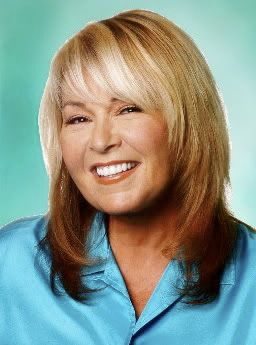
Roseanne, Bar None

When she first burst onto the scene in the late 1980s, courtesy of the era's comedy club boom, hers was a decidedly working class shtick; calling herself the 'domestic goddess' and dressed in schlumpy clothes, Roseanne Barr wowed the audience and host alike during her first appearance at The Tonight Show Starring Johnny Carson and almost overnight, it seems, she had hit the big time...

PhotobucketAs sitcoms go Roseanne was unrepentantly working class, an ethos which was as evident in the wardrobe and set design as it was in the writing. The blend of family and workplace scenarios on the show was unprecedented, and served to highlight just how hard working class people - especially moms - struggle to balance the two. Plus, the first season of the show features occasional appearances by a young George Clooney - with a head of hair you could lose a hand in!

The show became as famous for its backstage politics and Barr's own tussles with the network as it was acclaimed for the quality of its writing and acting, especially by the likes of Laurie Metcalf and John Goodman; Barr's midseries marriage to Tom Arnold - while it served to amp up the tabloid headlines - eventually threatened to disrupt the success of the show.

After Roseanne had run its course, Barr tried her hand at a variety of other TV formats, including the potentially career-killing talk show; yet two years as host of The Roseanne Show only served to sharpen the lady's perspective. Always a magnet for controversy - who can forget the national anthem debacle? - it's inevitable that anyone that outspoken seemingly without shame will occasionally give offense; for my part, I can't wait to see who she's going to offend next, even if it might be me.

Born on this day in 1951, Roseanne Barr has lately made a return to the stand-up stage, in addition to recording music for kids and appearing as a panelist on the sorts of shows where opinions matter most - from The View to Real Time with Bill Maher.
*

share on: facebook

Remembering... Marie Rudisill

From my perspective, there's nothing better than a dirty talking old lady - that's comedy gold, right there... Half the fun is in the shocked audience reaction, as if a person could get to the age of 70, 80, or 90 and not have already heard and said everything. Hell, I'd got there by the age of 12; if you think anything I say is shocking now, wait 'til I'm 80 motherfucker.

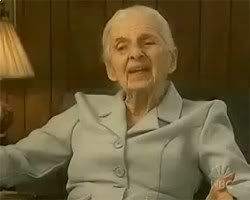
Photo Sharing and Video Hosting at PhotobucketMarie Rudisill, who passed away on this day in 2006 at the age of 95, was one such lady - a fearlessly outspoken woman with impeccable comedy timing, who began appearing on The Tonight Show with Jay Leno in 2000; what I didn't know until I began researching this post, though, is that Marie Rudisill was Truman Capote's Aunt Tiny, about whom he frequently wrote - not much of it nice. I have to admit, that kinda blew my mind a little bit.

Rudisill wrote a book about life with her famous relative - which is how she came to be invited on The Tonight Show in the first place - entitled Fruitcake: Memories of Truman Capote & Sook; another book - The Southern Haunting of Truman Capote - followed. In all Rudisill published 8 books late in her life, including cookbooks and juvenile fiction.  Her memoirs, however, have been frequently rubbished by others who had been there...
*
share on: facebook

Happy Birthday Dylan Moran


Irish comedian Dylan Moran spent eight years in the comedy clubs of Dublin honing his conversational, absurdist mumblings before he hit the big time with the BBC's Black Books in 2000. In 1996, he was the youngest person to win the Perrier Comedy Award, the highest honour at the Edinburgh Fringe Festival; and now, as the highlight of his career, a coveted profile on the Pop Culture Institute.

(Okay, so that last one isn't true... But the rest is!) Breithlá Sona Duit Dylan Moran!
*
share on: facebook

POPnews - November 3rd

Photobucket
[A few hours after returning from her history-making space flight Laika died from stress and overheating, which fact wasn't made public for decades; while her presence in pop culture has long been felt, now not only does she appear in bas-relief on the Monument to the Conquerors of Space (built in 1964) at Russia's Memorial Museum of Cosmonautics, in November 1997 a plaque honouring Laika was unveiled at the Star City cosmodrome, and since April 2008 a statue of her has adorned the military facility near Moscow where she'd been prepared for her fatal adventure.]

1493 - Christopher Columbus first sighted the Caribbean island of Dominica.

1783 - John Austin, a highwayman, was the last person to be publicly hanged at London's Tyburn gallows.

1793 - French playwright, journalist and feminist Olympe de Gouges was guillotined during the Reign of Terror for criticizing the tyrannical regime of Maximilien Robespierre as well as daring to write Declaration of the Rights of Woman and the Female Citizen in response to the Declaration of the Rights of Man and of the Citizen.

1817 - The Bank of Montreal, Canada's oldest chartered bank, opened in, of all places, Montreal.

1838 - The Times of India, the world's largest (in terms of circulation) English-language daily broadsheet, was founded as The Bombay Times and Journal of Commerce.

1868 - Ulysses S. Grant was elected 18th US President over Democrat Horatio Seymour.

1896 - William McKinley was elected 25th US President over Democrat William Jennings Bryan.

1908 - William Howard Taft was elected 27th US President over Democrat William Jennings Bryan.

1930 - The Detroit-Windsor Tunnel was opened to traffic.

1935 - Greece's King George II regained his throne following a plebiscite.

1936 - Franklin Delano Roosevelt was elected to a second term as US President over Republican Alf Landon.

1954 - Gojira - the first in the Godzilla series of films - was released in Japan.

1957 - The Soviet Union launched Sputnik 2; onboard was a dog named Laika, a 6 kg (13 lb) stray abducted from the streets of Moscow.

1964 - Lyndon Baines Johnson was elected 36th US President over Republican Barry Goldwater.

1970 - Salvador Allende was inaugurated as president of Chile.

1978 - Dominica gained its independence from the United Kingdom.

1979 - Five members of the Communist Workers Party - Sandi Smith, Dr. James Waller, Bill Sampson, Cesar Cause, and Dr. Michael Nathan - were shot dead and seven were wounded in 88 seconds by a group of Klansmen and neo-Nazis during a 'Death to the Klan' rally in what came to be known as the Greensboro massacre. One of the gravest miscarriages of justice in American history occurred without the presence of the police, who normally would have been present; of the 40 thugs involved only sixteen were arrested, only six of them were ever brought to trial and all were acquitted.

1986 - The Federated States of Micronesia gained its independence from the United States of America.

1992 - Bill Clinton was elected 42nd US President over Republican incumbent George H. W. Bush and third-party candidate Ross Perot.
*
share on: facebook

Tuesday, November 02, 2010

"Right Back Where We Started From" by Maxine Nightingale


Birthday wishes go out today to Maxine Nightingale, whose 1975 hit Right Back Where We Started From is oh-so emblematic of those heady times... Nightingale later had hits in 1977 with Love Hit Me and in 1979 with Lead Me On, while her success with this particular number continues unabated...

The song - written by written by Pierre Tubbs and J. Vincent Edwards - was featured prominently in Paul Newman's 1977 film Slap Shot, and has appeared in numerous other films over the years as well; it's also been covered by Sinitta, Marcia Hines, and Cleopatra.
*
share on: facebook

Pop History Moment: The Coronation of Haile Selassie

Photobucket
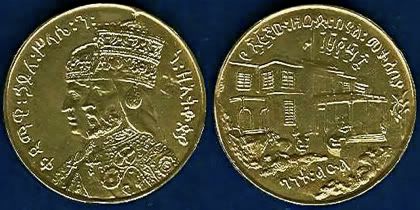
[This gorgeous gold medal was struck in 1955, to commemorate of the 25th anniversary of Haile Selassie's coronation.]

It's always been a matter of curiosity to me how exactly an Emperor of Ethiopia could become a potent religious symbol, first to the people of Jamaica, and thence to the Rastafari movement - which currently numbers some 600,000 people worldwide. Clearly there is much more than meets the eye in Haile Selassie I, for although he was an eminently civilized and cultured person there is nothing in him that would, outwardly at least, seem to inspire the fervent devotion to HIM*. Imagine: a cult of personality formed around a modest, devout figure!**

Selassie's reign actually began in the reign of his aunt, Empress Zewditu, when he was elevated to the rank of heir apparent and eventually came to serve as regent from 1916 onward. While serving as Crown Prince, Selassie (then known as Ras Tafari) continued the modernization begun under Menelik II, and certainly Selassie's rejection of colonial norms and support for pan-Africanism must have struck a chord with blacks everywhere, especially in the 1920s. Nevertheless, there were constant power struggles between aunt and nephew, culminating in a near-coup over Selassie's brokering of the Italo–Ethiopian Treaty of 1928.

Zewditu's death, in April 1930 - under mysterious and never satisfactorily explained circumstances - set the stage for Ethiopia's greatest moment of glory - the coronation of Haile Selassie and Empress Menen, on this day in 1930; held at the Cathedral of St. George in Addis Ababa, the splendid affair (with a rumoured price tag of $3 million) was attended by royalty and dignitaries from around the world.

The introduction of the country's first written constitution in July 1931, providing for a bicameral legislature, would give the Kingdom an all-too short-lived crack at modern democracy; the Italian invasion of Ethiopia and ensuing war of 1935-6 was a brief interruption (during which HIM lived in exile in the UK, at Bath's Fairfield House), but a brief coup in 1960 which installed his son Asfa Wossen as Emperor, the deposition of the Emperor in March 1974 following the Wollo Famine and the 1973 oil crisis, tenure of Communist dictator Mengistu Haile Mariam, and a severe famine in the 1980s*** all served to undermine what Ethiopia could have become, as well as what it dreamt of becoming on that day.

*Rastafarians refer to Selassie by many names, including HIM, the acronym of His Imperial Majesty.
**Sarcasm! Selassie's Christ-like attributes are made abundantly clear on any number of Rastafarian websites.
***No doubt caused or at least exacerbated by central planning - which does. not. work.
*

share on: facebook

In Memoriam: Marie Antoinette

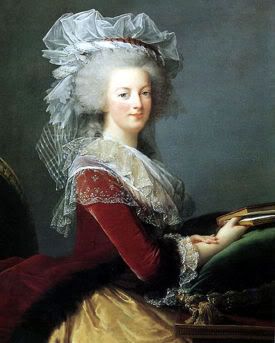
Born in Vienna on this day in 1755 and raised under the stern gaze of Empress Maria Theresa - one of the most formidable monarchs in European history - Marie Antoinette, as she came to be known, had a sheltered, regimented childhood; her only value, as must have been made clear to her again and again as a girl, was as a pawn in the royal marriage game.

Photo Sharing and Video Hosting at PhotobucketAnd so it was. In 1767 she was formally betrothed to the Dauphin of France (later the hapless Louis XVI), and finally married by proxy in 1770 following three years of negotiations over dowries and the other fine points of royal marriage. Then the shy yet regal girl began her journey from the heart of Europe to Versailles - out of the frying pan, into the fire.

Court life at Schönbrunn and Hofburg was downright private compared to the same at her new French home, where anyone from peasant to noble might just wander into the palace seeking an audience. It was a highly political place (in both senses - namely, concerned with the politics of the country and the world yet riven with its own factions and issues) and Marie Antoinette was no politician. Had she been, she might have survived what was to come.

Originally much beloved by the people, especially for her patronage of the fine arts (especially music) - her former teacher, Christoph Willibald Gluck, went on to much fame - as history was to show it didn't take long for that mob to turn ugly, blaming all the failings of its French politicians on its most high-profile Austrian possession. Outrageously slandered throughout her lifetime and for many years afterward, it's taken centuries for the light of truth to be shone on the life and character of Marie Antoinette.

The quintessential revisionist text (and I use the word here in its most positive sense) is Lady Antonia Fraser's Marie Antoinette, The Journey (2001) which, with solid research and sterling insight, offers a glimpse into the life of a woman tragically caught in the crossfire of history.
*
share on: facebook

Happy Birthday Your Majesty

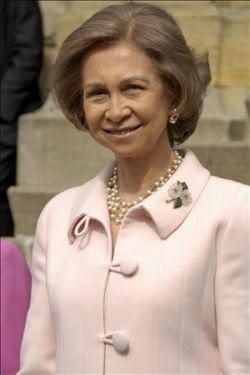
Erudite and multi-lingual, Queen Sofia of Spain (born on this day in 1938) has been a constant, serene presence at the side of her husband King Juan Carlos during turbulent times...

Photo Sharing and Video Hosting at PhotobucketBorn in Athens the eldest child of King Paul I of the Hellenes and his wife Queen Fredericka, Sofia's childhood witnessed the many travails which have beset that royal house from its inception in 1863 (the main one being, of course, that they are Danish and therefore merely squatters). A great deal of uncertainty shaped Her Majesty's childhood, including two bouts of exile, the first one during World War II and finally, for good, in 1964 (which, naturally, didn't affect her, except as a family matter).

Yet with the fortitude (or sense of entitlement) which is a family trait of the House of Schleswig Holstein Sonderburg Glücksburg, she ended up not doing too badly for herself. In 1954 she met and enchanted then-Prince Juan Carlos on a Mediterranean cruise, she competed in the 1960 Olympics (representing Greece in sailing), and in 1962 she married her Prince, who assumed the throne in 1975 after the death of Francisco Franco.

Since then she has concerned herself with charity, the rightful occupation of royalty. Through her Foundation she carries out numerous engagements, and is in particular interested in refugee relief, the treatment of drug addiction, fine arts, and micro-finance (working closely with Muhammad Yunus the Nobel laureate in the process).
*
share on: facebook

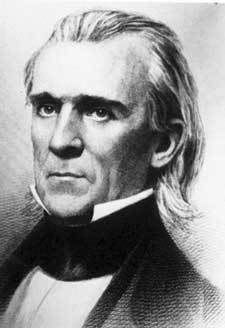
In Memoriam: James K. Polk

I must confess that I didn't know anything about the 11th US President until I heard the song about him by They Might Be Giants, from their 1996 album Factory Showroom. The song itself is a triumph of pop - not just music but culture - presenting history as it does in such an interesting and memorable way; hear it once, I guarantee you'll be humming it forever. A real earworm, as Mr. Barr would say.

Photo Sharing and Video Hosting at PhotobucketConsidered the best solution to an impasse in the Democratic Party, the former Speaker of the House and governor of Tennessee James K. Polk (born this day in 1795) was one of the first so-called dark horse candidates when he was nominated. Once elected, rather than merely serving as a caretaker president, he became one of the young nation's solidest leaders, fulfilling the Manifest Destiny inherent in President James Monroe's famous doctrine by completing most of the contiguous 48 states during his single term in office, save for the tiny Gadsden Purchase, which was finally bought for $10 million in 1853.

Neither the first slave-holding President nor the last, his position on slavery (especially involving the prevention of its expansion into new territories north and west of Missouri) made him equally unpopular among slavers, abolitionists, and compromisers alike; Polk favoured the extension of the Missouri Compromise over implementation of the Wilmot Proviso.

From the start Polk was resolved to serve only one term, and he set four clearly defined goals for his administration: the re-establishment of the Independent Treasury System, the reduction of tariffs, acquisition of some or all the Oregon boundary dispute, and the purchase of California and the Southwest from Mexico. It was also during his term that the Republic of Texas was admitted to the Union.

He did all of that in the time he allotted himself, kept to his word by shirking his incumbency, and then to seal the deal, died in June 1849, just three months after leaving office; the Presidency has been shown time and again to take its toll on those who assume it, but it took even more from the once-handsome Polk, who worked tirelessly to implement his agenda, even while reportedly suffering from cholera. At the time of his death he was only 53.

His home is now a museum, in Nashville.
*
share on: facebook

"Constant Craving" by k. d. lang


It was 1992 when the pride of Consort, Alberta, revealed that she was a lesbian; soon enough the same town that had once praised her shamed itself with hateful graffiti... The place that had already defamed itself once before - when lang came out as a vegetarian - did it all over again, only this time with homophobia. Footage of a billboard featuring her picture scrawled with the words 'Eat Beef Dyke' was shown all over the world.

k. d. lang was one of the first big stars to come out mid-career, and to do so involved a terrible risk; career suicide is what people (usually 'straight' record executives - if they can be considered people) called it. Small town and corporate bigots alike be damned; Ingénue became her biggest selling album to date, and Constant Craving was the biggest single on it. Suddenly the shame of Consort, Alberta, was the pride of the world.

It was the end of May; I remember because the issue of The Advocate in which she came out - now one of the most sacred relics in the collection of the Pop Culture Institute - was (and still is) dated June 3rd. I was then co-hosting a show at Dalhousie University's CKDU-Radio called The Word Is Out, when the producer - the inimitable Brenda Barnes (which, with a Halifax accent, is one hell of a name) - called me half off her nut with excitement to break the news.

I suggested that we should host a coming out party for k. d., she loved the idea, and so that's what we did; I quickly came up with a playlist of songs both old and new, wrote some thoughtful but humourous commentary to intersperse between them, and together we produced a half hour of college radio gold. Unwittingly - and more than a dozen years before the Pop Culture Institute was born - its style emerged, fully-formed and rarin' to go.

Not unlike k. d. lang herself, I might add, who emerged not so fully formed but still rarin' to go on this day in 1961.
*
share on: facebook

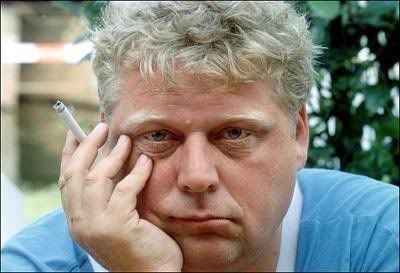
Pop History Moment: The Murder of Theo Van Gogh

Photo Sharing and Video Hosting at Photobucket

On this day in 2004, Dutch filmmaker Theo van Gogh was murdered on an Amsterdam street corner by a terrorist named Mohammed Bouyeri; the cause of Bouyeri's rage against Van Gogh was (at least in part) due to a film he made, in collaboration with Somali-born Dutch politician Ayaan Hirsi Ali, entitled Submission, which was justifiably critical of the fundamentalist Islamic treatment of women...

Van Gogh was shot eight times with an HS 2000 handgun, and died on the spot; Bouyeri then cut his victim's throat, nearly decapitating him, and stabbed him in the chest. He was apprehended later the same day, after himself being shot and wounded by police. In the days to come many fellow members of the Hofstad Network, a Dutch Islamic terrorist organization he had co-founded, were also arrested. In July 2005 Bouyeri was sent to prison for life.

The violence of Van Gogh's death reverberated through Holland for weeks, resulting in many unfortunate counter-attacks against mosques and counter-counter-attacks against churches; for a country still reeling from the 2002 assassination of Pim Fortuyn, a Dutch politician who was a) openly-gay, and b) an outspoken critic of what he viewed as the intolerance imported into Dutch society by Muslims in particular, Van Gogh's martyrdom to the cause of free speech was a bitter blow.

That Van Gogh was intemperate - even bigoted - in his criticism of Islam is unfortunate, mainly because a well-spoken and thoughtful critic who is killed under such circumstances is a far more effective martyr than one who throws around words like geitenneuker (goat-fucker) as Van Gogh often did when describing Muslims. That his bigotry was born out of a perfectly understandable frustration with the hatred fostered by fundamentalist religion of all kinds did not give him permission to add to the problem with harsh words and hatred of his own; indeed, understanding, not to mention compassion, might have saved his life.

A memorial to Theo Van Gogh entitled De Schreeuw (The Scream) - unveiled in March 2007 - now stands in Amsterdam's Oosterpark, a short distance from the corner of the Linnaeusstraat and Tweede Oosterparkstraat where he was murdered. It stands as a reminder that the current Islamic crusade against Western Civilization isn't merely aimed at our Western-ness - our politicians, laws, and institutions - but also at our civilization - our artists, philosophers, and dreamers - as well.
*
share on: facebook

POPnews - November 2nd

Photo Sharing and Video Hosting at Photobucket
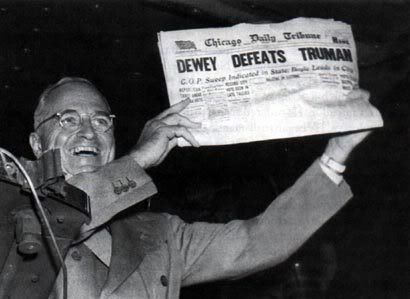
[The Chicago Tribune's premature headline on the morning of November 3rd, heading a story by Arthur Sears Henning, gave the world this iconic image; only a few hundred copies of the paper were printed before it was changed, but it was enough to give the President the photo-op to end all photo-ops.]

1852 - Franklin Pierce was elected 14th US President over Whig Winfield Scott.

1880 - James A. Garfield was elected 20th US President over Democrat Winfield Scott Hancock.

1889 - North and South Dakota became the 39th and 40th states. 

1917 - The Balfour Declaration proclaimed support for Jewish settlement in Palestine.  

1920 - Warren G. Harding was elected 29th US President over Democrat James M. Cox. 

1930 - Haile Selassie was crowned emperor of Ethiopia, an event still celebrated by Rastafarians.

1936 - The Canadian Broadcasting Corporation was established as a radio network on the same day the British Broadcasting Corporation initiated the BBC Television Service; both channels are still in operation to this day.

1947 - Howard Hughes piloted the maiden (and only) flight of the Spruce Goose (aka the Hughes H-4 Hercules), the largest fixed-wing aircraft ever built, at Long Beach, California. Today it resides at the Evergreen Aviation & Space Museum in McMinnville, Oregon.

1948 - Harry S. Truman was elected* 33rd US President over Republican Thomas E. Dewey despite a rift in his own party caused by Dixiecrat candidate Strom Thurmond.

*Because he'd initially become President after his successor Franklin Delano Roosevelt died in office in April 1946, this was Truman's one and only Presidential victory.

1963 - South Vietnam's President Ngô Ðình Diệm was assassinated following a military coup.   

1964 - King Saud of Saudi Arabia was deposed by a family coup, and replaced by his half-brother King Faisal.

1965 - Norman Morrison, a 31-year-old Quaker, set himself on fire in front of the river entrance to The Pentagon to protest the use of napalm in the Vietnam War.

1976 - Jimmy Carter was elected 39th US President over Republican Gerald R. Ford, becoming the first US president from the Deep South since Reconstruction.

1982 - The UK's Channel 4 was launched; within five years it had established itself as the best English-language television network that ever was.

1983 - President Ronald Reagan signed a bill creating Martin Luther King Day, currently the only national holiday honoring an individual American; due to opposition from crackers and bigots, January 17th, 2000, was the first time it was celebrated officially in all 50 states.

1984 - Velma Barfield became the first woman executed in the US since 1962; she was also the first US woman executed by lethal injection. She died at Central Prison in Raleigh, North Carolina, for poisoning 4 elderly patients in her care.

1988 - The Morris worm, the first internet-distributed computer worm to gain significant mainstream media attention, was created at Cornell by Robert Tappan Morris but launched from MIT as a ruse. Morris is now an associate professor at MIT.

2000 - The first crew arrived at the International Space Station, consisting of US astronaut William Shepherd and two Russian cosmonauts, Yuri Gidzenko and Sergei Krikalev; since then the ISS has been continuously occupied. 

2004 - George W. Bush was elected to a 'second' term as US President over Democrat John Kerry.
*
share on: facebook

Monday, November 01, 2010

"Witness" by Bo Bice


[WARNING: If you are Gavin of Y|O|Y, you may want to skip the story and just enjoy the video; if you do choose to proceed, don't say I didn't warn you. This post is definitely NSFG*.]

While I am generally at a loss for new and better ways to excoriate the televised karaoke dreck-fest that is American Idol (not to mention its ilk of many nations, which are spreading through the music industry like carefully pre-packaged cancers) every so often even I have to admit that occasionally a unique and compelling talent manages to shine through, which is certainly the case with birthday boy Bo Bice.

Of course, he may have been too unique and compelling, which is why he was only a runner-up, while winner Carrie Underwood has gone on to inspire a generation of girls to get on up out of that trailer park and make something of themselves - providing they're pretty, stacked, and can convincingly sound like every other female vocalist in the country format.

Witness is the first single from Bice's 2007 second album See the Light; the video was directed by Ramon Boutviseth, who won an online contest held by the band Incubus to direct the video for their song Dig.

*Not Suitable For Gavin, guh!
*

share on: facebook

POPnews - November 1st

Photobucket
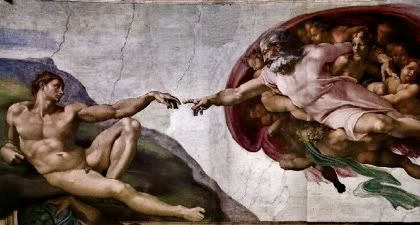
[The ceiling of the Sistine Chapel - created under the patronage of
Pope Sixtus IV - contains many iconic images such as this one, which
depicts God giving life to Adam; rendered in a naturalistic style
which had begun emerging as a result of the High Renaissance, the
ceiling thus contains even more dicks than the College of Cardinals.
]

1179 - France's Phillip II was crowned junior King at the behest of his ailing father Louis VII; the ceremony took place at the Cathedral of Notre-Dame de Rheims and was conducted by Archbishop William Whitehands.

1512 - The ceiling of the Sistine Chapel, painted by Michelangelo, was exhibited to the public for the first time, despite its having been completed in 1480; located within the Apostolic Palace, the Sistine Chapel is where papal convocations are held. Since their restoration - unveiled by Pope John Paul II in April 1994 - the frescoes have been so popular the Vatican is now attempting to curtail access to them.

1520 - The Strait of Magellan - the passage immediately south of mainland South America, connecting the Pacific and the Atlantic Oceans in the vicinity of Antarctica - was first navigated by Ferdinand Magellan during his global circumnavigation.

1604 - The first known performance of William Shakespeare's tragedy Othello was given at Whitehall Palace in London.

1611 - The first known performance of William Shakespeare's romantic comedy The Tempest was given at Whitehall Palace in London.

1755 - Lisbon was destroyed by a massive earthquake, tsunami, and fire beginning at 9:40 AM - killing between sixty thousand and ninety thousand people as they attended church services.

1800 - President John Adams became the first US President to live in the Executive Mansion (later renamed the White House).

1894 - Nicholas II became the new Tsar of Russia after the death of his father, Alexander III.

1918 - The worst rapid transit accident in US history - the Malbone Street Wreck - occurred under the intersection of Malbone Street and Flatbush Avenue in Brooklyn; at least 93 died.

1922 - Mehmed VI - the last sultan of the Ottoman Empire - abdicated.

1938 - Seabiscuit faced War Admiral at a horse race dubbed 'The Match of the Century' - in which the 5 year-old stallion, facing long odds in more ways than one, came from behind to eventually win by four clear lengths - events thrillingly recounted in the 2003 film Seabiscuit*, starring Tobey Maguire as Seabiscuit's jockey Red Pollard and Jeff Bridges as his owner Charles S. Howard.

*Which was itself based on Laura Hillenbrand's 2000 book, Seabiscuit: An American Legend.

1950 - Puerto Rican nationalists Griselio Torresola and Oscar Collazo attempted to assassinate US President Harry S. Truman, who was living at Blair House while his usual digs were being renovated. Police officer Leslie Coffelt was killed in the attack, but not before himself killing Torresola; Collazo was shot in the melee, captured, and sentenced to the electric chair, but Truman commuted the sentence to life imprisonment in 1952.

1954 - The Front de Libération Nationale fired the first shots in the Algerian War of Independence.

1963 - The largest radio telescope ever constructed - the Arecibo Observatory in Arecibo, Puerto Rico - officially opened.

1968 - The Motion Picture Association of America's film rating system was officially introduced, originating with the ratings G, M, R, and X.

1973 - Leon Jaworski was appointed as the new Special Prosecutor to look into the Watergate Scandal.

1981 - Antigua and Barbuda gained its independence from the United Kingdom.

1991 - Three faculty and one staff member of the department of physics and astronomy, along with one administrator, were killed when physics graduate student Gang Lu went on a shooting rampage at the University of Iowa.

1993 - The Maastricht Treaty took effect, formally establishing the European Union.
*
share on: facebook

Sunday, October 31, 2010

Parting Shot: Jack O' Lantern

Photobucket

Many thanks to Gavin over at Y|O|Y, for this bewitching seasonal image... I have no idea where it came from, but I do love it. I've even seen it being used by a few of my Facebook friends for their profile pics, so I figured it was safe to lift it.
*
share on: facebook

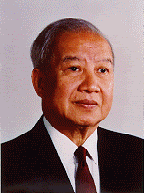
Happy Birthday King-Father Norodom Sihanouk

Photo Sharing and Video Hosting at PhotobucketOne of the things I like best about blogging is the learning I get to do; before writing this, for instance, I had no idea that the former King of Cambodia holds the Guinness Book's world record for the person who's held the greatest variety of titles in one government. In this case, these include: two terms as king, two as sovereign prince, one as president, two as prime minister, and one as Cambodia's non-titled head of state, as well as numerous positions as leader of various governments-in-exile.

A close second, though, involves the surprises; I had one such surprise today, while researching this post, and it involves His Majesty's support for same-sex marriage. Given the reverence in Cambodia for the 87-year-old King-Father (a term not unlike Queen Mother) his support gives marriage equality an invaluable boost in Southeast Asia.
*
share on: facebook

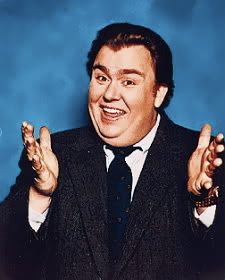
In Memoriam: John Candy

In the all-too-brief 15 years that spanned the career of John Candy, it can be safely said that he made no enemies, but only friends; and while it looked, a few years ago, like his memory might fade from the public consciousness altogether, the advent of DVDs means that much of his work has been re-released and is enjoying something of a renaissance...

PhotobucketBorn on this day in 1950, John Candy got his start with Toronto's famed improve theatre troupe, The Second City; while there he also appeared in many low- or no-budget films, as well as small (usually uncredited) roles in larger films, such as Class of '44. The characters he developed at Second City became mainstays of that sketch comedy alternate universe Second City Television (SCTV).

As the 80s progressed, so did Candy's career... An appearance in 1979's Steven Spielberg comedy 1941 soon led to greater and greater roles in films like The Blues Brothers, Stripes, and National Lampoon's Vacation. While his role in Ghostbusters ultimately went to fellow SCTV alum Rick Moranis owing to a clash over artistic differences, Candy got his big breakthrough that summer anyway, when he appeared in Splash.

From there the roles came fast and thick: Spaceballs, Planes, Trains & Automobiles, Who's Harry Crumb?, and Uncle Buck to name just four; nearly devoid of ego when it came to billing, Candy had no problem alternating between leading and supporting roles, even performing the occasional cameo if it appealed to him. Despite a few critical bombs, Candy entered the 90s as both the guy audiences wanted to see, as well as the one other actors wanted to work with, which made him a rare breed...

While his weight had always been a problem, Candy had also been a heavy smoker, and the combination of the two (as well as the heart disease to which he was genetically predisposed) soon caught up with him; he died in his sleep in March 1994 while on location in Mexico shooting Wagons East!. He was 43. Candy was survived by his wife Rosemary and Jennifer and Christopher, in addition to distraught former colleagues, friends, and fans the world over.
*
share on: facebook
Onion News Network: Has Hallowe'en Become Over-Commercialized?


I've long been an admirer of The Onion, whether in its tree-hating paper version, snazzy online incarnation, and lately courtesy of their YouTube channel; to a certain degree* it was The Onion's snarky, appallingly honest, and alternate dimension approach to news that inspired the work I've tried to do here at the Pop Culture Institute.

This, then, is their take on Hallowe'en...

*Although not to such a degree that I might be subject to prosecution, word...
*

share on: facebook
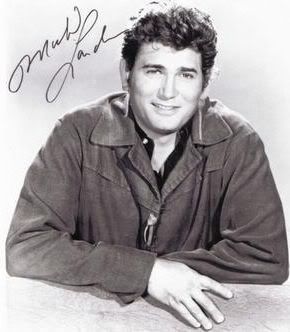
Gratuitous Brunette: Michael Landon

For an amazing thirty years, Michael Landon was a fixture on American television, starring on three hugely popular series back to back to back; first he played Little Joe Cartwright in Bonanza from 1959 to 1973, then Charles Ingalls in Little House on the Prairie from 1973 to 1984, and finally Jonathan Smith in Highway To Heaven from 1984 to 1989 - representing more than 700 hours of television, all of it on NBC.

Photo Sharing and Video Hosting at PhotobucketLandon (born this day in 1936) was universally revered in Hollywood; that good-guy image he portrayed was no act. Warm and caring, with an ever-ready smile and a heart as big as the outdoors he loved, his early death in July 1991 was greeted with genuine remorse.

He also had a wicked sense of humour, and loved to play practical jokes, especially on Johnny Carson; having heard that Carson ran over a cat with his car, Landon invited him to dinner at a restaurant where he'd had many of the menu items changed to include the word 'cat'.

Former Little House co-star Melissa Gilbert has said that Landon was like a second father to her, especially after her own father died when she was just 11; Landon had nine children of his own, so opening his home and heart to a tenth must have been the easiest thing in the world for him to do. Gilbert and her husband Bruce Boxleitner named their son after him in 1995.

Despite a fit physique and a positive attitude, though, Landon was a heavy smoker and ate a poor diet, all of which caught up with him at the age of 54. He was diagnosed with adenocarcinoma, an aggressive form of pancreatic cancer which quickly spread to his lymph nodes, and in what seemed like no time at all he was gone...
*
share on: facebook
Pop History Moment: The Death of Houdini

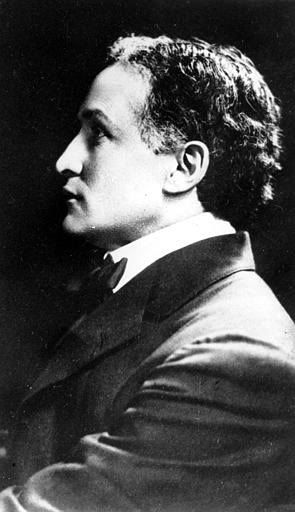
Photo Sharing and Video Hosting at PhotobucketPop lore states that Harry Houdini died of multiple blows to the abdomen delivered by a McGill University student, J. Gordon Whitehead, following a performance in Montreal on October 22nd, 1926. Modern medical science, however, discounts that Houdini's acute appendicitis could have been caused by any physical trauma; it appears that the blows he suffered were not fatal, but aggravated an existing undetected illness.

When Houdini arrived at Detroit's Garrick Theatre two days after what would be his fatal blow, for what would be his last performance, he had a fever of 40°C (104°F); despite his condition, Houdini took the stage.

Afterwards, he was taken to Room 401 of Detroit's Grace Hospital, where he died of peritonitis from a ruptured appendix at 1:26 PM on this day in 1926, at the age of 52. After taking statements from witnesses, Houdini's insurance company concluded that the death was due to the incident on the 22nd and paid double indemnity.

Probably the fact that Houdini was a believer in spiritualism (combined with the fact that he died on the day he did) has given his death the eerie connotations it has picked up over the years. For a full decade after his death Houdini's widow Bess used to hold a seance every October 31st, hoping to contact his spirit; she discontinued the practice in 1936, after he steadfastly refused to show up. Death proved to be the one thing from which Harry Houdini couldn't escape...

Still, it all makes for a suitably ghoulish story for bloggers to rehash every Hallowe'en, so I think in the spirit of the season I'll just go with it.
*
share on: facebook

Johnny Marr Describes Meeting Morrissey


If Morrissey gave The Smiths their voice, Johnny Marr gave them their pulse; although The Smiths were only together for five years (1982-1987) in that time their partnership - along with Andy Rourke and Mike Joyce - created some of the best British pop music ever.

Here then is a little clip of birthday boy Johnny Marr describing how he met Morrissey, and how they bonded over a shared love of Motown girl groups; if, after you're done watching, you haven't sated your need for him, here's the link to his own website.
*
share on: facebook

"To Autumn" by John Keats

Season of mists and mellow fruitfulness!
Close bosom-friend of the maturing sun;
Conspiring with him how to load and bless
With fruit the vines that round the thatch-eaves run;
To bend with apples the moss'd cottage-trees,
And fill all fruit with ripeness to the core;
To swell the gourd, and plump the hazel shells
With a sweet kernel; to set budding more,
And still more, later flowers for the bees,
Until they think warm days will never cease
For Summer has o'er-brimm'd their clammy cells.

Who hath not seen thee oft amid thy store?
Sometimes whoever seeks abroad may find
Thee sitting careless on a granary floor,
Thy hair soft-lifted by the winnowing wind;
Or on a half-reap'd furrow sound asleep,
Drowsed with the fume of poppies, while thy hook
Spares the next swath and all its twinèd flowers;
And sometimes like a gleaner thou dost keep
Steady thy laden head across a brook;
Or by a cider-press, with patient look,
Thou watchest the last oozings hours by hours.

Where are the songs of Spring? Ay, where are they?
Think not of them, thou hast thy music too,—
While barrèd clouds bloom the soft-dying day,
And touch the stubble-plains with rosy hue;
Then in a wailful choir the small gnats mourn
Among the river sallows, borne aloft
Or sinking as the light wind lives or dies;
And full-grown lambs loud bleat from hilly bourn;
Hedge-crickets sing; and now with treble soft
The redbreast whistles from a garden-croft;
And gathering swallows twitter in the skies.
*
share on: facebook

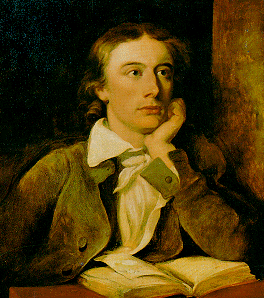
In Memoriam: John Keats

The poetry of John Keats was the subject of much critical derision over the course of his short life; clearly, this means he must have been on to something... People who are popular in their own day* often tend to be considered old-hat quite quickly after their death - if not long before - and fade inevitably into oblivion. Keats' work, on the other hand, is still finding new ways to inspire more poets and lovers than ever nearly 200 years after he died - no mean feat in an age rife with such defiantly unromantic fare as hardcore porn and gangsta rap!

Photo Sharing and Video Hosting at PhotobucketKeats - who was born on this day in 1795 - had bigger things to worry about, though, than the bitterness of the failed poets who typified his critics. His life was afflicted by tuberculosis long before he was; his mother died of the disease in 1810, after which Keats went to live with his grandmother. Within the decade she would also be dead, and he would be in charge of his brother, who was by then sick as well...

Tom Keats succumbed to his tuberculosis in December 1818; afterwards, Keats went to live at the home of his friend Charles Armitage Brown in Hampstead. Over the next 12 months, which Keats scholars refer to as 'The Great Year', the poet would produce much of his most famous work; it's also the year he met the love of his life, next-door neighbour Fanny Brawne.

As is often the case, the poet's passion provided more stress than solace, likely because in this instance it may have been an unrequited love, and was at best very complicated. When, by 1820, Keats was also showing signs that he, too, had contracted TB, he removed himself to Rome with his friend Joseph Severn. Brawne's diary rather brusquely recorded his departure thusly: 'Mr. Keats has left Hampstead.' Nevertheless, their romance is the subject of Jane Campion's 2009 film, Bright Star.

Keats settled into a house at the foot of the Spanish Steps (now a museum to him), but despite a drier clime and attentive medical care didn't last long, dying in February 1821, aged 25; he was buried in Rome's Protestant Cemetery beneath a tombstone bearing a bitter epitaph written by Charles Brown and Joseph Severn:

'This grave contains all that was mortal, of a YOUNG ENGLISH POET, Who on his Death Bed, in the Bitterness of his Heart, at the Malicious Power of his Enemies, Desired these Words to be engraven on his Tomb Stone: Here lies One Whose Name was writ in Water.'

As it states, only the final phrase was requested by Keats himself...

Still, those in Keats' circle insisted (as in the words of Lord Byron) that their friend's life was 'snuffed out by an article' - in this case, a scathing review of his work Endymion (thought to have been written by William Gifford but later proved to be the work of John Wilson Croker) which had appeared in the Quarterly Review shortly before his death; clearly it wasn't as yet well-understood that in order to be an artist one must be sensitive, but to survive as an artist one must be made of cast-iron, a dichotomy easily spoken but not easily lived, and as it turns out well-nigh impossible for John Keats...

*You know the type I mean - the 'flash in the pan'...
*
share on: facebook

"Quicksand" by Ethel Waters with Count Basie


Taken from the 1943 film Stage Door Canteen, here then is Ethel Waters (who was born on this day in 1896) singing a little ditty called Quicksand with the Count Basie Orchestra.
*
share on: facebook

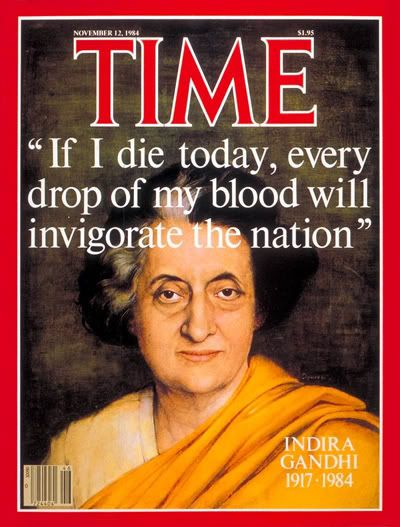
Pop History Moment: The Assassination of Indira Gandhi

Photo Sharing and Video Hosting at Photobucket

Having ordered Indian troops to fire upon the holiest Sikh shrine in India - the Harimandir Sahib (or Golden Temple) at Amritsar - during the disastrous and ill-considered Operation Blue Star in June 1984, Indian Prime Minister Indira Gandhi continued to employ Sikh bodyguards - for what reason I cannot possibly fathom...

It was on this day, just shy of five months to the day after Operation Blue Star had been carried out, Gandhi was walking in the garden of the Prime Minister's Residence (now a memorial to her) on New Delhi's Safdarjung Road, on her way to be interviewed by the British actor Peter Ustinov. As she passed a wicket gate, guarded by two of her bodyguards Satwant Singh and Beant Singh, they opened fire with machine pistols. A melee ensued, during which her two attackers and one other guard were killed.

Gandhi died on her way to the hospital, in her official car, but wasn't declared dead until many hours later; she was taken to the All India Institute of Medical Sciences, where doctors operated on her and reportedly removed 31 bullets from her body.

Almost the instant her death was announced, India erupted in anti-Sikh rioting, during which thousands were killed or injured, most of them Sikhs. Of this violence, Gandhi's son and successor Rajiv later said: 'When a big tree falls, the earth is bound to shake.' She was cremated on November 3, near Raj Ghat at Shakti Sthal, which means 'Place of Power'.
*
share on: facebook

"Bohemian Rhapsody" by Queen


It seems oddly appropriate for Hallowe'en that Bohemian Rhapsody was released this day, seeing as it is itself an opera disguised as a pop song...

Despite being released as long ago as 1975, it also has a video; this, then, must surely count as one of the earliest music videos, as it was created specifically for promotion (and not merely excerpted from some program or other, like a lot of the available musical performances from the 1960s and 70s).

It's name doesn't appear in the lyrics, it's got no chorus but more bridges than Venice, and the lyrics may or may not contain some cryptic meaning; nevertheless it is consistently cited as one of the greatest pop songs ever. Like the bumblebee - that shouldn't be able to fly, yet does - Bohemian Rhapsody soars on Freddie Mercury's vocals and is kept aloft by Brian May's prototypically head-banging guitar riffs alike.
*
share on: facebook

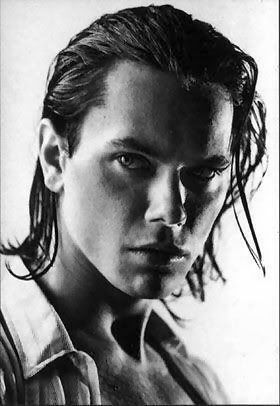
The Death of River Phoenix

River Phoenix often hinted at a childhood marred by sexual abuse, later claiming to have blocked it out; as a child his family belonged to the Children of God cult, about whom Phoenix subsequently had nothing good to say, and around which rumours of child abuse of every kind have always swirled...

Photo Sharing and Video Hosting at PhotobucketDespite the best intentions of the conscious mind, however, the subconscious never forgets. As good and well-meaning as Phoenix was in the present he was still being stalked by an awful trauma from the past; prone to fits of depression, he gradually began to self-medicate in order to deal with feelings of which he may not even have been aware.

Not helping matters was the matter of young fame, renowned for its toxicity, as well as having been raised after leaving the cult as a hippie (which he himself likened to the role he played in 1986's The Mosquito Coast); insufficiently vaccinated with the antibodies to fame that eventually saved his contemporaries from their own self-immolation, Phoenix quickly spiralled out of control.

More than just a lovely young man (both inside and out) died on this day in 1993 - at the age of just 23 - on the pavement outside the Viper Room... A promising career went with him as well.

From his early appearances in 1986's Stand by Me, to his shot-in-Vancouver A Night in the Life of Jimmy Reardon (1988), to later work in My Own Private Idaho and Dogfight (both 1991), Phoenix's fifteen movie roles are imbued with a certain compassion for the suffering which is inherent in the human condition. There's no telling what he might have accomplished had he lived, only wondering...
*
share on: facebook

POPnews - October 31st

Photobucket
[America's love affair with the open road resulted in the Lincoln Highway, which passes through 14 states, 128 counties, and more than 500 cities, towns, and villages over its 3389 mile (5454 km) length.]

475 CE - Romulus Augustulus - often considered the last Roman Emperor - was proclaimed.

1517 - Martin Luther nailed his 95 theses to the door of the Castle Church in Wittenberg - or so the legend has it.

1822 - Mexico's Emperor, Agustín de Iturbide, attempted to dissolve the Mexican Empire.

1864 - Nevada became the 36th US state.

1912 - The first gangster film - D.W. Griffith's The Musketeers of Pig Alley - premiered.

1913 - The Lincoln Highway Association dedicated the Lincoln Highway, the first continuous automobile road across the United States; the highway also became the first national tribute to fallen president Abraham Lincoln, nine years before the opening of the Lincoln Memorial in Washington, DC. The road, which came to be known as 'The Main Street Across America', connects New York City's Times Square to Lincoln Park in San Francisco.

1918 - The short-lived Banat Republic was founded as the Austro-Hungarian Empire was collapsing.

1923 - The first of 160 consecutive days with temperatures above 100 degrees Fahrenheit was recorded at Australia's Marble Bar.

1926 - Magician Harry Houdini died of gangrene and peritonitis that developed after his appendix ruptured.

1940 - The Battle of Britain ended when the United Kingdom prevented a German invasion.

1941 - After 14 years of work, drilling was completed on Mount Rushmore; alas, its creator Gutzon Borglum did not live to see it completed, having died seven months earlier; work was finished by Lincoln Borglum, the sculptor's son.

1959 - Future presidential assassin Lee Harvey Oswald attempted to renounce his American citizenship at the US Embassy in Moscow.

1961 - Joseph Stalin's body was removed from Lenin's Tomb.

1968 - Citing progress with the Paris peace talks, US President Lyndon B. Johnson offered the nation its first October surprise when he announced that he had ordered a complete cessation of 'all air, naval, and artillery bombardment of North Vietnam', effectively ending the Vietnam War; while Johnson's announcement was intended to improve the Democrats' chances electorally and therefore the outcome of the 1968 presidential election, Republican candidate Richard M. Nixon handily defected Democrat Hubert Humphrey and American Independent leader George Wallace anyway.

1973 - Seamus Twomey, J.B. O'Hagan, and Kevin Mallon - three Provisional Irish Republican Army members - escaped from Dublin's Mountjoy Prison aboard a hijacked helicopter that landed in the exercise yard; a band called the Wolfe Tones later wrote a song celebrating the escape called The Helicopter Song.

1975 - Queen released their most famous single, Bohemian Rhapsody.

1984 - Indian Prime Minister Indira Gandhi was assassinated by two Sikh security guards - Satwant Singh and Beant Singh - in retaliation for her ordering a military offensive against Amritsar's Harmandir Sahib during Operation Blue Star.

1986 - The 5th Congress of the Communist Party of Sweden opened, during the course of which the party name was changed to the Solidarity Party and a program of non-communist policies was adopted.

2003 - Mahathir bin Mohamad resigned as Prime Minister of Malaysia after 22 years in power.
*
share on: facebook