I wanted the gold, and I sought it;
I scrabbled and mucked like a slave.
Was it famine or scurvy, I fought it;
I hurled my youth into a grave.
I wanted the gold, and I got it --
Came out with a fortune last fall, --
Yet somehow life's not what I thought it,
And somehow the gold isn't all.
No! There's the land. (Have you seen it?)
It's the cussedest land that I know,
From the big, dizzy mountains that screen it
To the deep, deathlike valleys below.
Some say God was tired when He made it;
Some say it's a fine land to shun;
Maybe; but there's some as would trade it
For no land on earth -- and I'm one.
You come to get rich (damned good reason);
You feel like an exile at first;
You hate it like hell for a season,
And then you are worse than the worst.
It grips you like some kinds of sinning;
It twists you from foe to a friend;
It seems it's been since the beginning;
It seems it will be to the end.
I've stood in some mighty-mouthed hollow
That's plumb-full of hush to the brim;
I've watched the big, husky sun wallow
In crimson and gold, and grow dim,
Till the moon set the pearly peaks gleaming,
And the stars tumbled out, neck and crop;
And I've thought that I surely was dreaming,
With the peace o' the world piled on top.
The summer -- no sweeter was ever;
The sunshiny woods all athrill;
The grayling aleap in the river,
The bighorn asleep on the hill.
The strong life that never knows harness;
The wilds where the caribou call;
The freshness, the freedom, the farness --
O God! how I'm stuck on it all.
The winter! the brightness that blinds you,
The white land locked tight as a drum,
The cold fear that follows and finds you,
The silence that bludgeons you dumb.
The snows that are older than history,
The woods where the weird shadows slant;
The stillness, the moonlight, the mystery,
I've bade 'em good-by -- but I can't.
There's a land where the mountains are nameless,
And the rivers all run God knows where;
There are lives that are erring and aimless,
And deaths that just hang by a hair;
There are hardships that nobody reckons;
There are valleys unpeopled and still;
There's a land -- oh, it beckons and beckons,
And I want to go back -- and I will.
They're making my money diminish;
I'm sick of the taste of champagne.
Thank God! when I'm skinned to a finish
I'll pike to the Yukon again.
I'll fight -- and you bet it's no sham-fight;
It's hell! -- but I've been there before;
And it's better than this by a damsite --
So me for the Yukon once more.
There's gold, and it's haunting and haunting;
It's luring me on as of old;
Yet it isn't the gold that I'm wanting
So much as just finding the gold.
It's the great, big, broad land 'way up yonder,
It's the forests where silence has lease;
It's the beauty that thrills me with wonder,
It's the stillness that fills me with peace.
*
share on: facebook
Sunday, January 16, 2011


In Memoriam: Robert Service
Robert Service is a prime example of a person who was in the right place at the right time; employed as a banker, as a young man he was posted by his employer - the Canadian Bank of Commerce - to the still-remote location of Whitehorse, in Canada's Yukon Territory. Subsequently he lived in a cabin on 8th Avenue in Dawson City.
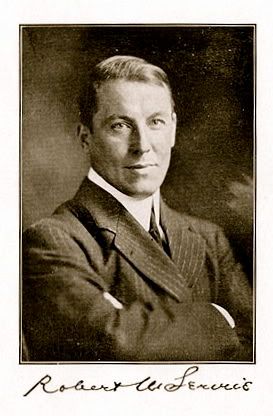 That the territory had recently been in the grips of a gold rush suited Service fine, and he set about crafting a series of poems which today are a part and parcel of Canada's national mythology. The Shooting of Dan McGrew and The Cremation of Sam McGee are just two of the works included in his first book, 1907's The Spell of the Yukon and Other Verses (published in England as The Songs of a Sourdough). He was often referred to as the 'Canadian Kipling', which was a greater compliment in those days than it is now.
By 1909 his books had made him enough money that Service was able quit his job, and thereafter he traveled the world, often as a newspaper correspondent; he never returned to the Yukon. In the period 1912-3 he covered the Balkan Wars for the Toronto Star. Despite his burgeoning wealth he dressed and lodged humbly.
During the First World War he worked as an ambulance driver for the Canadian Red Cross, which isn't exactly as cushy a job as it might sound, given that the roads in France were subject to shelling, and just as often rutted by rain; he was also a correspondent for the Canadian government during the war. His book Rhymes of a Red Cross Man, published in 1916, detailed his experiences.
Born on this day in 1874, Robert Service died in September 1958; his cabin in Dawson, long maintained by the IODE, was taken over by Parks Canada in 1971. Although visitors may not enter the building, they are able to peer into it, and in doing so, peer into that brief period of his life when Robert Service truly was 'the bard of the Klondike'.
*
share on: facebook
That the territory had recently been in the grips of a gold rush suited Service fine, and he set about crafting a series of poems which today are a part and parcel of Canada's national mythology. The Shooting of Dan McGrew and The Cremation of Sam McGee are just two of the works included in his first book, 1907's The Spell of the Yukon and Other Verses (published in England as The Songs of a Sourdough). He was often referred to as the 'Canadian Kipling', which was a greater compliment in those days than it is now.By 1909 his books had made him enough money that Service was able quit his job, and thereafter he traveled the world, often as a newspaper correspondent; he never returned to the Yukon. In the period 1912-3 he covered the Balkan Wars for the Toronto Star. Despite his burgeoning wealth he dressed and lodged humbly.
During the First World War he worked as an ambulance driver for the Canadian Red Cross, which isn't exactly as cushy a job as it might sound, given that the roads in France were subject to shelling, and just as often rutted by rain; he was also a correspondent for the Canadian government during the war. His book Rhymes of a Red Cross Man, published in 1916, detailed his experiences.
Born on this day in 1874, Robert Service died in September 1958; his cabin in Dawson, long maintained by the IODE, was taken over by Parks Canada in 1971. Although visitors may not enter the building, they are able to peer into it, and in doing so, peer into that brief period of his life when Robert Service truly was 'the bard of the Klondike'.
*
share on: facebook
"Is It A Crime?" by Sade
From Sade's second album Promise, released in 1985, comes the second of three videos on this, her birthday. The name of the album refers to Sade's father, who was being treated for cancer at the time, and had promised her that he would get better. I can't seem to find any information on whether he made good on that promise or not, but in any event I'd like to dedicate this song to people living with, and attempting to overcome, cancer.
Is It A Crime was never a huge hit, except at my house, where it was in heavy rotation throughout 1986; I just love the way it builds and falls repeatedly. It was around this time that I began to have serious misgivings about the way people listened to music; this song was as good or better than most stuff on the radio that year, yet do you think I could drag anyone away from their Def Leppard or Bon Jovi long enough to listen to it...?
No! (Not that I'm bitter. Much.)
*
share on: facebook
Remembering... Francesco Scavullo
For thirty years every Cosmo girl was also a Scavullo girl; from 1965, when Helen Gurley Brown hired him to sex up the cover of Cosmopolitan, until his death in January 2004 (ten days before his eighty-third birthday, on his way to photograph Anderson Cooper) the obfuscation he employed in the pursuit of effortless glamour would beguile and bedevil women in equal measure...
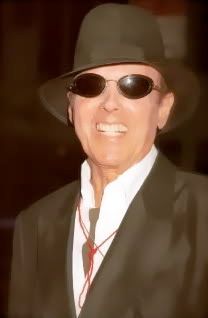 Born on this day in 1921, Scavullo showed an interest in fashion from a young age; he got his first job as a photographer while still a teenager. Indulged by his mother (who used to take him window shopping along Fifth Avenue in Manhattan), his sisters (who were his first models), and his father (who bought him his first camera) he went to work for Vogue in 1945.
There Scavullo worked with acclaimed photographers Cecil Beaton, John Rawlings, and Horst P. Horst, whose assistant he was for three years; in 1948, Scavullo shot his first cover, for Seventeen, and from that point on never looked back.
In high demand throughout the 1950s and 1960s, it was the 1970s that really defined Scavullo's oeuvre; the cocaine-fuelled orgy of that decade was best contrasted by Scavullo's cool, aloof style. One of the first celebrities to go public with his diagnosis of bipolar disorder in the early 1980s, he was thereafter vocal in regards to others seeking treatment for this potentially ruinous condition.
Scavullo was also known for his portraits of celebrities; he shot the notorious Burt Reynolds centerfold from the April 1972 issue of Cosmopolitan, and one of his muses was doomed supermodel Gia Carangi. The April 1982 cover he shot of her was her last, and taken when no one else would hire her, which says a lot about the level of loyalty for which he was known.
*
share on: facebook
Born on this day in 1921, Scavullo showed an interest in fashion from a young age; he got his first job as a photographer while still a teenager. Indulged by his mother (who used to take him window shopping along Fifth Avenue in Manhattan), his sisters (who were his first models), and his father (who bought him his first camera) he went to work for Vogue in 1945.There Scavullo worked with acclaimed photographers Cecil Beaton, John Rawlings, and Horst P. Horst, whose assistant he was for three years; in 1948, Scavullo shot his first cover, for Seventeen, and from that point on never looked back.
In high demand throughout the 1950s and 1960s, it was the 1970s that really defined Scavullo's oeuvre; the cocaine-fuelled orgy of that decade was best contrasted by Scavullo's cool, aloof style. One of the first celebrities to go public with his diagnosis of bipolar disorder in the early 1980s, he was thereafter vocal in regards to others seeking treatment for this potentially ruinous condition.
Scavullo was also known for his portraits of celebrities; he shot the notorious Burt Reynolds centerfold from the April 1972 issue of Cosmopolitan, and one of his muses was doomed supermodel Gia Carangi. The April 1982 cover he shot of her was her last, and taken when no one else would hire her, which says a lot about the level of loyalty for which he was known.
*
share on: facebook
Pop History Moment: The Death of Carole Lombard
For all her wacky antics onscreen, the foremost film comedienne of the 1930s was a patriotic American girl at heart; shortly after the bombing of Pearl Harbor, Carole Lombard had managed to personally sell millions of dollars worth of war bonds, more than anyone else up to that time.
 Which made her death, on this day in 1942, all the more poignant; returning home from a war bond rally in her home state of Indiana, the plane in which Lombard was traveling made an unscheduled refueling stop at what is now Nellis Air Force Base, near Las Vegas. Shortly after resuming its journey to Burbank, on a clear night, the plane crashed into the side of Mount Potosi near Double-Up Peak, igniting a forest fire in the process.
All 22 passengers onboard TWA Flight 3 - including MGM publicist Otto Winkler as well as Lombard's mother - were killed. Lombard's last words to an adoring public before boarding that fateful flight had been: 'Before I say goodbye to you all, come on and join me in a big cheer! V for Victory!' She was 33.
Her husband, Hollywood leading man Clark Gable, was said to be inconsolable at the loss, and soon enlisted, eventually flying bombing missions over Germany as a gunner; despite a subsequent remarriage, following his own death in November 1960 he was buried next to her. Jack Benny, Lombard's final costar (in the Ernst Lubitsch-directed anti-Nazi comedy To Be or Not to Be) scrapped that week's episode of his popular radio sitcom in favour of music in her honour.
To further honour her and her efforts, President Franklin D. Roosevelt officially named her the first female casualty of World War II, saying she had died in the line of duty, and posthumously awarded her the Presidential Medal of Freedom. Two years later (minus a day) the Liberty ship SS Lombard was launched, bearing her name...
Carole Lombard has been played in the movies most famously by Jill Clayburgh, in Sidney J. Furie's 1976 film Gable and Lombard, opposite James Brolin as Clark Gable.
*
share on: facebook
Which made her death, on this day in 1942, all the more poignant; returning home from a war bond rally in her home state of Indiana, the plane in which Lombard was traveling made an unscheduled refueling stop at what is now Nellis Air Force Base, near Las Vegas. Shortly after resuming its journey to Burbank, on a clear night, the plane crashed into the side of Mount Potosi near Double-Up Peak, igniting a forest fire in the process.All 22 passengers onboard TWA Flight 3 - including MGM publicist Otto Winkler as well as Lombard's mother - were killed. Lombard's last words to an adoring public before boarding that fateful flight had been: 'Before I say goodbye to you all, come on and join me in a big cheer! V for Victory!' She was 33.
Her husband, Hollywood leading man Clark Gable, was said to be inconsolable at the loss, and soon enlisted, eventually flying bombing missions over Germany as a gunner; despite a subsequent remarriage, following his own death in November 1960 he was buried next to her. Jack Benny, Lombard's final costar (in the Ernst Lubitsch-directed anti-Nazi comedy To Be or Not to Be) scrapped that week's episode of his popular radio sitcom in favour of music in her honour.
To further honour her and her efforts, President Franklin D. Roosevelt officially named her the first female casualty of World War II, saying she had died in the line of duty, and posthumously awarded her the Presidential Medal of Freedom. Two years later (minus a day) the Liberty ship SS Lombard was launched, bearing her name...
Carole Lombard has been played in the movies most famously by Jill Clayburgh, in Sidney J. Furie's 1976 film Gable and Lombard, opposite James Brolin as Clark Gable.
*
share on: facebook
"Smooth Operator" by Sade
Elegant jazz-pop songstress and birthday gal Sade appears here in the full 8 and a half minute video to this, her first single, Smooth Operator; oddly enough, Sade is the lead singer of a band called Sade, which must get confusing when it's time to open the mail.
Trained in fashion (she attended London's prestigious St. Martin's College in the late 70s) she was running a small atelier making men's clothes when the music industry beckoned. Her debut album Diamond Life - from which this is taken - was released in 1984 in the US and 1985 in the US, and was a huge smash, especially around my house. I think I listened to her more than I listened to Madonna, which admission frankly shocks even me.
This video was directed by Julian Temple, with whom she would later work on the stylish 1986 musical Absolute Beginners.
*
share on: facebook
POPnews - January 16th

[That the Space Shuttle Columbia was both the first to become space-worthy (on mission STS-1, shown above, in April 1981) and almost the last one in history (following mission STS-107, launched on this day in 2003) is an irony not lost on the Pop Culture Institute; unfortunately, the same talking heads whose criticisms nearly scuttled NASA's Space Shuttle Program altogether following Columbia's tragic destruction seemed incapable of grasping the idea that space travel involves a lower risk for fatality than any other kind of travel, including anything involving a motor vehicle.]
27 BCE - The title Augustus was bestowed upon Gaius Julius Caesar Octavian by the Roman Senate, making the nephew and heir of Julius Caesar the first Emperor of Rome.
929 CE - Emir Abd-ar-Rahman III of Cordoba declared himself caliph, thereby establishing the Caliphate of Cordoba in what is now northern Spain.
1120 - The Council of Nablus was held, establishing the earliest surviving written laws of the Kingdom of Jerusalem, which was established by Crusaders in 1099.
1362 - A great storm tide originating in the North Sea tore the German island of Strand in two and destroyed the wealthy city of Rungholt, as will happen along the Wadden Sea.
1547 - Ivan the Terrible was crowned Tsar of Russia having succeeded his father Vasili III in December 1533 and following the long regency of his mother, Elena Glinskaya.
1556 - The husband and king consort of England's Queen Mary I became King Philip II of Spain.
1605 - The first edition of El ingenioso hidalgo Don Quijote de la Mancha (Book One of Don Quixote) by Miguel de Cervantes was published in Madrid.
1761 - British forces captured the Indian settlement of Puducherry from the French and did what the British usually did in such a situation: changed its name, to Pondicherry.
1809 - The British defeated the French at the Battle of La Coruña during the Peninsular War.
1847 - John C. Frémont was appointed Governor of the new California Territory, three days after the Treaty of Cahuenga ended the Mexican-American War.
1883 - In response to the assassination of President James Garfield by a disgruntled office-seeker, the Pendleton Civil Service Reform Act was passed by US Congress, establishing a civil service based on merit; sponsored by Senator George H. Pendleton (D-Ohio) and written by Dorman Bridgeman Eaton, the new law outlawed patronage and nepotism in the US government.
1938 - The famous jazz concert by the Benny Goodman Orchestra and special guests took place at Carnegie Hall in New York City, the first jazz performance in that venue.
1945 - Adolf Hitler moved into his underground bunker, the so-called Führerbunker.
1986 - The Internet Engineering Task Force first met.
1996 - Long-serving three-time Greek Prime Minister Andreas Papandreou resigned from office for health reasons; he died the following June.
2001 - Congolese President Laurent-Désiré Kabila was assassinated by Rashidi Kasereka, one of his own bodyguards, who was also killed in the botched coup attempt.
2003 - Space Shuttle Columbia lifted off on the ill-starred mission STS-107 which would be its final one; Columbia disintegrated 16 days later over the southern US upon re-entry.
2005 - Adriana Iliescu became the oldest woman in the world to give birth, at age 66... The event also gave birth to some truly horrible jokes, some of which I'm not at all proud of myself for having thought them up.
2006 - Ellen Johnson-Sirleaf was sworn in as Liberia's new president, making her Africa's first female elected head of state.
*
share on: facebook
Saturday, January 15, 2011
Andrea Martin and Oscar the Grouch Demonstrate Anger
A couple of years ago now on Andrea Martin's birthday I posted a long-gone clip from SCTV of her impeccable Barbra Streisand impersonation*; the past couple of years I've decided to show my readers an equally skillful act she puts on, in this case anger.
Opposite Oscar the Grouch on Sesame Street, Martin lends her own considerable charm to that of puppeteer Carroll Spinney, much to the chagrin of Maria (Sonia Manzano). In under two minutes, you will witness everything that makes everyone involved so special...
*Alongside an uncanny rendering of Ruth Gordon by Valri Bromfield.
*
share on: facebook
Happy Birthday Andrea Martin
Although she first attained prominence as part of the dream team - John Candy, Dave Thomas, Eugene Levy, Catherine O’Hara, Harold Ramis and Joe Flaherty - that would make SCTV a television legend, Andrea Martin is plenty funny all by herself, whether portraying a character of her own creation or impersonating a veritable who's who of 70s and 80s celebrity*.
 Born on this day in 1947, an American of Armenian descent, by 1973 the grocer's daughter from Oregon was comfortably ensconced in Toronto and starring in Ivan Reitman's third film, the Canadian epic Cannibal Girls; she followed that up with an appearance in another cinematic masterpiece, Black Christmas, alongside such Canadian film die-hards as Margot Kidder and Keir Dullea. Such is the degree of her ubiquity - even in the 70s - that she also turns up in an early episode of King of Kensington!
Whether it's her work ethic or her agent**, Andrea Martin has a habit of turning up in unexpected places, which delightful surprises can always be counted on to make my day. As Wanda the Word Fairy on Sesame Street or Ishka on Star Trek: Deep Space Nine, from television tubes to movie screens to theatre stages, if you enjoy being entertained (and let's face it, who doesn't?) you couldn't do better than whiling away a spare hour or two in watching this dynamic and versatile lady work her particular brand of magic...
She's so talented she can even liven up dire failures***!
*Including Barbra Streisand, Ethel Merman, Arlene Francis, Sally Field, Sophia Loren, Beverly Sills, Lynn Redgrave, Linda Lavin, Bernadette Peters, Liza Minnelli, Connie Francis, Mother Teresa, Alice B. Toklas and Indira Gandhi!
**Or, less likely, her agent's work ethic.
***This means you, Young Triffie!
*
share on: facebook
 Born on this day in 1947, an American of Armenian descent, by 1973 the grocer's daughter from Oregon was comfortably ensconced in Toronto and starring in Ivan Reitman's third film, the Canadian epic Cannibal Girls; she followed that up with an appearance in another cinematic masterpiece, Black Christmas, alongside such Canadian film die-hards as Margot Kidder and Keir Dullea. Such is the degree of her ubiquity - even in the 70s - that she also turns up in an early episode of King of Kensington!
Whether it's her work ethic or her agent**, Andrea Martin has a habit of turning up in unexpected places, which delightful surprises can always be counted on to make my day. As Wanda the Word Fairy on Sesame Street or Ishka on Star Trek: Deep Space Nine, from television tubes to movie screens to theatre stages, if you enjoy being entertained (and let's face it, who doesn't?) you couldn't do better than whiling away a spare hour or two in watching this dynamic and versatile lady work her particular brand of magic...
She's so talented she can even liven up dire failures***!
*Including Barbra Streisand, Ethel Merman, Arlene Francis, Sally Field, Sophia Loren, Beverly Sills, Lynn Redgrave, Linda Lavin, Bernadette Peters, Liza Minnelli, Connie Francis, Mother Teresa, Alice B. Toklas and Indira Gandhi!
**Or, less likely, her agent's work ethic.
***This means you, Young Triffie!
*
share on: facebook
Remembering... Ivor Novello
It's highly unlikely that when Ivor Novello was born - on this day in 1893 - he was the only gay in the village; even though the village in question was Cardiff and not Llanddewi Brefi, someone was always drilling a new shaft down the valleys in those days, so it's quite likely that by the time he got to Oxford's Magdalen College the handsome Welshman had likely already been well-fagged...
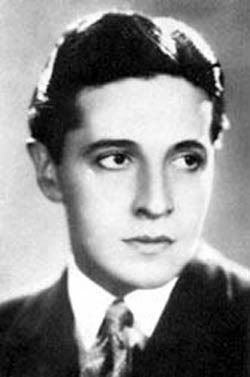 Novello attained his initial prominence during the First World War, when his song Keep The Home Fires Burning warmed many a parlour throughout the Empire. Then, even more than now, patriotism was the best defense against scandal; Novello's affair with Siegfried Sassoon had tongues wagging - occasionally even with gossip - and for 35 years Novello maintained a relationship with Bobbie Andrews both at home and at work.
Shortly after the end of hostilities, Novello embarked upon a movie career, appearing in two early films by Alfred Hitchcock, The Lodger (1927) and Downhill (1927). In the great British tradition, he thereafter alternated between movie and stage roles.
During World War II, when scandal finally caught up with him, it wasn't a rendezvous with a guardsman in Green Park that brought him low but an abuse of petrol coupons, for which he served four weeks in jail alongside the violent gangster Frankie Fraser. Accustomed to a life of luxury, after his release friends said Novello was never the same. He died of a coronary thrombosis in March 1951.
Novello's memory lives on; the annual Ivor Novello Awards honour songwriting in Britain, and as recently as Robert Altman's 2001 film Gosford Park Novello was portrayed by Jeremy Northam.
*
share on: facebook
Novello attained his initial prominence during the First World War, when his song Keep The Home Fires Burning warmed many a parlour throughout the Empire. Then, even more than now, patriotism was the best defense against scandal; Novello's affair with Siegfried Sassoon had tongues wagging - occasionally even with gossip - and for 35 years Novello maintained a relationship with Bobbie Andrews both at home and at work.Shortly after the end of hostilities, Novello embarked upon a movie career, appearing in two early films by Alfred Hitchcock, The Lodger (1927) and Downhill (1927). In the great British tradition, he thereafter alternated between movie and stage roles.
During World War II, when scandal finally caught up with him, it wasn't a rendezvous with a guardsman in Green Park that brought him low but an abuse of petrol coupons, for which he served four weeks in jail alongside the violent gangster Frankie Fraser. Accustomed to a life of luxury, after his release friends said Novello was never the same. He died of a coronary thrombosis in March 1951.
Novello's memory lives on; the annual Ivor Novello Awards honour songwriting in Britain, and as recently as Robert Altman's 2001 film Gosford Park Novello was portrayed by Jeremy Northam.
*
share on: facebook
"Ice Cream For Crow" by Captain Beefheart
Originally rejected as being too weird for MTV - although, having watched it twice all the way through I can't think why - birthday boy* Captain Beefheart's video for Ice Cream For Crow (the title track to his 12th and final album, released in 1982) has since been enshrined in the Permanent Film and Video Collection of New York City's Museum of Modern Art. Which just goes to show you that one man's freak show is another man's work of art - which could not only serve as the motto of the Pop Culture Institute but as a mantra for Captain Beefheart himself.
Shortly after releasing this, Captain Beefheart disbanded The Magic Band**, reverted to his birth name, Don Van Vliet, and took up a career as a neo-primitive abstract-expressionist painter; despite a notable lack of commercial success as a musician, however, Captain Beefheart's influence on contemporary music has been described as 'incalculable' - echoing in everyone from Sex Pistols to Frank Zappa to post-Asylum Tom Waits to The White Stripes and in many more besides.
*Sadly, Don Van Vliet died in December 2010, just a month before this, which would have been his 70th birthday.
**The magic dis-band?
*
share on: facebook
In Memoriam: Martin Luther King, Jr.
1955's Montgomery Bus Boycott was a pivotal moment for civil rights in the United States not just because it began the long, slow process of breaking the back of racism in America, but because it propelled to prominence a Baptist minister by the name of Martin Luther King Jr.; only 26 years old at the time, King went on to found the Southern Christian Leadership Conference predicated on the belief that intolerance and bigotry are antithetical to religious practice.
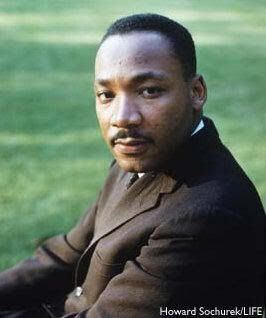 Born on this day in 1929 in Atlanta, Mr. King became Dr. King just six months before his calling became a crusade; by then he'd already been pastor of Dexter Avenue Baptist Church in Montgomery, Alabama, for two years.
As an activist, Dr. King's methods were modeled on those of India's Mohandas K. 'Mahatma' Gandhi, namely civil disobedience and peaceful protest to achieve stated goals. Gradually the violence with which these peaceful protests were met began to win more and more people to the cause of civil rights; among the earliest white supporters, the Quakers, threw the resources of their American Friends Service Committee behind the cause. The Quakers, it should be noted, had also been instrumental in abolitionism, which movement reached its zenith with the Underground Railroad of a century earlier.
From the early days of the movement, Dr. King's right hand man was the more overtly militant Bayard Rustin, who had campaigned to end discrimination in the US Armed Forces during World War II and later helped to organize the Freedom Rides of the late 1940s.
In the dozen years of his national prominence Dr. King achieved much, much of it as due to Rustin's persistence as his own; the 1963 March on Washington for Jobs and Freedom was attended by a quarter million people, who heard King announce 'I Have a Dream' and soon enough his dream was theirs. Despite attempts by Senator Strom Thurmond to slander King's relationship with Rustin - and by extension the entire movement - and the NAACP's chairman Roy Wilkins ironically bigoted refusal to give Rustin his due, King remained stalwart in his support of Rustin.
King, of course, never lived to see his dream realized; the cynical might say he never would, since such a high-flown ideal might seem well-nigh impossible. Despite the prickly issue that race remains in America today, though, one would have to be thoroughly blindered to say that African-Americans aren't better off today than they were in April 1968 on the day King was assassinated at the Lorraine Motel in Memphis, Tennessee.
Not only is King's birthday a national holiday (observed in all 50 states since 2000) it seems every item he touched is treated as a holy relic and every place with any connection to him is a National Monument, which is as it should be. While King had his faults - for which of us doesn't - his qualities far outshone his frailties, and the progress he set in motion wouldn't be halted by James Earl Ray's bullet but accelerated instead.
*
share on: facebook
Born on this day in 1929 in Atlanta, Mr. King became Dr. King just six months before his calling became a crusade; by then he'd already been pastor of Dexter Avenue Baptist Church in Montgomery, Alabama, for two years.As an activist, Dr. King's methods were modeled on those of India's Mohandas K. 'Mahatma' Gandhi, namely civil disobedience and peaceful protest to achieve stated goals. Gradually the violence with which these peaceful protests were met began to win more and more people to the cause of civil rights; among the earliest white supporters, the Quakers, threw the resources of their American Friends Service Committee behind the cause. The Quakers, it should be noted, had also been instrumental in abolitionism, which movement reached its zenith with the Underground Railroad of a century earlier.
From the early days of the movement, Dr. King's right hand man was the more overtly militant Bayard Rustin, who had campaigned to end discrimination in the US Armed Forces during World War II and later helped to organize the Freedom Rides of the late 1940s.
In the dozen years of his national prominence Dr. King achieved much, much of it as due to Rustin's persistence as his own; the 1963 March on Washington for Jobs and Freedom was attended by a quarter million people, who heard King announce 'I Have a Dream' and soon enough his dream was theirs. Despite attempts by Senator Strom Thurmond to slander King's relationship with Rustin - and by extension the entire movement - and the NAACP's chairman Roy Wilkins ironically bigoted refusal to give Rustin his due, King remained stalwart in his support of Rustin.
King, of course, never lived to see his dream realized; the cynical might say he never would, since such a high-flown ideal might seem well-nigh impossible. Despite the prickly issue that race remains in America today, though, one would have to be thoroughly blindered to say that African-Americans aren't better off today than they were in April 1968 on the day King was assassinated at the Lorraine Motel in Memphis, Tennessee.
Not only is King's birthday a national holiday (observed in all 50 states since 2000) it seems every item he touched is treated as a holy relic and every place with any connection to him is a National Monument, which is as it should be. While King had his faults - for which of us doesn't - his qualities far outshone his frailties, and the progress he set in motion wouldn't be halted by James Earl Ray's bullet but accelerated instead.
*
share on: facebook
Pop History Moment: The Coronation of Elizabeth I
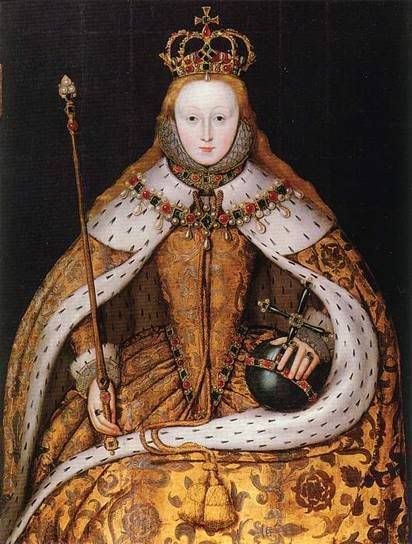
Given the years of uncertainty that had preceded it, by the time the 25-year-old Elizabeth attained the throne following the death of her half-sister Mary she must have felt like the most vindicated person in the entire kingdom. From the sumptuously appointed Royal Apartments at the Tower of London - where her mother Anne Boleyn had slept the night before her execution and where Elizabeth herself had spent time as a prisoner - she rode out along the Strand to Westminster to show herself to her people, by tradition, on the day before her coronation.
Pausing beside the royal menagerie as she departed Tower Hill, for the crowd's benefit she compared herself to Daniel in the Lion's Den, a fitting metaphor for her life thus far, and (as it turned out) equally apt for the life she was about to undertake. Five pageants were performed for her benefit along the way - at Gracechurch Street, Cornhill, Soper's Lane, Little Conduit in Cheapside, and Fleet Street - and at each one she stopped the procession to watch; when each was done she offered her thanks and praise, which was inevitably met with cheers by the mighty crowds.
At the suggestion of Lord Robert Dudley (Elizabeth's newly appointed Master of the Horse and one of her favourites at court) the date of her coronation - January 15th - had been carefully chosen by the noted astrologer Dr. John Dee as the most propitious; given the way history played out (Elizabeth's reign would stretch to 45 years, one of the longest) it was one of the rare times Dee had been right. As for the coronation itself, the rite was laid out in the Liber Regalis, which didn't stop the Queen from adding her own reforming touches.
Owing to a sudden dearth of clergymen - some too old, some too Catholic, some too dead - the service would be conducted by Owen Oglethorpe, the Bishop of Carlisle, and one of the most junior clerics in the realm. There was tension between them; she had stormed out of a service he officiated three weeks earlier on Christmas morning because it had been too Papist. Suitably chastised, he behaved himself thereafter.
When her procession departed from Westminster Hall on this day in 1559 she was lavishly outfitted in her 'Parliament robes' of crimson; by the time she arrived at Westminster Abbey a short time later she was in tatters, her robes having been cut to ribbons by well-wishers seeking a good luck token. Once there she changed into golden robes for the coronation itself...
A coronation is a solemn enough religious ritual in itself, but there is every indication that Elizabeth regarded it as nothing short of a wedding to her people; having recently lived through her predecessor's disastrous (and disastrously unpopular) marriage to Philip II of Spain, not to mention her own recent entanglements with Thomas Seymour (the husband of her stepmother Catherine Parr) Elizabeth's resolve to remain unmarried in the traditional sense seems to have hardened early.
In due time she was anointed, then finally ornamented, appearing much as she does in the portrait above; once she was crowned she again exchanged her robes (this time for purple ones) and returned to Westminster Hall for the obligatory sumptuous banquet. Following the sombre occasion of the coronation, throughout the remainder of the evening she was laughing and joyous - which while it offended the older members of the nobility, gave her people immense pleasure, and they loved her for it.
Though it was her determination to rule by wise counsel, she knew well enough that it was the people for whom she reigned, and she always made sure they knew it as well.
*
share on: facebook
"Ghost" by Howie Day
Whatever ghosts have haunted Howie Day in the past, it's the sincere hope of the Pop Culture Institute that this year for his birthday - today, natch! - he exorcises the crap out of it and finally gets some peace of mind. Although, for a sensitive singer-songwriter* like him, the kind of troubles he's had aren't so much problems as solutions to the age-old dilemna of what to write about...
The song Ghost originally appeared on Day's self-released 2000 album Australia, which was re-released in 2002 after Day signed a contract with Epic Records; he's seen here performing it on The Late Late Show during the tenure of its second host, Craig Kilborn.
*Albeit a sensitive singer-songwriter with a propensity for some serious douchebaggery, given the nature of said troubles...
*
share on: facebook
POPnews - January 15th

[From its cramped if elegant riverside headquarters in Bloomsbury's Montagu House, the British Museum moved to South Kensington, where Sir Robert Smirke designed a vast neo-classical complex to house the nation's treasures; between 1825 and 1850 it would be the largest building site in Europe.]
69 CE - Otho seized power in Rome, making him the second in the so-called Year of the Four Emperors; he ruled for only three months before committing suicide.
1559 - Elizabeth I was crowned queen of England at Westminster Abbey in London.
1759 - The British Museum was opened to the public at Montagu House in the tony Bloomsbury section of London at the behest (and due to the bequest) of Sir Hans Sloane.
1777 - New Connecticut - better known these days as Vermont - declared its independence from the United Kingdom; it would not join the United States until March 1791, at which time it became the 14th state.
1822 - During the Greek War of Independence, Demetrius Ypsilantis was elected president of the legislative assembly.
1844 - The University of Notre Dame received its charter from the state of Indiana.
1885 - Wilson Bentley took his first photograph of a snowflake, which was the first one ever taken.
1919 - The Boston Molasses Disaster killed 21 people; meanwhile, Rosa Luxemburg and Karl Liebknecht, two of Germany's most prominent socialists, were tortured and murdered by the Freikorps in Berlin.
1943 - The world's largest office building, The Pentagon, was dedicated in Arlington, Virginia.
1947 - The brutalized corpse of Elizabeth Short was found in Los Angeles' Leimert Park; her story has been told in James Ellroy's 1987 book The Black Dahlia as well as Brian De Palma's 2006 movie of the same name, which was based on it.
1951 - Ilse Koch, the Bitch of Buchenwald or Buchenwälder Schlampe, was sentenced to life in prison for her role as wife of Karl Otto Koch, commandant of the concentration camps Buchenwald (1937-41) and Majdanek (1941-3); having met and married in 1936 while she was working as a secretary at Sachsenhausen, near Berlin, they were soon embezzling from and murdering prisoners at their own whim.
1966 - The government of Nigeria's Abubakar Tafawa Balewa is overthrown in a military coup d’état.
1967 - The first Super Bowl was played - in Los Angeles, California - during which the Green Bay Packers defeated the Kansas City Chiefs 35-10.
1969 - The Soviet Union launched Soyuz 5.
1974 - Dennis Rader (better known as the BTK Killer) claimed his first victims by binding, torturing and killing four members of the Otero family - Joseph, Joseph II, Josephine and Julie - in their Sedgwick County home, near Wichita.
1982 - Mark Thatcher, the son of British Prime Minister Margaret Thatcher, was found safe after going missing in the Sahara Desert during his inaugural Paris-Dakar Rally with co-driver Charlotte Verney and their mechanic, known only as Jackie.
1986 - The Living Seas exhibit opened at EPCOT Center in Florida's Walt Disney World.
1997 - Princess Diana caused a political firestorm - in the UK and throughout the world - by advocating against the use of anti-personnel ordnance, or land mines, during a visit to Angola; her actions are said to have shamed many nations into signing the Ottawa Treaty. Despite her efforts, though, the People's Republic of China, India, the United States and Russia have yet to sign the treaty, despite being amongst the foremost users of these devices.
2001 - Wikipedia, the free Wiki content encyclopedia, went online; despite numerous and often frustrating inconsistencies, the Pop Culture Institute is nevertheless grateful for its innovation.
*
share on: facebook
Friday, January 14, 2011
"San Francisco" by Jeanette MacDonald
Today we mark the passing - on this day in 1965 - of movie songstress Jeanette MacDonald, whose semi-operatic warblings (often opposite Maurice Chevalier or, more famously, Nelson Eddy) graced many a movie during her nearly forty year career...
One such film for which she was rightly acclaimed was the 1936 classic San Francisco, directed by WS 'Woody' Van Dyke and centered around the events of the April 1906 earthquake which devastated that city. Co-starring both Clark Gable and Spencer Tracy, the clip shown here - of her singing the film's iconic title song - is as it appeared after undergoing the colorization process by order of Ted Turner in the 1980s; while I am not normally a fan of the process* in this instance I think it gives the proceedings the look of the era's hand-tinted postcards and the like.
*Which so offended the culturati - and rightly so - that it led to the creation of the National Film Registry, to preserve the work of filmmakers from any future ruination of the sort...
*
share on: facebook
Pop History Moment: The Ascension of Denmark's Queen Margrethe II

When on this day in 1972 Denmark's King Frederick IX died and his daughter succeeded him as Margrethe II, more than the orderly transition of constitutional authority was achieved; a referendum in 1953 had affirmed a major change to the country's Act of Succession, setting aside male preference primogeniture and therefore her uncle Prince Knud as heir apparent, destining her to become the first queen regnant in that Scandinavian country since the death of her namesake Margrethe I in October 1412.
Both down-to-Earth and intellectual, Her Majesty's popularity has remained consistently high throughout her reign; ably aided by her consort Prince Henrik and her heir, Crown Prince Frederik, Margrethe II has ensured the enduring success of the House of Glücksburg for more than 35 years, and thankfully she shows no sign of slowing down...
Længe leve Dronningen*!
*Long live the Queen!
*
share on: facebook
In Memoriam: Russ Columbo
When the hugely popular crooner Russ Columbo died as a result of an accidental shooting at the age of 26 in September 1934 it came as a shock to many Americans; one American who wasn't shocked in the least was his own mother, who spent the last ten years of her life believing her youngest son was still alive, thanks entirely to the subterfuge of her husband and other 11 children. It was thought the shock of the news would kill her, so she went to her grave merely believing her son couldn't be bothered to visit her, rather than that he had died...
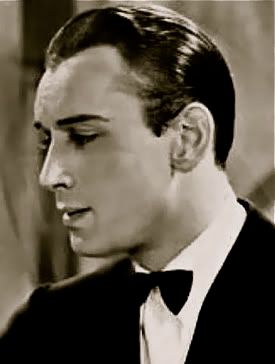 Born on this day in 1908, Russ Columbo seemed to live his life as though he knew he didn't have long to live it; he began playing the violin as a child, made his professional debut as a singer at 13, and had dropped out of school to pursue a career by 17. In 1928, as the movies began to talk, he was one of the first people to whom they beckoned, and it was on celluloid that his angelic voice and matinee idol looks merged to create an icon.
So while he made the most of the time he was given - indeed, he took his final bow as one of the biggest stars in the world - Russ Columbo's legacy fell into neglect after not too many years as musical tastes and styles evolved; recently, though, scholars of the obscure (myself humbly included among their number) have sought to revive interest in the suave presence and smooth phrasing of a man praised by such longer-lived contemporaries as Rudy Vallee and Bing Crosby. Both Joseph Lanza and Dennis Penna's Russ Columbo and the Crooner Mystique and Russ Columbo: The Amazing Life and Mysterious Death of a Hollywood Singing Legend by Lou Miano explore the unique appeal and untimely end of this paragon of cool from a bygone age...
*
share on: facebook
Born on this day in 1908, Russ Columbo seemed to live his life as though he knew he didn't have long to live it; he began playing the violin as a child, made his professional debut as a singer at 13, and had dropped out of school to pursue a career by 17. In 1928, as the movies began to talk, he was one of the first people to whom they beckoned, and it was on celluloid that his angelic voice and matinee idol looks merged to create an icon.So while he made the most of the time he was given - indeed, he took his final bow as one of the biggest stars in the world - Russ Columbo's legacy fell into neglect after not too many years as musical tastes and styles evolved; recently, though, scholars of the obscure (myself humbly included among their number) have sought to revive interest in the suave presence and smooth phrasing of a man praised by such longer-lived contemporaries as Rudy Vallee and Bing Crosby. Both Joseph Lanza and Dennis Penna's Russ Columbo and the Crooner Mystique and Russ Columbo: The Amazing Life and Mysterious Death of a Hollywood Singing Legend by Lou Miano explore the unique appeal and untimely end of this paragon of cool from a bygone age...
*
share on: facebook
Remembering... Ricardo Montalban
By the time he sashayed onto the immaculate lawn overlooking the float-plane launch on Fantasy Island, Ricardo Montalbán had already had a long career as a B-movie himbo in which he frequently played the quintessential gigolo with a swarthy hirsuteness and a tan like 'soft Corinthian leather'... In short, exactly the kind of man who is always appreciated here at the Pop Culture Institute.
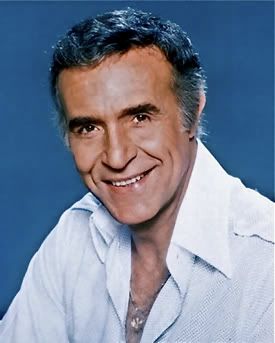 So while playing Mr. Roarke may have given Montalbán a kind of pop immortality, it was his performance as Khan Noonien Singh in both a 1967 episode of Star Trek (entitled Space Seed) and the 1982 film Star Trek II: The Wrath of Khan that best demonstrated his range, even though he'd previously played a samurai (in Sayonara), and an Indian in Westerns - in addition to the more expected bullfighters, flamenco dancers, and calypso singers.
In a movie career spanning seven decades, Montalbán did it all, but preserving his integrity seems to have been uppermost on his mind, despite the silliness inherent in acting (and the extreme silliness inherent in acting for minorities); in 1970 he co-founded the Nosotros Foundation (with Richard Hernandez, Val de Vargas, Rudolfo Hoyos Jr., Carlos Rivas, Tony de Marco, and Henry Darrow) in order to promote more positive portrayals of Mexicans in Hollywood. Although he claims the political stance cost him work, it garnered him a great deal of respect; to this day the Nosotros American Latino Film Festival (NALFF) is held annually at the Ricardo Montalbán Theater in Los Angeles.
He died on this day in 2009 at his home in Los Angeles of an undisclosed cause, predeceased by his wife Georgiana Young; he was 88.
*
share on: facebook
 So while playing Mr. Roarke may have given Montalbán a kind of pop immortality, it was his performance as Khan Noonien Singh in both a 1967 episode of Star Trek (entitled Space Seed) and the 1982 film Star Trek II: The Wrath of Khan that best demonstrated his range, even though he'd previously played a samurai (in Sayonara), and an Indian in Westerns - in addition to the more expected bullfighters, flamenco dancers, and calypso singers.
In a movie career spanning seven decades, Montalbán did it all, but preserving his integrity seems to have been uppermost on his mind, despite the silliness inherent in acting (and the extreme silliness inherent in acting for minorities); in 1970 he co-founded the Nosotros Foundation (with Richard Hernandez, Val de Vargas, Rudolfo Hoyos Jr., Carlos Rivas, Tony de Marco, and Henry Darrow) in order to promote more positive portrayals of Mexicans in Hollywood. Although he claims the political stance cost him work, it garnered him a great deal of respect; to this day the Nosotros American Latino Film Festival (NALFF) is held annually at the Ricardo Montalbán Theater in Los Angeles.
He died on this day in 2009 at his home in Los Angeles of an undisclosed cause, predeceased by his wife Georgiana Young; he was 88.
*
share on: facebook
Pop History Moment: Joe DiMaggio Marries Marilyn Monroe
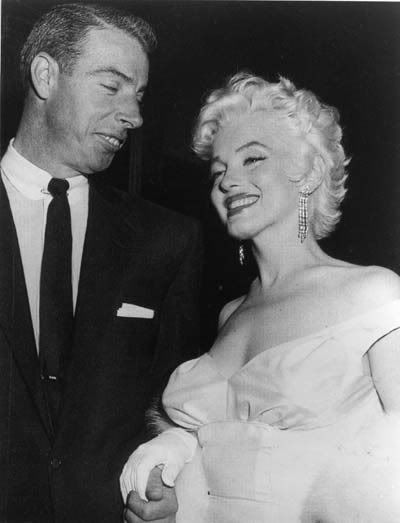
It is said that love is blind, but on this day in 1954 love also had to be deaf, for it was on just such a day that newly-retired baseball hero Joe DiMaggio married up-and-coming screen goddess Marilyn Monroe at San Francisco City Hall. There were howls of derision from every corner at the announcement that they had eloped - and this was in the days before the blogosphere!
Almost instantly, everything went wrong; in February, while on honeymoon in Japan, Monroe was invited to perform for American troops in Korea. She gladly went, and there worked her magic; DiMaggio, meanwhile, stayed behind in Japan and fumed while his bride - despite crippling stage fright - performed ten legendary shows for 100,000 soldiers over four days in subzero temperatures.
Not that he was ever out of the loop; wherever Marilyn went cameras followed, and her every move was reported as breathlessly as anything she performed in her act. By the time she filmed her famous scene over the subway grate in front of New York's Trans-Lux Theater in September 1954 (for Billy Wilder's classic film The Seven Year Itch) the marriage was effectively over, done in as much by his jealousy as her ambition.
The filming was entirely a publicity stunt, and quickly became a media circus; the scene eventually used in the movie had to be recreated in a studio as the crowds on the corner of 52nd Street and Lexington Avenue that night were vociferous in their admiration for that blondest of bombshells. DiMaggio, accompanied by Walter Winchell, stood by and glowered; every time her skirt blew up he looked away in disgust. The newlyweds later exchanged heated words in the lobby of the theater and he left early; she stayed and doled out smiles a-plenty to the crowd she'd drawn.
Marilyn and Joe's own seven-year itch proved to be a 274 day itch; Marilyn filed for divorce in October on the grounds of 'mental cruelty'. Still, the couple remained close until the day Marilyn died in August 1962, and for his part Joltin' Joe never kissed and told, taking their secrets to the grave with him in March 1999 despite numerous and increasingly lucrative offers for their story.
*
share on: facebook
POPnews - January 14th

[The Human Be-In expressed the highest ideals of the 1960s counterculture - ideals that would soon enough be undone by the highest members of the movement's leadership; still, people like artist Michael Bowen and poet Allen Ginsberg were definitely on to something... For liberating people unsuited to the treadmill of the bourgeoisie (myself included) they and their ilk will forever be considered heroes, at least by me.]
1301 - King Andrew III died, ending the Arpad dynasty in Hungary; he was succeeded there by Wenceslas III of Bohemia, who took the throne as Ladislaus V, and in Croatia by Charles I.
1639 - The Fundamental Orders, the first written constitution that created a government in Western history, was adopted by the council of the Connecticut Colony; to this day Connecticut is known as the Constitution State for this singular contribution to democracy.
1724 - Spain's King Philip V abdicated, only to be restored seven months later in August when his son and successor Louis died of smallpox six days after his 17th birthday.
1761 - The Third Battle of Panipat was fought in India between the Afghans under Ahmad Shah Durrani and the French-supplied Marathas; the Afghan victory changed the course of Indian history by allowing the British to gain a military advantage in the Subcontinent over the Marathas, who sustained heavy casualties.
1832 - Edgar Allan Poe published his first short story, Metzengerstein.
1858 - Emperor Napoleon III of France and his wife Eugénie escaped assassination while on their way to the opera in Paris; the botched attempt was plotted by Italian nationalist Felice Orsini and carried out with the assistance of Giuseppe Pieri, Antonio Gomez and Carlo di Rudio. While the royal couple were unhurt by the trio of bomb blasts, eight others were killed and 142 were injured in the attempt, including Orsini himself.
1939 - Norway claimed Queen Maud Land in Antarctica; this claim has never been universally recognized, and is subject to the Antarctic Treaty System.
1942 - The US government began its internment of Japanese-Americans; Japanese-Canadians experienced a similar atrocity on the same day in British Columbia.
1943 - US President Franklin D. Roosevelt and British Prime Minister Winston Churchill met at the Casablanca Conference to discuss strategy and study the next phase of World War II.
1952 - The Today Show, the world's first morning/breakfast program, premiered on NBC.
1953 - Marshal Josip Broz Tito was elected President of Yugoslavia, replacing Ivan Ribar.
1954 - The Hudson Motor Car Company merged with Nash-Kelvinator Corporation to form the American Motors Corporation.
1967 - Between 20,000 and 30,000 people attended the Human Be-In in San Francisco's Golden Gate Park, the event which launched that year's Summer of Love.
1972 - Queen Margrethe II ascended the throne of Denmark following the death of her father Frederick IX, thanks to a referendum in May 1953 which changed the rules of succession; not only was she the first queen regnant in that country since Margrethe I died in October 1412, she was the first Danish monarch not named Frederick or Christian since the death of King John in February 1513.
1975 - Teenage heiress Lesley Whittle was kidnapped by serial killer Donald Neilson, who was known as the Black Panther; her body was discovered seven weeks later, in March 1975.
1990 - L. Douglas Wilder became the first elected African-American governor when he took office in Richmond, Virginia.
1994 - US President Bill Clinton and Russian President Boris Yeltsin signed the Kremlin accords; on the same day, England's Duchess of Kent converted to Roman Catholicism, the first member of the Royal Family to do so for 300 years.
2004 - The so-called five cross flag of Georgia (the country, not the state) was restored to official use after a hiatus of some 500 years.
2005 - The European Space Agency's Huygens probe landed near the Xanadu region of Saturn's moon Titan, having been launched in October 1997.
*
share on: facebook
Thursday, January 13, 2011
In Memoriam: Sophie Tucker
Rather than being stung by the criticism of theatre owners and vaudeville bookers, who frequently told her she was 'too fat and ugly' to appear onstage (exactly the kind of charming sentiment which is the downfall, rather than the uplift, of showbiz) Sophie Tucker persisted anyway, and soon enough won hearts and minds with a style of ribald self-deprecation which never lapsed into self-pity - probably because it was born of defiance!
 Born on this day in 1884, Tucker was renowned for her ability to sing the blues in the style of such black divas as Bessie Smith, Gertrude 'Ma' Rainey, and Ethel Waters; although in her early career she was compelled to wear blackface, she found the practice distasteful and when she fought to wipe her face clean, she was one of the first to do so. After the theft of her makeup case prior to a 1909 performance, she was so hailed by audiences that she was never asked to wear it again, blazing a trail that would eventually see the disgraceful practice of minstrelsy abolished altogether.
Not content to merely mimic black performers - as was Kate Smith, for instance - Tucker took training from them, and was rewarded with their respect for having done so. Rising above her status as a so-called 'coon shouter' - which is such a lovely term* - Tucker also mined her Jewish heritage for material; one of her most famous songs was called My Yiddish Momme, a sentimental tribute to motherhood which routinely got everyone in the audience right in the heart.
Despite being 'fat and ugly' Tucker was known as 'The Last of the Red Hot Mamas', and not just because her jokes could scorch wallpaper at a dozen paces. One of her racier burlesque songs was called Bounce Your Boobies; given the copious and earthy sexuality on display in her act, I have no doubt that she bounced her boobies offstage as much or more than she did on.
Tucker's experiences in the early days of show business galvanized her politically in more ways than one; she was instrumental in the creation of unions to protect performers and was even elected President of the American Federation of Actors in 1938.
Sophie Tucker died in 1966, just in time for a certain frizzy-haired upstart from Hawai'i - herself a study in contradictions - to take up Tucker's considerable mantle...
*NOT!
*
share on: facebook
Born on this day in 1884, Tucker was renowned for her ability to sing the blues in the style of such black divas as Bessie Smith, Gertrude 'Ma' Rainey, and Ethel Waters; although in her early career she was compelled to wear blackface, she found the practice distasteful and when she fought to wipe her face clean, she was one of the first to do so. After the theft of her makeup case prior to a 1909 performance, she was so hailed by audiences that she was never asked to wear it again, blazing a trail that would eventually see the disgraceful practice of minstrelsy abolished altogether.Not content to merely mimic black performers - as was Kate Smith, for instance - Tucker took training from them, and was rewarded with their respect for having done so. Rising above her status as a so-called 'coon shouter' - which is such a lovely term* - Tucker also mined her Jewish heritage for material; one of her most famous songs was called My Yiddish Momme, a sentimental tribute to motherhood which routinely got everyone in the audience right in the heart.
Despite being 'fat and ugly' Tucker was known as 'The Last of the Red Hot Mamas', and not just because her jokes could scorch wallpaper at a dozen paces. One of her racier burlesque songs was called Bounce Your Boobies; given the copious and earthy sexuality on display in her act, I have no doubt that she bounced her boobies offstage as much or more than she did on.
Tucker's experiences in the early days of show business galvanized her politically in more ways than one; she was instrumental in the creation of unions to protect performers and was even elected President of the American Federation of Actors in 1938.
Sophie Tucker died in 1966, just in time for a certain frizzy-haired upstart from Hawai'i - herself a study in contradictions - to take up Tucker's considerable mantle...
*NOT!
*
share on: facebook
Happy Birthday Richard Moll
During an amazing nine-year run on NBC's Night Court - from 1984 to 1992 - Richard Moll's considerable presence could be counted on to liven up what was already a pretty lively proceeding; as bailiff Bull Shannon he used all of his six feet eight-and-a-half inches to intimidate suspects, but fortunately the show's writers decided to dispense with stereotypes when imbuing his character with hidden depths and gentle wisdom...
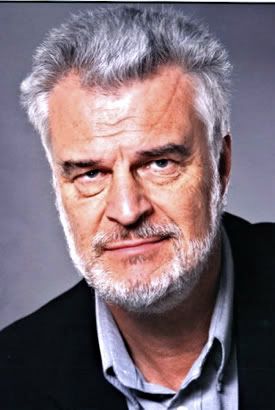 Born in Pasadena on this day in 1943, Moll's first film role was the 1981 film Hard Country, which starred Jan-Michael Vincent and Kim Basinger; the same year he voiced a beat poet in Ralph Bakshi's rotoscoped cult classic American Pop. For sheer camp appeal, though, neither of them had anything on his 1983 appearance in Metalstorm: The Destruction of Jared-Syn.
It was his role in Night Court, however, that made Richard Moll a household name; for sheer visual amusement, nothing could beat his sparring with gravelly-voiced co-star Selma Diamond, who was seemingly as short as he is tall. Moll later relied on a similar effect when he co-hosted Friday Night Videos opposite ALF, making for one of the more indelible viewing experiences of my teenage years.
After Night Court went off the air, Moll returned to the life of the itinerant actor he had known before it, albeit now with an, er, even higher profile* and the sweet, sweet residuals that make the life of the working actor all the more bearable. Among his notable recent film roles was in the 1999 film But I'm a Cheerleader, in which he played against type as a gay man who, with Wesley Mann (as his partner) helps kids escape from an anti-gay re-education camp. Moll also works extensively as voice-over talent in the burgeoning field of animation.
*Higher than 6'8.5"?
*
share on: facebook
Born in Pasadena on this day in 1943, Moll's first film role was the 1981 film Hard Country, which starred Jan-Michael Vincent and Kim Basinger; the same year he voiced a beat poet in Ralph Bakshi's rotoscoped cult classic American Pop. For sheer camp appeal, though, neither of them had anything on his 1983 appearance in Metalstorm: The Destruction of Jared-Syn.It was his role in Night Court, however, that made Richard Moll a household name; for sheer visual amusement, nothing could beat his sparring with gravelly-voiced co-star Selma Diamond, who was seemingly as short as he is tall. Moll later relied on a similar effect when he co-hosted Friday Night Videos opposite ALF, making for one of the more indelible viewing experiences of my teenage years.
After Night Court went off the air, Moll returned to the life of the itinerant actor he had known before it, albeit now with an, er, even higher profile* and the sweet, sweet residuals that make the life of the working actor all the more bearable. Among his notable recent film roles was in the 1999 film But I'm a Cheerleader, in which he played against type as a gay man who, with Wesley Mann (as his partner) helps kids escape from an anti-gay re-education camp. Moll also works extensively as voice-over talent in the burgeoning field of animation.
*Higher than 6'8.5"?
*
share on: facebook
"Folsom Prison Blues" by Johnny Cash
It's not that Johnny Cash recording an album - even a live album - was such an achievement; Cash was - and still is - one of the most prolific recording artists in American history...
The fact that he not only recorded an album entitled At Folsom Prison - which he actually recorded live at the actual Folsom Prison, and for an audience of actual convicts, no less! - was something that the music press and the general public at the time had some trouble getting their heads around. Yet Cash had been sensitive to the plight of the incarcerated ever since seeing the film Inside the Walls of Folsom Prison (1951) while in the service, and it obviously made an impression on him; shortly thereafter he wrote this song, Folsom Prison Blues, which became a staple of his set list.
His appearance at Folsom Prison on this day in 1968 was not Cash's first prison concert nor would it be his last; in fact, At Folsom Prison was so popular the following year he recorded Johnny Cash at San Quentin*. Nor were his sympathies only with American prisoners; in 1972 Cash recorded På Österåker at Sweden's Österåker Prison - which was released the following year - and on which he can be heard speaking Swedish!
The secret to success in any field is consistency, and consistency is the hallmark of Johnny Cash's life and works; in his private life Cash advocated for prison reform, going so far as to use his fame to gain access to President Richard Nixon to discuss the cause in 1972.
*Which is where this clip comes from...
*
share on: facebook
Gratuitous Brunette: Orlando Bloom
 It was several years ago now that Kingdom of Heaven, Sir Ridley Scott's epic film about the Crusades, found its way into the collection of the Pop Culture Institute; when the film was released in 2005, certain critics were heard to bemoan the sad state of the action film when someone like Orlando Bloom could be one of the genre's biggest stars.
It's too bad, really, that an addiction to bitch pills seems to be a prerequisite for becoming a movie critic...
The notion of a Stallone or a Schwarzeneggar portraying Legolas (for instance) is worse than laughable, it's nausea-inducing; alas, such is collective 'mind' of the criticocracy that progress and innovation are anathema to them, except in retrospect.
On this, his 34th birthday, just let me say that if there were more action films starring actors like Orlando Bloom - who can at least act - I might watch more of them myself. That way, even if the script is bad - a pretty good bet with most action films - at least there's someone to look at onscreen whose neck isn't wider than his head, and whose head is filled with more than sets and reps...
*
share on: facebook
Subscribe to:
Posts (Atom)